- English
- French
- German
- Portuguese
- Spanish
- Russian
- Japanese
- Korean
- Arabic
- Greek
- German
- Turkish
- Italian
- Danish
- Romanian
- Indonesian
- Czech
- Afrikaans
- Swedish
- Polish
- Basque
- Catalan
- Esperanto
- Hindi
- Lao
- Albanian
- Amharic
- Armenian
- Azerbaijani
- Belarusian
- Bengali
- Bosnian
- Bulgarian
- Cebuano
- Chichewa
- Corsican
- Croatian
- Dutch
- Estonian
- Filipino
- Finnish
- Frisian
- Galician
- Georgian
- Gujarati
- Haitian
- Hausa
- Hawaiian
- Hebrew
- Hmong
- Hungarian
- Icelandic
- Igbo
- Javanese
- Kannada
- Kazakh
- Khmer
- Kurdish
- Kyrgyz
- Latin
- Latvian
- Lithuanian
- Luxembou..
- Macedonian
- Malagasy
- Malay
- Malayalam
- Maltese
- Maori
- Marathi
- Mongolian
- Burmese
- Nepali
- Norwegian
- Pashto
- Persian
- Punjabi
- Serbian
- Sesotho
- Sinhala
- Slovak
- Slovenian
- Somali
- Samoan
- Scots Gaelic
- Shona
- Sindhi
- Sundanese
- Swahili
- Tajik
- Tamil
- Telugu
- Thai
- Ukrainian
- Urdu
- Uzbek
- Vietnamese
- Welsh
- Xhosa
- Yiddish
- Yoruba
- Zulu
6 Steps to Get Precision Custom Aluminum Die Casting for Robot Arms
The robot arm elements must simultaneously comply with multiple requirements. They must be light enough for quick movement, powerful enough to hold ground, accurate enough to work with bearings and drive components, and repeatable enough to be made in multiples. So, it’s not as simple as finding the lowest unit price when picking an aluminum casting provider. The final outcome is determined by the casting process, alloy, part geometry, machining needs, inspection plan, tooling approach and production capability. For buyers looking for customized aluminum die casting robot arm parts manufacturers , the most reliable approach is to define the application first and then qualify the manufacturing process against those requirements. The following six steps provide a practical path from an initial concept to stable production.
1. Define the Robot Arm Part Before Requesting a Quote
Start With Function, Load, and Installation Requirements
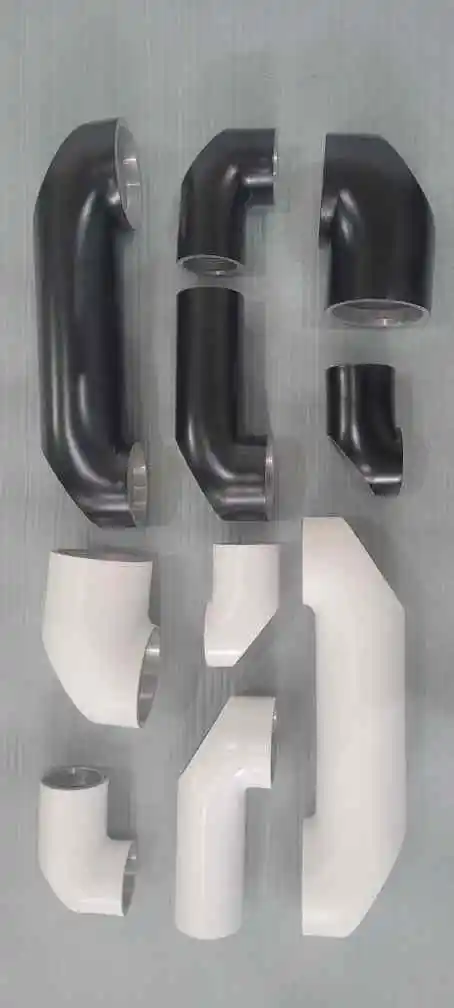
First, we need to figure out what the metal part really has to perform. A robot arm housing, motor mount, joint cover, actuator bracket, or end-effector support may look similar on the surface, but the mechanical needs can be quite different.
Prepare the 2D drawing and the accessible 3D CAD model and contact a casting provider. The drawing should indicate overall dimensions, mounting interfaces, holes, threaded features, machining regions, surface requirements, and essential tolerances. If some dimensions are more critical to the robot accuracy than others, specify this instead of specifying needlessly tight tolerances for the whole part.
The operational environment is important, too. Inform the supplier whether the part will be used inside, in a humid climate, around chemicals, near heat sources, or in a production line that requires frequent cleaning. These factors may affect the alloy, the surface treatment, the corrosion requirements, and the inspection plan.
Set a Realistic Weight and Stiffness Target
Aluminum is good for robot parts since it’s a lot less dense than steel. If two parts are geometrically the same but are built from materials with very differing densities, the aluminum part can be a lot lighter. However, a decrease of weight should not be the main design goal.
Material removal from a robot arm housing can reduce bulk. However, excessive thinning can lower rigidity or make local mounting regions unfit for machining and fastening. Ribs, bosses, filets, and reinforced portions can be used to help disperse loads while maintaining efficiency in the overall casting.
Therefore, the right target is not “the lightest possible part.” A part that strikes a good balance of mass, stiffness, manufacturability, and cost.
2. Choose the Casting Process and Aluminum Alloy Together
Do Not Assume One Casting Method Fits Every Robot Part
The phrase “aluminum die casting” comprises a variety of manufacturing techniques, and choosing the right one depends on the design of the item and the production needs. Processes such as permanent mold or gravity casting, high pressure die casting, and sand casting all have different advantages in terms of tooling investment, geometry, production volume, wall thickness, dimensional capability, and mechanical needs.
For example, a structural component of relatively moderate volume, with a shape suited for permanent mold casting, may be treated differently from a thin-walled component required in extremely high volumes. The supplier should be able to justify why the process it proposes is appropriate rather than just offer the process it happens to run.
The same is true for the choice of materials. Selection of the alloy should be made on the basis of mechanical qualities, corrosion aspects, casting characteristics, machining requirements, heat treatment, and the customer specification that is appropriate.
An example of an aluminum casting alloy utilized in engineering applications is A356. For example, the ASTM specifications specify the chemical composition criteria for A356.0 and other aluminum casting alloys. This is why the alloy designation is not a substitute for a documented material specification.
Consider Machining When Defining Casting Precision
A casting does not have to be produced straight from the mold for the dimensional precision of every feature. In many of the robot arm components, the more practical technique is to cast the basic geometry and then CNC mill the surfaces that control assembly.
After casting, several machined features may be required, such as bearing seats, precision bores, mounting faces, locating holes, and some threaded features. Therefore, the drawing shall differentiate cast dimensions and machined dimensions when working with customized aluminum die casting robot arm parts manufacturers.
This approach can help simplify the tooling. Instead of squeezing every feature into the mold at a very tight tolerance, the design can keep some machining room for important surfaces. This will typically result in a more manageable production process.
3. Give the Supplier Enough Technical Information for DFM Review
Send More Than a 3D Model
You need a 3D model, but that is not enough to provide a useful quote. You should also supply the supplier with the 2D drawing, material specification, expected annual or monthly amount, target application, surface treatment requirements, packaging expectations, and any inspection papers required by your quality system.
When a component is a replacement for an existing part, reference samples, previous inspection reports, or recognized issue areas can be helpful. For a new robot design, identify what interfaces are critical to the assembly.
The more precise the RFQ package is, the less likely the quotation is based on assumptions that become add-ons later.
Ask for Design-for-Casting Feedback
A good provider will check the geometry before starting the tooling. Such an evaluation could identify problems such as sudden changes in wall thickness, lack of draft, complex core structures, sharp internal corners, isolated heavy sections, or characteristics that are difficult to machine.
Parts of the robot arm should be considered with special attention to the relation between ribs and mounting sites. A CAD view of a casting may look very efficient, but in production settings it can be difficult to fill, cool, eject, or process.
The supplier should educate on planned changes, not just change the design. This distribution of engineering responsibility is explicit and does not deviate from the functional need of a production drawing.
4. Compare Manufacturers on Process Capability, Not Price Alone
Verify Equipment, Inspection, and Production Experience
While looking for providers of custom aluminum die casting robot arm parts, make certain to obtain evidence that the supply source is capable of handling the complete manufacturing chain your project requires.
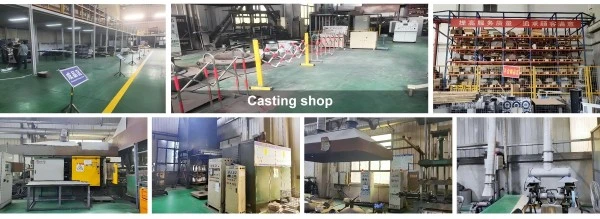
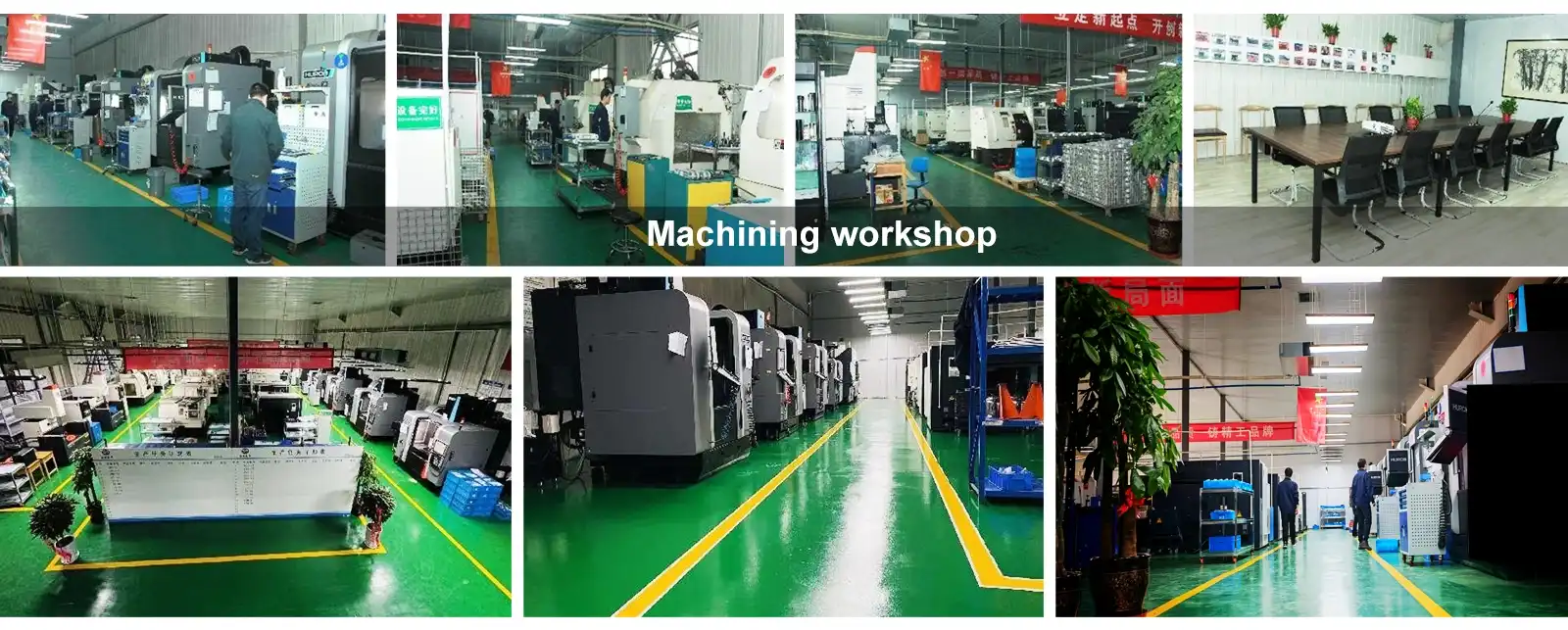
The appropriate competences may include mold or tooling development, aluminum casting, trimming, heat treatment if required, CNC machining, surface treatment, dimensional inspection, packaging, and export logistics. Some critical phases might still be delegated to a provider, but responsibilities and quality controls should be clear.
But the production gear is just half the story. Inspection ability is also necessary. Depending on the part, useful equipment may include coordinate measuring machines, height gauges, calipers, micrometers, surface roughness instruments, hardness testers, or other inspection equipment relevant to the application.
The provider should also be able to present inspection records that fit the requirements of the drawing, not broad assertions such as ‘100% quality checked.'
Treat Certifications as Supporting Evidence
Quality certifications can help buyers evaluate a supplier’s management system, but certification should not replace technical verification. For example, ISO 9001 is a quality management system standard and not a promise that every single casting will meet a customer’s dimensional requirements. ISO 9001 specifies the requirements for a quality management system and does not need continuous improvement and certification according to ISO.
Certificates also need to be verified against the existing ISO framework. ISO has published ISO 9001:2026. Buyers should not just take the word “ISO certified” at face value but check the version, validity period, certification authority, certified site, and scope.
For a robot part, the actual process proof from customized aluminum die casting robot arm parts manufacturers can be more relevant than a certification logo, such as sample inspection reports, material records, machining capability, and corrective-action history.
5. Approve Samples Before Releasing Volume Production
Inspect the Features That Affect Robot Assembly
The first piece has to be considered as a qualification run and not solely as a visual sample.
Begin with a dimensions check against the approved drawing. (1) Carefully note the locations of bearings, mounting holes, datum relationships, machined surfaces, and interfaces with motors, reducers, shafts, sensors, or other components.
If one essential bore or mounting relationship is wrong, a part can fail during assembly even if it is within its overall dimensions. This is why functional fit tests can be as significant as individual dimensions studies.
If the part is to be utilized in a moving joint, the sample should also be tested under representative assembly conditions. Check that the fastener is seated correctly, the pieces are aligned, and the component is not interfering or moving.
Confirm Material and Surface Treatment
Material documentation must be representative of the actual alloy indicated on the purchase order and drawing. If you need a certain aluminum alloy, please specify and ask for the corresponding material certificate or test results. If you want traceability, make sure you can trace it back to the production lot.
The same approach should also be examined for surface treatment. Anodizing, painting, powder coating, conversion coating, or other treatments can change appearance, corrosion resistance, surface dimensions, and even the assembly fit. Masking requirements shall be specifically mentioned where surfaces are machined or operational surfaces not to be coated.
If special testing is required for a critical component, define the test technique and acceptance criteria prior to the production of samples. This prevents disagreements after manufacture.
6. Establish a Production Quality Plan for Repeat Orders
Convert the Approved Sample Into a Controlled Production Standard
Once the initial item is approved, the next hurdle is uniformity. The authorized drawing, material specification, tooling setup, machining program, surface treatment requirement, inspection technique, and packaging standard shall be a regulated production baseline.
The inspection methodology and frequency of critical dimensions shall be precisely established. Functional interfaces may be viewed differently from non-essential esthetic characteristics. The inspection method should be related to the genuine risk of the component and not to the same inspection intensities to all dimensions.
It is also good practice to establish a procedure for handling engineering changes to repetitive robot arm programs. Any change to the alloy, casting process, tooling, machining program, surface treatment, or subcontracted process that may affect fit, function, or quality must be reviewed prior to implementation.
Discuss Tooling Life and Long-Term Supply Early.
Tooling is a significant portion of the overall cost of custom aluminum castings. So a quote should break tooling expenses out from production pricing and define what is covered in the tooling scope.
In sampling, ask about tooling change procedures and what happens if design changes are made after approval. Tooling maintenance, storage and repair responsibilities and replacement plans for long operating robotic applications.
The same is true for supply continuity. If a supplier is able to provide great samples but cannot fulfill your production quantities, then they may not be the suitable manufacturing partner. Buyers should evaluate predicted demand with actual production capacity, machining ability, lead time, and raw materials supply.
“Packaging should be part of the international buying conversation.” Machined surfaces of aluminum parts can be scratched, deformed, corroded, or otherwise marred by lack of proper protection during shipment. So the packaging has to be designed around the component, not an afterthought.
How to Make the Supplier Selection More Efficient?
The fastest approach to get usable quotations is to offer manufacturers with enough information to make an engineering judgment. The RFQ package shall comprise the current 3D CAD file, controlled 2D drawing, aluminum alloy requirement, projected order quantity, projected annual demand, surface treatment, machining requirements, inspection expectations, and shipping destination.
It also helps to let your vendors know which dimensions are functionally important. If the cosmetic surface on the outside does not have to be properly regulated, but a bearing seat must be, then the quote and production process may reflect that.
When comparing quotations, don’t just look at the cost of the casting. Look at the complete path of manufacture. A cheap casting can become a costly casting if the supplier is bad at machining the part, has a lot of secondary processing or high rejection rates or can’t offer convincing inspection documents.
This means the least expensive provider is not necessarily the best one. The manufacturer can prove a regulated approach from casting design to tooling to manufacturing to machining to inspection and on to repeat delivery.
Conclusion
Obtaining precision custom aluminum castings from customized aluminum die casting robot arm parts manufacturers requires more than selecting an aluminum alloy and asking for a quotation. The project should begin with clear functional requirements, realistic weight and stiffness targets, and a drawing that distinguishes casting features from machined interfaces. The casting process and alloy should then be selected according to geometry, production volume, mechanical requirements, and cost.
Supplier qualification should include process capability, engineering support, inspection equipment, material traceability, production capacity, and valid quality-system documentation. ISO certification can provide useful evidence of a management system, but it should be considered alongside actual manufacturing and inspection records.
Most importantly, sample approval should establish a clear production baseline. Once critical dimensions, material, machining, surface treatment, inspection, packaging, and change-control requirements are documented, repeat orders become much easier to manage. This structured approach helps buyers reduce avoidable tooling changes, quality disputes, and supply interruptions while building a more reliable source for customized aluminum robot arm components.
FAQ
1: What is the typical lead time for custom aluminum die-casting robot arm parts?
Lead times vary based on project complexity and supplier workload. Tooling fabrication typically requires 4 to 8 weeks depending on mold complexity. First article samples follow within 1 to 2 weeks after tooling completion. Volume production lead times range from 3 to 6 weeks for standard orders. Rush options may accelerate schedules at additional cost. Planning for 12 to 16 weeks from design approval to volume delivery provides a reasonable buffer for most projects.
How does gravity casting compare to high-pressure die casting for robot components?
Gravity casting fills molds using gravitational force alone, producing denser parts with lower porosity. This results in superior mechanical properties suitable for structural robot components. High-pressure die casting achieves faster cycle times but introduces more internal voids. For robot arm shells requiring strength and reliability, gravity casting typically offers better performance despite slightly higher per-part costs.
3: What quality certifications should I require from a die-casting supplier?
Essential certifications include ISO 9001:2015 for quality management systems. This standard ensures systematic approaches to process control and continuous improvement. ISO 14001 certification indicates responsible environmental management. ISO 45001 covers occupational health and safety practices. Together, these certifications demonstrate organizational maturity and commitment to operational excellence. Industry-specific certifications may apply depending on your application sectors.
Customized Aluminum Die Casting Robot Arm Parts Supplier: Rongbao Enterprise
After understanding the six-step procurement process, finding a capable manufacturing partner becomes the priority. Rongbao Enterprise has built a strong reputation serving industrial robot manufacturers who demand precision and reliability. Based in Xi'an, China, the company specializes in gravity casting processes that produce dense, high-strength aluminum components ideal for robotic applications.
The company focuses on industrial robot arm shell production using A356 aluminum alloy. This material choice reflects deep understanding of robot component requirements. Components ranging from 0.45 to 1.5 kilograms receive careful attention throughout manufacturing. Gravity casting processes ensure mechanical properties that structural robot applications demand.
Manufacturers seeking reliable sources for customized aluminum die casting robot arm parts are encouraged to contact Rongbao Enterprise directly. Technical discussions help clarify requirements and identify optimal solutions. Quotation requests receive prompt professional responses. Reach the sales team at steve.zhou@263.net or zhouyi@rongbaocasting.com to explore how precision aluminum die casting can enhance your robot arm products. Your next successful project starts with the right manufacturing partner.
References
1. Mordor Intelligence. (2024). Die Casting Market Size, Share & Trends Analysis Report, 2024-2030. Hyderabad, India: Mordor Intelligence Private Limited.
2. Grand View Research. (2024). Industrial Robotics Market Size, Share & Trends Analysis Report by Type, by Application, by Region, and Segment Forecasts, 2024-2030. San Francisco, CA: Grand View Research, Inc.
3. ASM International. (2022). Aluminum and Aluminum Alloys. Materials Park, Ohio: ASM International Handbook Committee.
4. International Federation of Robotics. (2024). World Robotics Industrial Robots 2024. Frankfurt, Germany: IFR Statistical Department.
5. Kumar, S., & Singh, R. (2023). Optimization of Gravity Die Casting Process Parameters for Aluminum Alloy Components. International Journal of Advanced Manufacturing Technology, 125(3-4), 1847-1862.
6. International Organization for Standardization. (2015). ISO 9001:2015 Quality Management Systems — Requirements. Geneva, Switzerland: ISO Central Secretariat.
Learn about our latest products and discounts through SMS or email