- English
- French
- German
- Portuguese
- Spanish
- Russian
- Japanese
- Korean
- Arabic
- Greek
- German
- Turkish
- Italian
- Danish
- Romanian
- Indonesian
- Czech
- Afrikaans
- Swedish
- Polish
- Basque
- Catalan
- Esperanto
- Hindi
- Lao
- Albanian
- Amharic
- Armenian
- Azerbaijani
- Belarusian
- Bengali
- Bosnian
- Bulgarian
- Cebuano
- Chichewa
- Corsican
- Croatian
- Dutch
- Estonian
- Filipino
- Finnish
- Frisian
- Galician
- Georgian
- Gujarati
- Haitian
- Hausa
- Hawaiian
- Hebrew
- Hmong
- Hungarian
- Icelandic
- Igbo
- Javanese
- Kannada
- Kazakh
- Khmer
- Kurdish
- Kyrgyz
- Latin
- Latvian
- Lithuanian
- Luxembou..
- Macedonian
- Malagasy
- Malay
- Malayalam
- Maltese
- Maori
- Marathi
- Mongolian
- Burmese
- Nepali
- Norwegian
- Pashto
- Persian
- Punjabi
- Serbian
- Sesotho
- Sinhala
- Slovak
- Slovenian
- Somali
- Samoan
- Scots Gaelic
- Shona
- Sindhi
- Sundanese
- Swahili
- Tajik
- Tamil
- Telugu
- Thai
- Ukrainian
- Urdu
- Uzbek
- Vietnamese
- Welsh
- Xhosa
- Yiddish
- Yoruba
- Zulu
A Complete Guide to Different Types of Stainless Steel Flanges
Safe and maintainable piping systems are critical for the delivery of water, chemicals, gasses, steam and other process media between equipment and different regions of a facility. Flanges are a useful solution among the various connection methods, when a pipe, valve, pump, vessel nozzle or any other component needs to be connected and then detached for inspection or repair. In environments involving moisture, corrosive media, elevated temperatures, or demanding operating conditions,stainless steel flanges are often selected, because stainless steel provides an attractive combination of corrosion resistance, mechanical strength and long term service performance.But stainless steel flanges are not one thing. Weld neck, slip–on, blind, socket weld, threaded, lap joint and orifice flanges are constructed differently and utilized for diverse connection arrangements. Choosing the right kind is more than simply matching pipe nominal size. The proper flange for a specific system depends on its pressure class, service temperature, material grade, flange facing, gasket, pipe standard, installation method and inspection requirements. This is a key difference for procurement teams. Flanges of the same nominal size may have varied bolt hole arrangements, pressure ratings, face measurements or material specifications. So a technically correct decision begins with knowing how each type of flange works and what information you should look at before placing an order.
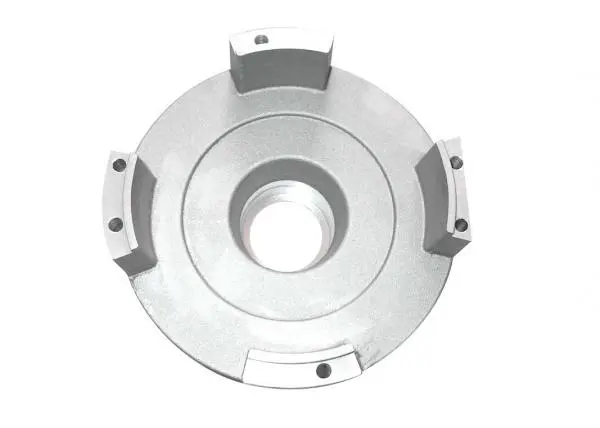
Understanding How Stainless Steel Flanges Are Categorized
Stainless steel flanges can be classified according to their connecting mode, structural design, facing arrangement, and the intended service. The first thing to clarify is what dimensions the standard applies to. They are not immediately convertible between systems of standards.
For example, ASME B16.5 is utilized as a standard for pipe flanges and flanged fittings within its suitable size range, whereas other projects may use EN, DIN, or JIS or other regional standards. These systems may differ in exterior diameter, thickness, bore, bolt-circle diameter, bolt-hole size, and pressure indication.
You can't just say "stainless steel"; you have to identify the grade of material. Typical austenitic grades are 304 and 316; however, duplex stainless steels and other alloy systems may be utilized where service demands differing combinations of strength and corrosion resistance. The grade is correctly chosen based on process media, chloride exposure, temperature, corrosion environment, mechanical requirements, and project specification.
Weld Neck Flanges for High-Stress Piping
Weld neck flanges also include a long tapered hub that offers a gradual transition from the flange to the pipe. This geometry helps to distribute stresses through the connection and makes the design particularly beneficial when a piping system is exposed to high pressure, elevated temperature, cyclic loading, or other demanding situations.
The flange is generally butt welded to the pipe. 2. Since the welding connection is a crucial part of the assembly, pipe preparation, alignment, welding method, and inspection can have a direct effect on the finished connection. Visual inspection and non-destructive testing may be required depending on the project specification.
Weld neck flanges, including stainless steel flanges, are used in refineries, petrochemical plants, power generation facilities, and other industrial environments where the integrity of the connection is a critical technical concern. They may be more costly in material and installation than simpler flange designs; therefore, the choice should be based on service requirements rather than assuming a more robust design is always required.
Slip-On Flanges for General Piping Applications
Slip-on flanges are intended to be slipped over the exterior of the pipe. The pipe fits inside the flange and is usually attached with filet welds. This layout can make for easier fabrication and alignment at installation time than a weld neck configuration.
Therefore, slip-on flanges are often utilized in common industrial pipelines where the operating circumstances do not need the additional construction requirements of a weld neck connection. They are also easy to install, which is attractive for projects where cost and fabrication efficiency are vital.
Ease of installation, however, should not be the sole consideration in the choosing process. Buyers should check the requisite pressure-temperature rating, stainless steel quality, flange dimensions, welding requirements, and face and governing standard. Systems that experience high mechanical loads, pressure changes, or repetitive temperature cycling may require a modified flange arrangement.
Blind Flanges for Isolation and Pressure Testing
Blind flanges have no central bore. Rather, they provide a bolted closure for the termination of a pipe, valve, nozzle, or other flanged connection. The most typical use of a valve is to isolate a piece of piping or equipment from the remainder of the system.
They can also be handy for pressure testing and for future additions where a connection may be required at a later date. The blind flange seals off the opening completely. The internal pressure is then applied across the closed face. Therefore, the flange has to be selected according to the pressure class, material, temperature, size, and the engineering design.
A blind flange should not be judged on thickness and bolt pattern alone. Consider the whole pressure boundary and the relevant design standard.
Socket Weld Flanges for Compact Small-Bore Systems
Socket weld flanges have a socket that the pipe is placed into prior to welding. Usually used with smaller diameter piping, the design can be employed where a compact flanged connection is needed.
These flanges may be used in small-bore, higher-pressure services such as process lines and instrument connections. Proper fit-up and welding techniques are still necessary, as with other types of welded flanges. Poor fit-up, inadequate preparation for the weld, or poor welding practice can spoil the finished product.
For procurement the specification shall include the nominal pipe size, pipe outer diameter and bore requirements where applicable, pressure class, material grade, applicable dimensional standard, and facing arrangement. Providing these specifications decreases the possibility of obtaining a flange that cannot be matched appropriately to the pipe or mating component.
Threaded Flanges When Welding Is Not Preferred
Threaded flanges are joined to pipe by external threads and usually do not require a standard welding process. This makes them suitable in areas where hot working is prohibited, unattractive, or problematic.
The essential thing to keep in mind is thread compatibility. The pipe and flange shall be of a compatible thread standard and dimensional design. The operating environment is also relevant. Vibration, temperature cycling, corrosion, and other service factors may impact whether a threaded connection is appropriate.
Threaded flanges should therefore be selected on the basis of the whole service requirements, not only to be free from welding. Before buying, make sure of the suitable thread standard, pressure requirements, material grade, and operating conditions.
Lap Joint Flanges for Systems Requiring Frequent Removal
A lap joint flange is utilized with a stub end. Unlike a weld neck or slip-on flange, a loose lap joint flange does not have direct welding to the pipe. The stub end is welded to the pipe, and the flange can rotate around the stub end.
There is a practical advantage in installation in that the flange can be rotated so that the bolt holes align with the flange to which it is mating. It can therefore be beneficial in piping systems where components are often detached for cleaning, inspection, maintenance, or replacement.
The stub end and loose flange shall be treated as an assembly. The loose flange should not be specified in isolation, but rather its material compatibility, size, pressure requirements, corrosion conditions, and applicable standards should be evaluated.
Orifice Flanges for Differential-Pressure Flow Measurement
Orifice flanges are special flange assemblies that are used with an orifice plate to detect flow using differential pressure. An orifice flange is part of a measurement system as opposed to a standard flange, whose main function is only to make a mechanical and sealing connection.
Depending on the design, the assembly may incorporate pressure taps and jack screws to allow installation, inspection, or removal of the orifice plate. Conclusions: The pipe size, orifice plate, pressure tap arrangement, gasket, flange facing, and instrumentation need therefore to be examined together.
Orifice flange procurement needs to be done in accordance with the measurement and piping specs instead of treating it as a common flange with a modified bore.
Key Selection Factors for Stainless Steel Flanges
Identifying the correct flange type is merely the first step in the choosing process. The flange must also be compatible with the working circumstances and with all the components that are part of the connection.
Match Pressure Rating With Temperature and Service Conditions
The first parameter to be checked is the pressure class. "Typical ASME classes are 150, 300, 600, 900, 1500, and 2500. But pressure alone is not sufficient to dictate the proper class.
The allowable pressure depends on the material and temperature. A flange suitable at one temperature may have a different permissible pressure at a higher working temperature. Consulting the suitable pressure-temperature tables for the precise material and standard is necessary for buyers instead of relying on a generic pressure number.
Transient situations also have to be accounted for. Other loads than normal operating conditions may be generated by start-up, shutdown, pressure testing, thermal expansion, vibration, and pressure variations.
Select the Stainless Steel Grade According to the Process
The term "stainless steel flange" is not enough information for technical procurement. The purchase documents shall include the exact material grade and the material specification to be used.
316 has molybdenum and is commonly considered for locations where exposure to chlorides is a concern. Grade 304 is utilized for a wide range of general corrosion-resistant applications. Duplex stainless steels may be selected where increased strength and some corrosion-resistance requirements are essential.
The ultimate decision should be taken according to the actual process environment. Chlorides, acids, caustic solutions, high temperatures, and other process variables all impact how alloys function. For really aggressive services, the choice of the material should be based on proper engineering evaluation rather than a blanket assumption that one grade is “more corrosion resistant."
Check Flange Facing and Gasket Compatibility
Flange facing directly impacts the gasket's location and compression. Generally you will see raised face, flat face, and ring-type joint arrangements.
Raised face designs are quite common in industrial plumbing because the gasket is compressed over a predetermined sealing area. Hooking up to equipment designed for a flat surface may necessitate flat face configurations. Ring-type joint configurations are used in some high-pressure and high-temperature applications.
The gasket is not selectable separately from the flange. Temperature, pressure, chemical compatibility, and the condition and arrangement of the facing on the flange surface can all impact the sealing performance. So the stainless steel flanges, gasket, and bolting must be considered as a whole sealing system.
Verify Dimensional Standards Before Ordering
Dimensional compatibility is one of the most significant procurement concerns when ordering flanges. Other bolt-hole patterns and diameters are available for use with ASME, EN/DIN, JIS, and other systems.
Even if two products are listed as the same pipe size, the actual dimensions may be different. Buyers should confirm the appropriate standard, nominal size, pressure class, face, bore, bolt-hole dimensions, bolt-circle diameter, and overall flange dimensions before ordering.
Using components from various standards without engineering confirmation can lead to installation problems or an incompatible connection. Suppliers can supply an exact product and avoid needless procurement problems by setting the dimensions standard before quoting.
Manufacturing and Inspection Considerations
The manufacturing process can have an impact on the material structure, the mechanical qualities, the dimensional consistency, the economics of production, and the types of applications for which a flange is suitable. Buyers should therefore be aware of the manner of production, without thinking that a manufacturing process inherently guarantees superior quality.
Forging for Controlled Material Properties
Forging heats metal and shapes it through controlled deformation. With sufficient control, the technique can provide good mechanical qualities and a somewhat uniform structure of material.
Forged stainless steel flanges are commonly chosen when mechanical performance, traceability of the material, and regulated manufacture are of importance. Depending on the quality of the product and project specification, forged stainless steel flange items may be covered by standards such as ASTM A182.
But the word “forged” should not be used to replace quality verification. Buyers still need to verify material quality, heat treatment condition, dimensions, inspection criteria, heat number, and proper certification.
Casting for Suitable Geometry and Production Requirements
A casting is the result of pouring molten metal into a mold. Casting is an effective manufacturing process for certain components dependent on alloy, geometry, production volume, dimensional requirements, and application.
Gravity casting uses gravity to fill the mold. Investment casting uses a disposable pattern and a ceramic shell to produce more complicated structures. Every procedure has its perks and pitfalls.
The most important consideration in the purchase of flanges is the manufacturing process that can meet the material specification, mechanical properties, dimensional tolerances, pressure service, and product standard as specified. The choice of manufacturing process should satisfy the engineering criteria and not just the production cost.
Establish Inspection Requirements Before Production
Quality inspection should not be just to see if the finish flange looks alright. Inspection can comprise dimension checks, material identification, surface examination, hardness testing, and non-destructive examination based on the project specification.
Positive material identification can be employed where alloy grade is to be verified. Liquid penetrant testing may be applicable for detection of surface-breaking discontinuities; ultrasonic or radiographic examination may be indicated for some internal or weld-related inspection requirements.
Material certificates also contain significant data for traceability. Depending on the project, purchasers may ask for chemical composition, mechanical test results, heat-treatment records, heat numbers, dimensional inspection reports, PMI data, NDT paperwork, and certificates of conformity.
These standards must be agreed upon prior to the commencement of manufacture. Once manufacturing is under way, it might be difficult to request more inspection, as this can lead to delays, extra expenses, or restrictions on what can still be checked.

Conclusion
Selecting the right stainless steel flange involves more than choosing between weld neck, slip-on, blind, socket weld, threaded, lap joint, and orifice designs. Each type has a different connection arrangement and should be evaluated according to the piping configuration, operating conditions, material requirements, and maintenance needs.
Pressure class, temperature, stainless steel grade, flange facing, gasket, bolting, dimensional standard, manufacturing method, and inspection requirements should all be reviewed before an order is placed. A flange that matches the nominal pipe size but uses the wrong standard, material, facing, or pressure class may still create compatibility or performance problems.
For buyers, the most effective approach is to provide a complete technical specification at the quotation stage. Clear information about flange type, size, pressure class, material, standard, facing, quantity, inspection requirements, and documentation allows suppliers to quote more accurately and makes technical comparisons easier. When a project requires custom dimensions, special materials, additional testing, or specific certification, those requirements should be confirmed before production. This approach helps ensure that the finished stainless steel flanges correspond to the engineering, installation, and procurement requirements of the complete piping system.
FAQ
1: What is the difference between slip-on and weld neck stainless steel flanges?
Slip-on flanges slide over pipe ends and receive two fillet welds for attachment. They cost less and install faster than weld neck alternatives. Weld neck flanges feature long tapered hubs that butt-weld to pipe ends. This design distributes stress more favorably and suits high-pressure, high-temperature applications. ASME rates weld neck flanges approximately 50% stronger than comparable slip-on flanges for the same pressure class.
2: How do I select the correct pressure class for stainless steel flanges?
Pressure class selection requires evaluating both pressure and temperature together. ASME B16.5 provides pressure-temperature rating tables for each class. Start with maximum operating pressure and temperature conditions. Include potential upset scenarios that might exceed normal parameters. Select a class providing adequate margin above maximum conditions. When in doubt, consulting with piping engineers ensures appropriate selection.
3: What stainless steel grade works best for corrosive environments?
The optimal grade depends on specific corrosive agents present. Type 316 stainless steel offers improved chloride resistance compared to Type 304. Duplex stainless steels like 2205 provide excellent resistance to stress corrosion cracking. Super duplex grades handle severe chloride exposure. Consulting corrosion data for your specific environment guides material selection. Testing in actual service conditions provides the most reliable guidance.
Stainless Steel Flanges Supplier: Rongbao Enterprise
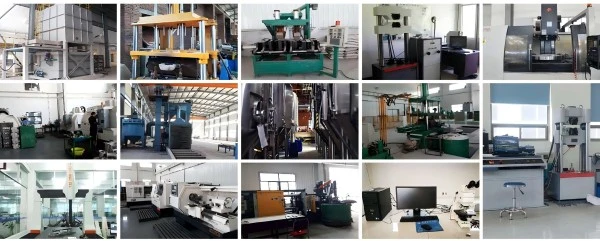
Finding a reliable supplier for stainless steel flanges requires evaluating capabilities, quality systems, and customer service commitment. Rongbao Enterprise has established itself as a trusted manufacturer serving fire protection and industrial applications. Located in Xi'an, China, the company combines modern manufacturing capabilities with rigorous quality standards that customers worldwide depend upon.
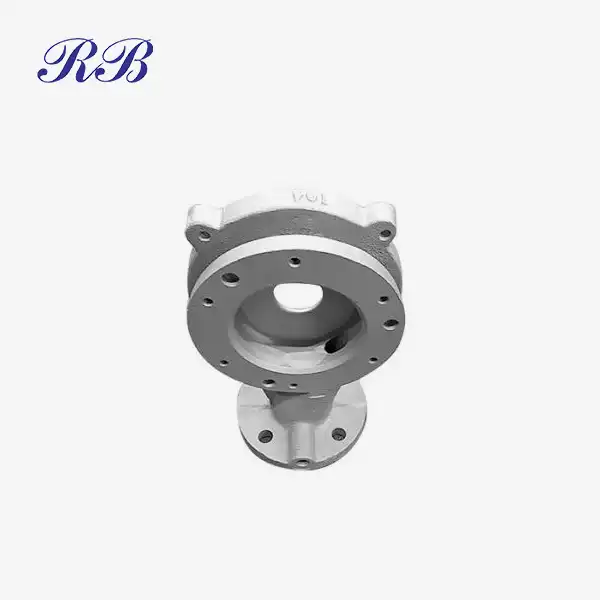
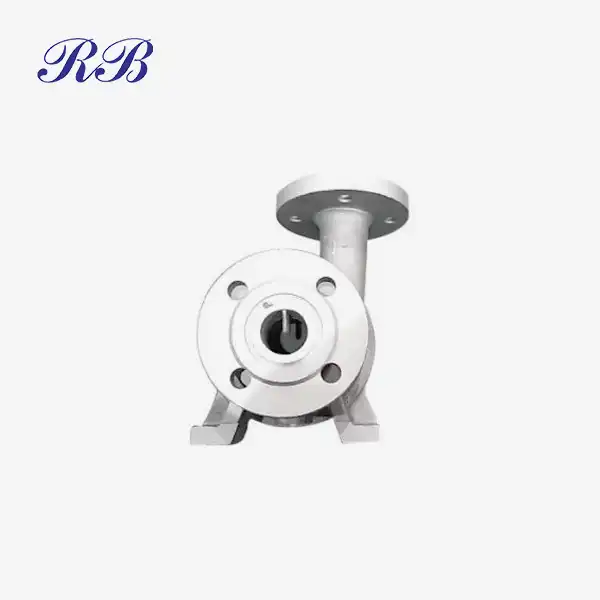
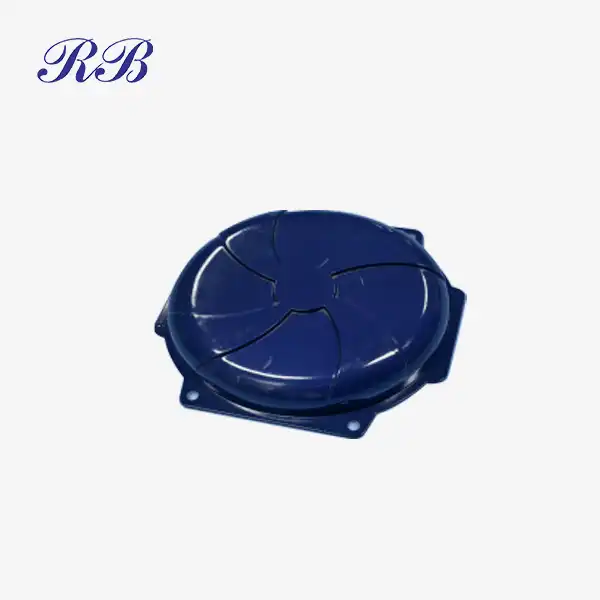
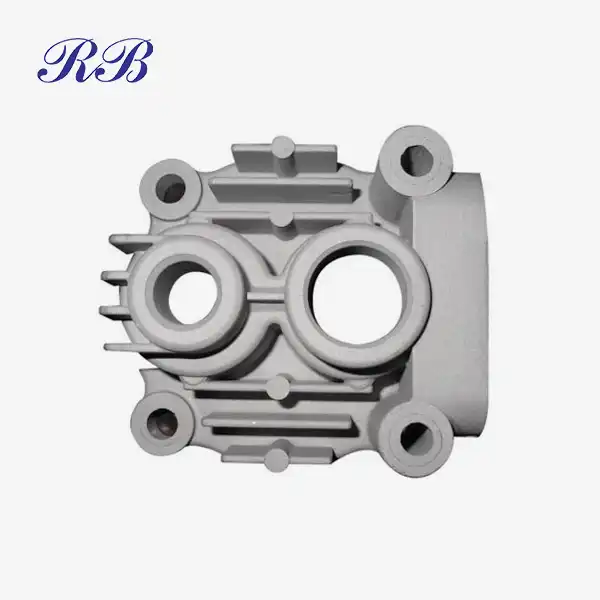
The company specializes in producing stainless steel flanges through gravity casting processes using A356 material. Each flange weighing approximately 1.11 kilograms receives careful attention throughout production. CNC machining operations achieve precise dimensions on critical features. Shot blasting surface treatment enhances corrosion resistance and appearance. These integrated capabilities ensure consistent quality from raw material through finished product.
Procurement professionals seeking quality stainless steel flanges for fire protection and industrial applications are encouraged to contact Rongbao Enterprise directly. Technical discussions help clarify requirements and identify optimal solutions. Quotation requests receive prompt, professional responses from experienced staff. Reach the sales team at steve.zhou@263.net or zhouyi@rongbaocasting.com to begin conversations about your flange requirements. Quality components from a trusted supplier strengthen your projects and protect your reputation.
References
1. Grand View Research. (2024). Industrial Flanges Market Size, Share & Trends Analysis Report By Material, By Product, By End-use, By Region, And Segment Forecasts, 2024-2030. San Francisco, CA: Grand View Research, Inc.
2. American Society of Mechanical Engineers. (2020). ASME B16.5-2020: Pipe Flanges and Flanged Fittings: NPS 1/2 Through NPS 24 Metric/Inch Standard. New York, NY: ASME.
3. ASTM International. (2022). ASTM A182/A182M-22: Standard Specification for Forged or Rolled Alloy and Stainless Steel Pipe Flanges, Forged Fittings, and Valves and Parts for High-Temperature Service. West Conshohocken, PA: ASTM.
4. Davis, J.R. (2000). ASM Specialty Handbook: Stainless Steels. Materials Park, OH: ASM International.
5. Bickford, J.H. (2008). Introduction to the Design and Behavior of Bolted Joints, Fourth Edition. Boca Raton, FL: CRC Press.
6. International Organization for Standardization. (2015). ISO 9001:2015 Quality Management Systems — Requirements. Geneva, Switzerland: ISO Central Secretariat.
Learn about our latest products and discounts through SMS or email