- English
- French
- German
- Portuguese
- Spanish
- Russian
- Japanese
- Korean
- Arabic
- Greek
- German
- Turkish
- Italian
- Danish
- Romanian
- Indonesian
- Czech
- Afrikaans
- Swedish
- Polish
- Basque
- Catalan
- Esperanto
- Hindi
- Lao
- Albanian
- Amharic
- Armenian
- Azerbaijani
- Belarusian
- Bengali
- Bosnian
- Bulgarian
- Cebuano
- Chichewa
- Corsican
- Croatian
- Dutch
- Estonian
- Filipino
- Finnish
- Frisian
- Galician
- Georgian
- Gujarati
- Haitian
- Hausa
- Hawaiian
- Hebrew
- Hmong
- Hungarian
- Icelandic
- Igbo
- Javanese
- Kannada
- Kazakh
- Khmer
- Kurdish
- Kyrgyz
- Latin
- Latvian
- Lithuanian
- Luxembou..
- Macedonian
- Malagasy
- Malay
- Malayalam
- Maltese
- Maori
- Marathi
- Mongolian
- Burmese
- Nepali
- Norwegian
- Pashto
- Persian
- Punjabi
- Serbian
- Sesotho
- Sinhala
- Slovak
- Slovenian
- Somali
- Samoan
- Scots Gaelic
- Shona
- Sindhi
- Sundanese
- Swahili
- Tajik
- Tamil
- Telugu
- Thai
- Ukrainian
- Urdu
- Uzbek
- Vietnamese
- Welsh
- Xhosa
- Yiddish
- Yoruba
- Zulu
ZL101A vs A356 for Casting Covers
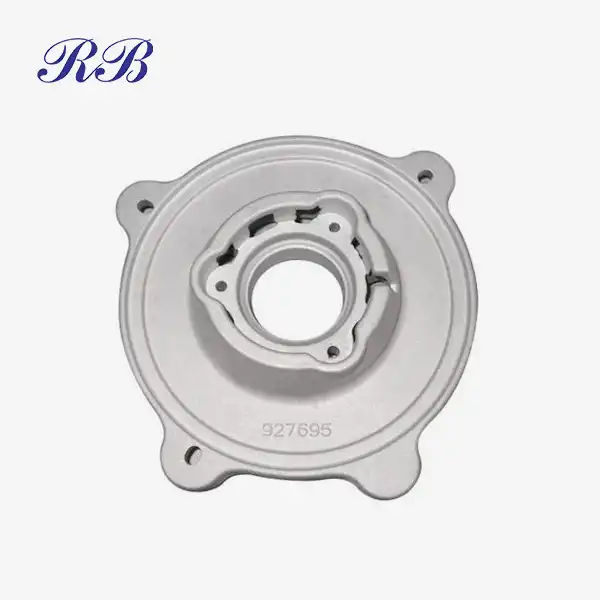
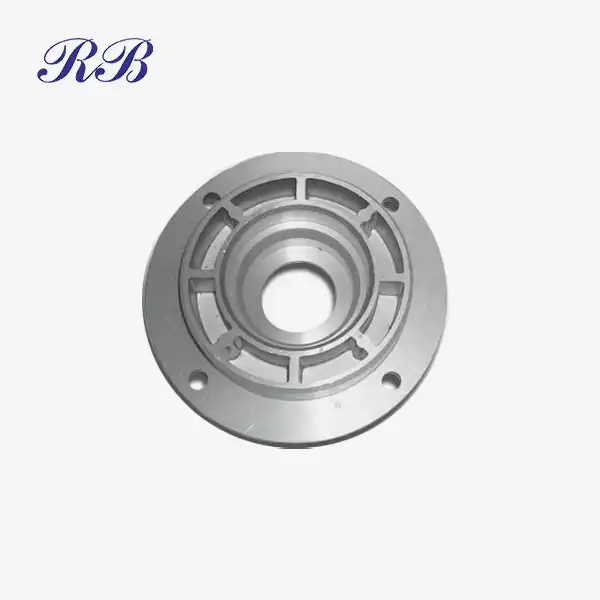
When sourcing a gravity casting cover for industrial equipment, one of the first questions engineers ask is simple: ZL101A or A356? Both aluminum alloys are widely used in permanent mold casting, and both deliver solid results — but they are not interchangeable. The right choice depends on your load requirements, operating environment, budget, and production volume. This article breaks down each alloy's properties, compares their real-world performance, and gives you a practical framework to match the material to your application.
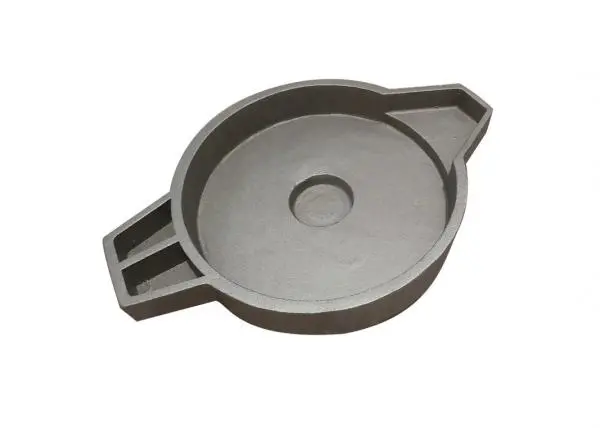
Understanding Gravity Casting Covers and Material Basics
It's helpful to know what a metal case made by gravitational mold filling needs from its material before comparing the two alloys.
What Makes a Good Casting Cover Material?
The inside of a gravity casting cover must be kept free of dust, shaking, water, and heat. To put it another way, the substance must be simple to pour, dry out with few holes, and stay the same size from batch to batch. All three of these conditions are met by aluminum alloys, which is why they are used for most fixed mold covers in industries like wiring, machinery, and cars.
ZL101A: The Chinese Standard Alloy
The GB/T 1173 standard in China makes it clear what ZL101A is. About 6.5% to 7.5% of it is silicon, 0.25 to 0.45% is magnesium, and less than 0.2% is iron. The ZL101A is more flexible than the ZL101 because it has better control over iron. When poured, the alloy flows easily and reliably fills thin-walled sections. This makes it a good choice for making a lot of general-purpose industrial covers.
A356: The International Benchmark
The American standard metal A356 (UNS A1356) is governed by ASTM B26 and AMS 4217. It has about the same amount of silicon as ZL101A (6.5% to 7.5%), but more magnesium (0.25 to 0.45%) and stricter limits on iron (≤0.20%) and other trace elements. In A356, the mechanical qualities are more stable from batch to batch because the chemistry is better controlled. Brands that want to sell their goods in North America and Europe need to pay attention to this.
Material Performance Comparison: ZL101A vs A356
The two alloys look similar on paper, but their performance gaps become visible under stress testing and batch inspection.
Mechanical Strength
After T6 heat treatment, A356 typically achieves a tensile strength of 262–310 MPa and yield strength around 186–241 MPa. ZL101A in T5 condition reaches roughly 200–230 MPa tensile strength. For covers handling moderate static loads in general machinery, ZL101A is sufficient. For covers on high-cycle automotive or pneumatic equipment, A356's higher yield strength reduces the risk of fatigue cracking over time.
Casting Behavior and Defect Rates
Both alloys show good mold-filling ability in gravity casting cover. However, ZL101A's slightly wider processing window makes it more forgiving in foundries with less automated temperature control. A356 demands tighter melt treatment — degassing and grain refinement — to achieve its rated properties. Without proper melt preparation, A356 can develop more shrinkage porosity than ZL101A under equivalent pouring conditions.
Supply Chain and Pricing Factors
ZL101A ingot is widely available across Chinese domestic markets at a cost roughly 5–8% lower than certified A356 ingot sourced to ASTM specifications. For buyers running annual aluminum casting purchases in the range of ¥500,000–¥3,000,000, that cost difference is real money. A356 commands a premium, but its international certification makes it the required specification for projects destined for North American or European OEM supply chains.
Application-Specific Suitability of ZL101A and A356 Casting Covers
It's not enough to know what the alloy's properties are. It depends on the job as to which material actually works better in service.
ZL101A for General Industrial and Machinery Covers
When the temperature is below 150°C and the walls are uniformly thick, ZL101A is a good choice for brackets, flanges, junction housings, and hardware enclosures in general. Most foundries can make a lot of them because they are cheap and easy to cast. Batch sizes of 1,000 to 5,000 pieces are very close to each other. If a company makes machines that can be put together in different ways, ZL101A is a good and cheap base material to use.
A356 for High-Performance and Export Applications
A356 is the most common material used for engine covers, compressor housings, and cases in cars that need to be checked by a third party and follow international rules. It doesn't rust as easily after being anodized or shot-blasted, so it's better for use outside or in marine settings. People who buy things and send them to the US, Europe, or Japan usually want proof that the products meet ASTM standards. A356 meets that need right away.
Design Considerations That Apply to Both Alloys
The shape of the gravity casting cover is a big part of how well the end part works, no matter what metal is used. Three things about the way they were made affect how well ZL101A and A356 cast:
- Wall thickness uniformity: Abrupt thickness changes create hot spots that increase shrinkage porosity. Keeping wall transitions gradual reduces internal defects without changing the alloy.
- Draft angles: A minimum draft of 1.5° on vertical walls prevents die wear and improves part release consistency across high-volume runs.
- Gating and riser placement: Properly positioned gates and feeders allow directional solidification, which improves density and reduces scrap rates in both alloys.
When making tools, making sure these design details are right helps keep costs down and makes sure they are delivered on time. These are two things that procurement teams that are trying to meet tight production schedules care about just as much as the alloy they choose.
Choosing Between ZL101A and A356: A Decision Support Framework
You don't have to think very hard about which metal to pick. When you look at a structured evaluation next to your actual business needs, the answer is clear.
Match Alloy to Environment
Figure out where the cover can be used. Cool, dry, and low-humidity machines inside? This works well with ZL101A. Tools used outside, places near the water, or tasks that need to be certified for salt spray? If you treat the surface of A356 the right way, like by shot blasting and then anodizing, it will last longer.
Match Alloy to Customer Specification
If a customer further down the line needs an ASTM material certification or gives you a drawing with the number A356 on it, the call ends. ZL101A is a good, cheap option if the design is open or uses Chinese state standards. Because of this, ZL101A has become the standard for many companies that make home appliances.
Weigh Supplier Capability and Certification
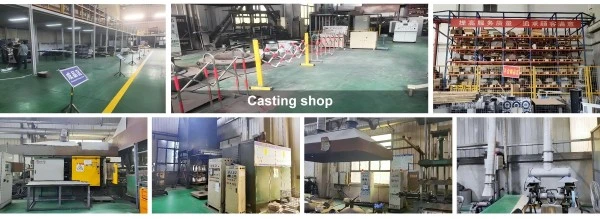
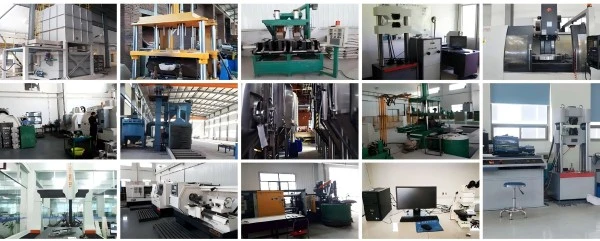
Controls over how the ingots are made at a gravity casting cover supplier are just as important as the type of metal used. If your process is approved by ISO 9001:2015, you can keep written records of them. The ISO 14001 and ISO 45001 certifications show that the foundry is a managed and audited facility. This makes it less likely that quality problems will appear out of the blue. Making sure you have test reports, records of the batch inspections, and sample parts before you place a big order is important.
Future Outlook and Trends in Gravity Casting Cover Materials
In the aluminum casting business, there is a clear trend toward smaller tolerances, fewer defects, and more ways to treat the surface. The reason for this is that OEMs need parts that work better.
Vacuum-Assisted Gravity Casting
More and more foundries are adding vacuum help to their set mold lines. Vacuum gravity casting lowers the number of holes in both ZL101A and A356 by letting go of gas that was saved during filling. This makes covers that are dense and have a good surface, similar to those made by low-pressure die casting. Suppliers who work with customers in the auto and precision machinery industries are already using this technology.
Hybrid and Modified Alloy Development
Researchers are adding small amounts of titanium and strontium to different types of A356 to make the grain structure and eutectic look better. Early tests show that the tensile strength is 8–12% higher than normal A356-T6. This is the case even though the conditions of the casting were not changed. Maybe one day, these new alloys will be used for tough cover jobs instead of regular A356.
Sustainability and Material Traceability
European and North American buyers want more and more written details about how the supply chain can be kept going. This includes the amount of recycled material, the carbon footprint per kilogram, and any declarations about conflict minerals. Foundries that build these tools now will be able to do better with customer surveys in five to ten years.
Conclusion
It has been shown that gravity casting covers can be made from both ZL101A and A356. For both home and business uses, ZL101A is inexpensive and simple to work with in many ways. A356 is more mechanically stable and meets the requirements for selling markets in other countries. The best choice for you will rely on your income, the load, the working conditions, and your customers' needs. There is less danger when you buy from a foundry that is certified in ISO 9001:2015, ISO 14001, and ISO 45001 and can work with both metals. This will also help you stick to your production plan.
FAQ
Which alloy offers better corrosion resistance for outdoor covers?
A356, especially after shot blasting and anodizing, provides better corrosion resistance than ZL101A in outdoor or high-humidity environments. ZL101A performs adequately indoors with standard surface treatment, but its slightly higher iron tolerance can accelerate oxidation in aggressive conditions.
Can ZL101A be used where A356 is specified?
Only if your customer or drawing permits a substitution and accepts Chinese GB/T 1173 certification in place of ASTM B26. For North American or European OEM projects, A356 is typically the required specification and cannot be substituted without formal engineering approval.
What are typical lead times for bulk orders?
For standard gravity casting covers in either alloy, most certified foundries quote 25–35 days for a first production run after tooling approval. Repeat orders with approved tooling typically ship within 15–20 days depending on order volume and surface treatment requirements.
What is the minimum order quantity?
MOQ varies by supplier and part complexity. Production runs starting at 500 pieces are common for sample validation, with standard production batches typically at 2,000–5,000 pieces per order cycle.
Does alloy choice affect CNC machining after casting?
Yes. A356-T6 machines more cleanly due to its finer microstructure and higher hardness. ZL101A is softer and can show more built-up edge on cutting tools in high-volume machining operations, but proper tool selection offsets this difference.
Partner with Rongbao Enterprise for Your Gravity Casting Cover Needs
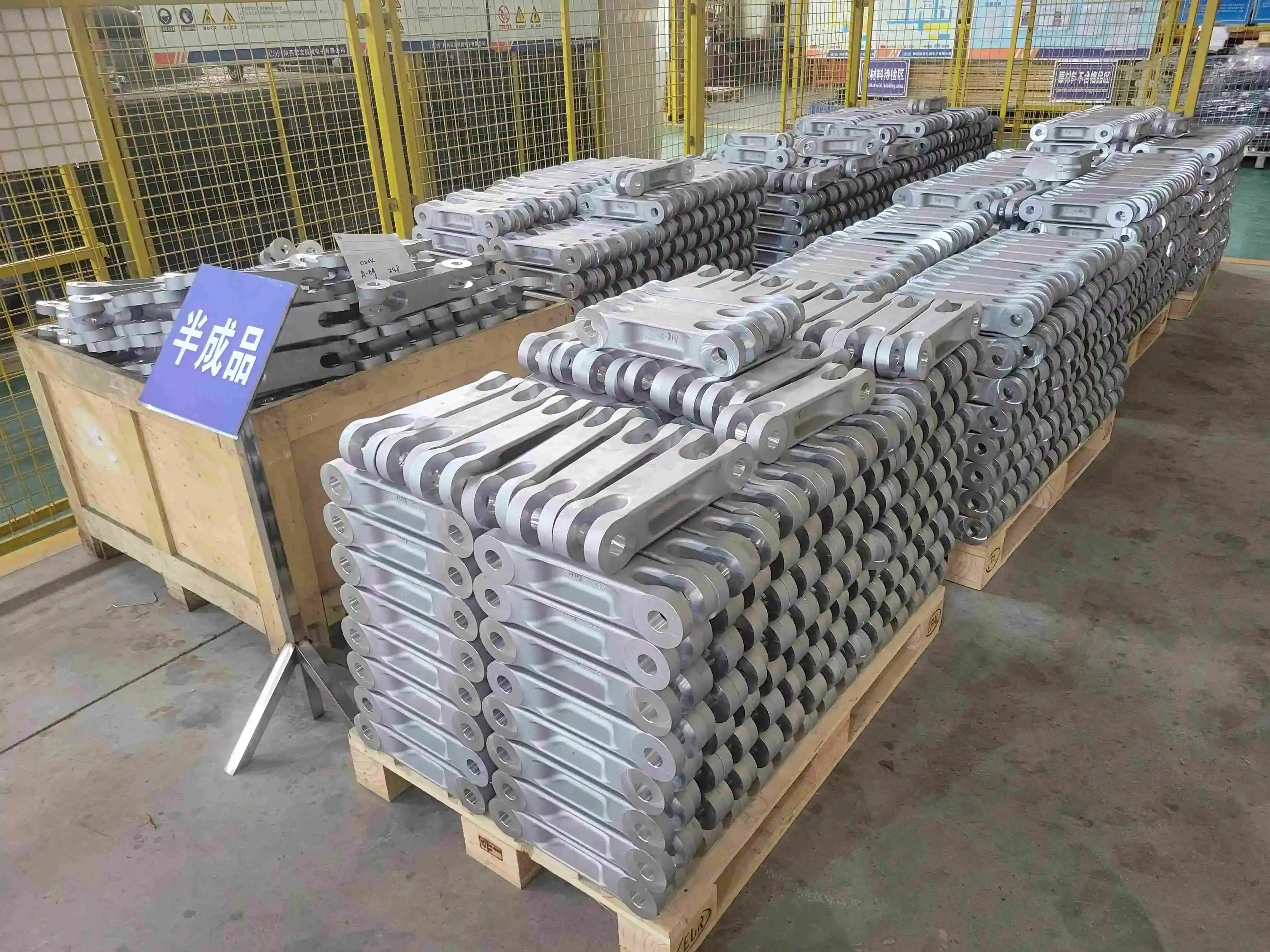
Rongbao Enterprise, which is based in Xi'an, makes ZL101A gravity casting covers. As part of their ISO 9001:2015, ISO 14001, and ISO 45001 certifications, they can make 5,000 pieces in a run. They also use CNC cutting and shot blasting. We have been making durable gravity casting covers for 20 years, and 70% of our sales go to Europe, the US, and Japan. We offer full OEM/ODM design, wooden box packing, and on-time shipping. You can email our team at steve.zhou@263.net or zhouyi@rongbaocasting.com or visit rongbaocasting.com to get a quote.
References
- American Foundry Society. Aluminum Casting Alloy Data Sheets. American Foundry Society, 2019.
- ASM International. ASM Handbook, Volume 2: Properties and Selection — Nonferrous Alloys and Special-Purpose Materials. ASM International, 2018.
- ASTM International. ASTM B26/B26M: Standard Specification for Aluminum-Alloy Sand Castings. ASTM International, 2021.
- Chinese National Standard Committee. GB/T 1173: Casting Aluminum Alloys. Standardization Administration of China, 2013.
- Kaufman, J.G., and Rooy, E.L. Aluminum Alloy Castings: Properties, Processes, and Applications. ASM International, 2004.
- Niu, X.P., Hu, B.H., Pinwill, I., and Li, H. "Vacuum Assisted High Pressure Die Casting of Aluminium Alloys." Journal of Materials Processing Technology, vol. 105, no. 1–2, 2000, pp. 119–127.
Learn about our latest products and discounts through SMS or email