- English
- French
- German
- Portuguese
- Spanish
- Russian
- Japanese
- Korean
- Arabic
- Greek
- German
- Turkish
- Italian
- Danish
- Romanian
- Indonesian
- Czech
- Afrikaans
- Swedish
- Polish
- Basque
- Catalan
- Esperanto
- Hindi
- Lao
- Albanian
- Amharic
- Armenian
- Azerbaijani
- Belarusian
- Bengali
- Bosnian
- Bulgarian
- Cebuano
- Chichewa
- Corsican
- Croatian
- Dutch
- Estonian
- Filipino
- Finnish
- Frisian
- Galician
- Georgian
- Gujarati
- Haitian
- Hausa
- Hawaiian
- Hebrew
- Hmong
- Hungarian
- Icelandic
- Igbo
- Javanese
- Kannada
- Kazakh
- Khmer
- Kurdish
- Kyrgyz
- Latin
- Latvian
- Lithuanian
- Luxembou..
- Macedonian
- Malagasy
- Malay
- Malayalam
- Maltese
- Maori
- Marathi
- Mongolian
- Burmese
- Nepali
- Norwegian
- Pashto
- Persian
- Punjabi
- Serbian
- Sesotho
- Sinhala
- Slovak
- Slovenian
- Somali
- Samoan
- Scots Gaelic
- Shona
- Sindhi
- Sundanese
- Swahili
- Tajik
- Tamil
- Telugu
- Thai
- Ukrainian
- Urdu
- Uzbek
- Vietnamese
- Welsh
- Xhosa
- Yiddish
- Yoruba
- Zulu
Shot Blasting vs Other Surface Treatments for Cast Covers
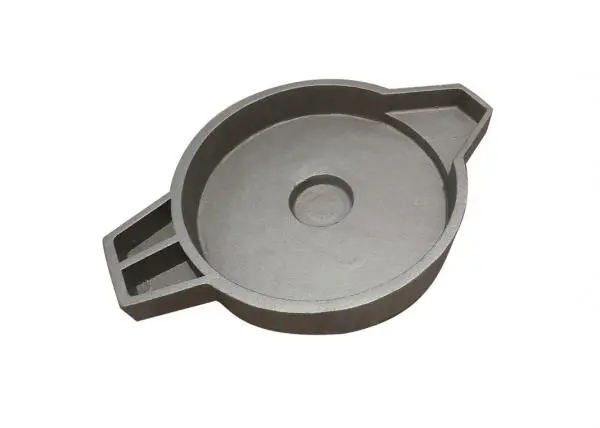
When sourcing a gravity casting cover for industrial equipment, the surface treatment you specify can be just as important as the alloy grade or wall thickness. Shot blasting removes sand residue, mill scale, and micro-burrs left by the casting process, creating a clean, stress-relieved surface ready for paint, anodizing, or direct assembly. Alternatives such as sandblasting, vibratory finishing, chemical cleaning, and CNC polishing each serve different needs. Choosing correctly affects part lifespan, batch consistency, cost per piece, and your ability to meet delivery schedules—factors that matter most to procurement managers running tight production lines.
Surface Treatments for Cast Covers
Surface treatment is the last step before a cast component reaches your assembly floor, and getting it wrong costs time and money. Here is a quick map of the main options available for aluminum alloy and cast-iron covers.
Shot Blasting
Shot blasting propels steel or aluminum shot at high velocity against the casting surface. It strips oxide layers, removes residual sand, and introduces compressive residual stress that improves fatigue life. For ZL101A aluminum alloy gravity casting cover weighing around 0.7 kg, shot blasting produces a uniform matte finish with a roughness value (Ra) typically between 3.2 and 6.3 µm—ideal for paint adhesion or powder coating.
Sandblasting and Vibratory Finishing
Sandblasting uses compressed air to propel abrasive grit, giving good cleaning results but generating finer dust and offering less control over surface uniformity at scale. Vibratory finishing tumbles parts in abrasive media, producing smooth, deburred surfaces with Ra values below 1.6 µm. It works well for small, complex geometries but is slower in throughput compared to shot blasting when batch sizes reach thousands of pieces.
Chemical Cleaning and CNC Polishing
Chemical cleaning dissolves oxides and oils through acid or alkaline baths—fast and chemistry-driven, but requiring careful waste-water management and worker safety protocols. CNC polishing delivers the tightest dimensional control and the smoothest mirror-like finishes, yet it adds significant cost and machining time. For structural industrial covers where aesthetics are secondary to function, CNC polishing is rarely the most cost-effective path.
Shot Blasting vs Other Treatments: Performance and Cost Comparison
You need to look at both real running funds and performance data to pick the best treatment. People who are in charge of buying things usually look at three things: how good the surface is, how much it costs, and how well it meets environmental standards.
Performance Metrics
The American Foundry Society says that shot blasting always makes castings 15–25% more resistant to fatigue than castings that have not been treated. Sandblasting also cleans the surface, but it doesn't make the same layer of compressive stress. It gets rid of burrs well, but it doesn't make the base harder. When you clean a part with chemicals, they only clean it; they don't do anything mechanically useful.
Cost and Throughput
After the belt is full, shot blasting lines can work on hundreds of parts an hour with almost no direct work. Sandblasting takes more work to cover complicated shapes evenly. It takes a long time for vibratory finishing to work—often 30 to 90 minutes per batch. It costs more per piece when you order more than 5,000 of them in a run. When a lot of work is done, the prices of chemicals and getting rid of waste add up for chemical cleaning tools.
Environmental and Safety Considerations
Hit blasting makes metal dust that is gathered by built-in bag-filter systems. This makes it simple to deal with according to ISO 14001 rules. The risk of silica sandsis goes up when they are used for sandblasting, so some markets limit or ban their use. When you clean with chemicals, you need to be very careful and follow certain steps. When people buy from foreign companies that are ISO 14001 and ISO 45001 approved, they have checks in place for all three types of risks. This makes it less likely that compliance standards won't be met.
Choosing the Right Surface Treatment for Gravity Casting Covers
For each part, a different finish must be used. Your pick will depend on how many parts you need and where they will be used.
Application Environment and Material Compatibility
If you need to protect a gravity casting cover from rust in an outdoor industrial setting, shot blasting and powder coating work well together. If the inside of a mechanical housing doesn't need to be painted, it might only need to be deburred with vibration. Shot blasting works well on ZL101A aluminum metal because it has between 6.5 and 7.5% silicon, which keeps the shape of the surface while it's being blasted. This is not the same as higher-copper metals, which can crack very small when hit with a high-pressure blast.
Production Volume and Scalability
For groups of 500 to 5,000 pieces, shot blasting is the best way to get the best balance of speed and consistency. This is what most companies that make industrial equipment do. A case study published in China Foundry journal says that in 2021, a medium-sized car bracket supplier in Chongqing switched from sandblasting to automated shot blasting. It took 40% less time to treat each piece and 18% less time to fix any flaws on the surface. Being able to grow in this way is important when the number of orders changes every month.
Design Recommendations for Surface Finish
The shot speed needs to be slowed down for walls that are less than 3 mm thick to keep the image from getting distorted. Deep holes and blind spots might not get a full blast, but this can be fixed with both shot blasting and light chemical cleaning. Putting the goal Ra value on your drawing instead of just "shot blast" makes it easy for your source to see if the work is good, and it also helps with the quality check that happens when the work arrives.
Supplier Insights: Finding the Best Gravity Casting Cover Surface Treatment Partner
A capable gravity casting cover supplier should handle surface treatment in-house. Outsourcing this step adds lead time, coordination risk, and a second quality handoff.
Key Evaluation Criteria
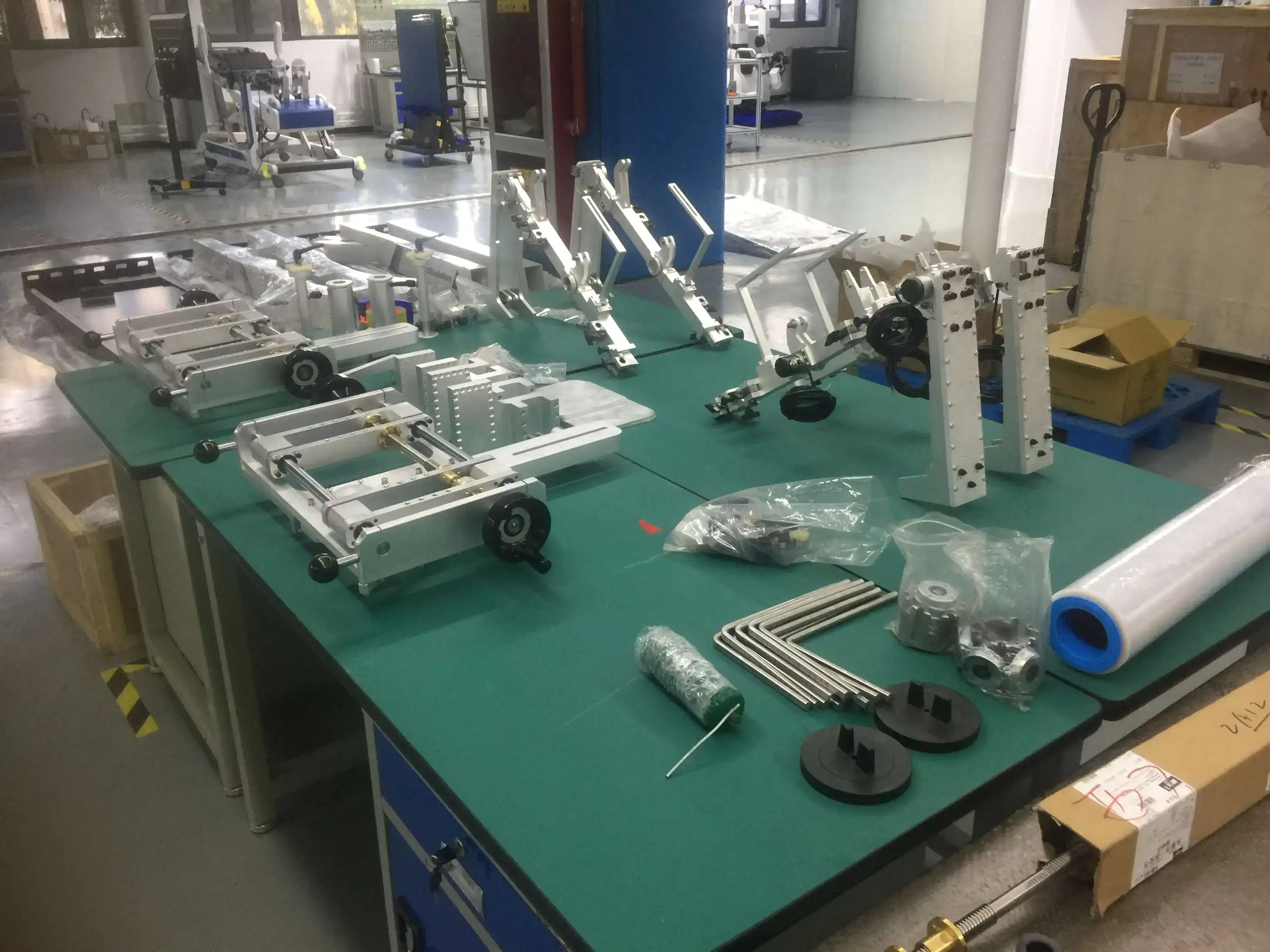
Look for suppliers holding ISO 9001:2015, ISO 14001, and ISO 45001 certifications as a baseline. These three standards together confirm that the factory manages production quality, environmental impact, and worker safety through documented, auditable systems. Ask specifically whether the supplier runs shot blasting on the same site as casting and CNC machining—integrated workflows reduce handling damage and keep dimensional tolerances intact.
OEM and Custom Service Capability
A supplier with genuine OEM/ODM capability can adapt blast intensity, media type, and post-treatment steps to match your drawing. Suppliers who only offer a single standard finish often push back on customization or add steep tooling fees. Request sample parts with documented process parameters—shot size, wheel speed, exposure time—before committing to a production order.
Logistics and Lead Time
Confirm minimum order quantities, packaging standards (wooden box protection is common for precision castings), and sea-freight lead times to your region. A Xi'an-based supplier shipping to the US West Coast typically adds 25–35 days transit time; factor this into your production schedule alongside the quoted manufacturing lead time.
Future Trends in Surface Treatment for Gravity Casting Covers
In the area of surface cleaning, machines and cleaner chemicals are being used more and more. Buying teams that know about these changes will be able to choose better where to get goods in the future.
Automation and Precision Media Control
In new automated shot blasting lines, sensors that work in real time check the surface's roughness and change the wheel speed or media feed rate in the middle of the cycle. There is less variation in Ra values across large batches because many corporate buyers are concerned about quality being the same.
Laser Cleaning and Ultrasonic Techniques
Laser cleaning doesn't use rough materials to get rid of oxide films and other contaminants, so it doesn't make any extra waste. It's too expensive to use right now to make many standard parts, but it's becoming more popular for making medicine and aerospace parts that are very important. Cleaning metal with ultrasound is a good way to get it ready for anodizing because it makes it easier for coats to stick to aluminum shapes that aren't straight.
Nanocoatings and Corrosion-Resistant Finishes
Nano-ceramic coatings can make salt-spray protection last longer than the normal 240 hours (per ASTM B117) to over 1,000 hours if they are put on after shot blasting. This is a big change to the specifications that suppliers who have put money into research and development can already make for castings that will be used in chemical processing or the ocean.
Conclusion
For most large-scale gravity casting cover, shot blasting is still the best and most cost-effective way to treat the surface. It gets the surface clean, tough, and ready all in one high-throughput step. Shot blasting is the best way to clean up basic industrial parts because it is quick, effective, and easy to clean up. Sandblasting, mechanical finishing, chemical cleaning, and CNC grinding are also good in their own ways. The best place to buy something is from a company that does shot blasting in-house and can change the process to fit your needs instead of giving all parts the same finish when they come off the line.
FAQ
What is the difference between shot blasting and sandblasting for cast covers?
The steel or aluminum shot used in shot blasting is moved by a machine on wheels. This cleans the surface and stresses it out at the same time. When you sandblast, you use compressed air to move grit, which is usually aluminum oxide or glass beads. The main things it does are clean and shape, but it's not as good for relieving stress as other ways. Shot blasting is a common way to make the surface roughness of large batches of ZL101A aluminum alloy covers more consistent.
Does shot blasting improve corrosion resistance in aluminum cast covers?
Even though shot blasting doesn't add a protective layer, it does get rid of oxides, sand inclusions, and surface flaws that would let water in and cause the metal to rust faster. When you powder coat or anodize something made of aluminum that has been shot-blasted, the coating usually sticks better and lasts longer than on a surface that has only been chemically cleaned or not treated at all.
What are typical lead times for bulk surface treatment on cast covers?
A facility that does both casting and shot blasting usually adds one to two working days to the time it takes to make a batch of 500 to 5,000 pieces. It will take an extra three to five working days on top of the logistics if the surface treatment is done by someone else. If you want to stick to your production plan, make sure your seller agrees to this when they give you their price.
Can shot blasting be applied to thin-walled aluminum cast covers without distortion?
Yes, as long as you don't mess up the settings. There needs to be less than 3 mm of wall space and slower shot speeds so that the media doesn't warp. Before sending the work out, a good supplier will check the measurements and write down the blast strength on the process sheet. They will also look at the work to make sure the dimensions are right.
Get a Custom Quote from Rongbao Enterprise — Gravity Casting Cover Supplier
Gravity casting, CNC machining, and shot blasting are some of the ways that Rongbao Enterprise makes ZL101A aluminum alloy cast covers. For all of these steps, they have ISO 9001:2015, ISO 14001, and ISO 45001 certifications. People in North America, Europe, and Southeast Asia who make industrial equipment hire us. We can make up to 5,000 pieces in each run, and we can work with OEMs and ODMs. Send us an email at steve.zhou@263.net or zhouyi@rongbaocasting.com right now to get a price quote, or visit rongbaocasting.com.
References
- American Foundry Society. Casting Source Directory and Metalcasting Industry Overview. 2022.
- Campbell, J. Complete Casting Handbook: Metal Casting Processes, Metallurgy, Techniques and Design. Butterworth-Heinemann, 2015.
- China Foundry (Journal). "Process Optimization in Aluminum Gravity Die Casting for Industrial Applications." Vol. 18, 2021.
- ASTM International. ASTM B117: Standard Practice for Operating Salt Spray (Fog) Apparatus. 2019.
- Davim, J. P. (Ed.). Surface Integrity in Machining. Springer, 2010.
- International Organization for Standardization. ISO 9001:2015 Quality Management Systems — Requirements. ISO, 2015.
Learn about our latest products and discounts through SMS or email