- English
- French
- German
- Portuguese
- Spanish
- Russian
- Japanese
- Korean
- Arabic
- Greek
- German
- Turkish
- Italian
- Danish
- Romanian
- Indonesian
- Czech
- Afrikaans
- Swedish
- Polish
- Basque
- Catalan
- Esperanto
- Hindi
- Lao
- Albanian
- Amharic
- Armenian
- Azerbaijani
- Belarusian
- Bengali
- Bosnian
- Bulgarian
- Cebuano
- Chichewa
- Corsican
- Croatian
- Dutch
- Estonian
- Filipino
- Finnish
- Frisian
- Galician
- Georgian
- Gujarati
- Haitian
- Hausa
- Hawaiian
- Hebrew
- Hmong
- Hungarian
- Icelandic
- Igbo
- Javanese
- Kannada
- Kazakh
- Khmer
- Kurdish
- Kyrgyz
- Latin
- Latvian
- Lithuanian
- Luxembou..
- Macedonian
- Malagasy
- Malay
- Malayalam
- Maltese
- Maori
- Marathi
- Mongolian
- Burmese
- Nepali
- Norwegian
- Pashto
- Persian
- Punjabi
- Serbian
- Sesotho
- Sinhala
- Slovak
- Slovenian
- Somali
- Samoan
- Scots Gaelic
- Shona
- Sindhi
- Sundanese
- Swahili
- Tajik
- Tamil
- Telugu
- Thai
- Ukrainian
- Urdu
- Uzbek
- Vietnamese
- Welsh
- Xhosa
- Yiddish
- Yoruba
- Zulu
How to Select the Right Brass Material for Kitchen Hardware?
When selecting the correct brass for your kitchen hardware, you should consider its purpose first: contact with water, pressure, wear and appearance. Then find a copper-zinc alloy that meets your needs and the rules of the people you want to sell to. The results of copper casting depend on the alloy and the process, so match the alloy to a good process. H62 brass is often used for kitchen fittings for its strength, ease of machining and clean finish. Finally, test a sample to make sure the composition, size and surface quality are correct before you make a lot of them. That order saves time and labor. Each step in this guide is written in plain language.
Start With the Application and the Brass Family
Define What the Kitchen Hardware Must Do
Every time I review something, I begin with what it does. A sink drain and a cabinet handle are put under different loads compared to the faucet body. Water, pressure, heat, wear and cleaning chemicals are different from part to part. Translate those conditions into measurable goals: corrosion resistance, strength, thread quality, surface finish, and accuracy of measurements. Separate the material performance from the fit to the machinery. An alloy that is good in service may not be as good in casting or in fitting the machine. A written spec sheet ensures all suppliers are quoting the same scope so it is easy to compare prices. Add drawing, target market, annual volume and expected service life for a copper casting project.
Understand the Main Brass Materials in Kitchen Hardware
Copper and zinc are used to make brass. It strikes a nice balance of cost, looks, corrosion resistance, and ease of casting/machining. Kitchen hardware manufacturers like it. But brass is not a single thing. Free-machining leaded grades, lead-free potable-water alloys, brass that won't dezincify, and silicon brass are all used for different purposes. All the ASTM, EN, UNS, and Chinese GB standards call things by different names, so make sure you get written confirmation from the manufacturer of the exact grade and make-up. If you are most concerned about conductivity, exposure to chlorides or wear, compare copper casting to brass, bronze, stainless steel and aluminum. Each of these options changes the cost, finish, and compliance path.
Where H62 Brass Fits
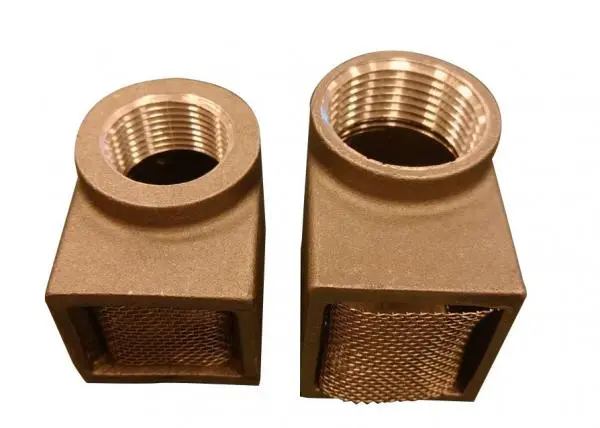
In China, brass is designated as H62 and consists of approximately 60.5% to 63.5% copper with the balance being zinc. Its two-phase structure gives it strength and ease of working hot, so it can be used to make both cast and machined components. Brass with more than about 15 per cent zinc will lose zinc in bad water. Parts that have been wet need to be inspected for dezincification. H62 is well above that line so. The weight of our H62 kitchen part is 0.23kg. We make it using a type of copper casting known as gravity casting. Then we finish it with CNC machining and shot blasting. Let us know early on if your product needs another grade, such as lead free or dezincification resistant. We will customize the specifications for each project and check the alloy against your drawing.
Match Performance Needs to the Right Copper Casting Process
Select Brass Based on Performance Requirements
Material selection should be performance driven, not just by price or alloy name. Parts that come in contact with water may need to be resistant to general corrosion, pitting, stress corrosion, and dezincification. Connectors and valves must be able to withstand thread loading, pressure and torque. Lead limits can impact the ease of cutting a grade and machinability can affect the productivity of a CNC machine. Thermal conductivity matters when the part is in contact with hot water or hot cookware. Get the composition, test records, pressure ratings, and a technical justification for the alloy before you approve production. “Your quality team can support these papers that make a copper casting quote a choice.
Compare Sand, Gravity, Investment, and Die Casting
Each copper casting method can produce different parts. Sand casting. With sand casting, you can make large parts, custom parts, and low volume parts. However, they usually require more machining and finishing. Permanent mold casting (also called gravity die casting) is when metal is poured into a metal mold that can be reused over and over. It is easier to replicate at medium volumes. Investment castings with fine details and thin walls require less work to produce. Die casting is good for large quantities when you want to control porosity and tool cost is a concern. You should also compare casting with forging, CNC machining, and continuous casting. All of those make different trade-offs between strength, precision, and availability of material. Your selection will depend on what you want to do with the geometry, volume and surface.
Why Gravity Casting Suits a 0.23 kg H62 Part
Gravity casting is a good way to make our 0.23 kg H62 kitchen part. The shape of the pours is the same because the mold can be used again and again. Mold cost is spread out over all pieces, so when you order more than once, the tooling share of the unit price goes down. High-pressure injection is faster and more turbulent than gravity-fed filling. This helps keep the gas porosity and turbulence low. The process also leaves room for machining, which means that afterward, CNC machining can bring important dimensions up to size. The part comes from China, in Xi'an. We can make up to 5,000 of these items, and we offer OEM and ODM services to let you change the specs. Before we suggest a copper casting route, we look over each drawing.
Evaluate Surface Finish, Tolerances, and Appearance
Separate As-Cast Surfaces From Finished Surfaces
Both the function and the look of a kitchen product are important, so define both early on. When the finish is polished, brushed, satin, chrome-plated, nickel-plated, or PVD, it puts different demands on the base casting. It's not possible to finish and decorate an as-cast surface. Roughness, porosity, flash, shrinkage, and inclusions can make polishing take longer and lead to flaws in the plating. These flaws can be fixed at their source with careful gating, venting, and clean melt. On your drawing, you should show which surfaces are left as-cast, which ones are machined, and which ones get a finish. Tell your supplier about the final finish when they give you a quote. This makes it easy to compare copper casting quotes and avoids having to do extra work after samples arrive.
Use CNC Machining for Critical Features
The shape of the near-net is set by casting, and the accuracy of the spots where parts meet is set by CNC machining. Most of the time, machined tolerances are better than as-cast ones for threads, sealing faces, bores, and mounting surfaces. Specifications for flatness, concentricity, and threads should be shown on the drawings separately from general casting tolerances. With geometric dimensioning and tolerancing (GD&T), both the machinist and the inspector can understand what is being said. After gravity casting, our H62 part goes through CNC machining. This means that the machine, not the mold, controls the important dimensions. Compared to many steels, brass cuts cleanly, which helps keep the same sizes across a batch as long as the tools and fixtures stay the same. For kitchen components, this pairing is a common copper casting route.
Shot Blasting for a Uniform Surface
Shot blasting shoots small pieces of media at the casting surface. It removes oxide scale and light burrs, leaving a smooth matte finish. Our H62 kitchen part surface is treated by shot blasting. It's also helpful to have a flat base if the customer decides they want it polished or plated later, as a finisher can work from a flat base. Shot blasting does not repair deep holes or shrinkage. Process control is still important during copper casting. On the drawing, write the roughness value you need. We test it on a sample before we make a lot of them, and that protects both the look and the schedule.
Check Safety, Compliance, and Total Cost
Confirm Compliance for the Target Market
It is contingent upon where the product is sold and if it gets wet. In the US, the Reduction of Lead in Drinking Water Act states that wettable surfaces may contain no more than 0.25% lead by weight on average. NSF/ANSI 61 addresses the health effects of components of drinking water systems, and NSF/ANSI 372 addresses lead content. California’s Prop 65 has warning regulations. Buyers in Europe may also request information regarding REACH and RoHS. Compliance applies to the whole product and not just to the base alloy. This includes the plating, seals and coatings. “Make these rules clear before you approve any material. If you change the alloy later in a copper casting program, you’ll have to test it again.
Request Traceability and Test Records
Ask each copper casting supplier for composition certificates, batch tracking, lab reports, and records of pressure tests done on parts that carry water. An agreed-upon inspection plan should include checking the alloy, the size, the hardness, the quality of the surface, and the integrity of the casting inside and out. Rongbao Enterprise is certified by ISO 9001:2015, ISO 14001, and ISO 45001, and we check the quality of all of our products from the time they come in as raw materials to the time they are delivered as finished goods. If you can track a complaint back to its production lot, your quality team can find the source of the problem. The processes shown by these management system certificates are standard. For drinking water rules, they don't replace tests that are specific to the product, so we agree with each buyer on the reports that are needed before we start making them.
Compare Total Cost, Not Only Price per Kilogram
Most of the time, the lowest price per kilogram of brass does not mean the lowest total cost. The cost of materials changes based on copper and zinc prices, but the landed cost includes the cost of tools, the yield of the casting, the time it takes to do CNC machining, surface treatment, inspection, packaging, shipping, and duties. Machined or sand-cast parts may be better for low-volume work, while gravity or die-casting tools may be better for repeat orders. Put unit price, lead time, minimum order quantity, and scrap risk next to each other and compare them. For copper casting, a full RFQ includes the drawing, the amount of work needed each year, the alloy, the finish, the testing standard, the packaging, and the delivery terms. This way, every quote covers the same work. Our H62 parts are sent in wooden boxes to keep them safe while they're being shipped.

Match Applications and Choose a Qualified Supplier
Match Alloy and Process to Kitchen Hardware Applications
The most important things for faucets, mixer bodies and valve parts are lead compliance, pressure tightness, clean internal passages, accurate threads and plating compatibility. Sink drains and connectors should be able to seal reliably and maintain size. When choosing cabinet handles, the design, weight and evenness of the surface all matter. The priorities of finish and tolerance differ in each case. If you need parts that will be exposed to high temperatures or pumps, you may need bronze or silicon bronze instead of brass. Copper casting plus CNC machining is often a good way to produce complex parts that need sealing or threading. As our H62 part is made for kitchen use and can be modified to your needs, we first make sure it meets and works as per your design.
Use a Supplier Checklist
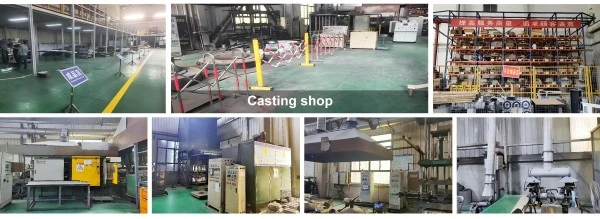
A good copper casting supplier does more than just pour metal. Check out the casting, design tools, CNC machining, surface treatment, testing, packing, and shipping for export. Check the quality system too, which includes ISO certification, material inspection, first-article approval, process monitoring, and how to handle problems that don't meet standards. Rongbao Enterprise has been in business for 20 years. We talk about precision machining, low- and high-pressure die casting, gravity casting, and develop molds and treat the surface. We send about 70% of our goods to America, Europe, and Japan. Also, make sure to ask any potential supplier about their support for prototypes, lead times, and speed of corrective action. These will show you how they handle things after the first order.
Follow a Simple Decision Process Before Mass Production
The less risk, the shorter the sequence. First, set the rules for end use, water contact, pressure, temperature, finish and target market. Secondly, choose a family of materials and explain why you have chosen it. 3. Ensure the design is compatible with casting or machining, or both. 4. Before placing bulk orders, test samples for composition, size, finish and fit. Finally, after production has started, check the supplier’s performance and make a new choice if rules, designs or production volumes change. This order works well for copper-casting programs, because if problems with the alloy and the surface are detected early in sample checks, changes are cheap. Rongbao Enterprise provides OEM & ODM customization for every step of the way, from making the mold to shipping the finished parts.
Conclusion
When you choose brass for kitchen hardware, you have to make sure that the alloy, process, and finish are all right for the job. The needs are set by the function and the amount of water contact. There are different grades of brass, so the composition and designation need to be confirmed in writing. H62 is a copper-zinc brass that is strong and works well when heated. It can be used for both cast and machined parts, but wet parts still need to be dezincified and lead checked. For medium-sized batches, gravity casting gives consistent results, CNC machining keeps an eye on important dimensions, and shot blasting creates a smooth surface. The whole product is compliant, and test records can be tracked to back this up. The price of the metal is only one part of the total cost. Other parts are tooling, machining, finishing, packaging, and shipping. Consistent copper casting results are achieved through a staged process of specification, sample validation, and supplier review.
FAQ
Which brass grade works best for kitchen hardware?
The part makes a difference. Parts that come into contact with water need to be able to handle lead and not dezincify, while decorative handles are more concerned with how they look and how they finish. Copper-zinc brass H62 is often used for cast and machined parts, but check the rules of the market you're going after before you pick a grade. As well as composition data, ask the supplier for it.
Is gravity casting better than CNC machining alone?
If you order the same part over and over, gravity-based copper casting will usually waste less metal and cut down on the time it takes to machine it. The important parts are then finished with CNC machining. When getting a quote, compare both ways to machine from solid bar. This can work for very small runs. The best route is based on the shape and volume of the area.
What information do you need to quote a brass part?
Send drawings or 3D models of the product, along with the alloy or use, the annual volume, finish, test requirements, packaging, and delivery terms. With this information, we can give you a clear quote and compare the copper casting and machining routes. Some samples or sketches can also be useful when drawings are not yet ready.
Request a Copper Casting Quote From Rongbao Enterprise
Rongbao Enterprise is a copper casting supplier that has been in business for 20 years and has ISO 9001:2015, ISO 14001, and ISO 45001 certifications. They also offer customized OEM/ODM services. Before we put our H62 kitchen part in wooden boxes, we gravity cast, CNC machine, and shot blast it. Our team will look over your project after you send your drawings, alloy goal, and annual volume to steve.zhou@263.net or zhouyi@rongbaocasting.com. For more information, go to rongbaocasting.com.
References
1. ASM Handbook, Volume 2: Properties and Selection: Nonferrous Alloys and Special-Purpose Materials, 1990
2. ASM Handbook, Volume 15: Casting, 2008
3. Copper and Copper Alloys, ASM Specialty Handbook, 2001
4. Reduction of Lead in Drinking Water Act, 2011
5. NSF/ANSI/CAN 61: Drinking Water System Components – Health Effects, 2023
6. GB/T 5231: Chemical Composition and Forms of Wrought Copper and Copper Alloys, 2022
Learn about our latest products and discounts through SMS or email