- English
- French
- German
- Portuguese
- Spanish
- Russian
- Japanese
- Korean
- Arabic
- Greek
- German
- Turkish
- Italian
- Danish
- Romanian
- Indonesian
- Czech
- Afrikaans
- Swedish
- Polish
- Basque
- Catalan
- Esperanto
- Hindi
- Lao
- Albanian
- Amharic
- Armenian
- Azerbaijani
- Belarusian
- Bengali
- Bosnian
- Bulgarian
- Cebuano
- Chichewa
- Corsican
- Croatian
- Dutch
- Estonian
- Filipino
- Finnish
- Frisian
- Galician
- Georgian
- Gujarati
- Haitian
- Hausa
- Hawaiian
- Hebrew
- Hmong
- Hungarian
- Icelandic
- Igbo
- Javanese
- Kannada
- Kazakh
- Khmer
- Kurdish
- Kyrgyz
- Latin
- Latvian
- Lithuanian
- Luxembou..
- Macedonian
- Malagasy
- Malay
- Malayalam
- Maltese
- Maori
- Marathi
- Mongolian
- Burmese
- Nepali
- Norwegian
- Pashto
- Persian
- Punjabi
- Serbian
- Sesotho
- Sinhala
- Slovak
- Slovenian
- Somali
- Samoan
- Scots Gaelic
- Shona
- Sindhi
- Sundanese
- Swahili
- Tajik
- Tamil
- Telugu
- Thai
- Ukrainian
- Urdu
- Uzbek
- Vietnamese
- Welsh
- Xhosa
- Yiddish
- Yoruba
- Zulu
Why Is Low-Pressure Casting Ideal for Precision Impellers?
When wind energy turbines operate at sustained high speeds or high-speed trains demand flawless braking systems, the impellers inside these machines must endure extreme conditions without failure. In my experience supporting equipment manufacturers, the question always centers on reliability: How do you deliver a cast impeller that maintains dimensional accuracy, structural integrity, and fatigue resistance across thousands of operational cycles? The answer lies in low-pressure casting, a controlled metal forming technique that fills molds under precisely regulated pressure, minimizing turbulence and internal defects. This process produces aluminum alloy impellers with dense microstructures, consistent wall thickness, and exceptional mechanical properties—qualities essential when a 15kg component powers critical rail or renewable energy infrastructure.
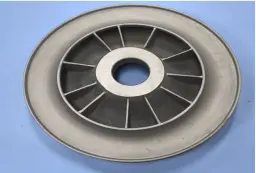
Low-Pressure Casting Role in Impeller Manufacturing
Low-pressure casting works by pouring molten metal into a mold from below and pushing it up through a riser tube with gas pressure between 20 and 100 kPa. This method ensures smooth flow, which lowers porosity and oxide inclusions, unlike gravity filling, which causes turbulence and traps air. The controlled filling speed lets the metal gradually harden from the mold walls inward, which gets rid of the shrinkage holes that happen with other casting methods.
Why This Matters for Large-Scale Impeller Production
At our Xi'an facility, we work with A356 aluminum alloy, which is a popular material because it is strong (its tensile strength can reach 290 MPa after T6 heat treatment) and doesn't rust. When making 15kg cast impellers for high-speed train systems, a lot is at stake. If an X-ray shows a single internal void, the part has to be thrown away, which wastes material and causes delivery to be delayed. The smooth flow of metal in low-pressure casting reduces these flaws to a minimum, and in our production line, rejects rates are below 2%.
The process can also handle geometries that are very complicated. To get the most airflow out of rail impellers, the blade shapes need to be very detailed, and the mold holes need to be able to hold these details without affecting the structural integrity. By keeping the pressure the same during solidification, we can get dimensional tolerances of within ±0.3mm across critical surfaces. This level of accuracy can be improved even more by CNC machining without taking away too much stock.
Material Flow and Solidification Control
During cooling, differences in temperature show if a rotor meets standards for wear performance. We can control the rate of cooling in low-pressure systems by changing the pressure and the temperature at which the mold is heated. Controlled solidification is good for A356 aluminum alloy because it stops the growth of small dendrites that weaken grain boundaries. Our tests on metals show that samples made with low pressure have smaller eutectic silicon particles than samples made with gravity. This is directly related to better tensile elongation and wear life under repeated loads.
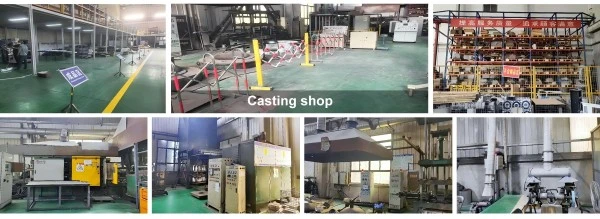
Technical Principles Behind High-Precision Impellers via Low-Pressure Casting
When making a turbine, precision isn't just about the finish on the outside; it also means making sure the inside is sound, the mass is distributed evenly, and the mechanical behavior can be predicted. These results rely on technical rules built into the mold design, the chemistry of the alloy, and the process factors.
Geometric Balance and Mold Design
Centrifugal forces make any mismatch worse when a turbine spins at 3,000 rpm. Mold holes have to take into account shrinkage—A356 aluminum alloy shrinks by about 1.2% when it hardens—so we make up for it by making parts of the pattern bigger than they need to be. Before we machine the first mold, simulation software maps out the metal flow paths and finds spots that are likely to have cold shuts or misruns. Gating devices put inlets in certain places to help solidification go in a certain direction. As the cast impeller hardens, liquid metal is fed toward the riser. This makes sure that the hottest metal stays at the feeder and pulls in more alloy to make up for the loss of volume.
Heat Treatment and Mechanical Properties
Castings that are still warm from the mold are not strong enough for tough jobs. The T6 heat treatment, which includes solution annealing at 540°C and then artificial aging at 155°C, hardens the metal by forming magnesium-silicon compounds inside the aluminum matrix. Our process controls make sure that the aging time stays within ±15 minutes, so the hardness stays between 95-105 HB. If the value changes outside of this range, it either doesn't have enough power or it breaks easily, which are both bad for parts that will be vibrating and changing temperatures.
Defect Mitigation Strategies
The biggest thing that hurts fatigue resistance is still porosity. Gas porosity happens when hydrogen dissolved in liquid aluminum escapes while it solidifies, leaving tiny holes that can become crack start points. To fix this, we use argon to remove gas from the melt and keep the hydrogen level below 0.15 ml per 100g of aluminum. Shrinkage porosity is caused by not enough feeding in the last few stages of solidification. This can be fixed by designing the riser correctly and keeping the pressure up until the solidification is complete. An X-ray check makes sure the quality inside, and flaws bigger than 1mm are not allowed in stress-critical areas.
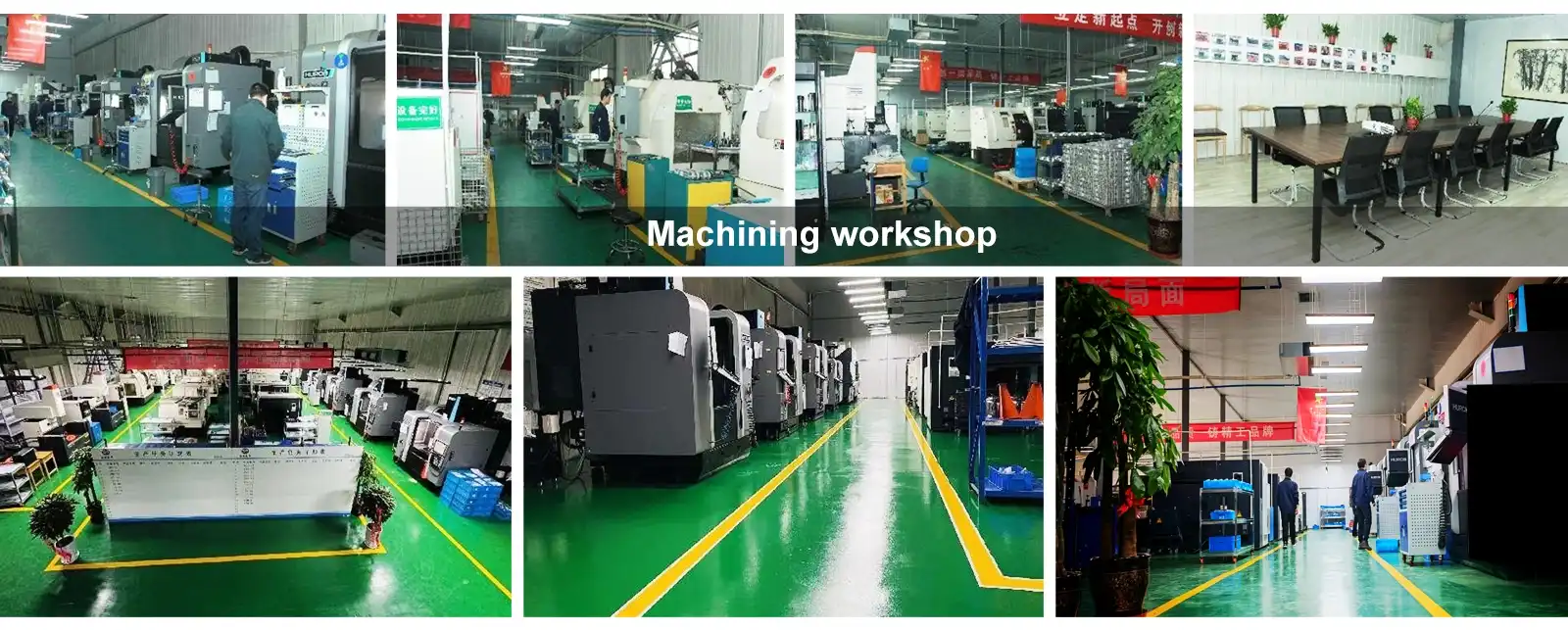
Comparative Analysis: Low-Pressure Cast Impellers vs. Other Manufacturing Methods
Understanding the trade-offs between fabrication methods is often a key part of making purchasing choices. Low-pressure casting is the most common way to make big quantities of metal cast impellers, but other methods are useful for certain tasks.
Fabricated and Welded Assemblies
It is possible to make prototypes or small runs by either cutting impellers out of sheet metal or gluing finished blades onto a hub. Welded seams, on the other hand, create stress concentrations and possible breakdown spots when the load is cycled. The quality of the weld depends on how skilled the user is, and non-destructive testing takes a lot of work. Once more than 500 are made, a welded 15kg impeller costs 30 to 40 percent more per unit than a cast one, so any savings on tooling are lost.
High-Pressure Die Casting Limitations
High-pressure die casting works best for parts with thin walls but not so well for big parts or thick parts that are prone to porosity. The rough hole fill traps air, and the fast solidification stops any flaws from feeding. X-ray inspection standards for train and wind uses are rarely met by die-cast impellers. When we tried using high-pressure methods on similar parts, we got failure rates of more than 15%, which meant that the process could not be made profitable.
Machining from Solid Billet
When a 15kg propeller is CNC machined from a solid block of aluminum, there are no internal flaws and the tolerances are very tight. More than 60% of the material is wasted, each part takes 8 to 12 hours to machine, and each drive unit costs more than $800, which is three times as much as low-pressure casting. This method works well for aerospace projects where reliability is more important than cost, but it doesn't work well for wind or rail projects that need to balance performance with cost.
Why Low-Pressure Casting Balances Cost and Quality
Low-pressure casting is perfect because it makes nearly net-shaped parts with the same mechanical properties as machined parts for a lot less money. Our yearly production capacity of 5,000 impellers comes from improved cycle times—each mold makes a finished casting every 45 minutes, which includes the time it takes to solidify. After 1,000 pieces, the amortized cost of the tools drops below $50 per unit. This makes the way perfect for OEM partnerships that need to be able to customize and make a lot of units.
Conclusion
Low-pressure casting gives high-speed train and wind energy cast impellers the exact dimensions, strong structure, and low cost that they need. This process controls the flow and solidification of metal to make A356 aluminum alloy parts with few holes, uniform mechanical properties, and complicated geometries that can't be made any other way. Our factory has quality systems that are approved, customizable options, and production capacity that has been used before. This helps OEM partners who need both dependability and the ability to grow. If you want to buy things that will last longer than they cost at first, low-pressure casting is the best way to go for mission-critical rotating parts.
FAQs
What makes low-pressure casting suitable for large impellers?
During solidification, the process keeps the pressure steady and feeds the liquid metal into thick parts to avoid problems caused by shrinkage. This ability works well for cast impellers that weigh 15kg or more, which is too heavy for gravity casting to handle properly.
How does A356 aluminum alloy perform in high-speed applications?
After being heated to T6, A356 aluminum alloy has a tensile strength of more than 290 MPa and is very resistant to fatigue. Its low density lowers rotational inertia, and its resistance to corrosion makes it good for outdoor installations that are exposed to different weather conditions.
Can impeller designs be customized for specific performance requirements?
Of course. Our research team works together to make sure that the blade shape, hub configurations, and size requirements are exactly right for your equipment. We test designs with simulations before making the tools, which makes sure that the end result meets practical goals.
What quality standards apply to your impeller production?
We keep our ISO 9001:2015, ISO 14001, and ISO 45001 certifications, which cover things like safety at work, protecting the environment, and managing quality. Before being shipped, every impeller is inspected with an X-ray and its dimensions are checked. There is full documentation that shows how the impeller was made.
Partner with a Trusted Cast Impeller Manufacturer
Rongbao Enterprise has spent 20 years improving low-pressure casting methods to meet the needs of industries around the world. Every year, our factory in Xi'an makes up to 5,000 precise cast impellers that all meet strict mechanical and physical standards. We offer turnkey solutions that make your supply chain easier. These solutions include design consultations, CNC machining, shot blasting, and certified quality inspections. Our technical know-how, ISO-certified systems, and flexible OEM options make sure that you get impellers that work consistently in the toughest conditions, whether you need parts for high-speed rail or green energy. Get in touch with us at steve.zhou@263.net or zhouyi@rongbaocasting.com to talk about how our cast impeller manufacturing can help you with your next project. Visit rongbaocasting.com to explore our full capabilities.
References
- Campbell, J. (2015). Complete Casting Handbook: Metal Casting Processes, Metallurgy, Techniques and Design. Butterworth-Heinemann.
- Davis, J.R. (1993). Aluminum and Aluminum Alloys (ASM Specialty Handbook). ASM International.
- Kaufman, J.G., & Rooy, E.L. (2004). Aluminum Alloy Castings: Properties, Processes, and Applications. ASM International.
- Boileau, J.M., & Allison, J.E. (2003). "The Effect of Solidification Time and Heat Treatment on the Fatigue Properties of a Cast 319 Aluminum Alloy." Metallurgical and Materials Transactions A, 34(9), 1807-1820.
- Xue, X., et al. (2019). "Low-Pressure Casting Process Optimization for Aluminum Alloy Impeller Based on Numerical Simulation." International Journal of Metalcasting, 13(2), 412-425.
- Belov, N.A., Aksenov, A.A., & Eskin, D.G. (2002). Iron in Aluminum Alloys: Impurity and Alloying Element. CRC Press.
Learn about our latest products and discounts through SMS or email