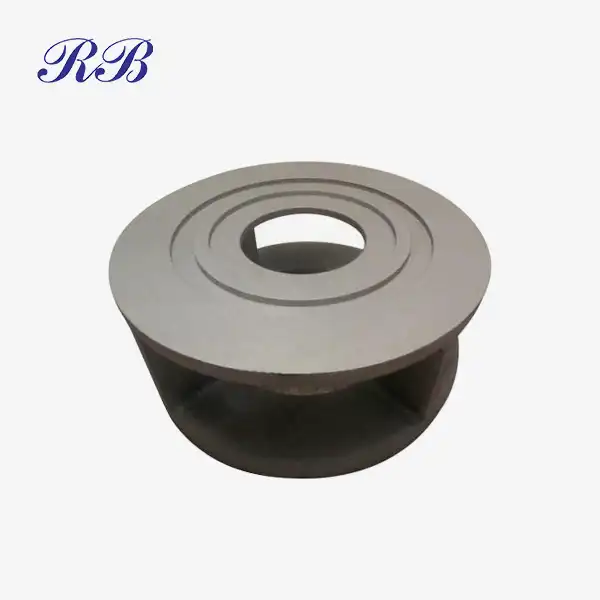
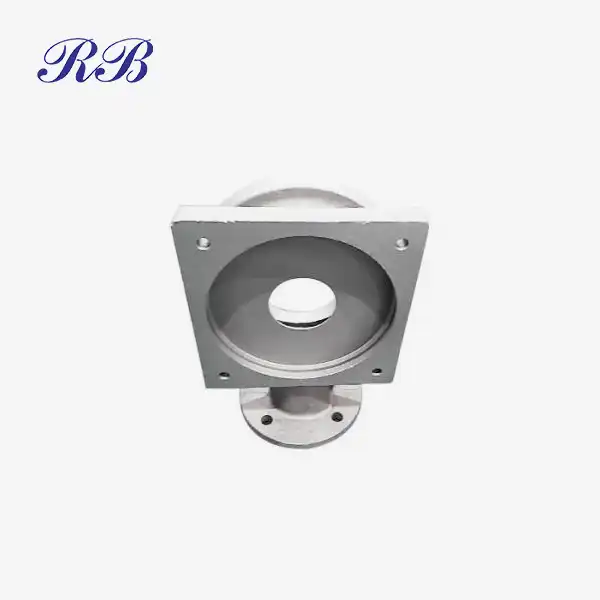
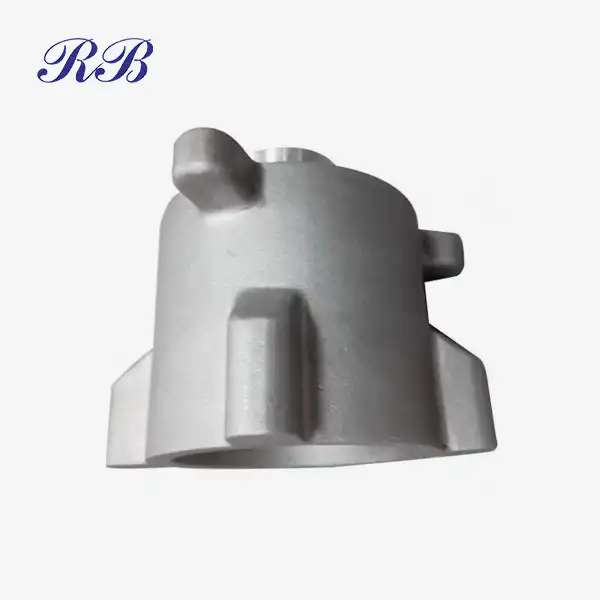
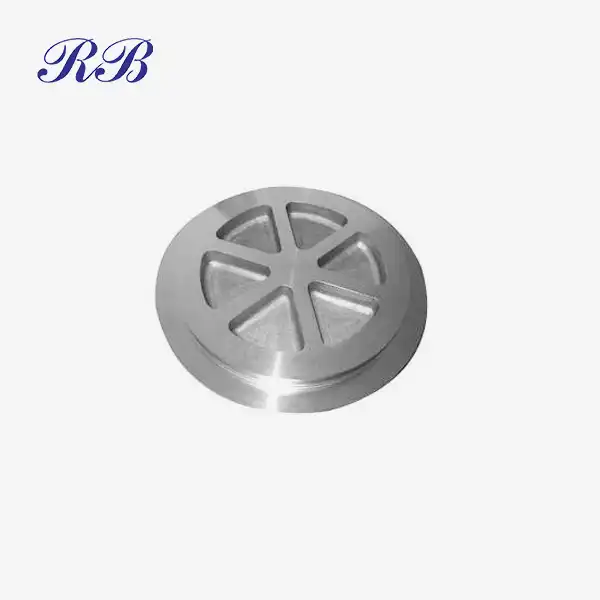
When a bracket is utilized as a structural connection, mounting component, support or equipment interface, a standard item is not necessarily the best solution. Differences in load requirements, installation space, material choices, mounting holes, connecting interfaces and operational environments might make an off-the-shelf bracket a challenge to integrate into a finished product. OEM custom-casting brackets provide another approach by allowing the bracket to be developed around the actual requirements of the application. Manufacturers can make using an existing drawing, 3D model, sample or a set of technical specifications, rather than adapting the product to a conventional bracket. Then the supplier can evaluate casting method, material, wall thickness, machining and finishing needs before production begins. This can minimize wasteful redesign and result in a more predictable manufacturing path. For organizations who buy brackets in large quantities, the benefit of an OEM casting is not just in the casting operation itself. A good project plan may include casting, machining, finishing, inspection, packaging and delivery all in the same manufacturing cycle. The end result is a part that is easier for the buyer to incorporate into its assembly processes and easier to manage from a purchasing standpoint.

How Does OEM Casting Change the Bracket Manufacturing Process?
The first step in a typical OEM casting project is to examine the customer requirements, rather than jumping right into production. The supplier must be aware of the intended use, material specifications, dimensions, tolerances, quantity, surface condition, and any particular inspection requirements.
This first examination is significant since the geometry of a bracket does influence how it can be cast. Manufacturing problems may arise from sharp transitions, superfluous wall thickness, isolated heavy portions, problematic cores, and poorly located features. Generally it is more efficient to fix these problems prior to starting tooling or manufacturing, as opposed to fixing the problems after the first production run.
A seasoned supplier can take a look at the drawing and identify areas that might require improvement for casting for an existing design. The aim is not necessarily to change the customer’s design but to identify a realistic manufacturing method that maintains the required function and makes production more stable.
The production process may involve pattern or tooling preparation, casting, cleaning, heat treating if required, machining, surface treatment, dimensional inspection, and final packaging. It is generally easier to coordinate these processes with a single provider than to manage multiple independent vendors.
Why Design Review Matters Before Tooling?
One area where early engineering decisions have a direct impact on project cost and time is tooling. If a bracket needs a casting mold or other production tooling, adjustments after tooling is complete can mean extra effort.
A design review prior to tooling allows the supplier to assess the parting lines, draft requirements, machining allowances, core needs, and locations where metal flow or solidification may need attention. Casting simulation can also be used to analyze filling and solidification behavior for relevant projects prior to real production.
This does not mean that simulation eliminates all casting danger. Instead, it provides the engineering team with an additional source of knowledge for determining the manufacturing route and spotting potential problems before committing to production volumes.
Customization Options That Affect Cost and Lead Time
The key benefit of custom-cast brackets is that the component can be developed to the real needs of the application. Customization might be material, geometry, mounting interfaces, machining, surface treatment, identification, and packaging.
Material Selection Based on the Working Environment
The choice of material for custom-casting brackets should be related to the working circumstances of the bracket and not limited to the lowest purchasing price. Where corrosion resistance is necessary, stainless steel might be ideal. Where weight, mechanical qualities, machinability, or cost are more relevant, other cast alloys might be more suited.
For example, a bracket used in a marine environment may need a different material and surface treatment method than one used within industrial equipment. Automotive applications may require focus on weight, repeatability, and integration with neighboring components.
The material decision should therefore be decided in conjunction with the supplier’s technical team and verified against the customer’s drawings, specifications, and applicable material requirements.
Integrating Features Into the Casting
A bespoke casting might contain features that would normally require extra manufacturing steps. Mounting bosses, ribs, apertures, connection spaces, and other structural characteristics can often be integrated in the casting shape.
The practical benefit is that the provider can assess which features should be made during casting and which should be created through subsequent machining. This balance is critical because casting can be used to build the basic geometry efficiently, while CNC machining can be used to create tighter tolerances on functional surfaces.
For example, a mounting bracket might be cast to its main structural shape and then machined at bolt holes or locating surfaces that require more exact measurements. This hybrid approach eliminates the need to get tolerances in the casting process that are best managed by machining.
Supporting Identification and Production Traceability
Where required by the application, OEM brackets may also have identification features. Identification information such as part numbers, logos, casting marks, or others may be integrated into the tooling or added in a subsequent step.
Permanent identification is quite beneficial where more than one version of the brackets is used in the same production environment. It can help the operator identify components and parts during assembly, inspection, maintenance, or replacement.
The choice of the marking method should be guided by the geometry, the requirements of the surface, and the production volume.
Where ODM Support Adds Value to a Casting Project?
OEM and ODM are similar yet have different goals. ODM is more involved with the supplier in product development and engineering, while OEM manufacturing is typically based on the customer’s current design or specification.
For purchasers with a completed drawing, production consistency is often the key. If the buyer has an application requirement but hasn’t determined the bracket geometry, ODM cooperation can contribute to the engineering input.
From Concept to Manufacturable Casting
An ODM project can be initiated using a sample, drawing, 3D model, load need, installation area, or functional description. The engineering team can then work toward a casting design that is manufacturable.
The aim of this partnership is not only to produce a complex shape. A smart design takes into account how the bracket will be cast, machined, inspected, assembled, and used. The design must account for wall thickness, ribs, transitions, mounting points, and machining allowances.
This method can help avoid a typical problem in bespoke fabrication: developing something that works great as a digital model but is overly complex or expensive to actually build.
Using Simulation Before Physical Production
Casting simulation can provide useful information during product development. Depending on the casting process and software, the engineers might consider material filling, solidification, areas of possible shrinkage, and other process factors.
The results can be included in the engineering evaluation before any physical samples are made. The simulation, in conjunction with practical casting experience, assists the manufacturer to decide whether to explore adjustments to the shape, gating method, or process parameters.
This can be particularly beneficial for complex brackets to identify a potential manufacturing issue before tooling and mass production, as late-stage adjustments can impact schedule and cost.
How Does CNC Machining Complement Custom Casting?
Casting is commonly employed to form the primary shape of a bracket, but not all working surfaces have to be fully cast. CNC machining can be added if stricter tolerances or specialized surface conditions are required.
Typical machined features could include mounting holes, threaded holes, locating surfaces, sealing surfaces, and connecting interfaces. The near-net form structure is provided by the casting, and selected features are machined to the desired specifications.
This combination can provide a possible trade-off between manufacturability and dimensional precision.
It also allows the engineering team to distinguish between surfaces that are functionally critical and those where standard casting tolerances are acceptable. This is important for custom-casting brackets, as unnecessary machining of each surface can raise the cost of production and processing time.

Surface Treatment and Finishing for Different Applications
Depending on the material and use, the bracket may need cleaning, blasting, coating, passivating, or other finishing following casting and machining.
Surface treatment should be considered as an integral part of the whole manufacturing plan and not as a separate final step. The treatment used must be compatible with the base material and with the desired look or environmental resistance.
For industrial equipment, surface durability and resistance to the working environment may be more important. Appearance may also be a factor for visible components. Material selection and finishing selections in maritime applications may be affected by corrosion-related restrictions.
If one supplier conducts the casting, machining, and finishing, the manufacturing steps can be seen as one whole. This can help eliminate unnecessary handoffs between numerous vendors and make for easier quality communications.
Quality Control for OEM Casting Brackets
Quality control should be more than the finished look of the bracket. A production inspection plan may include material verification, dimensional inspection, visual examination, machining inspections, and other tests as dictated by client requirements.
The inspection should be focused on those dimensions that control assembly, i.e., those dimensions that determine whether the bracket can be properly attached. These may include hole positions, mounting sizes, critical thicknesses, flatness, or machined surfaces.
The provider can additionally supply manufacturing documentation and inspection records for client inspection if necessary. Exact papers should be agreed upon before producing so that the inspection procedure will fulfill the buyer's quality specifications.
Repeat orders shall be produced to the same approved drawing revision, material specification, manufacturing route, and inspection requirements. Another major contributor to minimizing problems in assembly is consistency between production lots.
How OEM Custom-Casting Brackets Can Reduce Total Cost?
The cost advantage of OEM casting is not limited to the lower unit price. The whole cost of manufacturing comprises tooling, machining, secondary processes, handling, inspection, packing, transportation, and the cost of production issues.
With a well-designed bracket, a number of needs can be combined into a single production process, and some of these costs are offset. For example, the addition of structural features to the casting might reduce the amount of material to be removed at a later stage. With the right machining procedures you may avoid unnecessary CNC work. Coordination of finishing and inspection can reduce the number of external providers in the project.
Another significant factor is production volume. If the tooling cost is distributed over a greater production quantity, a little prototype bracket, which is expensive to build, can be less expensive.
For this reason, buyers should consider the total project cost when evaluating suppliers, including custom-casting brackets, rather than only the quoted cost for the casting.
Balancing Tooling Cost and Production Volume
“Tooling choices should be made based on anticipated production quantity and product life. A single prototype, a short production run, and a long-term OEM program will need different methodologies.
The supplier should be prepared to address tooling requirements, expected life, maintenance considerations, and the impact of tooling changes on future production. Open communication today means no nasty surprises for purchasers later.
Reducing Supplier Coordination
Another potential cost benefit is the consolidation of manufacturing operations. If one supplier does casting, machining, surface treatment, inspection, and packaging, the buyer has fewer production interfaces to coordinate.
This does not necessarily mean lower costs, but it can make procurement and quality control easier. It can also indicate the location of a problem if a dimension or finishing problem is detected during inspection.
Why Work With Rongbao Enterprise for Custom Casting Brackets?
Rongbao Enterprise can handle OEM and ODM casting projects from initial engineering review to production and finishing. If the buyer has a drawing, then the emphasis can be on manufacturing feasibility, process planning, and production uniformity. If a customer is creating a new component, the engineering collaboration can be used to review the design before production tooling is completed.
Depending on the polish that is desired for the component, the company can combine casting with CNC machining and surface treatment. This is especially useful when the bracket contains both cast structural elements and machined interfaces requiring tighter dimensional control.
A solid OEM cooperation also requires open communication regarding drawings, material specs, tolerances, inspection demands, and packing and delivery expectations. These qualities allow for a production process that can be repeated for future orders rather than treating each batch as its own project.
Overseas buyers also have packaging and identification as part of the supply operation. The brackets must be packaged according to size, weight, surface condition, and transportation requirements so that the components arrive ready for inspection and subsequent usage in production.
requirements so that components arrive ready for inspection and subsequent production use.
What Buyers Should Prepare Before Requesting a Quote?
A complete quotation can be easily prepared if the buyer provides the correct technical data. Ideally the RFQ should include the latest 2D drawing and 3D model if available, required material grade, projected annual or batch quantity, critical tolerances, surface treatment, inspection requirements, and packaging expectations.
If the bracket is a replacement of an existing part, it can also help the supplier understand the project with images, samples, installation details, or what the current manufacturing difficulty is.
The customer should also identify essential functional aspects. You do not have to hold every dimension to the same tolerance. Tighter than necessary tolerances can increase demands on machining and inspection without any significant gain in the part’s performance.
A supplier who has considered these demands before quoting can give a more relevant manufacturing proposal than one who simply calculates a unit price from the drawing.
Conclusion
OEM custom-casting brackets can provide a practical way to align bracket design with the actual requirements of a production application. The main advantages come from combining application-specific geometry with an appropriate material, casting process, machining strategy, finishing method, inspection plan, and packaging solution.
For buyers, the goal should not be to choose the most complex casting process or simply pursue the lowest unit price. A better approach is to evaluate the complete manufacturing route and understand how each stage affects cost, quality, lead time, and assembly.
Rongbao Enterprise supports OEM and ODM casting bracket projects by combining engineering review, casting, CNC machining, surface treatment, and quality control. By involving the supplier early and providing clear technical requirements, manufacturers can develop brackets that are easier to produce, inspect, assemble, and reorder while keeping the overall project under better control.
Ready to discover how custom-casting brackets can optimize your next project? Contact us at steve.zhou@263.net and zhouyi@rongbaocasting.com to discuss your specific requirements and receive a detailed proposal tailored to your application needs.
FAQ
1: What minimum order quantities do you require for custom casting brackets?
Our production capacity accommodates orders from 100 pieces up to 5,000 pieces per batch. We can discuss flexible arrangements for smaller prototype quantities or larger production runs based on your specific requirements.
2: How long does the typical custom casting bracket development process take?
Complete development timelines vary based on complexity, but typically range from 4-8 weeks from initial design to first article inspection. Prototype development usually requires 2-3 weeks, while full production setup adds another 2-4 weeks depending on volume requirements.
3: Can you help with material selection for specific environmental conditions?
Absolutely. Our engineering team provides comprehensive material recommendations based on your application environment, whether marine corrosion resistance, automotive temperature cycling, or industrial chemical exposure. We work with various casting alloys beyond stainless steel 304 to meet specific performance requirements.
References
- Smith, J.R. et al. "Advanced Precision Casting Techniques for Industrial Applications." Manufacturing Technology Review, Vol. 45, 2023.
- Chen, L.M. "Cost Optimization Strategies in OEM Bracket Manufacturing." Industrial Engineering Quarterly, Issue 3, 2023.
- Williams, A.K. "Quality Control Systems in Modern Casting Operations." Metals Processing Journal, Vol. 38, 2024.
- Thompson, R.D. "Material Selection Guide for Marine and Automotive Brackets." Engineering Materials Handbook, 15th Edition, 2023.
- Martinez, C.P. "Supply Chain Efficiency in Global Manufacturing Partnerships." International Business Review, Vol. 29, 2024.
- Anderson, M.J. "Surface Treatment Technologies for Enhanced Casting Performance." Surface Engineering Magazine, Spring Issue, 2024.