- English
- French
- German
- Portuguese
- Spanish
- Russian
- Japanese
- Korean
- Arabic
- Greek
- German
- Turkish
- Italian
- Danish
- Romanian
- Indonesian
- Czech
- Afrikaans
- Swedish
- Polish
- Basque
- Catalan
- Esperanto
- Hindi
- Lao
- Albanian
- Amharic
- Armenian
- Azerbaijani
- Belarusian
- Bengali
- Bosnian
- Bulgarian
- Cebuano
- Chichewa
- Corsican
- Croatian
- Dutch
- Estonian
- Filipino
- Finnish
- Frisian
- Galician
- Georgian
- Gujarati
- Haitian
- Hausa
- Hawaiian
- Hebrew
- Hmong
- Hungarian
- Icelandic
- Igbo
- Javanese
- Kannada
- Kazakh
- Khmer
- Kurdish
- Kyrgyz
- Latin
- Latvian
- Lithuanian
- Luxembou..
- Macedonian
- Malagasy
- Malay
- Malayalam
- Maltese
- Maori
- Marathi
- Mongolian
- Burmese
- Nepali
- Norwegian
- Pashto
- Persian
- Punjabi
- Serbian
- Sesotho
- Sinhala
- Slovak
- Slovenian
- Somali
- Samoan
- Scots Gaelic
- Shona
- Sindhi
- Sundanese
- Swahili
- Tajik
- Tamil
- Telugu
- Thai
- Ukrainian
- Urdu
- Uzbek
- Vietnamese
- Welsh
- Xhosa
- Yiddish
- Yoruba
- Zulu
What are the surface qualities of motor housings made of different materials?
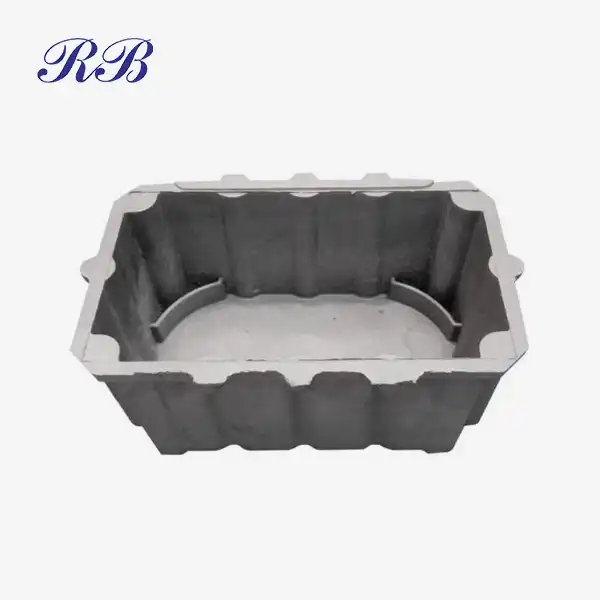
When engineers compare sand casting motor housing parts ,strength, weight, thermal conductivity, machinability, cost. Surface finish is one of the practical differences to be considered. The motor housing can be aluminum, magnesium, cast iron or other alloys, each of which has various interactions with the sand mold in the filling and solidification stages. The surface produced can differ in roughness, sand bonding, dimensional definition, oxidation, and the amount of finishing after casting. But the material itself doesn’t dictate the ultimate look. The result is influenced by mold design, sand properties, refractory coating, pouring temperature, filling behavior, venting, alloy condition and casting geometry. So one alloy should not be considered better than all the rest by engineers. It is best to consider the material and the casting process together and then specify the surface requirements based on the function of the motor housing.
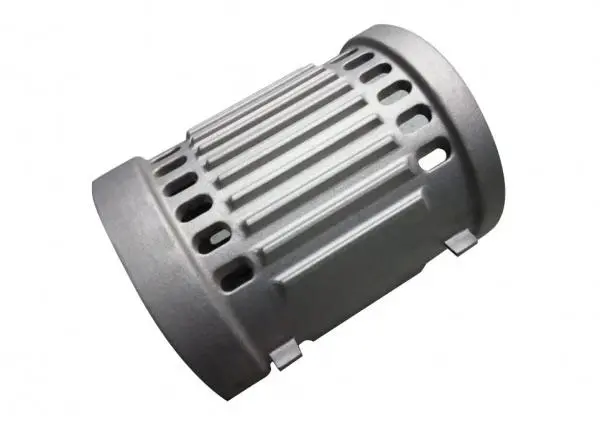
How Material and Sand Casting Work Together?
In sand casting, the housing surface is produced where the molten metal contacts the mold. The texture and condition of the mold will not be reflected by a machined surface, while an as-cast surface will naturally reflect the same. The size of the sand particles, the hardness of the mold, the binder used, the quality of the coating, and the preparation of the mold can therefore have a considerable effect on the completed component.
The molten metal entering the cavity should fill the comparatively narrow parts with little turbulence or premature solidification. If metal gets between the grains of sand, the surface can get rougher, or sand can stick in spots. If the mold surface is damaged by heat or mechanical strain, particles can adhere to the casting or cause surface defects.
The alloy matters also, since different metals have different melting and pouring properties. A good fluid metal can replicate the mold details better. An alloy more susceptible to oxidation or temperature variation may need better process control. The thermal behavior of the metal and the mold also influences the solidification and appearance of the casting.
This difference is important for motor housings since not every surface has the same functional requirement. An outside cover may require only a constant visual appearance and a good grip of the coating. Later, it may be necessary to machine the bearing seat, mounting face, shaft aperture, or sealing surface to the required dimensional accuracy and surface finish.
Comparing the Surface Qualities of Common Motor Housing Materials
Aluminum Motor Housings
Aluminum alloys are often used for motor housings because of their low density, good thermal conductivity, and good casting qualities. Good surface finishes can be obtained with alloys such as A356 in sand casting when the mold system and pouring circumstances are controlled.
An aluminum sand casting normally will not have the same surface smoothness as a die-cast or machined surface. But for many non-sealing exterior surfaces, the surface may be good enough with normal casting cleanliness. Visually it’s very much a function of the sand system and the coating of the mold. A good molding material properly managed will give a more uniform texture. But a rough sand or a faulty mold will result in a surface that appears rougher to the eye.
One advantage of aluminum is that it can be processed at very low temperatures as opposed to ferrous alloys. This lessens the heat load on the mold, but high pouring temperatures can still cause mold erosion, metal penetration, and other surface problems.
An advantage is that the transition from casting to machining is quite easy. Post-casting machining of critical mounting faces or bearing-related elements without having to mill out the entire housing. This makes aluminum very suitable for applications such as a motor housing where a lightweight, cast shape and local fine machining are required.
Hence, the final surface quality should be evaluated in proportion to the intended area of the housing instead of a single Ra number. The supplier shall be able to distinguish between the as-cast surfaces and the machined surfaces.
Magnesium Motor Housings
Magnesium alloys offer a unique weight advantage, making them suitable in applications where it is important to reduce the bulk of a component. Molten magnesium, however, is more reactive than aluminum and requires suitable process controls for melting, pouring, and mold handling.
A magnesium housing with an as-cast surface may be acceptable for sand-casting motor housing parts if the foundry has appropriate control of oxidation, mold filling, and solidification. Surface discoloration, impurities, or local roughness might be problems if the molten metal is not sufficiently covered or if the process conditions are changeable.
Thus, the surface quality of magnesium castings is significantly dependent on the discipline of the production. The molten metal must be kept safe. It requires the correct mold materials, controlled temperature, and careful handling after shakeout. The unique protection system should be selected based on the needs of the alloy, equipment, environment, and foundry process. It should not be assumed that all magnesium castings have the same technique.
Magnesium can provide a favorable weight vs. performance ratio, but the buyer should consider the extra process controls vs. aluminum. If the housing is to be coated, painted, or otherwise surface treated, the supplier should also detail the cleaning and preparation of the casting prior to finishing.
Cast Iron Motor Housings
Cast iron has characteristics that are substantially different from those of aluminum and magnesium. It has the higher density, but in some of the motor and equipment applications, it can provide useful stiffness, damping characteristics, wear resistance, and dimensional stability.
The surface of a sand-cast iron housing is often more visually textured than the surface of a properly controlled aluminum casting. The greater casting temperature imposes additional thermal demands on the mold. Improper selection or control of the mold system might contribute to the occurrence of defects such as burn-on, metal penetration, scabs, or other surface faults.
But there is no reason why a good design of iron casting should have a terrible surface. Correct selection of refractory coatings, sand, compaction of mold, gating, and control of pouring can give a homogeneous industrial casting surface.
The key question is whether the surface is fit for purpose. Usually, painted or coated areas just need good cleaning and preparation. Usually machining is necessary for the bearing positions, mounting interfaces, or sealing characteristics.
Steel and Other Ferrous Alloys
Steel castings can be highly robust and durable, but the fact that they are poured at high temperature means that the mold and casting process must be quite demanding. Thermal stress, mold erosion, metal penetration, and change of the dimensions during solidification must be taken into account.
When steel is utilized for mechanical reasons for applications of motor housing, surface quality should be checked in combination with the integrity of casting. A good surface does not necessarily guarantee that the casting is free of internal defects. Depending on the application, inspection may consist of dimensional checks, visual inspection, penetrant testing, radiographic testing, or other methods as specified by the design and quality criteria.
This is an important difference for procurement purposes. Surface appearance is only one component of casting quality. A smooth outer housing may need further inspection if it is to be utilized in a severe mechanical application.
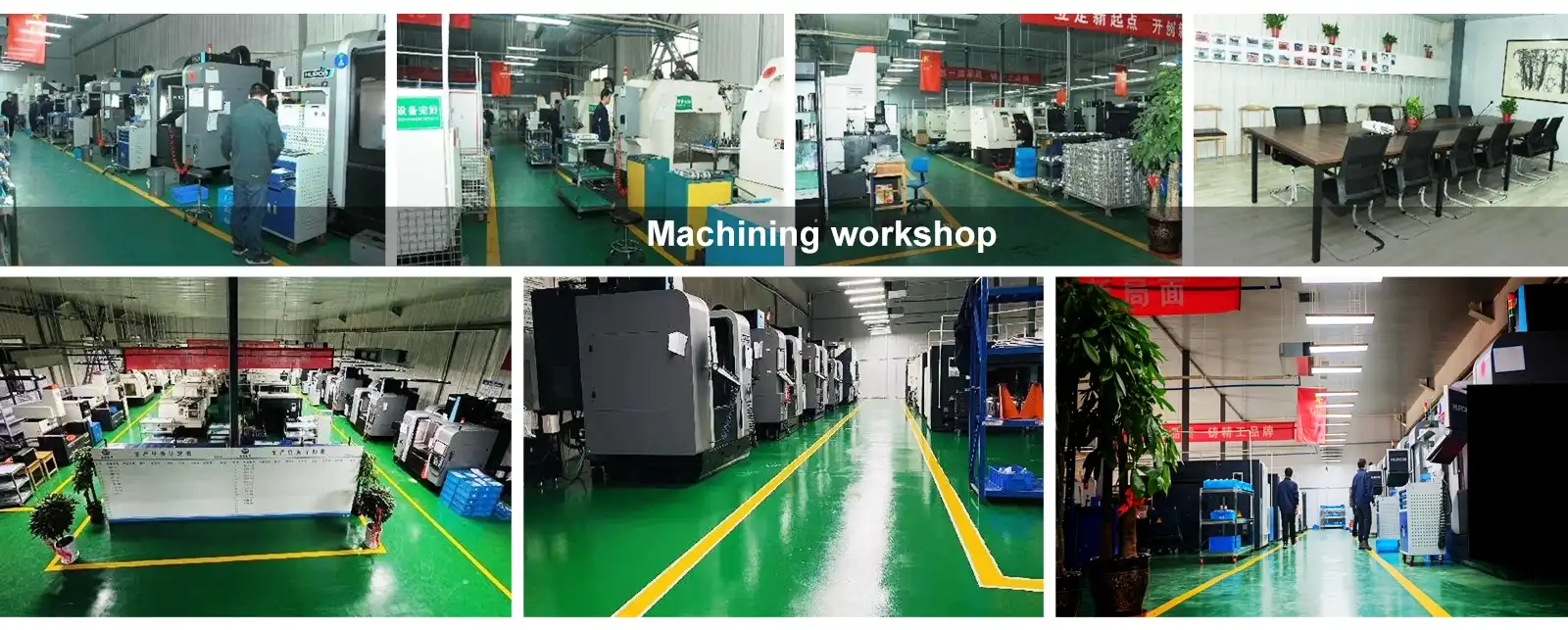
What Determines the Surface Quality of a Sand-Cast Housing?
The basic casting behavior of sand casting motor housing parts is determined by the material chosen, while the final surface quality is dependent on various manufacturing variables.
Sand Grain Size and Mold Condition
The mold is the surface on which the molten metal immediately solidifies. Usually, the finer sand can make a finer mold texture, and the coarser sand may make a more obvious casting texture. However, the best quality sand may not be the answer, as permeability, mold strength, thermal behavior, and casting geometry should also be taken into consideration.
The condition of the surface of the mold is also very essential. Poor compaction, broken patterns, uneven coatings, or variable mold hardness might cause variances to show up on the finished housing.
Refractory Coatings
The coatings of mold make a protective layer between the material of mold and the molten metal. They can limit metal penetration, enhance surface separation, and aid in managing casting texture.
The coating must be compatible with the alloy used and the casting temperature. A coating suited for an aluminum casting should not be assumed to be suitable for a high temperature ferrous casting.
When dealing with motor housings with large external surfaces, it’s crucial to maintain a consistent coating, as differences might be seen across the completed component. Thus the supplier has to control the coating formulation, the application thickness, the drying condition, and the mold coverage.
Pouring and Filling Conditions
The flow of molten metal into the mold can directly affect the surface quality. High turbulence increases oxidation, entrains gas, disturbs the mold surface, and leads to inclusions or other casting flaws. In contrast, a low filling speed may cause early solidification and cold closes or misruns.
The proper parameters depend on the alloy, wall thickness, gating design, casting size, and equipment. The good foundry will determine the process parameters for the particular housing design, not attempt to use a single pouring-speed value.
Venting and Gas Management
As the hole fills, gas generated by the mold system must escape. Inadequate venting can lead to gas-related flaws and can prevent proper filling.
This is especially true for ribbed motor housings, enclosed portions, deep pockets, or other complex geometries. Vent placements should be addressed in the mold and gating design, not as a last resort to correct problems.
As-Cast Surface vs. Machined Surface
One of the most important things to remember when you specify sand-casting motor housing parts is the difference between an as-cast surface and a machined surface.
The as-cast surface is directly associated with the mold and casting process. It can be inherently textured and does not generally offer the same dimensional accuracy as machining. This is often acceptable for wide external faces, interior cavities, or portions that are to be coated.
Machined surfaces are another matter. CNC machining can establish controlled dimensions and surface roughness on bearing seats, mounting faces, gasket interfaces, shaft apertures, and other functional elements.
This method is usually less expensive than machine-filling the full housing. The casting technique is used to determine the general shape, and machining is only used for the portions where the dimensional accuracy is really needed.
Buyers should, thus, when seeking a price, supply drawings that clearly separate casting surfaces from machining allowances and final surfaces. A broad demand for roughness over the complete housing can mean unnecessary cost for the manufacturer.
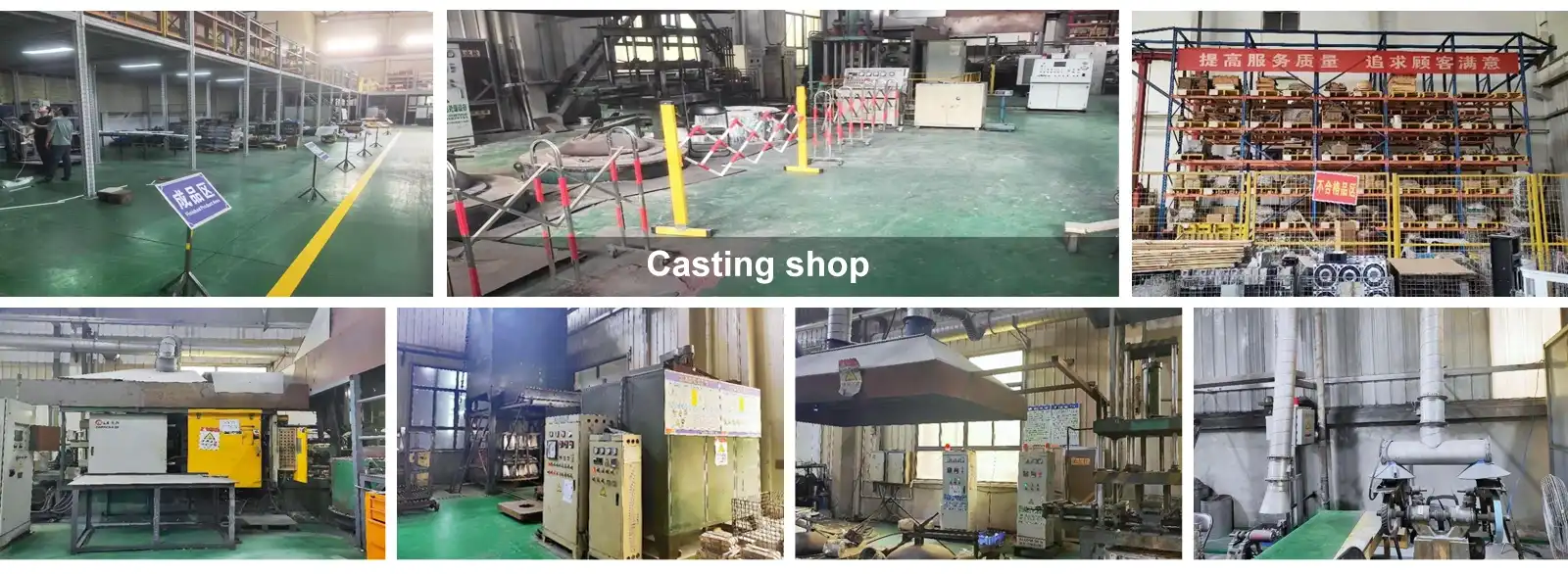
Surface Treatments After Sand Casting
Post-casting operations may improve the appearance and cleanliness of sand casting motor housing parts, but the different treatments have different goals.
Often, shakeout is followed by shot blasting to remove remaining sand, scale, and other surface impurities. The media and the blasting settings used must be suitable for the material and the surface condition you want to achieve.
Shot peening is a whole different matter. It is based on the controlled impact of the media to change the surface layer and to generate compressive residual stresses. This should not just be put forth as a replacement for cleanup of casting.
Grinding can be utilized for localized flash, parting line imperfections, or other specialized surface problems. If you need dimensional accuracy and controlled surface roughness, you would utilize CNC machining. The chosen housing material and service environment can then be painted, powder coated, anodized where appropriate, or otherwise finished.
The right sequence is determined by the product specifications. A supplier should be able to describe what surface treatment is utilized, what it is for, and what areas are covered.
How Should Buyers Specify Surface Quality?
A foundry can’t reliably understand a vague demand such as “smooth surface.” Better specification means knowing what matters and defining acceptance criteria that can be measured.
A sketch may call out crucial machined surfaces apart from typical as-cast portions. The requirements for the surface roughness may therefore be allocated to those finished surfaces where the measurement makes sense. Visual approval criteria can be applied to general casting surfaces when the parties agree on mutual boundaries for such problems as sand adherence, fractures, excessive flash, visible porosity, or other defects.
Buyers should also ask about surface quality inspection. The key issues are whether the inspection is carried out before or after machining, the measuring instrument utilized, the location of the measurements, and what inspection records are kept.
For larger manufacturing operations it is good practice to set up a reference sample or an approved initial article. This is a physical benchmark for both buyer and supplier as to look and finishing standards.
Choosing the Right Material for Your Motor Housing
No one material delivers the highest surface quality for all motor housing applications.
Aluminum is typically desirable when low weight, thermal conductivity, and practical casting qualities are significant. Magnesium can be considered if additional weight reduction demands more rigorous process control. If stiffness, damping, or other ferrous-material qualities are more significant than low weight, cast iron may be preferred. Steel can be chosen when the material option is dominated by higher mechanical requirements.
Therefore, the right option should start with the function of the housing and not the surface appearance. Engineers should consider weight, heat dissipation, mechanical loads, corrosion requirements, machining needs, coating requirements, production volume, and total manufacturing cost together.
For complex housings it is also worthwhile to consult the casting supplier on the material decision before the design is finalized. Even little variations in wall thickness, filet shape, draft angles, machining allowances, and gating access can greatly alter the quality of the cast and finishing needs.
Working With a Supplier of Sand Casting Motor Housing Parts
Rongbao Enterprise offers casting and machining service for motor housing applications where material selection and surface uniformity need to be evaluated collectively. Its manufacturing process is capable of handling the casting process and the subsequent cleaning and machining requirements so that the final component may be assessed as a fully made item and not just an incomplete casting.
Process control for aluminum motor housing projects should cover alloy specification, melting and pouring conditions, mold preparation, casting inspection, and any heat treatment required. If a T6 condition is to be provided for an aluminum alloy, such as A356, the requirements for heat treatment should be described in accordance with the applicable material specification and the drawing or purchase order of the client.
After casting, the functional surfaces can be CNC machined to the desired specifications. This is especially true for mounting interfaces, bearing sites, holes, and sealing surfaces. Rather than a blanket finishing requirement for the entire housing, Rongbao may determine where machining is necessary and where as-cast is sufficient.
Quality documentation is equally vital to industrial purchasers. Depending on the project, procurement teams may require material documents, dimensional inspection data, casting inspection records, heat-treatment information, and samples for approval. These documents give more tangible evidence of production consistency than generic statements about “excellent surface quality."
In addition to inquiring about suppliers’ casting capabilities, maximum component size and weight, machining capacity, inspection equipment, sample development, production lead time, packaging, and quality-control procedures, buyers should ask about: These characteristics help to define if a supplier can support both prototype development and repeat production.
Conclusion
The material utilized and the sand casting procedure used to manufacture a motor housing determine the quality of the surface. Aluminum alloys, like A356, provide a useful combination of relatively good cast surface quality, low weight, and machinability. Magnesium provides further weight reduction but more process sensitivity. Cast iron and steel can offer a variety of mechanical properties, but they often need precise control over the high temperature casting conditions.
The most dependable way for sand casting motor housing parts is to assess material, condition of the mold, pouring behavior, coating, venting, casting geometry, and post-casting activities as one manufacturing system. Buyers should also distinguish between typical as-cast surfaces and precision-machined regions rather than require the same finish throughout.
A good casting supplier should be able to explain how the chosen material will influence the surface quality and what surfaces are going to require further processing and offer inspection information to support the agreed-upon standards. This engineering-based technique facilitates the achievement of a uniform motor housing surface without incurring excessive production cost.
Our experienced team stands prepared to answer technical questions, review designs, and provide detailed quotations for sand casting motor housing parts.We invite you to experience the Rongbao difference in quality, service, and technical support. Contact Steve Zhou at steve.zhou@263.net or Zhou Yi at zhouyi@rongbaocasting.com to begin the conversation. Let us demonstrate why leading manufacturers trust Rongbao Enterprise for their critical motor housing applications.
References
- Campbell, J. (2015). "Complete Casting Handbook: Metal Casting Processes, Metallurgy, Techniques and Design." Butterworth-Heinemann, Oxford, United Kingdom, Second Edition.
- ASM International. (2008). "ASM Handbook, Volume 15: Casting." ASM International Handbook Committee, Materials Park, Ohio, pp. 468-502.
- Kaufman, J. G., & Rooy, E. L. (2004). "Aluminum Alloy Castings: Properties, Processes, and Applications." ASM International, Materials Park, Ohio, pp. 134-167.
- American Foundry Society. (2019). "Surface Quality Optimization in Sand Casting Operations." AFS Technical Report Series, Schaumburg, Illinois, Volume 47, Issue 3.
- Schumacher, P., Greer, A. L., & Fenstad, J. (2014). "Grain Refinement of Aluminium-Silicon Foundry Alloys." Light Metals 2014, TMS Annual Meeting Proceedings, pp. 967-972.


Learn about our latest products and discounts through SMS or email