- English
- French
- German
- Portuguese
- Spanish
- Russian
- Japanese
- Korean
- Arabic
- Greek
- German
- Turkish
- Italian
- Danish
- Romanian
- Indonesian
- Czech
- Afrikaans
- Swedish
- Polish
- Basque
- Catalan
- Esperanto
- Hindi
- Lao
- Albanian
- Amharic
- Armenian
- Azerbaijani
- Belarusian
- Bengali
- Bosnian
- Bulgarian
- Cebuano
- Chichewa
- Corsican
- Croatian
- Dutch
- Estonian
- Filipino
- Finnish
- Frisian
- Galician
- Georgian
- Gujarati
- Haitian
- Hausa
- Hawaiian
- Hebrew
- Hmong
- Hungarian
- Icelandic
- Igbo
- Javanese
- Kannada
- Kazakh
- Khmer
- Kurdish
- Kyrgyz
- Latin
- Latvian
- Lithuanian
- Luxembou..
- Macedonian
- Malagasy
- Malay
- Malayalam
- Maltese
- Maori
- Marathi
- Mongolian
- Burmese
- Nepali
- Norwegian
- Pashto
- Persian
- Punjabi
- Serbian
- Sesotho
- Sinhala
- Slovak
- Slovenian
- Somali
- Samoan
- Scots Gaelic
- Shona
- Sindhi
- Sundanese
- Swahili
- Tajik
- Tamil
- Telugu
- Thai
- Ukrainian
- Urdu
- Uzbek
- Vietnamese
- Welsh
- Xhosa
- Yiddish
- Yoruba
- Zulu
What is the function of the casting connecting frame in an industrial robotic support arm?
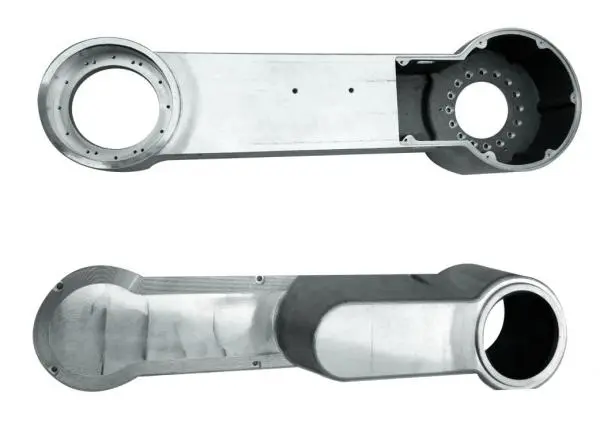
In an industrial robotic support arm, the casting connecting frame is a structural component that links major sections of the arm and helps transfer loads between them. Although not as apparent as the motor, gearbox or end effector, the frame is important for the overall rigidity, positional stability, load distribution and durability of the total assembly. It should consequently be designed to be compatible with the robot’s payload, range of movement, mounting arrangement, operational environment and production needs. The exact position of a connecting frame depends on the robot architecture. It could link the base and a lower arm segment, combine two structural elements, or offer a mounting interface for other components. In all cases, the component must retain its shape as the robot accelerates, decelerates, rotates and copes with a changing load. That is why the choice of a casting connecting frame is not simply a matter of picking a metal part with the proper exterior dimensions. All of them must be taken into account combined, e.g. material selection, cast design, machining accuracy, mounting interfaces, wall thickness, surface treatment and inspection requirements.
How Does the Connecting Frame Support the Robotic Arm Structure?
The main duty of the frame is to ensure a rigid connection between the structural pieces of the robotic support arm. When the arm is operational it is susceptible to forces caused by its own weight and payload, acceleration and deceleration and movement of attached apparatus. These loads are transferred to the structural members and their points of attachment.
A good built frame will distribute these forces to the right areas of i nstallation, not a few locations. This is especially important at bolt holes, bearing seats, mounting bosses, and other areas where the frame contacts with surrounding components.
Positioning performance is also affected by the structural rigidity. If a support component deflects under load, the position of the downstream mechanism can vary even if the control system has not requested the required movement. What is the allowable distortion for the robot application. Structural stiffness and repeatability may alter during welding, material handling, assembly, inspection and other procedures.
The structure therefore needs to be robust enough to withstand the appropriate operating conditions without increasing the mass. A bigger part is not necessarily a better part, as the increased bulk may increase the load that motors, gearboxes, bearings and other driving parts have to move.
Why Geometry and Load Distribution Matter?
The forces transmission through the structure are closely related to the geometry of an industrial robotic support arm. The connecting frame may feature ribs, bosses, mounting surfaces, holes and reinforced sections. These are not some production information. They are used to determine how the component will respond to bending, compressive, tensile and torsional loads.
For example, a mounting area supporting a bearing or rotating joint must be robust enough to hold the correct alignment. A thin section around a mounting hole may flex with repeated loading. Too much material in an area of low structural function means weight without a compensating benefit.
This type of geometry can be useful to create by casting. The mold may have shapes that would be difficult to produce or not inexpensive to make from a simple plate or block. You can machine the original casting to completion, and add ribs and transitions.
But the final design has to be checked against the real loading conditions. Design of the structure is dictated by the payload, acceleration, joint torque, safety factors, operation cycles and connecting methods. Even if two parts look identical, you cannot assume that a frame that works well for one robotic arm would work well for another.
Material and Casting Process Work Together
Another important aspect in the construction of a casting connecting frame is the choice of material. Aluminum alloys are often used where a combination of relatively low weight, enough structural strength, machinability and corrosion resistance is needed.
For example, the A356 aluminum alloy is often used in cast components where these qualities are critical. However, the suitability of A356 is dependent on the specific design and operating conditions. The alloy specification should be determined by the engineer taking into account the required mechanical properties, the casting condition, any heat treatment, the wall thickness, the loads on the joints and the environment conditions.
The process of casting also has an effect on the quality of the resulting component. Gravity casting employs gravity to fill the mold with molten metal. This method, with well regulated mold design and process conditions, can lead to intricate structural geometries with a favorable compromise between production economy and component performance.
Do not think about casting as a guarantyd way to create a final precise part. Additional machining may be needed on bearing seats, locating surfaces, threaded holes and critical mounting faces.
So the connection between casting and machining is quite important. It is cast to form the basic shape of the structure. Machining selects functional surfaces and brings them to the proper size and tolerances.
CNC Machining Refines Critical Interfaces
Dimensional precision is often important at many interfaces of a robotic support arm. Examples of such features include mounting holes, bearing seats, locating surfaces and threaded connectors and interfaces between the frame and other arm sections.
These parts can be machined to required dimensional accuracy and surface quality following casting. Using CNC machining the producer is able to machine defined surfaces according to engineering drawings and set tolerances.
All surfaces are not machined to the same tolerances. Using all the dimensions as high-precision ones can increase the production expenses without any enhancement of the robot performance. Instead, tolerances should be given according to the function of each feature.
The engineering drawing is thus a key piece of the purchasing process for a customer. The supplier will know which dimensions are important, which surfaces are used for placement, which holes are critical for fit, and which surfaces can be left in the as-cast condition.
Then the inspection needs to be focused on functional qualities of the casting connecting frame instead of a broad statement such as “high precision”.
Managing Vibration, Torque, and Repeated Loads
An industrial robotic support arm is not loaded statically once. It is loaded dynamically over and over. Sudden changes in direction, acceleration, deceleration, and joint motion can bring vibration and torsional forces into the structure.
The connecting frame preserves the link between the primary sections of the arm and contributes to the structural behavior of the arm as a whole. Its geometry and rigidity can alter the load path across the assembly.
It is particularly true if the frame is supporting a rotating joint or connecting components that work in different positions. The structure must be designed to resist the expected torque without excessive distortion or damage.
Another consideration is fatigue. A part that passes one high stress test, however, may nevertheless require further testing if it is submitted to a million repeated load cycles. Hence, the design process may involve structural analysis, fatigue evaluation, prototype testing, or other technical verification for demanding applications.
Therefore, the design of a casting connection frame should consider the real working conditions of the robot, not merely the appearance or the nominal measurements.
Surface Treatment and Finishing Requirements
Depending on the use, the surface condition of the frame may need further treatment after casting and machining.
Shot blasting can be used to clean the surfaces of castings and improve their look. It also removes some of the surface residues connected with the casting process. If the component is to be used in an environment where corrosion resistance or a specific surface finish is required, then further surface treatments or coatings may be considered.
The treatment is tailored to the material, working environment and customer request. For example, a robotic part functioning in a reasonably clean indoor assembly space may have different finishing needs than one operating in a foundry, outdoor facility, or environment including dampness and industrial pollutants.
So, it is better to define surface treatment according to the real application instead of assuming a unique finishing procedure applicable for all robotic frames.
Where Casting Connecting Frames Are Used?
Casting-made frames can be joined for many kinds of industrial robotic supports. For example, robotic systems are utilized in welding, material handling, assembling, painting, and other repetitive processes in automotive manufacturing.
In such applications, the structural components have to keep their geometry while the robot is executing repeated motions. The frame must also provide a dependable link to neighboring parts and allow the whole arm to be constructed and serviced easily.
Another requirement is material handling systems. When a robot is moving a large cargo, it can exert large forces on its support system, particularly during acceleration and deceleration. Therefore, the connecting frame has to be assessed in conjunction with the cargo and motion profile and not as a standalone element.
In electronics and precision assembly applications, dimensional stability and controlled movement may be of higher importance. In these situations the frame design can be dictated by stiffness and correct mounting interfaces while managing superfluous mass.
So, the same fundamental component design can be applied for numerous industries, but its material, geometry, tolerances, and inspection needs must be modified for the individual robot.

Customization Is Important for Robotic Components
Robotic structural components are generally tailored around a particular machine architecture, unlike standard pipe fittings, casting connecting frame components, or general-purpose castings. Different robot models could have different mounting hole patterns, interface dimensions, cable routing requirements, bearing locations, and overall envelopes.
Therefore, the adapted off-the-shelf frame is not always the best choice, and bespoke fabrication can be more appropriate.
An OEM project can start with an engineering drawing already in existence. In this case, the supplier has to manufacture the part according to the approved dimension, material specification, machining specifications, and inspection standards.
An ODM project may require a higher level of engineering cooperation. The supplier may be asked to help build the casting structure according to the customer’s application requirements. In this kind of project the communication on load conditions, installation area, material, manufacturing process, and crucial parameters should happen before the start of production.
Before tooling or mass manufacturing starts, the drawings and technical specifications must be confirmed for both processes.
What Buyers Should Check Before Ordering?
Buying a casting connection frame is more than just checking the length, width, and weight of the part. First of all, the buyer should check the material grade and casting technique, since they directly affect the mechanical and manufacturing properties of the component.
Critical dimensions, tolerances, areas to be machined, mounting holes, threads, bearing interfaces, and surface requirements should be specified on the engineering drawing. If there are any measurements particularly critical to robotic positioning or assembly, these should be clearly indicated for examination.
The customer should also question supplier restrictions over casting quality. Applicable controls for certain applications may include visual inspection, dimensional inspection, material verification, and non-destructive testing where required by the engineering requirements.
For mass production, uniformity of process is especially critical. A supplier must be able to maintain the stipulated material, casting procedure, machining process, inspection standards, and packaging method over manufacturing batches.
Sample approval can help reduce risk prior to the release of greater quantities of production. A first article or prototype can be evaluated for installation compatibility, dimensional accuracy, surface quality, and assembly performance before expanding the manufacturing schedule.

Why Does Manufacturing Capability Affect Final Performance?
The performance of a casting connecting frame is not only dependent on the alloy but also depends on the manufacturing of the part. A good supplier should grasp the interaction between casting design, machining, inspection, and final assembly.
For example, a casting may be dimensionally precise in its overall size, yet still need further machining on a bearing seat or locating surface. Likewise, a machined part may satisfy individual dimensional requirements yet fail to assemble correctly if the interaction between several mounting features is not managed.
Hence dimensional examination should take into account functional linkages rather than isolated measurements.
When the output volume increases, the manufacturing capability counts more. The process employed for a prototype has to be repeatable consistently in bigger production runs. The production-control system includes tooling condition, casting specifications, CNC programs, inspection methods, and packing procedures.
Documentation is as vital for international buyers. Depending on the project, consumers may request any of the following: material information, inspection records, dimensional reports, certificates, samples, pictures, or other production documents.
Casting Connecting Frame Supplier: Rongbao Enterprise
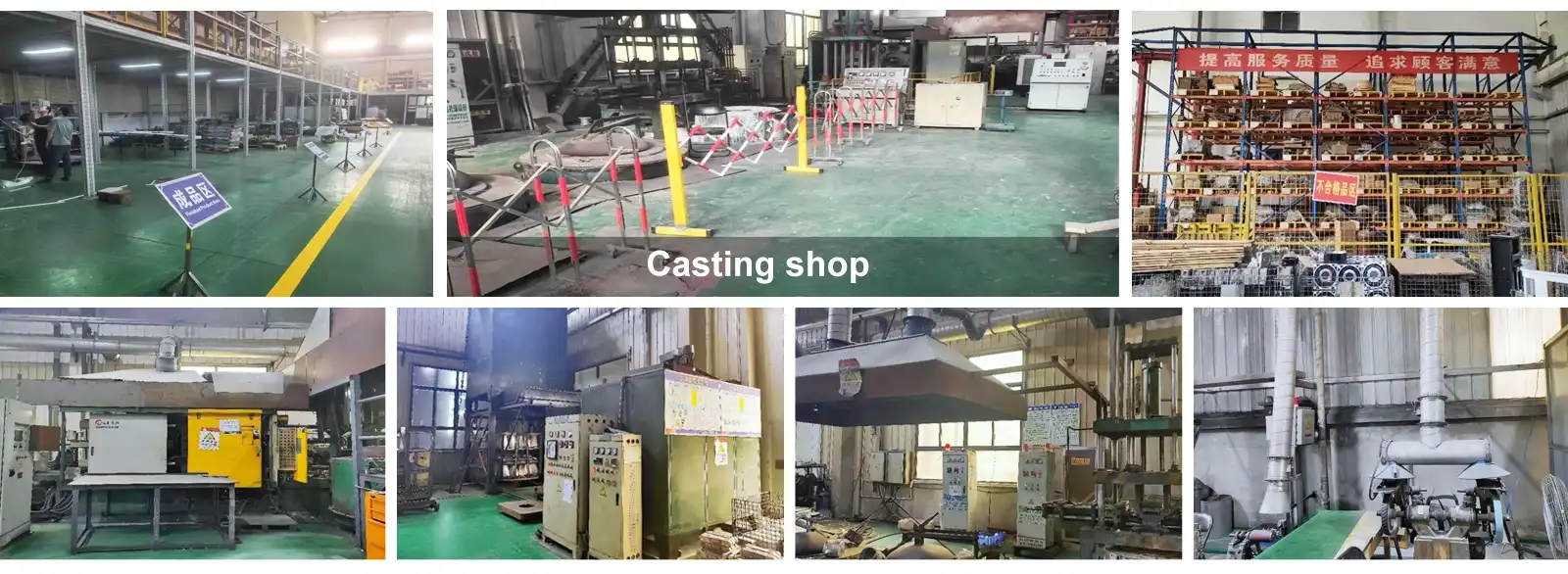
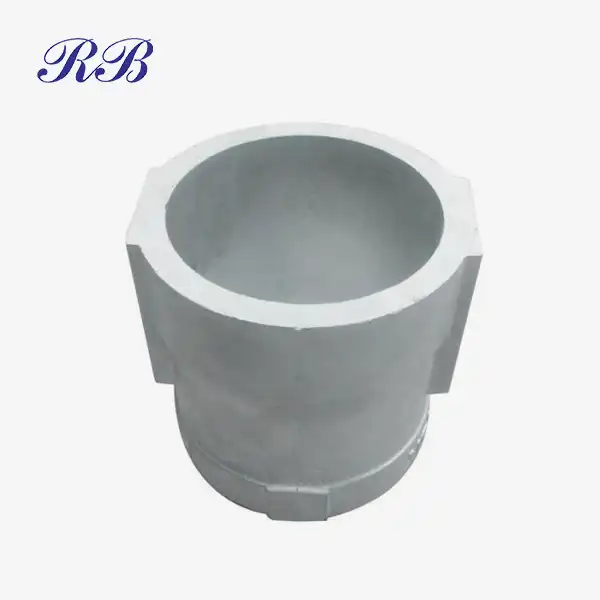
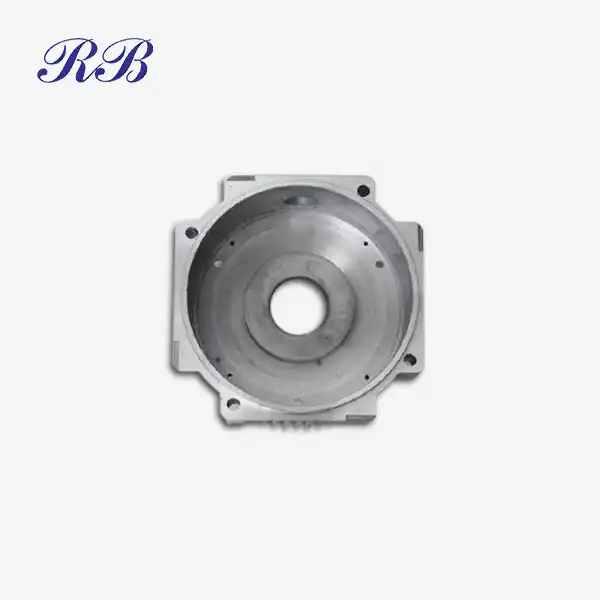
Rongbao Enterprise also produces custom cast parts for industrial applications such as connecting frames of robotic support structures. The company is located in Xi'an, China, and specializes in casting production mixed with CNC machining and finishing operations.
The company uses A356 aluminum alloy for the relevant frame design and gravity casting to manufacture the basic structural form for robotic support arm applications. CNC machining can then be used to machine the critical regions to the dimensional requirements of the customer.
For this application, the conventional frame has a reference weight of roughly 9.5 kg, and bespoke dimensions and combinations can be built based on the customer’s robot design. This is crucial, as robotic support systems often require modifications to the mounting interfaces, geometry, weight, and machining features.
Rongbao Enterprise further notes that its management systems have ISO 9001:2015, ISO 14001, and ISO 45001 certifications. These certifications should be considered in the supplier evaluation process. However, buyers should check the applicable certificate scope and actual validity for the particular project.
The company boasts a production capability of up to 5,000 units each month. If a buyer is considering recurrent orders or larger projects of robots, then the manufacturing capacity should be considered together with the real lead time, tooling requirements, inspection capability, and the supplier’s ability to maintain consistent quality from batch to batch.
OEM and ODM support can also be helpful if the frame is intended for a certain robot arm. OEM manufacture: Customers may submit their existing designs for OEM manufacture or consult about a custom design if the part is to be developed for a new application.
Another practical consideration is packaging. When transporting precision-machined surfaces, they must be protected from impact, contamination, and scratches. Rongbao Enterprise employs wooden boxes as their casting frames, which are used as stronger packing for bigger metal parts in overseas shipping.
For a custom casting connecting frame project, customers will need to provide drawings, material specifications, crucial tolerances, expected loads, mounting details, surface treatment requirements, and desired production volume. Such data enables the provider to assess the casting design and machining requirements prior to production.
Conclusion
The role of a casting connecting frame in an industrial robotic support arm is not limited to the simple connection of two structural pieces. The joint is designed to handle the transfer of loads, maintain the structural rigidity, provide mounting interfaces, control the weight of the arm, and resist the repeated mechanical forces associated with robotic movement. Its ultimate performance is a result of the combination of material selection, casting design, machining accuracy, surface finish, inspection, and application-specific engineering.
The most crucial issue for the buyer is not whether a casting can be produced by a provider. The supplier should be able to integrate the casting process with CNC machining, dimensional control, quality control, customization, and repeat production. When considered together, these criteria suggest that a casting connecting frame can offer a robust structural foundation for demanding applications of robotic support arms.
To send an inquiry, request a detailed quote, or discuss your specific connecting frame requirements, reach out via email at steve.zhou@263.net or zhouyi@rongbaocasting.com. Our team of experts will respond promptly to help you source the right components for your industrial robotic support arms.
FAQ
1: How does the casting connecting frame improve robot precision?
It stabilizes arm segments and absorbs vibrations. This prevents small deviations that ruin precise tasks, per ASM International data.
2: What makes A356 aluminum ideal for these frames?
It has a strong strength-to-weight ratio. It also resists corrosion in harsh factory environments, notes Manufacturing.net.
3: Can casting connecting frames be customized for unique robots?
Yes, most suppliers offer OEM/ODM services. They adjust dimensions and specs to fit specific robot models.
4: What certifications are critical for these frames?
ISO 9001:2015, ISO 14001, and ISO 45001 are key. They ensure quality, safety, and environmental compliance.
References
- International Federation of Robotics. (2024). World Robotics Report: Industrial Robot Components.
- ASM International. (2023). Cast Metal Components for Industrial Automation.
- Robotics Business Review. (2023). Robotic Arm Component Reliability and Downtime Reduction Study.
- Manufacturing.net. (2022). Aluminum Alloys for Heavy-Duty Industrial Components Guide.
- American Foundry Society. (2021). Gravity Casting Process Efficiency Report.
Learn about our latest products and discounts through SMS or email