- English
- French
- German
- Portuguese
- Spanish
- Russian
- Japanese
- Korean
- Arabic
- Greek
- German
- Turkish
- Italian
- Danish
- Romanian
- Indonesian
- Czech
- Afrikaans
- Swedish
- Polish
- Basque
- Catalan
- Esperanto
- Hindi
- Lao
- Albanian
- Amharic
- Armenian
- Azerbaijani
- Belarusian
- Bengali
- Bosnian
- Bulgarian
- Cebuano
- Chichewa
- Corsican
- Croatian
- Dutch
- Estonian
- Filipino
- Finnish
- Frisian
- Galician
- Georgian
- Gujarati
- Haitian
- Hausa
- Hawaiian
- Hebrew
- Hmong
- Hungarian
- Icelandic
- Igbo
- Javanese
- Kannada
- Kazakh
- Khmer
- Kurdish
- Kyrgyz
- Latin
- Latvian
- Lithuanian
- Luxembou..
- Macedonian
- Malagasy
- Malay
- Malayalam
- Maltese
- Maori
- Marathi
- Mongolian
- Burmese
- Nepali
- Norwegian
- Pashto
- Persian
- Punjabi
- Serbian
- Sesotho
- Sinhala
- Slovak
- Slovenian
- Somali
- Samoan
- Scots Gaelic
- Shona
- Sindhi
- Sundanese
- Swahili
- Tajik
- Tamil
- Telugu
- Thai
- Ukrainian
- Urdu
- Uzbek
- Vietnamese
- Welsh
- Xhosa
- Yiddish
- Yoruba
- Zulu
What do cast armor plates do?
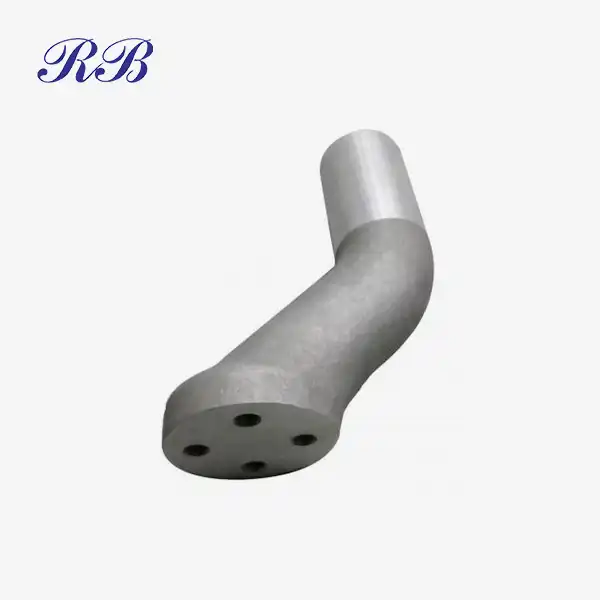
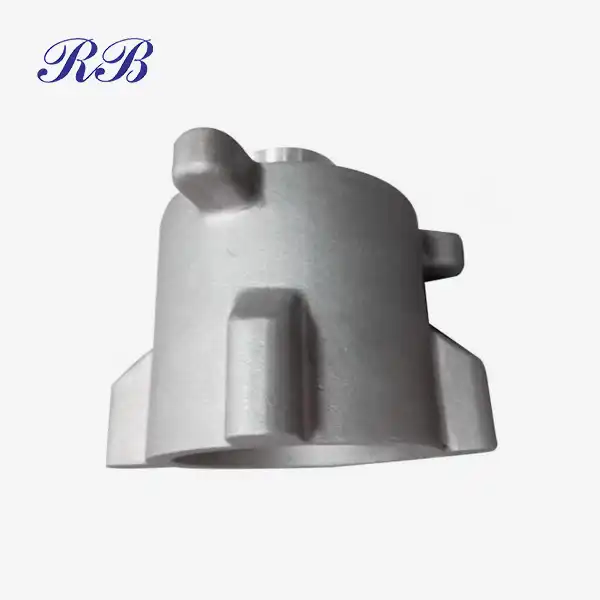
Cast armor plates are protective and connecting components used in specialized electrical and industrial assemblies. The exact function relies on equipment design, connection method, dimensions and material specification, but the main objective is to provide a rigid interface around a connection area while shielding the assembly from mechanical and environmental stressors. For engineers and buying teams, it’s more helpful to know what a cast armor plate actually performs, rather than just calling it a protective metal piece. The design has to take into account the geometry of the pieces to be joined and the estimated loads, installation environment and method of manufacture. Equally important is the choice of material since the plate needs to be a good compromise between strength, weight, corrosion resistance, machinability, and casting properties. For example, the cast armor plate produced by Rongbao Enterprise is made of A356 aluminum alloy using gravity casting. Its product configuration includes CNC machining, shot blasting and OEM/ODM customisation for application specific requirements. The listed unit weight is about 1.05 kg.
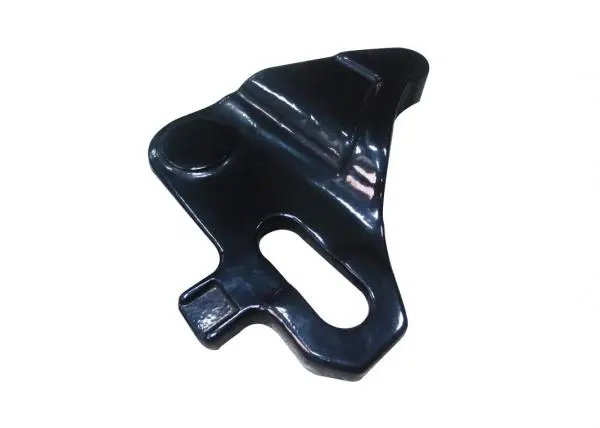
Understanding the Main Function of a Cast Armor Plate
A cast armor plate is used primarily to support and protect a connection region in an installation of equipment. The plate itself is not an electrical device but part of a bigger mechanical assembly. The geometry can provide a specified interface for connecting heads, fasteners, housings, or other related components.
One important function is mechanical protection. Electrical equipment used in industrial environments may be vulnerable to vibration, handling loads, accidental contact, moisture, dust, and temperature changes. A well-designed metal plate can help to protect the connecting region from direct mechanical damage and keep the components in their designated locations.
The plate can also help with dimensional stability. When several pieces are assembled into a unit, their relative positions must be within the tolerances specified by the equipment designer. A rigid cast part can provide a secure mounting or connecting surface and can reduce undesired motion when the system is subjected to normal mechanical loads.
The load-bearing role will always be determined from the technical drawing and the equipment specification. Unless specified otherwise in the design, a cast armor plate shall not be assumed to be a pressure-bearing, current-carrying, grounding, or electromagnetic-shielding component. This distinction is important to the engineer when selecting a replacement or fabricating a custom item.
How Do Cast Armor Plates Support Electrical Equipment?
The electrical distribution equipment is usually provided with connection regions having many components, which must be held in correct alignment after installation. Thus, the function of cast armor plates is closely connected with the mechanical integration.
A plate built around a connecting head allows for a defined mounting interface and helps spread mechanical loads over a broader region. The component geometry can distribute the load into the surrounding structure rather than concentrating forces at a small fastening point. The efficiency of this arrangement is a function of wall thickness, mounting geometry, material condition, fastener design, and stresses stated by the equipment manufacturer.
Another consideration is vibration. Industrial electrical equipment may be subjected to continual mechanical vibration from fans, motors, transformers, switching operations, or nearby machinery. A rigid connecting part can hold the desired position of mated parts. But the plate is not the only factor resisting vibration. The end result is a combination of fastener selection, tightening processes, joint design, equipment structure, operating conditions, etc.
Thermal conditions must also be taken into account in the design. Aluminum and other metals expand and contract with temperature. If the cast plate is part of an assembly that is closely controlled, the design engineer must take into account the changes in thermal expansion across related materials. More crucial than the “absorption” of thermal stress by the plate itself is the proper tolerancing and joint design.
So the most useful method to evaluate a cast armor plate is as one element in a whole assembly. Its usefulness is in its accuracy relative to the surrounding equipment when considering its shape and material attributes.
Why Is A356 Aluminum Used for This Type of Casting?
A356 is a popular aluminum casting alloy based on an aluminum-silicon-magnesium combination. Typical A356 specifications contain Si in the range of 6.5–7.5%, with magnesium as a major alloying element. There may be copper present within limitations, but this is not the distinguishing alloy addition, as is silicon and magnesium.
This material system is suitable for casting of components and offers a practical combination of castability and mechanical properties. The silicon content ensures good casting qualities, and the magnesium content allows the alloy to reach useful mechanical properties after suitable heat treatment.
Weight might be another key concern for a component like a cast armor plate. Aluminum has a much lower density than steel, and an aluminum casting can provide a sturdy component without adding as much mass to the entire assembly. This can facilitate installation and handling if the component dimensions are acceptable for aluminum casting.
Another reason that aluminum alloys are often considered for industrial components is corrosion behavior. Aluminum has a thin oxide coating on its surface naturally. This is not to suggest that an aluminum casting will be immune to corrosion, especially in strong chemical or marine atmospheres, but it can give useful resistance compared to untreated ferrous materials in many common industrial situations.
Final performance is still dependent on alloy specification, quality of casting (where appropriate), heat treatment, accuracy of machining, surface condition, and operating environment. So buyers should request the material specification that applies, not just the generic word “A356.”
What Gravity Casting Contributes to the Component?
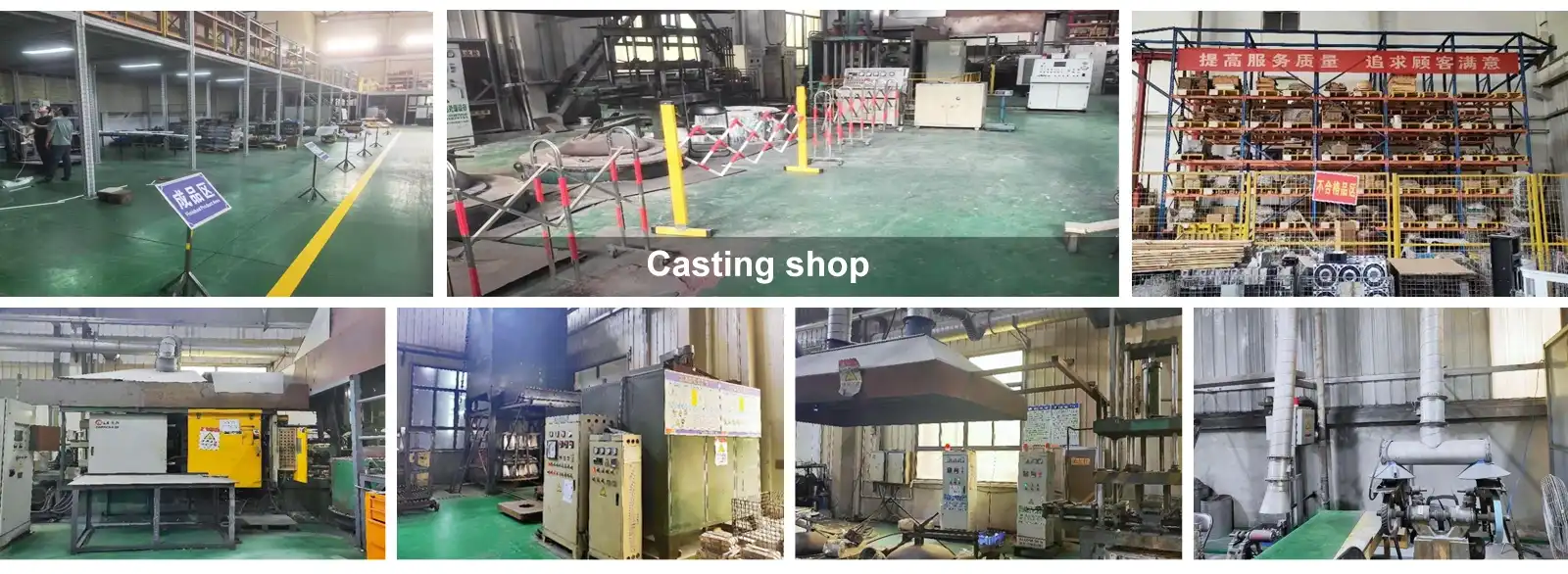
Understanding cast armor plates includes the manufacturing process. Rongbao’s product is made of gravity cast, then CNC machined and shot blasted.
Gravity Casting: Molten metal is poured into a prepared mold, and gravity does the rest. No high-pressure injection is required. This procedure is applicable for components with established three-dimensional geometry and reproducible casting production.
Casting can reduce the amount of material that would need to be machined from a solid block for a connection component. It also can make possible the practical fabrication of curves, mounting features, ribs, and other geometric characteristics that are difficult or uneconomical to build wholly by machining.
Casting, however, does not inherently provide defect-free components. Good process design and inspection must limit porosity, shrinkage, inclusions, dimensional variation, and other casting problems. Hence, the acceptability criteria should be set based on the component drawing and application requirements.
Casting is followed by CNC machining, which adds an extra level of dimensional control. Critical holes, mounting surfaces, threads, or other specified features can be machined to the appropriate dimensions. This combination of casting and machining is particularly useful where the basic component is of a reasonably complex shape but still has to have exact interfaces for assembly.
The surface treatment of Rongbao’s cast armor plate is shot blasting. It helps to get a more uniform appearance of the surface and prepares the casting for subsequent handling or further surface treatment if required.
How to Specify Cast Armor Plates for a Project?
The choice of supplier for cast armor plates should be based on engineering needs, not the general description of the company’s product. The initial document to establish should be a component drawing or three-dimensional model. This sets the geometric definition, mounting locations, critical dimensions, tolerances, and interfaces that the manufacturer must duplicate.
The material that is to be noted separately. If A356 is desired, the procurement specification shall specify the applicable alloy designation and, where applicable, the desired heat-treatment condition. Varied material conditions might give varied mechanical qualities; therefore, saying “aluminum” is often not enough for an engineering component.
Documentation should also include the running environment. Indoor electrical equipment, outdoor equipment, marine installations, and industrial facilities with chemical exposure can have extremely diverse environmental needs. If the component is to be painted, coated, anodized, or otherwise protected, this requirement must be specified before manufacture and not as an afterthought.
Another key purchasing concern is dimensional checking. Critical machined features should be defined with tolerances, and the inspection method should be appropriate to the importance of the feature. Buyers may seek dimensional inspection records, material paperwork, casting inspection records, or other quality documents depending on the application.
The mode of connecting must also be studied. Are there threaded holes, through holes, mounting faces, locating features, or other interfaces on the plate? The manufacturer needs to know. A casting may appear correct on the outside, but if these interfaces are not made to the proper tolerances, they may not assemble.
Buyers should also address process consistency for production repeats. Once a casting is authorized, the use of the same mold, material specification, machining program, and inspection criteria can assist in limiting variation from batch to batch in production.
What to Check Before Ordering Cast Armor Plates?
If you are looking for cast-designed parts, don’t try to compare providers on price alone. The cheaper quote could be due to different material specs, less machining, different inspection needs, or other tooling configurations.
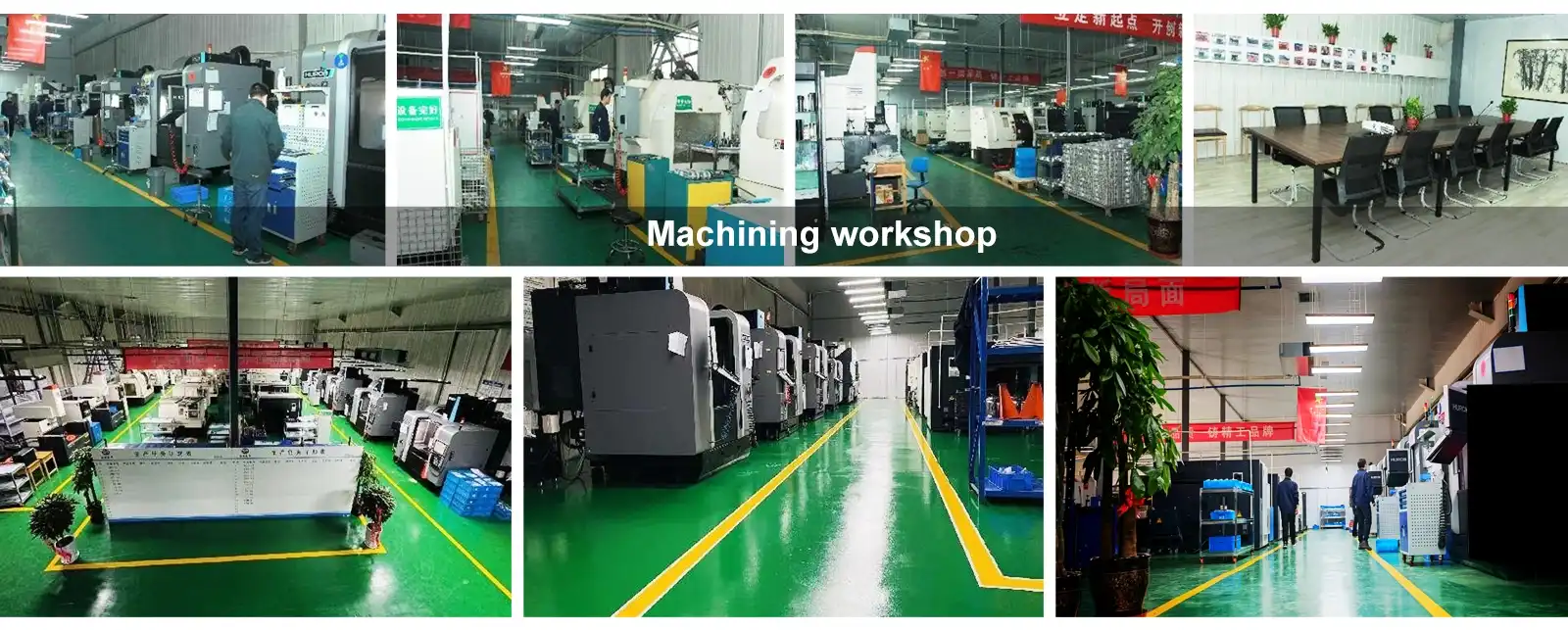
Manufacturing competence is the starting point for a better purchase review. Verify whether the supplier does mold creation, casting, machining, and surface treatment in-house or uses several subcontractors for these operations. According to the product information of Rongbao, they provide an integrated process such as mold creation, gravity casting, CNC machining, and shot blasting to ease the coordination of custom components.
The amount produced is also important. Regarding MOQ, Rongbao indicated that they could produce 5,000 pieces in each batch for this product, with MOQ normally being 100 pieces. The lead time of mold is 15-25 days, and the production lead time is 7-20 days. Actual schedules should still be checked against the intricacy of the drawing, order quantity, tooling needs, and production workload at the time of purchase.
Quality management documents should be evaluated, not used as a marketing statement. Rongbao management systems are certified to ISO 9001:2015, ISO 14001, and ISO 45001. ISO 9001 is about quality management, and ISO 14001 and ISO 45001 are about environmental and occupational health and safety management, respectively. These certifications can be important information regarding the manufacturer’s management processes but should not be taken as a product-specific performance certification.
Buyers should also decide what inspection documentation to include with the order. Depending on the application, this may comprise material paperwork, results of dimensional inspection, production records, or other agreed quality data
Custom Manufacturing Considerations for Cast Armor Plates
Often some custom work will be needed since cast armor plates are normally manufactured to the contour of a particular equipment installation. A standard catalog part may not have the proper hole pattern, thickness, mounting surface, or connecting head interface.
A manufacturer should therefore be able to work from engineering drawings, samples, or 3D models and translate the concept into an appropriate casting technique. The mold design is a very crucial issue since the shape of the casting immediately affects the material flow, the solidification, the machining allowance, and the final dimensional correctness.
Design should also differentiate between cast and machined features. Frequently the casting process may produce huge exterior curves with critical interfaces that can be finalized using CNC machining. This strategy may be able to reduce machining waste and still provide the required accuracy.
Before the engineer develops the mold for a new project, he should study draft angles, wall thickness, ribs, filets, machining allowances, and other design-for-casting issues. Start communicating early to avoid tooling change lead times later in the project.
The cast armor plate is a custom product, and the product information of Rongbao explicitly indicates that it supports OEM/ODM modification. This makes the product more helpful for equipment manufacturers and industrial buyers that need a component tailored to their specific connection geometry instead of a generic off-the-shelf plate.
Rongbao Enterprise as a Cast Armor Plate Manufacturer
Shaanxi Rongbao Machinery Electronics Co., Ltd. is a subsidiary company of Rongbao Enterprise. It is a professional manufacturer of customized cast parts by means of the aluminum alloy casting process. It features a listed armor plate made of A356 aluminum alloy and gravity casting and has a listed unit weight of around 1.05 kg. Manufacturing Process: CNC Machining, Shot Blasting, and OEM/ODM Customization Available.
The company, according to the product description, manufactures its products in Xi’an, China, and is ISO 9001:2015, ISO 14001, and ISO 45001 certified. This information provides a baseline for supplier qualification for the buyer who is evaluating a new supplier. The final purchase decision should be based on the specific drawing, material requirements, inspection criteria, and paperwork that have been agreed to for the project.
It is also important for preparing the listed production information of the supplier. Based on a typical MOQ of 100 pieces, a reported production capacity of 5,000 pieces per batch, and stated tooling and manufacturing lead-time limits, buyers can negotiate prototype and repeat-order requirements. These estimates should be reconfirmed before placing an order since real timing may differ based on the complexity of tooling and production scheduling.
“Especially in the case of individual cast parts, direct technical communication is a great value. In the quote stage, when providing the drawing, material demand, projected working environment, annual quantity, key dimensions, and inspection criteria, the manufacturer may estimate the casting process more correctly.
Conclusion
So what do cast armor plates do? They are mostly utilized to establish a rigid, protective, and precisely built interface within a specialty equipment assembly. They can support connection components, maintain mechanical alignment, distribute loads, and protect the connection region from common environmental and mechanical stressors. But their exact electrical or structural operation depends on the complete apparatus design, not simply the plate.
The A356 aluminum alloy is suitable for this type of cast part because its aluminum-silicon-magnesium alloy system gives good casting characteristics, relatively low weight, and adequate mechanical properties when the alloy condition and manufacturing process are adequately controlled. Gravity casting offers a simple design, and the key interfaces can be cut to the desired specifications by CNC machining.
So, for purchasing teams, the key determinants are not just whether a supplier can provide a “high quality” plate. Check the drawing, material specification, casting process, machining requirement, surface treatment, inspection criteria, manufacturing quantity, lead time, and quality document before ordering.
Rongbao Enterprise offers custom cast armor plates, constructed from A356 aluminum gravity casting and including CNC machining, shot blasting, and OEM/ODM customization. We like the buyer to submit to us the component designs and application requirements so that we may negotiate the best manufacturing technique, tooling, dimensions, inspection needs, and production timeframe before going into formal production.
Contact Information:
Email: steve.zhou@263.net or zhouyi@rongbaocasting.com
Professional sales representatives will respond promptly to inquiries, providing detailed specifications and delivery timelines. Whether you need immediate component replacement or planning equipment upgrades, Rongbao Enterprise delivers the reliability and quality your electrical distribution systems demand.
References
1. IEEE Standard 1415-2014 - IEEE Guide for Induction Machinery Maintenance Testing and Failure Analysis
2. American Foundry Society Technical Data on Aluminum Casting Alloys (2022)
3. ASTM B26/B26M - Standard Practice for Aluminum and Aluminum-Alloy Sand Castings
4. IEC 61076-2-100 - Connectors for Electrical and Electronic Equipment - Product specifications, Part 2-100: Circular connectors
5. ASM Handbook Volume 15: Casting - ASM International (2021)
Learn about our latest products and discounts through SMS or email