- English
- French
- German
- Portuguese
- Spanish
- Russian
- Japanese
- Korean
- Arabic
- Greek
- German
- Turkish
- Italian
- Danish
- Romanian
- Indonesian
- Czech
- Afrikaans
- Swedish
- Polish
- Basque
- Catalan
- Esperanto
- Hindi
- Lao
- Albanian
- Amharic
- Armenian
- Azerbaijani
- Belarusian
- Bengali
- Bosnian
- Bulgarian
- Cebuano
- Chichewa
- Corsican
- Croatian
- Dutch
- Estonian
- Filipino
- Finnish
- Frisian
- Galician
- Georgian
- Gujarati
- Haitian
- Hausa
- Hawaiian
- Hebrew
- Hmong
- Hungarian
- Icelandic
- Igbo
- Javanese
- Kannada
- Kazakh
- Khmer
- Kurdish
- Kyrgyz
- Latin
- Latvian
- Lithuanian
- Luxembou..
- Macedonian
- Malagasy
- Malay
- Malayalam
- Maltese
- Maori
- Marathi
- Mongolian
- Burmese
- Nepali
- Norwegian
- Pashto
- Persian
- Punjabi
- Serbian
- Sesotho
- Sinhala
- Slovak
- Slovenian
- Somali
- Samoan
- Scots Gaelic
- Shona
- Sindhi
- Sundanese
- Swahili
- Tajik
- Tamil
- Telugu
- Thai
- Ukrainian
- Urdu
- Uzbek
- Vietnamese
- Welsh
- Xhosa
- Yiddish
- Yoruba
- Zulu
What is low pressure die casting of aluminium?
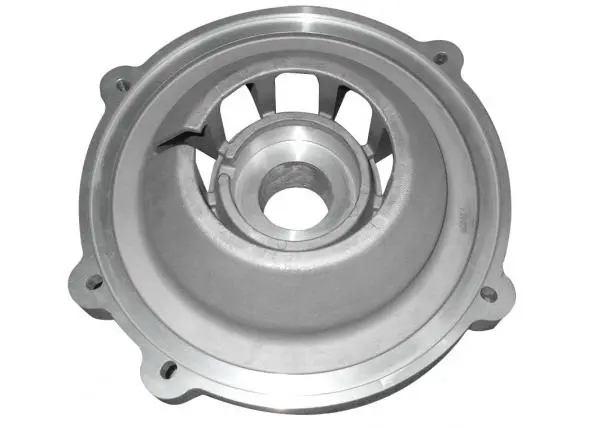
Low pressure aluminum casting of aluminium is a specialized metal forming process that has gained significant traction in various industries due to its unique advantages. This method combines precision, efficiency, and cost-effectiveness, making it an ideal choice for producing high-quality aluminium components. In this comprehensive guide, we'll explore the intricacies of low pressure aluminium casting, its key characteristics, and typical applications.
Key Characteristics of Low Pressure Aluminium Casting
Low pressure die casting of aluminium is characterized by several distinctive features that set it apart from other casting methods. Understanding these characteristics is crucial for appreciating the process's benefits and applications.
One of the primary attributes of low pressure aluminum casting is its ability to produce components with excellent dimensional accuracy and surface finish. The procedure is filling a cavity of a die with molten aluminum at a pressure of around 0.2 to 0.7 bar. When opposed to high-pressure die casting, this soft filling technique produces a grain structure that is more consistent and has fewer flaws.
The process's adaptability to a wide range of component sizes and complexity is another distinguishing feature of low pressure aluminum casting. Whether it's a big structural piece or a little delicate component, low pressure aluminum casting can handle it all. Its adaptability makes it a strong fit for a wide range of markets, from consumer products to the automobile and aerospace sectors.
The improved mechanical qualities of the finished product are a result of the regulated solidification process used in low pressure aluminum casting. Achieving ideal grain structures and minimizing porosity via pressure and temperature manipulation throughout the casting cycle allows manufacturers to produce components that are stronger and more dependable.
Typical Applications of Low Pressure Aluminium Casting
Many different types of industry have been using low pressure die casting of aluminum because of its many benefits. Now we'll take a look at a few of the most typical uses:
Engine blocks, cylinder heads, and wheels are among the many automobile components made using low pressure aluminum casting. The process's mastery of complicated geometries, along with its great dimensional accuracy and exceptional surface quality, makes these components really exceptional. For example, this process frequently results in alloy wheels with few machining needs, which in turn reduces manufacturing time and costs.
Critical components including turbine blades, structural sections, and engine casings are also made using low pressure aluminum casting in the aerospace sector. This method is perfect for these high-performance uses because it consistently produces high-quality components with better mechanical qualities.
Low pressure aluminum casting is used to make accurate and sturdy parts for hydraulic systems, valves, and pumps in the industrial equipment domain. These uses benefit greatly from the process's ability to create intricate interior channels while keeping tolerances tight.
Creating components for elevators is another major use. Low pressure aluminum casting allows Rongbao Enterprise, a frontrunner in the industry, to produce elevator parts that are up to par in terms of quality and safety. Strict quality control procedures guarantee the dependability and longevity of these components, which are usually crafted from 380 aluminum alloy and weigh around 6.5 kg.
Even the consumer products industry may benefit from low pressure aluminum casting's adaptability. The process's capacity to create complex patterns with constant quality and an outstanding surface polish makes it ideal for products like ornamental hardware, high-end cookware, and light fixtures.
Advantages of Low Pressure Aluminium Casting
There are a number of reasons why many manufacturers use low pressure die casting of aluminum:
To begin with, the procedure ensures that the castings are of excellent quality and have few faults. Fewer porosity problems and enhanced mechanical qualities are the results of controlled filling of the die cavity at low pressure, which lowers turbulence and air entrapment.
The second advantage is the great material efficiency of low pressure aluminum casting. A yield of 90–95% is not uncommon, which is far greater than what other casting procedures accomplish. Lower manufacturing costs and less waste are the results of this efficiency.
The fact that the low pressure aluminum casting process is very consistent and repeatable is another perk. With the right settings, low pressure die casting can make almost identical components with almost no variation, guaranteeing good quality while cutting down on quality control efforts.
A great deal of design leeway is also provided by the technique. There are new avenues for product design and innovation made possible by the relative simplicity of achieving complex geometries, thin walls, and detailed detailing.
As a last point, low pressure aluminum casting is less harmful to the environment than other production methods. Aligning with the increasing focus on sustainable manufacturing techniques, the low energy consumption and great material efficiency lead to a smaller carbon impact.
Challenges and Considerations
Although low pressure die casting of aluminum has several advantages, there are also certain things to keep in mind.
An important factor to think about is the money you'll need to spend on tools and equipment originally. It may not be feasible to do small-scale production runs using the specialized technology and dies required in low pressure aluminum casting due to their high cost.
The cycle time is another factor to think about. The production speeds for high-volume applications might be impacted by the higher cycle periods of low pressure aluminum casting compared to high-pressure die casting.
When casting aluminum at low pressure, material choice is also critical. The method works well with most aluminum alloys, but for some materials you may have to tweak the settings a little to get the best results.
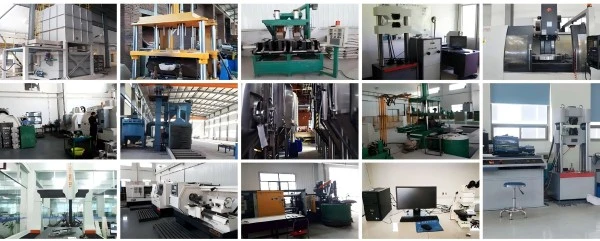
Finally, to guarantee the continuous manufacturing of high-quality components, the process's complexity calls for competent operators and strong quality control systems. To get the most out of low pressure aluminum casting, you need to put money into training and quality management systems.
Low Pressure Aluminum Casting Supplier: Rongbao Enterprise
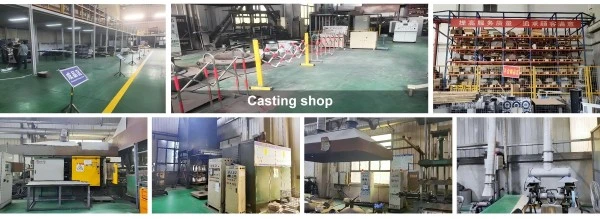
When searching for a reliable source for high-quality low pressure aluminum castings, many businesses turn to Rongbao Enterprise. Elevator components are among the various products manufactured at the cutting-edge Xi'an facility of the Chinese firm Rongbao.
Rongbao Enterprise's expertise in low pressure aluminum casting is seen in their exceptional manufacturing capabilities. Each component may weigh around 6.5 kg, and they can manufacture up to 5,000 of them. They promise optimal strength and lifespan for mission-critical usage with their 380 aluminum alloy.
The distinguishing traits of Rongbao are quality and environmental sensitivity. Certification in three international standards for quality management, environmental management, and occupational safety and health demonstrates that they adhere to international standards.
Rongbao Enterprise provides a wide range of services, including precision CNC machining and shot blasting. Being well-versed in OEM/ODM allows them to cater to each customer's specific needs with tailored solutions.
If you're looking for a reliable partner for your low pressure aluminium casting needs, consider reaching out to Rongbao Enterprise. You can contact them at steve.zhou@263.net or zhouyi@rongbaocasting.com to discuss your project requirements and explore how their expertise can benefit your business.
FAQ
1. What are the main differences between low pressure and high pressure die casting?
The main differences lie in the pressure used and the resulting characteristics of the castings. Low pressure die casting uses pressures between 0.2 to 0.7 bar, resulting in slower cavity filling and better control over the solidification process. This leads to fewer defects, better mechanical properties, and the ability to cast larger parts. High pressure die casting uses much higher pressures (typically 50 to 120 MPa), allowing for faster production cycles and thinner wall sections, but with potentially more defects and limitations on part size.
2. What types of aluminium alloys are commonly used in low pressure die casting?
Common aluminium alloys used in low pressure die casting include A356 (AlSi7Mg), A357 (AlSi7Mg0.6), and 380 (AlSi8Cu3). These alloys offer a good balance of castability, strength, and corrosion resistance. The choice of alloy depends on the specific requirements of the application, such as mechanical properties, weight considerations, and operating environment.
3. How does low pressure die casting impact the environmental footprint of manufacturing?
Low pressure die casting generally has a lower environmental impact compared to some other manufacturing processes. It offers high material efficiency (90-95% yield), reducing waste. The lower pressures used also mean less energy consumption compared to high pressure die casting. Additionally, the process allows for easier recycling of excess material, further reducing the environmental footprint. However, the overall impact depends on factors such as the specific alloy used, energy sources, and any additional treatments or processes applied to the castings.
4. Can low pressure die casting be used for non-aluminium metals?
While low pressure die casting is most commonly associated with aluminium alloys, the process can be adapted for other metals with relatively low melting points. This includes magnesium alloys, zinc alloys, and some copper alloys. However, the process parameters and equipment may need to be adjusted to accommodate the different properties of these metals. It's worth noting that aluminium remains the most widely used metal in low pressure die casting due to its excellent combination of properties and wide range of applications.
5. How does the cost of low pressure die casting compare to other casting methods?
The cost-effectiveness of low pressure die casting depends on various factors, including production volume, part complexity, and material choice. Generally, low pressure die casting has higher tooling costs compared to sand casting or gravity die casting, but lower than high pressure die casting. However, it offers advantages in terms of part quality, reduced machining requirements, and lower scrap rates, which can offset the initial investment for medium to high volume production. For small production runs, other methods might be more economical. A detailed cost analysis considering all aspects of production and the specific requirements of the project is necessary to determine the most cost-effective method.
References
1. Campbell, J. (2015). Complete Casting Handbook: Metal Casting Processes, Techniques and Design. Butterworth-Heinemann.
2. ASM International. (2008). ASM Handbook, Volume 15: Casting. ASM International.
3. Kaufman, J. G., & Rooy, E. L. (2004). Aluminum Alloy Castings: Properties, Processes, and Applications. ASM International.
4. Bonollo, F., & Gramegna, N. (2015). The MUSIC guide to key-parameters in high pressure die casting. AIM-Associazione Italiana di Metallurgia.
5. Luo, A. A. (2013). Magnesium casting technology for structural applications. Journal of Magnesium and Alloys, 1(1), 2-22.
Learn about our latest products and discounts through SMS or email