- English
- French
- German
- Portuguese
- Spanish
- Russian
- Japanese
- Korean
- Arabic
- Greek
- German
- Turkish
- Italian
- Danish
- Romanian
- Indonesian
- Czech
- Afrikaans
- Swedish
- Polish
- Basque
- Catalan
- Esperanto
- Hindi
- Lao
- Albanian
- Amharic
- Armenian
- Azerbaijani
- Belarusian
- Bengali
- Bosnian
- Bulgarian
- Cebuano
- Chichewa
- Corsican
- Croatian
- Dutch
- Estonian
- Filipino
- Finnish
- Frisian
- Galician
- Georgian
- Gujarati
- Haitian
- Hausa
- Hawaiian
- Hebrew
- Hmong
- Hungarian
- Icelandic
- Igbo
- Javanese
- Kannada
- Kazakh
- Khmer
- Kurdish
- Kyrgyz
- Latin
- Latvian
- Lithuanian
- Luxembou..
- Macedonian
- Malagasy
- Malay
- Malayalam
- Maltese
- Maori
- Marathi
- Mongolian
- Burmese
- Nepali
- Norwegian
- Pashto
- Persian
- Punjabi
- Serbian
- Sesotho
- Sinhala
- Slovak
- Slovenian
- Somali
- Samoan
- Scots Gaelic
- Shona
- Sindhi
- Sundanese
- Swahili
- Tajik
- Tamil
- Telugu
- Thai
- Ukrainian
- Urdu
- Uzbek
- Vietnamese
- Welsh
- Xhosa
- Yiddish
- Yoruba
- Zulu
How to check stainless steel processing drainage pipe?
Drainage pipe quality is crucial for plumbing systems since it prolongs their useful life and prevents costly repairs. Because stainless steel processing drainage pipes don't corrode and endure a long time, people like them.But it's important to know how to examine these pipes the right way to make sure they fulfill the regulations. In this complete tutorial, we'll go over the most important methods to check the quality of stainless steel processing drainage pipes. These include making sure they meet certification standards, checking the quality of the welding, making sure they don't leak, and checking the surface treatment.
Verify Certification Compliance
Verifying the drainage pipes' certification compliance is the initial stage in inspecting stainless steel processing drainage pipes. Installers and end users may rest easy knowing that the pipes adhere to industry standards and regulations.
Examine certification conformity with the following factors in mind:
Certification in accordance with ISO 9001:2015: This standard guarantees consistent product quality by ensuring that the producer adheres to a quality management system.
The manufacturer's dedication to minimizing environmental effect is shown by its ISO 14001 accreditation, an environmental management standard.
ISO 45001 certification: This standard for occupational health and safety guarantees that the producer puts worker safety first when producing goods.
Get paperwork from the manufacturer or supplier to confirm these certifications. Reputable businesses, such as Rongbao Enterprise, often make their certifications widely visible on their product literature or website.
Inspect Welding Quality and Leak-Proof Performance
The performance of stainless steel processing drainage pipes is determined on the welding joints' integrity. Bad welding may cause leaks, rust, and early failure. This is how to tell how well the welding is and how well the leakproofing works:
- Visual inspection: Examine the welds for uniformity, smoothness, and the absence of faults such cracks, porosity, or undercutting.
- Nondestructive testing: Ultrasonic testing or radiographic inspection may be used to detect inner faults in welds.
- The hydrostatic pressure test involves filling the pipe with water and pressurizing it to detect leaks or weak points.
- Dye penetrant testing may reveal surface faults that might otherwise go unnoticed.
Rongbao Enterprise, for example, use sophisticated CNC machining techniques to produce precise welding and faultless connections in their stainless steel processing drainage pipes. This attention to detail contributes to the exceptional leak-proof performance.

Check Surface Treatment and Finish
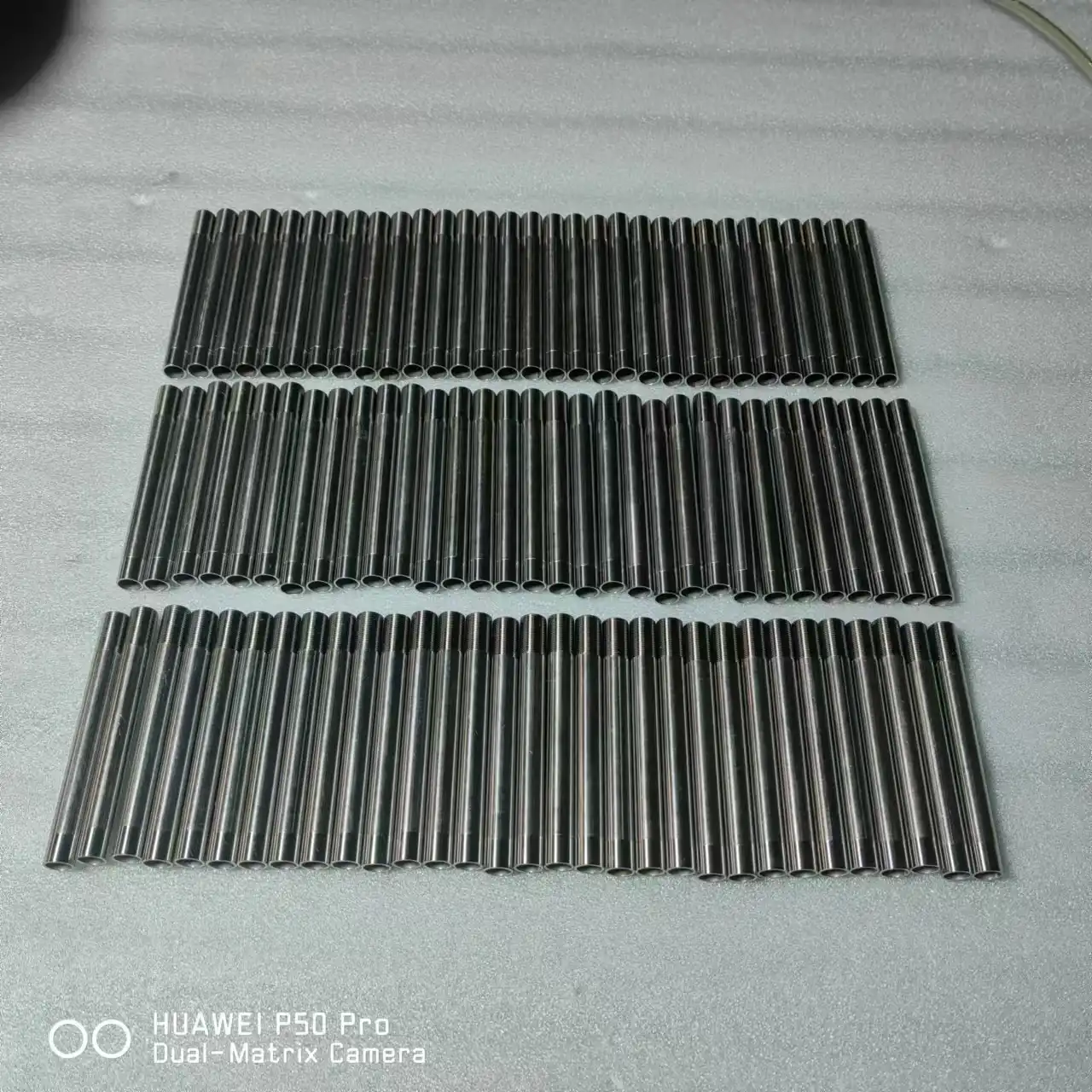
The polish and surface treatment of stainless steel processing drainage pipes are very important for their capacity to resist rust and last a long time. When you look at the surface treatment and finish, check for these things:
- Put your hand over the pipe to feel whether it is smooth. It should feel smooth and not have any bumps or rough places.
- Consistency: The finish should be the same all the way around the pipe, with no patches or color changes.
- Passivation is a chemical process that makes stainless steel more resistant to corrosion. Find out how the manufacturer does passivation.
- Polishing: Some uses may need a polished surface to look better or be more hygienic. Make sure that the level of polishing fits your needs.
Rongbao Enterprise, for instance, has a lot of techniques to finish the surfaces of their stainless steel processing drainage pipes, such electropolishing and mechanical polishing, to meet the needs of various clients.
You should consider about how the drainage pipe will be utilized when you choose a surface treatment for it. For example, pipes used in food processing could require a smoother surface to prevent germs from developing and make cleaning simpler.
Additional Considerations for Stainless Steel Processing Drainage Pipes
Certification compliance, welding quality, and surface treatment are not the only significant factors to consider while evaluating stainless steel processing drainage pipes.
Make sure the stainless steel grade is appropriate for your need before buying the pipes.
Its exceptional resistance to corrosion and extended lifetime have led to 304 stainless steel's widespread adoption.
Make sure the pipe measurements are accurate in length, wall thickness, and diameter.
Features that are mechanical Verify that the material's yield, elongation, and tensile strengths are adequate before using it in your project.
Chemical make-up: Verify the pipe's stainless steel's chemical make-up using a material test certificate.
Rongbao Enterprise uses hardwood boxes for its pipes because they are an example of proper packaging that helps keep pipes safe throughout transit and storage.
The reliability and suitability of the stainless steel processing drainage pipes you choose for your application may be guaranteed by carefully considering these factors.
Stainless Steel Processing Drainage Pipe Supplier: Rongbao Enterprise
Rongbao Enterprise is a reputable provider of high-quality stainless steel processing drainage pipes. They provide dependable solutions for a range of sectors because to their dedication to precise production and quality control. Their stainless steel processing drainage pipes are used extensively in kitchenware, exhibiting their adaptability and durability.
Rongbao Enterprise's mastery in precision processing and aluminum alloy casting allows them to provide stainless steel products of consistently excellent quality. These principles are clearly supported by their quality management, environmental consciousness, and occupational safety certifications (ISO 9001:2015, ISO 14001, and ISO 45001).
For inquiries about their stainless steel processing drainage pipes or other precision components, you can reach out to Rongbao Enterprise at steve.zhou@263.net or zhouyi@rongbaocasting.com. With a production capacity of 1,000,000 pieces and the ability to offer customized specifications, Rongbao Enterprise is well-equipped to meet your specific needs for high-quality drainage solutions.
FAQ
1. What are the advantages of using stainless steel for processing drainage pipes?
Stainless steel processing drainage pipes offer several advantages, including excellent corrosion resistance, durability, ease of cleaning, and long service life. They are particularly suitable for environments where hygiene is crucial, such as food processing plants and pharmaceutical facilities.
2. How often should stainless steel processing drainage pipes be inspected?
The frequency of inspections depends on the specific application and environment. Generally, it's recommended to perform visual inspections annually and more comprehensive checks, including leak tests, every 3-5 years. However, in harsh environments or critical applications, more frequent inspections may be necessary.
3. Can stainless steel processing drainage pipes be recycled?
Yes, stainless steel is 100% recyclable. At the end of their service life, stainless steel processing drainage pipes can be recycled without loss of quality, contributing to environmental sustainability and resource conservation.
4. What is the typical lifespan of a stainless steel processing drainage pipe?
When properly installed and maintained, stainless steel processing drainage pipes can last 50 years or more. Their longevity depends on factors such as the specific grade of stainless steel used, the environment they're exposed to, and the quality of installation and maintenance.
5. Are there any special maintenance requirements for stainless steel processing drainage pipes?
While stainless steel is known for its low maintenance requirements, regular cleaning and inspection are recommended to ensure optimal performance. Avoid using abrasive cleaners or steel wool, which can damage the protective oxide layer. Instead, use mild detergents and soft cloths for cleaning. Periodic flushing with clean water can help prevent buildup and maintain flow efficiency.
References
1. International Organization for Standardization. (2015). ISO 9001:2015 Quality management systems — Requirements.
2. American Society for Testing and Materials. (2021). ASTM A312 / A312M - 21 Standard Specification for Seamless, Welded, and Heavily Cold Worked Austenitic Stainless Steel Pipes.
3. Stainless Steel World. (2022). Stainless Steel in the Water Industry.
4. American Welding Society. (2020). AWS D18.1/D18.1M:2020 Specification for Welding of Austenitic Stainless Steel Pipe and Tubing for Sanitary (Hygienic) Applications.
5. International Stainless Steel Forum. (2023). Stainless Steel and Sustainability.
Learn about our latest products and discounts through SMS or email