- English
- French
- German
- Portuguese
- Spanish
- Russian
- Japanese
- Korean
- Arabic
- Greek
- German
- Turkish
- Italian
- Danish
- Romanian
- Indonesian
- Czech
- Afrikaans
- Swedish
- Polish
- Basque
- Catalan
- Esperanto
- Hindi
- Lao
- Albanian
- Amharic
- Armenian
- Azerbaijani
- Belarusian
- Bengali
- Bosnian
- Bulgarian
- Cebuano
- Chichewa
- Corsican
- Croatian
- Dutch
- Estonian
- Filipino
- Finnish
- Frisian
- Galician
- Georgian
- Gujarati
- Haitian
- Hausa
- Hawaiian
- Hebrew
- Hmong
- Hungarian
- Icelandic
- Igbo
- Javanese
- Kannada
- Kazakh
- Khmer
- Kurdish
- Kyrgyz
- Latin
- Latvian
- Lithuanian
- Luxembou..
- Macedonian
- Malagasy
- Malay
- Malayalam
- Maltese
- Maori
- Marathi
- Mongolian
- Burmese
- Nepali
- Norwegian
- Pashto
- Persian
- Punjabi
- Serbian
- Sesotho
- Sinhala
- Slovak
- Slovenian
- Somali
- Samoan
- Scots Gaelic
- Shona
- Sindhi
- Sundanese
- Swahili
- Tajik
- Tamil
- Telugu
- Thai
- Ukrainian
- Urdu
- Uzbek
- Vietnamese
- Welsh
- Xhosa
- Yiddish
- Yoruba
- Zulu
How is cast armor plate made?
Engineers and procurement specialists in defense, aerospace, and security sectors face the same challenge every day. They need lightweight armor that stops modern threats without adding excessive weight. Cast armor plates deliver exactly that solution. These components combine high-strength aluminum with advanced ceramic composites to create protection that outperforms traditional rolled homogeneous armor in many scenarios.
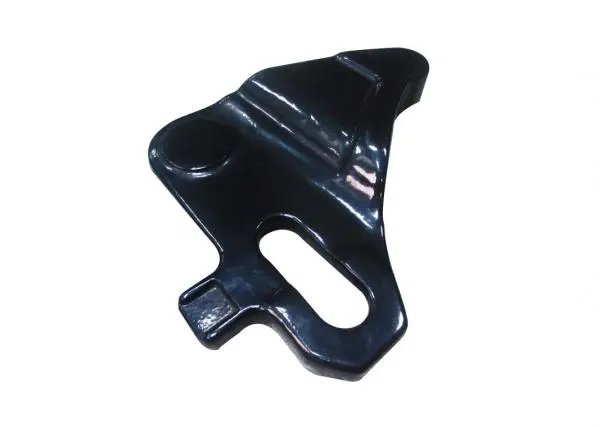
Material Selection: Building Protection at the Molecular Level
Everything starts with the right alloy. A356 aluminum serves as the matrix material because it offers outstanding castability and mechanical properties after T6 heat treatment. Foundries choose primary A356 with low iron content, typically below 0.12 %, to maximize ductility and fracture toughness.
To push performance further, manufacturers incorporate boron carbide particles into the melt. Boron carbide ranks as the third-hardest material known, surpassed only by diamond and cubic boron nitride. When uniformly dispersed at 10–20 % volume fraction, it dramatically raises wear resistance and hardness.
The mixing process demands precision. Operators use electromagnetic stirring or ultrasonic dispersion to prevent particle agglomeration. This step ensures every cubic millimeter of the final plate contains the optimal ceramic reinforcement. Independent laboratories regularly verify particle distribution through microstructural analysis.
Real-world results speak volumes. Cast armor plates produced with this composite approach consistently achieve Brinell hardness values between 520 and 620 BHN—numbers that rival many steel armor solutions while weighing 60 % less.
Advanced Vacuum Gravity Casting: Eliminating Defects Before They Form
Traditional sand casting simply cannot deliver the internal soundness required for cast armor plate applications. That is why serious manufacturers use vacuum gravity casting. The process pulls 10–50 mbar vacuum in the mold cavity before and during pouring.
This vacuum level removes dissolved gases and prevents air entrapment. Porosity drops to virtually zero. Each cast armor plate achieves radiographic quality equivalent to ASTM E155 Grade I or better.
Temperature control stays tight. Operators maintain melt temperature at 720–740 °C and pour at 690–710 °C. The mold itself sits at 250–300 °C to reduce thermal shock and promote directional solidification. Cooling channels in the steel die ensure the thickest sections solidify last, feeding shrinkage naturally.
The result? Cast blanks that require minimal machining stock—typically just 3–5 mm per face. This efficiency reduces both material waste and CNC cycle time significantly.
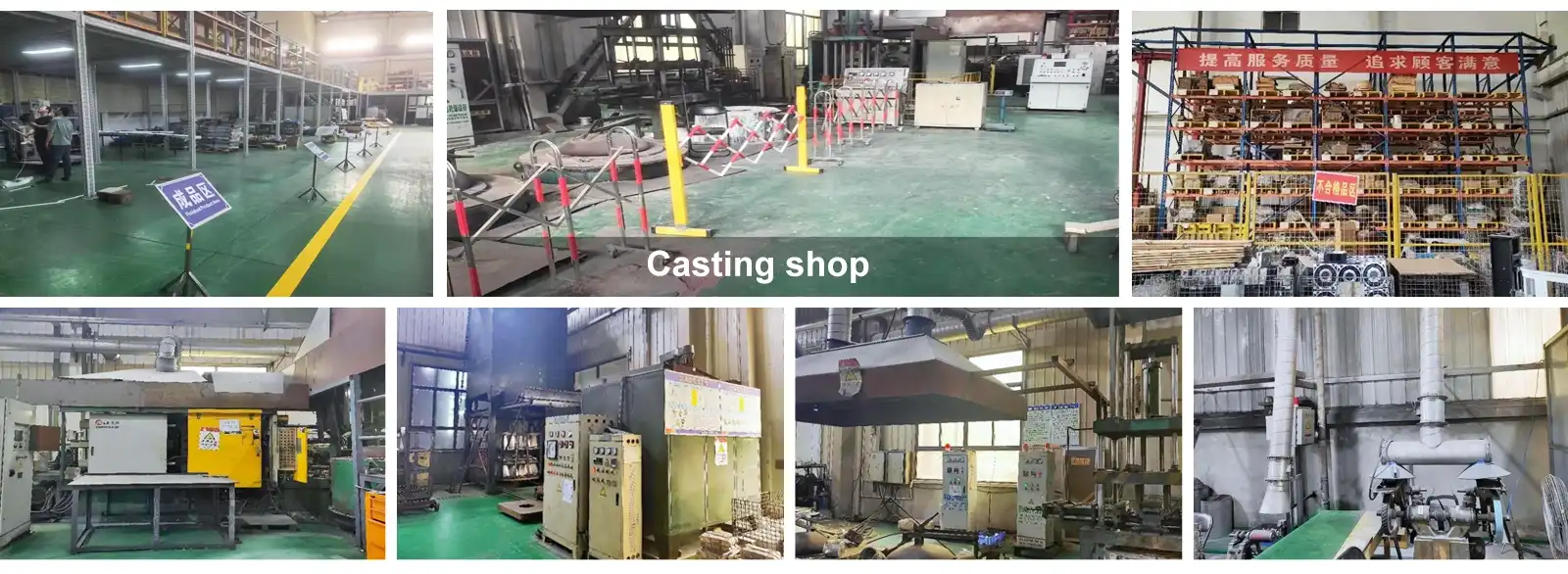
CNC Machining Strategies That Deliver Perfect Geometry Every Time
Raw castings arrive at the machining center with excellent internal quality but rough surfaces. Five-axis CNC machines then transform them into finished cast armor plates.
Programmers follow a specific sequence that experienced shops have refined over thousands of parts:
- Rough machining in the T4 condition to remove 80 % of excess material
- Solution heat treatment and quenching
- Artificial aging to T6 temper
- Semi-finish and finish machining with carbide and PCD tooling
This sequence minimizes distortion. Final tolerances on critical mounting surfaces reach ±0.05 mm. Hole position accuracy stays within 0.15 mm across 1,500 mm plates.
Surface finish matters for ballistic performance. Engineers specify Ra 1.6–3.2 μm on threat-facing surfaces to optimize ceramic adhesion in hybrid configurations and reduce projectile yaw.
Surface Enhancement and Final Protection Layers
After machining, every cast armor plate goes through shot blasting with stainless steel shot. This process work-hardens the surface layer and removes oxide scale. Hardness increases by 15–20 % in the affected zone.
Many customers then request additional coatings:
- Type III hard anodizing (50–75 μm) for abrasion resistance
- Ceramic polymer coatings for spall liner adhesion
- Low-observable paint systems for military vehicles
- Anti-spall layers bonded directly to the aluminum substrate
Each coating system undergoes salt spray testing for 1,000+ hours to verify corrosion protection in marine environments.

Testing That Proves Performance, Not Just Claims It
Trust arrives only with data. Every production batch undergoes a rigorous test matrix.
Hardness testing occurs on every single plate at nine specified locations. Ballistic testing follows NATO STANAG 4569 or customer-specific protocols. Common threats tested include 7.62×51 AP (M61), 14.5×114 API/B32, and various fragmentation simulators.
Independent test houses conduct V50 ballistic limit testing according to MIL-STD-662F. Customers receive full reports with high-speed video and residual velocity data.
Recent tests on 35 mm thick composite cast plates achieved V50 values above 950 m/s against 20 mm FSP—performance that exceeds many rolled steel solutions at half the weight.
Cast Armor Plate Supplier: Rongbao Enterprise
For over twenty years, Rongbao Enterprise in Xi'an, China has manufactured mission-critical aluminum castings for the world's most demanding applications. We specialize in high-performance cast armor plates using A356 aluminum with boron carbide reinforcement, produced through vacuum gravity casting, precision CNC machining, and comprehensive ballistic qualification.
Our 48,000 m² facility holds ISO 9001:2016, ISO 14001, and ISO 45001 certifications. Annual capacity exceeds 12,000 tons of precision aluminum castings, with 70 % exported to North America, Europe, Japan, and Australia.
When lives depend on protection, contractors choose partners who deliver without excuses. That partner is Rongbao.
Contact our armor division today:
Steve Zhou: steve.zhou@263.net
Yi Zhou: zhouyi@rongbaocasting.com
We respond within 24 hours and deliver formal quotations with technical proposals within 72 hours. Let us prove why global defense manufacturers trust Rongbao for their most critical armor programs.
FAQ
What is the typical lead time for custom cast armor plates?
First articles take 8–10 weeks from approved drawing. Production lots of 100–500 pieces ship in 10–14 weeks. Rongbao maintains dedicated armor production lines for rapid response.
Can you produce plates thicker than 100 mm?
Yes. We routinely cast and machine plates up to 150 mm thick while maintaining internal soundness and consistent properties throughout the section.
What is the weight saving compared to AR500 steel?
Our composite cast plates deliver equivalent protection at 55–65 % of AR500 weight, depending on threat level and plate thickness.
Do you supply complete bolt-on armor kits?
Absolutely. We deliver fully machined plates with mounting hardware, spall liners, and installation templates ready for vehicle integration.
Are your facilities approved for ITAR-controlled projects?
Yes. Rongbao operates ITAR-compliant processes and regularly supplies U.S. defense contractors under export licensing.
References
- Gooch, W. A. (2018). "Aluminum Armor Alloys" in Military Vehicles and Engineering. CRC Press.
- Chinella, J. F. (2020). "Lightweight Composite Armor Development" – U.S. Army Research Laboratory Report ARL-TR-8924.
- Showalter, D. D., et al. (2021). "Vacuum Die Casting of Aluminum Armor Components" – International Journal of Metalcasting, Vol. 15, pp. 412-428.
- NATO STANAG 4569 – Protection Levels for Occupants of Logistic and Light Armoured Vehicles.
- MIL-STD-662F – V50 Ballistic Test for Armor.
Learn about our latest products and discounts through SMS or email