- English
- French
- German
- Portuguese
- Spanish
- Russian
- Japanese
- Korean
- Arabic
- Greek
- German
- Turkish
- Italian
- Danish
- Romanian
- Indonesian
- Czech
- Afrikaans
- Swedish
- Polish
- Basque
- Catalan
- Esperanto
- Hindi
- Lao
- Albanian
- Amharic
- Armenian
- Azerbaijani
- Belarusian
- Bengali
- Bosnian
- Bulgarian
- Cebuano
- Chichewa
- Corsican
- Croatian
- Dutch
- Estonian
- Filipino
- Finnish
- Frisian
- Galician
- Georgian
- Gujarati
- Haitian
- Hausa
- Hawaiian
- Hebrew
- Hmong
- Hungarian
- Icelandic
- Igbo
- Javanese
- Kannada
- Kazakh
- Khmer
- Kurdish
- Kyrgyz
- Latin
- Latvian
- Lithuanian
- Luxembou..
- Macedonian
- Malagasy
- Malay
- Malayalam
- Maltese
- Maori
- Marathi
- Mongolian
- Burmese
- Nepali
- Norwegian
- Pashto
- Persian
- Punjabi
- Serbian
- Sesotho
- Sinhala
- Slovak
- Slovenian
- Somali
- Samoan
- Scots Gaelic
- Shona
- Sindhi
- Sundanese
- Swahili
- Tajik
- Tamil
- Telugu
- Thai
- Ukrainian
- Urdu
- Uzbek
- Vietnamese
- Welsh
- Xhosa
- Yiddish
- Yoruba
- Zulu
What are the casting product design considerations?
Casting product design includes pouring molten material into a mold, which requires careful design considerations such as consistent wall thickness, draft angles, and suitable fillet radii to avoid flaws and facilitate mold release. Strategies like sand casting for cost-effective flexibility and die casting for precision mass production need meticulous attention to material shrinkage control in modern manufacturing. For procurement to be a success in sectors ranging from aircraft to automobiles, thorough design planning is required, since these choices are based on material qualities, manufacturing volume, and complexity requirements.
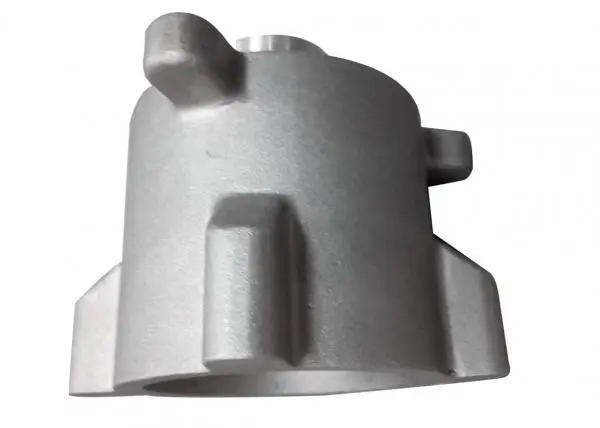
Understanding Casting Product Design: Key Principles and Challenges
To master metal casting, one must be familiar with the process by which molten metal is transformed into a precise part using a well-designed mold. Manufacturing costs and product performance are influenced by casting design, which includes material selection, process optimization, and dimensional precision requirements. Aluminum, steel, iron, and specific alloys are all part of today's procurement teams' complicated decision-making processes; each material has its own set of properties that affect the quality of the final product.
Core Elements of Effective Casting Design
The foundation of every casting project is the material selection. For heavy industrial components, steel castings provide higher durability, while aluminum alloys are great for automotive applications due to their exceptional strength-to-weight ratios. It is important to consider the expected production volume and the required accuracy when deciding between investment casting, sand casting, and die casting. The versatility and lower tooling costs of sand casting make it a popular choice for prototype and low-volume production. On the other hand, die casting is the way to go for high-volume situations that need exact dimensional constancy.
To guarantee that parts are ejected from molds smoothly and undamaged, draft angles usually vary from half a degree to three degrees, depending on the casting depth and material characteristics. Maintaining a consistent wall thickness lessens the chances of structurally weakening porosity flaws and internal stress concentrations. The effects on scrap rates and the need for further machining caused by these technical factors have a direct bearing on procurement costs.
Common Design Challenges and Solutions
Casting projects still face the biggest challenge when it comes to dimensional accuracy: thermal shrinkage rates may range from 1.5% to 2.1% for aluminum alloys and up to 2.5% for certain steel grades. Geometric complexity may be constrained by mold design constraints, especially for undercut features that need specialized core systems or multi-part tooling arrangements. For optimal budget optimization, early supplier engagement is vital, since cost variables climb fast when design demands surpass ordinary production capabilities.
Methodical techniques that strike a balance between technical needs and economic restrictions are at the heart of effective design strategies, which effectively tackle these difficulties. Fillet radii ranging from 3 to 8 millimeters round off sharp edges that might cause stress concentration and eventual failure. To fill the mold properly with little material loss and additional finishing processes, gates and runners must be strategically placed.
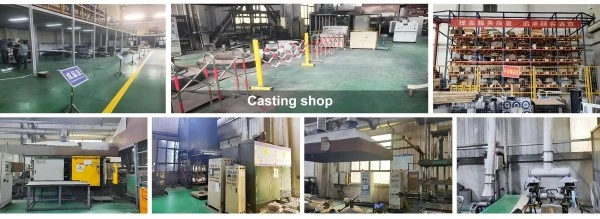
Essential Considerations in Casting Product Design
Integrated analysis across various dimensions, including material science, manufacturing processes, and quality control systems, is necessary for casting product design projects to be successful. Using this all-encompassing method, procurement teams may improve technical performance and total cost of ownership across product lifecycles with educated judgments.
Material Properties and Manufacturing Integration
Casting fluidity and mechanical qualities that are ideal for aerospace and automotive applications are both offered by aluminum alloys such as A356 and A380. Components of construction and industrial machinery benefit greatly from the exceptional strength properties offered by steel casting grades like ASTM A216. Specific heat treatment procedures and altered cooling rates are necessary for high-strength alloys, whose material characteristics have a direct impact on design parameters.
The design of the casting must be coordinated with the downstream machining processes, surface treatments, and assembly needs in order for manufacturing integration to take place. The difference in wall thickness should not exceed 20% of the nominal dimensions in order to avoid warpage or internal stress patterns caused by differential cooling rates. If a component has more than one surface finish, the draught angle needs to be flexible enough to permit the casting release and the setup for the next machining.
Precision Standards and Quality Control
Depending on the purpose of the component and industry standards, the particular dimensions that must be met during casting might vary from ±0.5mm for sand casting to ±0.1mm for precision die casting techniques. While components for the aerospace industry must be AS9100 certified and adhere to stringent documentation procedures, automotive applications often need IATF16949 compliance. The criterion for selecting suppliers and the sustainability of long-term partnerships are both affected by these quality requirements.
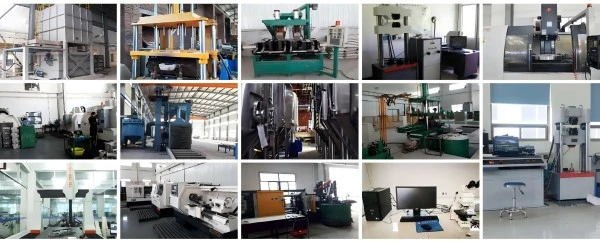
Mechanical testing validates material properties, X-ray analysis detects internal defects, and coordinate measuring devices verify dimensions. Component integrity is guaranteed without sacrificing production timelines using non-destructive testing techniques including magnetic particle inspection and ultrasonic testing. In order to keep prices low, quality control systems need to strike a compromise between rigorous inspections and efficient manufacturing.
Cost Optimization Strategies
Amortization of tools, maintenance of quality systems, and growth of supplier capabilities are all areas that might have an effect on procurement budgets, in addition to unit cost. While single-source tooling arrangements may save startup costs, they also make it harder to scale production without sacrificing supply chain flexibility. The design flexibility of multi-cavity tooling allows for future upgrades while optimizing per-part costs for high-volume applications.
Material waste, secondary processes, and quality-related charges should all be carefully evaluated in order to achieve economic efficiency. It is common for casting suppliers and procurement teams to work together in value engineering to find ways to reduce costs without sacrificing performance or efficiency in manufacture.
How Advanced Manufacturing Intelligence Enhances Design Optimization?
Optimizing design parameters and production processes is a key component of modern casting product design activities, which are increasingly driven by data. Casting quality parameters, predictive maintenance scheduling, and supply chain performance optimization may all be monitored in real-time with the use of advanced analytics solutions. Procurement teams are able to see more clearly into supplier processes and quality consistency thanks to these digital capabilities.
Data-Driven Decision Making Benefits
In order to find areas for improvement, manufacturing intelligence systems collect and evaluate data from various sensors, such as those that measure temperature, pressure, and dimensions. Quality trends that can affect delivery timelines or component performance can be identified early on with the use of statistical process control approaches. By analyzing past manufacturing data and fluctuations in material properties, machine learning algorithms may anticipate possible patterns of defects.
When teams in design, procurement, and manufacturing have access to the same real-time production data and quality indicators, they are able to communicate better. Collaborative platforms make it easy to respond quickly to changes in design while keeping track of everything for quality system needs and regulatory compliance. The development cycle times and supplier relationship management are both improved by these improved communication channels.

Implementation Strategies and Tools
In order to set baseline performance parameters, basic analytics solutions start by monitoring temperature and cycle time. Incorporating automated measuring systems, machine vision inspection, and integrated quality management platforms are all components of advanced systems. In order to manage procurement, manufacturing, and quality operations, software solutions may be as simple as standalone monitoring programs or as complex as extensive enterprise resource planning interfaces.
Suppliers who put money into quality monitoring systems and modern production skills will have an edge in the market. Suppliers who are technologically savvy and can provide comprehensive documentation of processes, capacity assessments, and programs for continuous development are a boon to procurement teams. Quality risks are decreased and delivery performance is enhanced as a consequence of these relationships.
Selecting the Right Manufacturing Partner: A Strategic Approach
A thorough assessment of technical competence, quality systems, and the possibility of a long-term collaboration is necessary when selecting suitable suppliers for casting product design. Strategic partnerships provide an emphasis on collaborative design optimization, continual improvement, and technological innovation, in contrast to traditional supplier evaluations that center on price and delivery performance. Value generation and supply chain resilience should be prioritized alongside immediate cost concerns in modern procurement strategies.
Technology and Process Evaluation
Product development cycles are made easier by CAD/CAE system interoperability, which allows for smooth design transfer and change management. In order to reduce development risks and accelerate time-to-market targets, simulation software capabilities allow for the virtual evaluation of casting designs prior to investing in tooling. Technological investments in process optimization tools, quality monitoring systems, and automated production equipment show that suppliers are committed to developing their capabilities over the long term.
When deciding on a license, it is important to think about things like data security standards, software compatibility, and IP protection. Suppliers' abilities to handle increased volume, new geographic markets, and cutting-edge technology are all factors in scalability evaluations. In order to achieve company development goals while keeping quality standards in place, these technical studies provide the groundwork for strategic collaborations with suppliers.
Partnership Development and Support
Assistance with technical issues, settlement of quality problems, and joint improvement projects are all part of a vendor's support capabilities. Procurement groups, design engineers, and quality assurance staff may all benefit from training programs that teach them how to make the most of the resources and tools provided by suppliers. Regular evaluations of capabilities, evaluations of performance, and coordination of strategic planning are all part of the ongoing assistance.
Tooling, quality systems, logistics, and relationship management charges are all part of total ownership costs that must be included in cost effectiveness studies. Sharing development efforts, volume pledges, and long-term price agreements are common ways in which strategic alliances save money. These all-encompassing collaborations help businesses expand while keeping their costs down.
Conclusion
Effective casting product design requires comprehensive consideration of material properties, manufacturing processes, quality standards, and cost optimization strategies. Success depends on integrated collaboration between procurement teams, design engineers, and manufacturing partners who understand the complex relationships between design parameters and production capabilities. Modern approaches emphasize data-driven decision making, advanced manufacturing technologies, and strategic supplier partnerships that support long-term business objectives while maintaining competitive cost structures and quality excellence.
Partner with Rongbao Enterprise for Advanced Casting Solutions
Ready to optimize your casting product design projects with a proven manufacturing partner? Rongbao Enterprise combines comprehensive technical capabilities with global quality standards to deliver exceptional value for automotive, industrial, and aerospace applications. Our experienced team provides end-to-end support from initial design consultation through final product delivery, ensuring your specifications are met with precision and reliability. Contact our specialists at steve.zhou@263.net or zhouyi@rongbaocasting.com to discuss your casting product design requirements and discover how our advanced manufacturing solutions can enhance your supply chain performance.
FAQ
What are the most critical design factors in industrial casting applications?
Wall thickness uniformity, draft angles, and material selection represent the three most critical factors affecting casting success. Uniform wall thickness prevents internal stress concentrations and reduces porosity risks, while proper draft angles ensure clean part removal from molds without surface damage. Material selection impacts not only mechanical properties but also casting processability, heat treatment requirements, and final cost structures.
How does manufacturing intelligence impact the casting design lifecycle?
Manufacturing intelligence provides real-time visibility into production processes, enabling predictive quality management and optimization of design parameters based on actual manufacturing data. This approach reduces development cycles, minimizes quality risks, and supports continuous improvement initiatives that benefit both suppliers and customers. Advanced analytics can predict potential issues before they impact production schedules or component quality.
What procurement criteria should guide casting supplier selection?
Technical capabilities, quality system maturity, and long-term partnership potential should drive supplier selection decisions. Evaluate manufacturing processes, equipment capabilities, and quality certifications alongside financial stability and geographic considerations. Strategic partnerships with technologically advanced suppliers often provide superior value through collaborative design optimization, shared development investments, and continuous improvement initiatives.
References
1. Campbell, John. "Complete Casting Handbook: Metal Casting Processes, Metallurgy, Techniques and Design." Butterworth-Heinemann, 2015.
2. Brown, J.R. "Foseco Ferrous Foundryman's Handbook." Elsevier Science & Technology Books, 2000.
3. Flemings, Merton C. "Solidification Processing." McGraw-Hill Science/Engineering/Math, 1974.
4. ASM International Handbook Committee. "ASM Handbook Volume 15: Casting." ASM International, 2008.
5. Monroe, Richard W. "Expendable Pattern Casting." American Foundrymen's Society, 2005.
6. Taylor, H.F. "Semi-Solid Processing of Alloys." Institute of Materials, 1992.


Learn about our latest products and discounts through SMS or email