- English
- French
- German
- Portuguese
- Spanish
- Russian
- Japanese
- Korean
- Arabic
- Greek
- German
- Turkish
- Italian
- Danish
- Romanian
- Indonesian
- Czech
- Afrikaans
- Swedish
- Polish
- Basque
- Catalan
- Esperanto
- Hindi
- Lao
- Albanian
- Amharic
- Armenian
- Azerbaijani
- Belarusian
- Bengali
- Bosnian
- Bulgarian
- Cebuano
- Chichewa
- Corsican
- Croatian
- Dutch
- Estonian
- Filipino
- Finnish
- Frisian
- Galician
- Georgian
- Gujarati
- Haitian
- Hausa
- Hawaiian
- Hebrew
- Hmong
- Hungarian
- Icelandic
- Igbo
- Javanese
- Kannada
- Kazakh
- Khmer
- Kurdish
- Kyrgyz
- Latin
- Latvian
- Lithuanian
- Luxembou..
- Macedonian
- Malagasy
- Malay
- Malayalam
- Maltese
- Maori
- Marathi
- Mongolian
- Burmese
- Nepali
- Norwegian
- Pashto
- Persian
- Punjabi
- Serbian
- Sesotho
- Sinhala
- Slovak
- Slovenian
- Somali
- Samoan
- Scots Gaelic
- Shona
- Sindhi
- Sundanese
- Swahili
- Tajik
- Tamil
- Telugu
- Thai
- Ukrainian
- Urdu
- Uzbek
- Vietnamese
- Welsh
- Xhosa
- Yiddish
- Yoruba
- Zulu
What are the casting collection box parts for a rainwater collector?
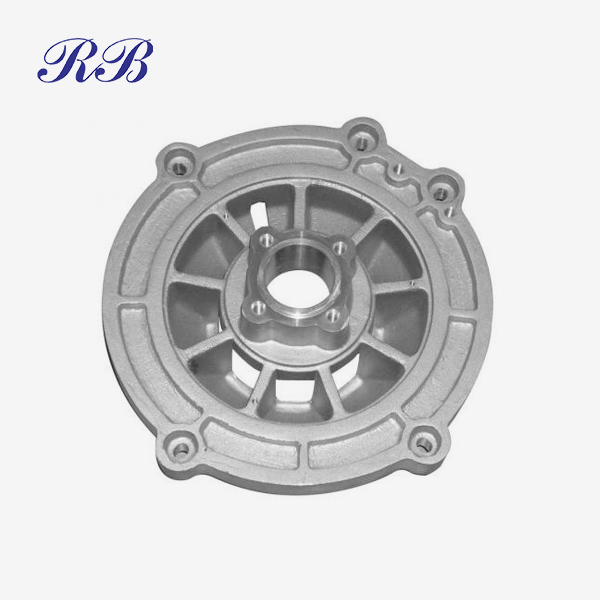
Rainwater collectors rely on several precision-engineered casting collection box parts to function reliably. These components typically include the frame, cover, grate, drainage joint, and inlet housing—each manufactured to channel stormwater efficiently while withstanding outdoor exposure. The frame anchors the assembly to surrounding infrastructure, the grate filters debris, and the drainage joint directs flow into subsurface piping. Material selection, dimensional accuracy, and surface integrity determine whether these parts perform across seasons. Understanding each component helps procurement teams and project engineers specify the right parts from the right casting collection box supplier.

Casting Collection Box Parts for Rainwater Collectors
Getting rainwater is more than just a sink. It is a structure that supports weight, filters out waste, and directs water flow that is built into city sidewalks, road medians, and planted areas. Every part of the sewage system is responsible for a specific task, and if any of them fails, the whole system is at risk.
Primary Components and Their Functions
The structural hierarchy of a rainwater collector box consists of:
- Frame (surround): This is the load-bearing edge that is fixed into asphalt or concrete. It has to be able to stand up to both vertical traffic loads and lateral soil pressure without giving way.
- Grate or cover: The grate or cover sits flush with the pavement and lets water in while filtering out big pieces of debris. Hydraulic capacity is directly affected by the shape of the grates.
- Drainage joint / outlet socket: This part connects the cast housing to the underground pipe network and handles changes in the direction of flow.
- Inlet housing / sump body: The inlet housing or sump body is the enclosed space under the grate that collects stormwater, holds it for a short time, and sends it in a different direction before it enters the main drainage line.
These casting collection box parts are governed by international standards including ASTM A48 for gray iron castings, EN 124 for ditch tops and manhole covers, and ISO 9001 for quality management—rules that responsible manufacturers follow.
Materials and Types of Casting Collection Box Parts: Comparison & Benefits
One of the most important decisions you have to make when buying rainwater collector components is which material to use. If you use the wrong metal, it will rust early, change size, or wear down the surface, which will cost a lot to replace.
Due to its high shear strength and ability to dampen vibrations, traditional gray cast iron is still often used for heavy-duty tasks. But aluminum alloy castings—particularly A356—are becoming more popular in artistic and city drains because they are better at resisting corrosion and have a lower unit weight. They can also be designed in a variety of ways.
The tensile strength of A356 aluminum alloy is about 228 MPa, it flows easily during casting, and it doesn't shrink much. These are all traits that make it a good choice for gravity casting. An A356 casting collection box parts component is much lighter than its cast iron counterpart, weighing only about 1.8 kg per unit. This means that it requires less work to install and is cheaper to ship without losing structural performance.
There are plastic alternatives, but they have measurable drawbacks, such as a lower load capacity, UV damage over time, and a much shorter useful life when left outside. For municipal-grade uses that must meet strict durability and load requirements, metal casts are still the standard.
As building becomes more eco-friendly, people are also becoming more interested in long-lasting surface paints and metals that can be recycled. When shot blasting is done after casting, it gets rid of scale and micro-burrs and makes the surface profile more uniform, which helps the coating stick better. This process directly helps paint last longer and prevent fading over time.

Design, Dimensions, and Common Issues in Casting Collection Box Parts
When building drainage systems, accuracy in measurements is not a choice. An improperly adjusted frame rocks when there is a lot of traffic, and an exit that is too small stops flow and causes pooling.
Standard Sizing and OEM Customization
ASCE and state DOT standards are often used for grate sizes and load class ratings in municipal projects across the United States. The most common grate openings are 300 mm x 300 mm to 600 mm x 600 mm. The frame depths are adjusted to match the installation depth and pipe invert elevation. Still, custom sizes are needed for a lot of projects, especially streetscapes and mixed-use developments.
Customization through OEM and ODM is a must for these casting collection box parts. It is common for project designers to send CAD drawings or dimensional specifications that don't match catalog standards. This means that the casting manufacturer has to change the tools and make custom parts. After casting, CNC cutting makes sure that the mating surfaces, bolt holes, and drainage holes are all within very close tolerances, no matter what the shape of the base casting was.
Defects to Monitor and How to Prevent Them
The most common casting flaws that affect both the structure and the way it looks are porosity, cold shuts, and surface shrinking. In gravity casting, the main ways to stop it are to control the pour temperature and make sure the mold has venting. Post-cast shot blasting finds problems on the surface of parts before they leave the plant. It works as a combined quality checkpoint. Procurement teams should make sure that the frame sitting areas and outlet sockets are always round as part of their standard procedure for receiving goods.
Procurement Insights: How to Choose and Buy Casting Collection Box Parts
Choosing where to get materials for city structures has long-lasting effects. If a part fails in the field, it causes problems for the public, costs money to fix, and hurts the contractor's image.
When evaluating a casting collection box parts manufacturer or supplier, these factors consistently separate reliable partners from commodity vendors:
- Certification compliance: ISO 9001:2015 proves systematic quality management; ISO 14001 talks about protecting the environment; and ISO 45001 talks about workplace safety. All three of these standards show that the building is run by professionals.
- Customization capability: For project-specific procurement, it's important to be able to make OEM/ODM parts from designs that include custom measurements and surface treatments.
- Production capacity and lead time: A verified capacity of 5,000 pieces per production run means that the manufacturer can handle medium to large municipal orders as well as smaller project quantities.
- Surface treatment quality: Parts are always shot-blasted before they are delivered, and additional coatings are also available to make sure they are ready for the job.
- Packaging and logistics: International shipping carton boxes protect the finish on the surface and the shape of the items while they're being shipped.
Prices depend on the type of metal, how hard it is to machine, and how many orders are placed. When purchasing managers work with makers early on in the planning process, before the final drawings are made, they can often find ways to save money by suggesting better tooling and materials.

Future Trends and Innovations in Casting Collection Box Parts
The infrastructure sector for water management is changing. As part of EPA-mandated Combined Sewer Overflow (CSO) programs, cities and towns across the US are updating their old stormwater systems. This is creating a steady need for high-performance drainage components. In 2023, the world market for water and wastewater infrastructure was worth more than $260 billion. This market keeps growing as more people move into cities.
Tooling development for custom casting collection box parts is starting to be affected by additive manufacturing, which cuts prototype lead times by a large amount. In smart city projects, IoT-enabled sensors are being built into collection box structures. These sensors provide real-time flow data and blockage alarms. Green Building approval systems like LEED are putting pressure on buyers to buy casts that are made with recycled metal and low-emission surface treatments.
These changes mean that OEM makers and infrastructure dealers can offer more products. This is especially true for decorative drainage systems, where both the hydraulic and visual performance are important.
Conclusion
For rainwater collector systems to work successfully over their entire service life, their casting collection box parts must be carefully made from the right materials. The combination of A356 aluminum metal, gravity casting, CNC machining, and shot blasting is a mature and tried-and-true way to make things that strikes a good balance between cost, weight, appearance, and longevity. When purchasing professionals choose qualified sellers who have shown they can customize products and maintain quality standards, projects turn out better and costs are lower over their entire lifecycle.

FAQ
What material is best for rainwater collector casting parts in outdoor environments?
For outdoor drainage parts, A356 aluminum alloy is a great choice. Naturally, it doesn't rust, it's a lot lighter than cast iron, and its dimensions stay the same as the temperature changes. Shot blasting makes the surface even more ready for protective coatings that make things last longer in places with a lot of UV light and water.
Can casting collection box parts be customized to match project drawings?
Yes. Manufacturers with a good reputation and OEM/ODM capabilities can make parts directly from CAD files or measurements provided by the customer. After gravity casting, CNC machining makes sure that the unique shapes meet the close specs needed for fitting and seating.
What certifications should a supplier hold?
Look for ISO 9001:2015 for quality management, ISO 14001 for environmental management, and ISO 45001 for health and safety at work. All three of these certificates show that the provider follows management standards that are known around the world.
What is a realistic lead time for custom casting orders?
Usually, it takes seven to ten weeks for a new OEM order to go through design review, tooling, trial approval, and production. Most repeat orders for well-known tools are finished in one to two weeks.
What is the minimum order quantity for custom rainwater collector parts?
Not all suppliers do this. Manufacturers who can work with municipal projects can usually handle small to medium runs, which includes amounts below 500 pieces. This is the same batch size that is popular for municipal streetscape contracts.
Partner With Rongbao Enterprise for Certified Casting Solutions
Rongbao Enterprise manufactures rainwater collector components and casting collection box parts for municipal and infrastructure projects worldwide. Holding ISO 9001:2015, ISO 14001, and ISO 45001 certifications, with 20 years of production experience and export presence across North America and Europe, Rongbao delivers A356 gravity castings with CNC machining and shot blasting—fully OEM/ODM capable. Contact our team at steve.zhou@263.net or zhouyi@rongbaocasting.com, or visit rongbaocasting.com to request a sample or project quotation.
References
- ASTM International. ASTM A48/A48M: Standard Specification for Gray Iron Castings. ASTM International, 2023.
- European Committee for Standardization. EN 124: Gully Tops and Manhole Tops for Vehicular and Pedestrian Areas. CEN, 2015.
- American Society of Civil Engineers. ASCE 7-22: Minimum Design Loads and Associated Criteria for Buildings and Other Structures. ASCE, 2022.
- U.S. Environmental Protection Agency. Combined Sewer Overflows: Policy and Program Updates. EPA Office of Water, 2022.
- Davis, Mackay L. Water and Wastewater Engineering: Design Principles and Practice. McGraw-Hill Education, 2010.
- Beeley, Peter R. Foundry Technology. Butterworth-Heinemann, 2001.
_1751078338779.webp)
Learn about our latest products and discounts through SMS or email