- English
- French
- German
- Portuguese
- Spanish
- Russian
- Japanese
- Korean
- Arabic
- Greek
- German
- Turkish
- Italian
- Danish
- Romanian
- Indonesian
- Czech
- Afrikaans
- Swedish
- Polish
- Basque
- Catalan
- Esperanto
- Hindi
- Lao
- Albanian
- Amharic
- Armenian
- Azerbaijani
- Belarusian
- Bengali
- Bosnian
- Bulgarian
- Cebuano
- Chichewa
- Corsican
- Croatian
- Dutch
- Estonian
- Filipino
- Finnish
- Frisian
- Galician
- Georgian
- Gujarati
- Haitian
- Hausa
- Hawaiian
- Hebrew
- Hmong
- Hungarian
- Icelandic
- Igbo
- Javanese
- Kannada
- Kazakh
- Khmer
- Kurdish
- Kyrgyz
- Latin
- Latvian
- Lithuanian
- Luxembou..
- Macedonian
- Malagasy
- Malay
- Malayalam
- Maltese
- Maori
- Marathi
- Mongolian
- Burmese
- Nepali
- Norwegian
- Pashto
- Persian
- Punjabi
- Serbian
- Sesotho
- Sinhala
- Slovak
- Slovenian
- Somali
- Samoan
- Scots Gaelic
- Shona
- Sindhi
- Sundanese
- Swahili
- Tajik
- Tamil
- Telugu
- Thai
- Ukrainian
- Urdu
- Uzbek
- Vietnamese
- Welsh
- Xhosa
- Yiddish
- Yoruba
- Zulu
How to install elbow pipe?
Installing a cast elbow pipe correctly is one of those tasks that looks straightforward until something goes wrong mid-project. Whether you're directing flow around a corner in a water drop channel system or routing coolant through industrial equipment, the fitting you choose and how you install it determines the long-term reliability of the entire line. This guide walks you through every stage — from receiving inspection to final pressure testing — so your team can execute the job with confidence, reduce rework, and source smarter.
Understanding Cast Elbow Pipes Before Installation
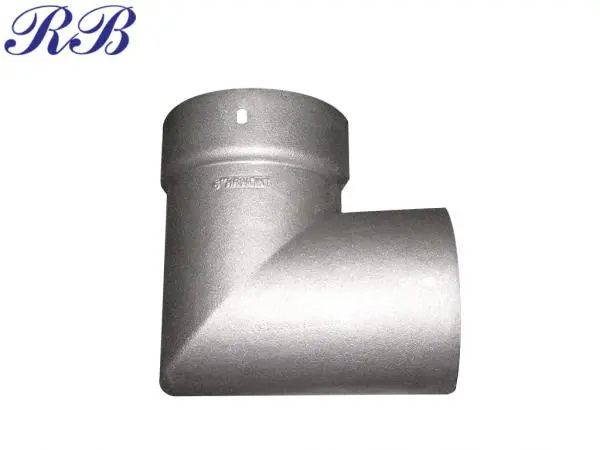
It's best to know what you're working with before you touch a wrench or welding torch. A cast elbow pipe is a directional fitting that is usually made at 45° or 90° angles. Its job is to change the flow of fluid without causing sudden drops in pressure or turbulence. Unlike forged or welded elbows, cast ones are shaped in a single pour. This means that the wall thickness and grain structure are more consistent across the bend.
Types and Material Grades Worth Knowing
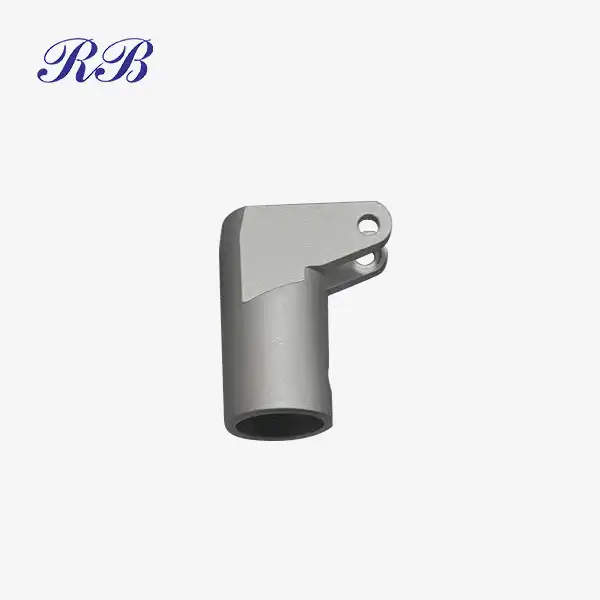
You can find cast elbow fittings in chemical plants, HVAC systems, water drainage pathways, and oil and gas pipes. The choice of material is very important here. For places that are prone to corrosion, aluminum alloy types like ZL101A offer a great mix of strength and protection to oxidation. ZL101A is often used in water drop channel uses where the casting weight needs to be kept low. A finished sand-cast elbow in this alloy weighs about 0.56 kg, which makes it much easier to handle and place during long assembly runs.
Dimensional Standards and Pressure Ratings
Before you place an order, check each part against ASME B16.9 or a foreign standard that is similar. Check the standard bore sizes, center-to-face measurements, and rated working pressure against the design of your system. Even a millimeter of a difference can weaken the sealing surfaces and lead to leaks when the temperature changes.
Pre-Installation Considerations for Cast Elbow Pipes
Proper preparation at this stage eliminates the majority of installation failures you'll encounter downstream. When a load comes in, inspect each part before it leaves the dock. Make sure the surface has been shot-blasted smoothly and that there are no sand particles, cold shuts, or porosity that can be seen. These are flaws that can happen in sand casting if the process controls aren't good enough. Make sure the matching faces that were made with CNC are straight and within the allowed range. Check the arrival against the material certificates from the seller and make sure that the ISO9001:2015 compliance paperwork is included. Teams get caught when they skip this step.
Here are the critical pre-installation checks your team should run through:
- Dimensional verification: Use accurate gages to compare the bore diameter, center-to-face length, and wall thickness to the specs shown on the plan.
- Surface condition review: Look for cracks, inclusions, or machining lines on sealing faces in shot-blasted surfaces that are well-lit.
- Certificate matching: Make sure that the heat/batch numbers on the fittings match the numbers on the mill certificates and quality documents.
- Tool and PPE staging: Before the work starts, make sure that welding machines, alignment clamps, torque wrenches, and personal protection equipment are all there.
Each batch of these checks takes less than thirty minutes, but they often avoid delays that cost a lot more in time and labor than the inspection itself.
Step-by-Step Installation Guide for Cast Elbow Pipes
A strict installation process makes sure that the cast elbow pipes are tight, the angles are correct, and the paperwork is clean for compliance checks.
Surface Preparation and Alignment
Use an approved fluid to clean the pipe ends completely, getting rid of scale, oxidation, and any cutting oil that is still there. Before you start a tack weld, use alignment tools or pipe clamps to hold the elbow at the right angle. Even a half-degree of angle deviation adds up over many fits to make the whole system look out of place.
Joining Method Selection
Pick a connecting method based on the size, material, and pressure of the pipe. For bigger bore cast parts in high-pressure industrial systems, butt-welding is the best way to go. Socket welding works best for lines with a smaller diameter, where full penetration welds are not as important. TIG welding with the right grade of filler rod keeps the material's integrity in the heat-affected zone of aluminum alloy castings.
Post-Weld Inspection and Pressure Testing
After welding, check the weld visually and then use the right non-destructive testing for the pressure rating. For aluminum alloys, dye penetrant testing works well. Before the system goes live, the stability of each part is checked using hydrostatic or pneumatic pressure testing at 1.5 times the original pressure. Write down all of the test results; this information is needed for equipment checks or guarantee claims.
Common Challenges and How to Avoid Them During Installation
Problems can happen to even the most skilled installation teams. The fastest way to stop things from going wrong is to figure out where they go wrong. Most of the time, the problem is misalignment. When pipe ends arrive slightly out of round, which often happens because they were not handled properly during transport, forcing them into place creates residual stress at the joint that speeds up fatigue cracking. When responsible makers ship their products in wooden boxes, there is a lot less damage to precision-machined faces during transport.
Material incompatibility creates a subtler but equally damaging problem. When you connect an aluminum alloy elbow to a different metal without an isolation connection, galvanic rust speeds up. Instead of trying to fix the problem on-site, always specify flanges and gaskets that work with each other during the design phase.
Physical damage during storage is another underestimated risk. Cast elbow pipes should be kept off the ground on padded racks, and surfaces that have been shot-blasted should be kept dry and covered until they are installed. Exposure to moisture can cause surface oxidation, which makes it harder for paint to stick and makes the metal less resistant to corrosion over time.
Procurement Tips and Partnering with Trusted Cast Elbow Pipe Suppliers
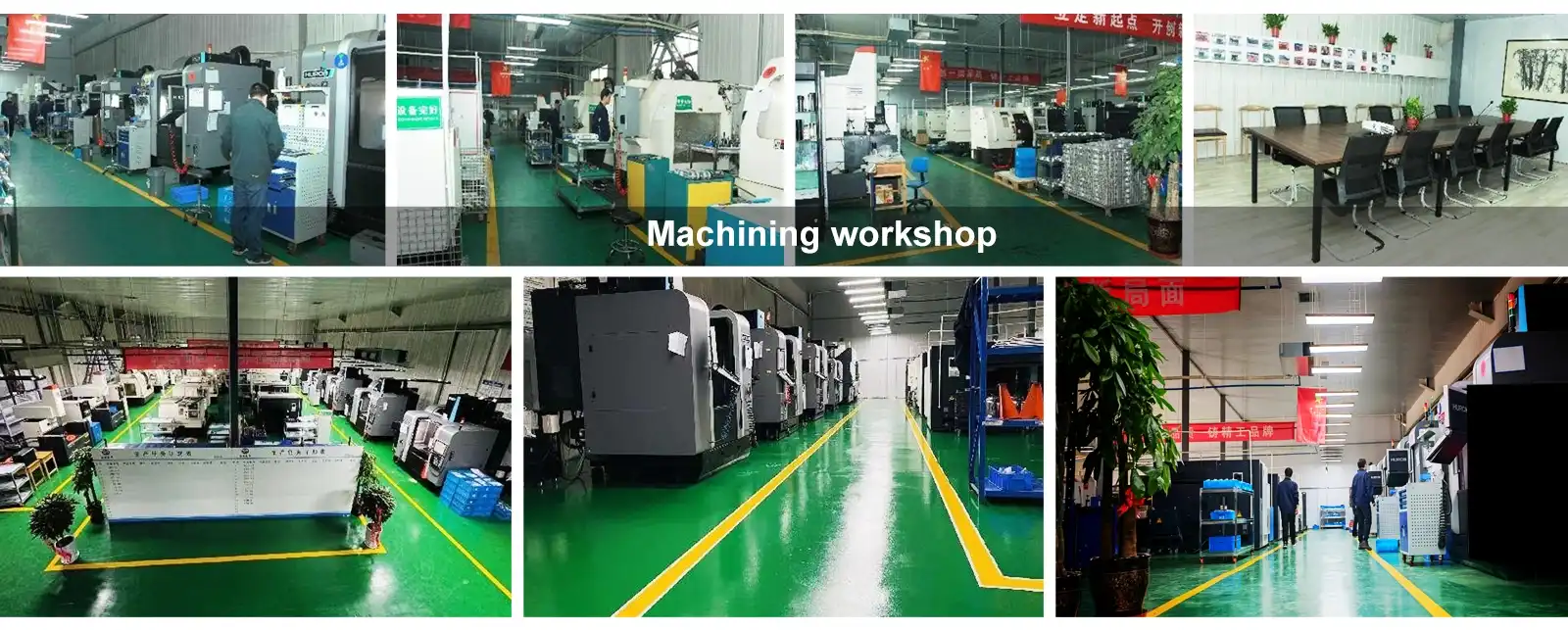
During the buying stage, choices about where to get things are carried out in every part of the project. If you choose a cast elbow pipe maker that does sand casting, CNC machining, surface treatment, and quality testing all under one roof, you won't have to coordinate with multiple vendors, and wait times will be much more stable.
When evaluating potential suppliers, prioritize these indicators of operational reliability:
- Triple certification compliance: ISO9001:2015, ISO14001, and ISO45001 certification show that systems for managing quality, the environment, and safety are being kept up to date, not just written down.
- OEM/ODM flexibility: Suppliers who can really customize can work with your specific channel geometries and assembly tolerances without charging you again for each change.
- Production capacity: Make sure the seller can meet your volume needs; a capacity of 5,000 pieces per run gives buying teams a lot of scheduling freedom.
- Packaging and logistics standards: Putting cast parts in wooden boxes protects their surfaces during foreign shipping and cuts down on claim fights.
All of these skills work together to give procurement managers the stable supply chain that keeps equipment assembly lines on time.
Conclusion
To properly install cast elbow pipe fittings, you need to plan ahead, be precise, and get reliable parts from suppliers who know what industrial-grade quality means on a large scale. Each step in this guide, from checking the dimensions before installation to testing the pressure after welding, lowers the chance that the system will fail or go down without warning. It's just as important which material you choose—whether it's ZL101A aluminum alloy for lightweight channel applications or a different grade that works better in your environment—as it is how you install it. If you are careful when installing your pipe systems and smart when buying them, they will work reliably for their whole life.

FAQ
What is the difference between a cast elbow and a forged elbow?
Melting metal is poured into a mold to make a cast elbow pipe. This method works well for complicated forms and big production runs. Forged elbows are made by pressing a solid block against a hammer to shape it. This creates a thicker grain structure that works better in situations with high pressure or impact. Cast elbows are a good value for the money when it comes to standard industrial drainage and fluid routing, such as water drop channel systems.
Is ZL101A aluminum alloy suitable for water channel applications?
Yes. It's easy to cast ZL101A, it doesn't rust, and it has enough mechanical power for low- to medium-pressure settings. Because it has a lot of useful qualities, it can be used in water drop channel fittings where weight and resistance to rust are both important.
Can standard TIG welding be used with aluminum cast elbow fittings?
When the right filler material and pre-weld cleaning steps are used, TIG welding can be done on aluminum metal molds. The main cause of failure is contamination at the weld zone; surfaces that are free of oxides and proper shielding gas flow must be maintained at all times.
How do I verify quality before accepting a bulk shipment?
Ask for material test certificates that are matched to batch numbers, use calibrated gages to check the sizes of incoming parts, and look at shot-blasted surfaces for casting flaws. For important uses, get review reports from a third party before the product goes out.
Partner with Rongbao Enterprise for Reliable Cast Elbow Pipe Supply
Rongbao Enterprise has been making products for 20 years and sends 70% of their products to Europe, the United States, and Japan. They offer precision-engineered cast elbow pipe options that are backed by ISO9001:2015, ISO14001, and ISO45001 certification. We can make up to 5,000 pieces per run of fully designed OEM/ODM products using sand casting and CNC cutting. You can email our team at steve.zhou@263.net or zhouyi@rongbaocasting.com, or you can go to rongbaocasting.com right now to get a quote.
References
- ASME International. ASME B16.9: Factory-Made Wrought Buttwelding Fittings. ASME, 2018.
- ASM International. Casting Design and Performance. ASM International, 2009.
- American Welding Society. AWS D1.2/D1.2M: Structural Welding Code — Aluminum. AWS, 2021.
- Aluminum Association. Aluminum Alloy Castings: Properties, Processes and Applications. Aluminum Association, 2007.
- International Organization for Standardization. ISO 9001:2015 Quality Management Systems — Requirements. ISO, 2015.
- Nayyar, Mohinder L. Piping Handbook, 7th ed. McGraw-Hill, 2000.
Learn about our latest products and discounts through SMS or email