- English
- French
- German
- Portuguese
- Spanish
- Russian
- Japanese
- Korean
- Arabic
- Greek
- German
- Turkish
- Italian
- Danish
- Romanian
- Indonesian
- Czech
- Afrikaans
- Swedish
- Polish
- Basque
- Catalan
- Esperanto
- Hindi
- Lao
- Albanian
- Amharic
- Armenian
- Azerbaijani
- Belarusian
- Bengali
- Bosnian
- Bulgarian
- Cebuano
- Chichewa
- Corsican
- Croatian
- Dutch
- Estonian
- Filipino
- Finnish
- Frisian
- Galician
- Georgian
- Gujarati
- Haitian
- Hausa
- Hawaiian
- Hebrew
- Hmong
- Hungarian
- Icelandic
- Igbo
- Javanese
- Kannada
- Kazakh
- Khmer
- Kurdish
- Kyrgyz
- Latin
- Latvian
- Lithuanian
- Luxembou..
- Macedonian
- Malagasy
- Malay
- Malayalam
- Maltese
- Maori
- Marathi
- Mongolian
- Burmese
- Nepali
- Norwegian
- Pashto
- Persian
- Punjabi
- Serbian
- Sesotho
- Sinhala
- Slovak
- Slovenian
- Somali
- Samoan
- Scots Gaelic
- Shona
- Sindhi
- Sundanese
- Swahili
- Tajik
- Tamil
- Telugu
- Thai
- Ukrainian
- Urdu
- Uzbek
- Vietnamese
- Welsh
- Xhosa
- Yiddish
- Yoruba
- Zulu
Top Things to Consider Before Buying Casting Accessories
When sourcing casting accessories for safety-critical applications like gas control systems or alarm enclosures, the stakes are genuinely high. The right accessories directly affect product performance, regulatory compliance, and time-to-market. From material selection and explosion-proof certification to OEM customization flexibility and delivery speed, every procurement decision carries real operational consequences. This guide walks through the core factors that gas equipment and security alarm manufacturers should evaluate before placing an order — helping you avoid costly mistakes and find a supplier that actually fits your production reality.
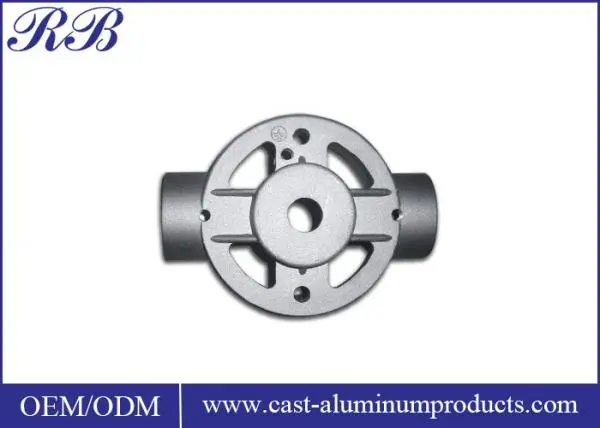
Understanding What Your Application Actually Demands
Match Material to Functional Scenarios
Not all aluminum alloys deliver consistent heat resistance, pressure resistance and structural stability in industrial environments, making material matching the primary principle for selecting qualified casting accessories. One typical high-performance option is A380 aluminium, which features excellent castability, inherent rust resistance and outstanding structural strength. This alloy is widely adopted for manufacturing natural gas control valve parts, alarm enclosure shells and gas meter protective components.
Before comparing unit prices of gas meter and alarm housing parts, procurement teams must verify whether the selected metal material fully meets the equipment’s heat resistance, load-bearing and structural stability requirements. Reasonable material selection fundamentally avoids performance failures of accessories in long-term high-temperature, humid and pressure-bearing working environments, ensuring the stable operation of safety-critical equipment.
Define Certification Requirements in Advance
Gas safety and fire alarm equipment belong to special safety industrial products, and their supporting casting accessories must meet strict explosion-proof and ingress protection industry standards. Core specifications including Ex d IIB T6 explosion-proof grade and IP65 dust and water resistance require precise casting dimensional accuracy and seamless sealing performance, which cannot be achieved by ordinary low-precision casting processes.
Clarifying certification standards and parameter requirements at the early inquiry stage, rather than correcting problems during sample testing, can effectively avoid delayed progress and certification failure risks. Formal and professional casting accessories suppliers integrate comprehensive quality control into every production link based on standardized management systems. Qualifications including ISO9001:2015 quality management, ISO14001 environmental management and ISO45001 occupational safety management ensure stable and compliant product quality, greatly reducing the failure probability of the first sample batch in official certification tests.
Key Criteria for Evaluating a Casting Accessories Supplier
Selecting an unqualified casting accessories supplier will bring far more losses than procurement cost waste, including delayed product launch cycles, unstable batch quality and damaged customer trust. A standardized and systematic supplier screening mechanism helps procurement engineers eliminate invalid interference factors and accurately lock in high-quality cooperative manufacturers.
Complete Process Capability and Supporting Equipment
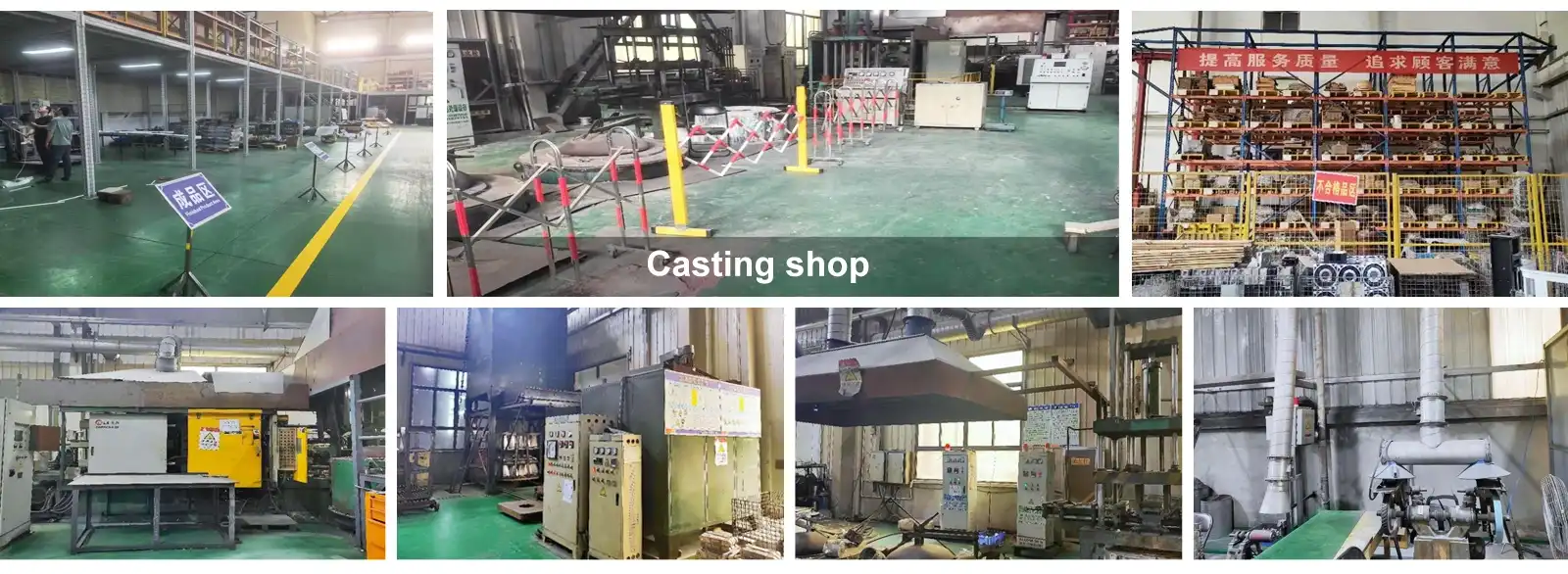
Integrated production capacity is a core indicator to measure the comprehensive strength of a casting accessories supplier. Manufacturers that independently complete high-pressure die casting, precision CNC machining and shot blasting surface treatment in one factory can completely eliminate quality deviation and delivery delays caused by multi-subcontractor handover and cross-factory coordination.
Among mainstream processing technologies, high-pressure die casting can produce accessories with dense internal structure, consistent dimensional tolerance and smooth surface. This process is especially suitable for precision components such as valve bodies and equipment housings that require high dimensional accuracy and tight assembly tolerances, providing reliable structural foundation for subsequent assembly and safety certification.
Complete Certification and Compliance Documentation
Standardized system certification is the basic guarantee for the stable quality of batch-produced casting accessories. ISO9001:2015 covers the whole-process quality management specification of product development, production and inspection, controlling product quality fluctuations from the source. ISO14001 standardizes factory environmental management procedures to meet industrial environmental protection production requirements, while ISO45001 standardizes on-site operation safety management to ensure standardized and controllable production processes.
Suppliers holding all three authoritative certifications have systematic and standardized production management capabilities, rather than only meeting superficial production requirements. Their products can stably meet the compliance standards of domestic and foreign safety equipment markets, helping downstream manufacturers smoothly complete product certification and market access.
Small-Batch Flexibility and Scalable Production Capacity
Security alarm and gas safety equipment industries have the characteristics of multiple product models and single-model small and medium batches, which puts forward high requirements for the flexible production capacity of casting accessories suppliers. Excellent suppliers support 500–1000 pieces of trial small-batch production without minimum order quantity penalties, perfectly matching the new product trial production and prototype verification needs of OEM manufacturers.
At the same time, stable scalable mass production capacity is essential. A single production run capacity of 5,000 pieces can fully meet the demand for product volume growth in the later stage of customer product iteration, avoiding the production interruption risk caused by frequent supplier replacement and ensuring the continuity of the accessories supply chain.
In-Depth OEM/ODM Customization Capabilities
Most safety equipment has non-standard structural design requirements, which requires casting accessories suppliers to have independent customization capabilities. Professional manufacturers support personalized customization of core parameters such as component wall thickness, draft angle, assembly aperture and surface finish according to customer engineering drawings and sample requirements.
Suppliers with in-house mold development and independent surface treatment processes can accurately convert design drawings into qualified finished accessories, eliminating quality errors and communication costs caused by outsourcing multiple processes. This one-stop customization capability ensures that customized parts are highly matched with customer equipment assembly standards.
Process Types and Their Impact on Casting Accessories Quality
High-Pressure Die Casting for Precision Component Molding
High-pressure die casting (HPDC) is the core molding process for high-precision accessories. This process injects molten aluminum alloy into hardened steel molds under a pressure of 1,500 to 25,000 psi, realizing rapid molding of parts. The finished products feature smooth surface, accurate dimensional tolerance and excellent batch repeatability.
These advantages enable high-pressure die-cast casting accessories to fully meet the strict flatness and sealing requirements of valve body sealing surfaces and alarm housing assembly surfaces, effectively avoiding equipment air leakage, water seepage and other failures caused by dimensional deviation.
CNC Machining for High-Precision Finishing
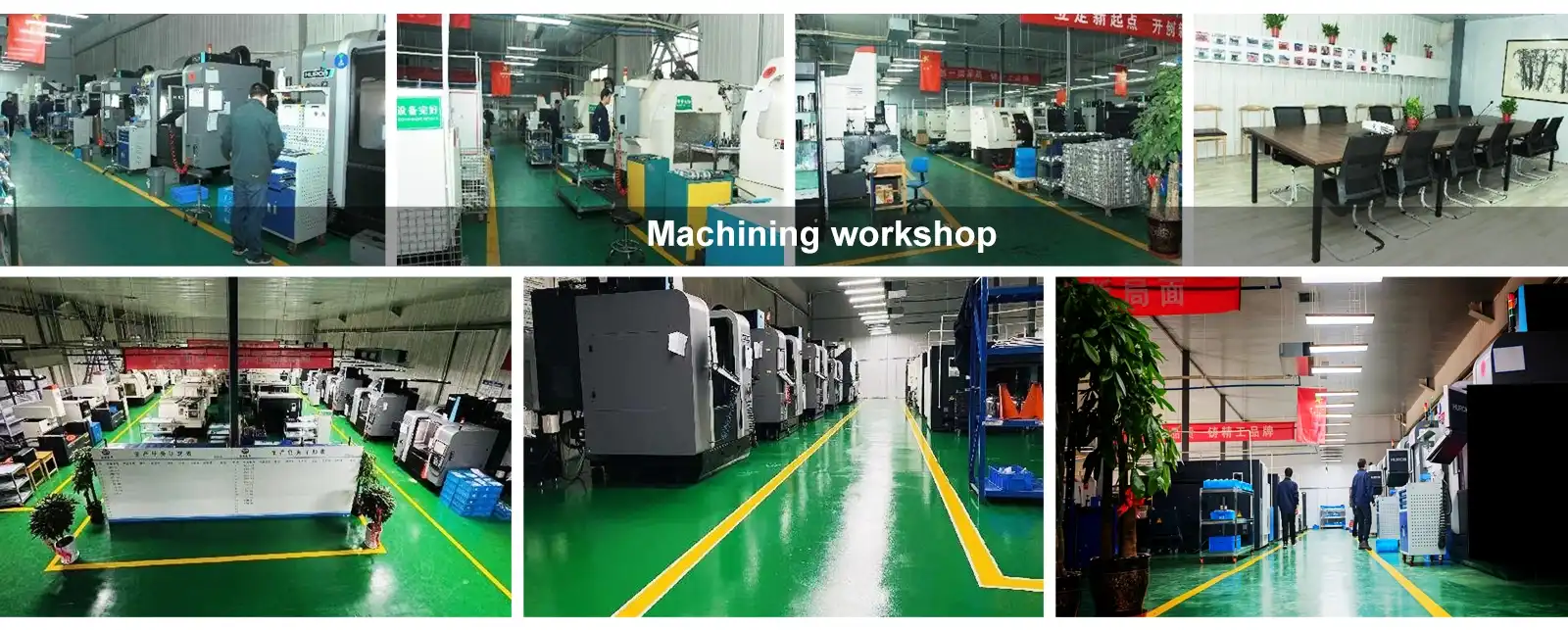
Although die-cast blanks have high molding accuracy, secondary CNC finishing is still an indispensable link for high-standard accessories. Precision machining can optimize and calibrate key dimensions such as thread structure, assembly matching surface and mounting hole position on the basis of cast blanks.
Choosing a supplier with integrated casting and CNC machining capabilities ensures unified dimensional standards and consistent processing benchmarks for parts. It avoids assembly failures caused by dimensional errors in cross-process handover, and further improves the assembly accuracy and stability of finished casting accessories.
Shot Blasting for Standardized Surface Treatment
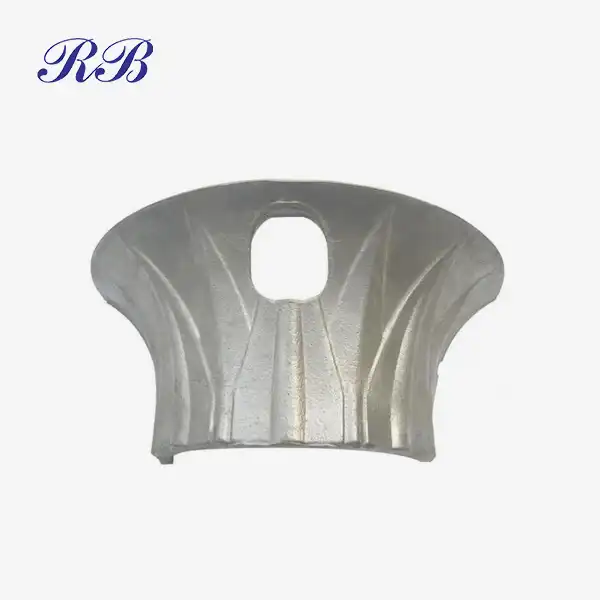
Shot blasting is a key surface pretreatment process for high-quality casting accessories. This process can thoroughly remove casting skin, oxide scale and tiny surface defects generated during the casting process, optimizing the surface flatness and uniformity of parts.
In addition to improving the appearance quality, shot blasting provides a good foundation for subsequent anodizing and powder coating processes. For outdoor gas meter housings and environmental alarm box accessories, clean and smooth treated surfaces can enhance coating adhesion, effectively resist outdoor corrosion and aging, and extend the service life of equipment components.
Practical Procurement Tips for Security and Gas Equipment Manufacturers
Procurement quality of casting accessories determines the overall qualification rate and launch progress of safety equipment. A standardized procurement process can effectively avoid rework costs and time losses caused by early-stage negligence. The disciplined procurement process is summarized as: submitting engineering drawings or reference samples, confirming materials and obtaining detailed quotations, prototype production and confirmation, certification testing, small-batch trial production, and formal mass production. The whole cycle of first-order customized production is 6–8 weeks, and the repeat order cycle after tooling confirmation can be shortened to about 1 week.
In addition, there are several key details worthy of attention in actual procurement:
-
Complete material traceability: Require suppliers to provide full material traceability documentation. For safety-related accessories, each production batch must be equipped with valid A380 alloy certification to guarantee material compliance and long-term operational stability.
-
Standardized packaging and logistics: Confirm packaging and transportation specifications upfront. Custom wooden box packaging is the standard for precision casting accessories in international shipping, effectively preventing collision damage during long-haul transit and reducing after-sales repair and replacement costs.
-
industry experience: Prioritize suppliers with mature experience in manufacturing explosion-proof and IP-rated components. Safety-certified casting accessories demand far stricter process precision and quality control than ordinary industrial castings, and professional industry experience avoids common certification and quality risks.
First, require suppliers to provide complete material traceability documents. For safety-related casting accessories, each batch of products must be accompanied by valid A380 alloy material certification reports to ensure material compliance.
Second, confirm packaging and transportation specifications in advance. Custom wooden box packaging is the standard for precision casting accessories in international transportation, which can effectively avoid component collision and damage during long-distance logistics and reduce after-sales repair and replacement costs.
Third, prioritize suppliers with rich experience in explosion-proof and IP-rated component production. The process precision and quality control standards required for safety-certified accessories are far higher than those of ordinary industrial castings, and mature industry experience can effectively avoid various certification and quality risks.
Conclusion
The procurement of casting accessories for gas safety and alarm equipment is not a simple price comparison work, but a systematic evaluation covering material performance, process capability, certification compliance, customization flexibility and supply stability. Excellent suppliers with long-term industry experience have optimized and improved tooling design and production processes for many years, effectively avoiding common quality instability problems in new manufacturers.
For OEM manufacturers, selecting a professional, compliant and flexible accessories supplier can not only ensure product safety and certification pass rate, but also reduce comprehensive procurement costs and accelerate product marketization, creating long-term competitive advantages for enterprises.
FAQ
What material is best for gas valve casting components?
A380 aluminium alloy is often used for gas control valve casting accessories because it is easy to cast, keeps its shape, and doesn't rust. It works reliably in gas systems where temperatures change a lot, and it adapts well to high-pressure die casting methods, producing consistent parts with minimal internal pores for stable long-term operation.
What certifications should a casting accessories supplier hold?
For reliable quality control, suppliers must hold ISO9001:2015 certification. For environmental and occupational safety compliance, ISO14001 and ISO45001 are essential qualifications. Meanwhile, manufacturers need to verify whether the supplier’s casting accessories can meet Ex d IIB T6 explosion-proof and IP65 ingress protection standards, and check valid third-party test reports to support product certification.
Can a casting supplier handle small-batch orders for alarm device parts?
Yes. Professional OEM/ODM casting accessories suppliers support flexible small-batch orders of 500 to 1,000 pieces, which fully meets the needs of new product prototype testing and small-batch trial production. It is recommended to confirm the clear minimum order quantity clause with the supplier in advance to avoid subsequent order restrictions.
How long does the first order typically take?
For customized casting accessories requiring new mold development, sample approval and certification testing, the first order delivery cycle is usually 6 to 8 weeks. After the tooling is confirmed and the process is stabilized, the repeat order production cycle can be shortened to about one week, realizing rapid batch supply.
Partner With Rongbao Enterprise for Reliable Casting Accessories
If you are looking for high-precision, certification-compliant and cost-effective casting accessories for gas control and alarm safety equipment, Rongbao Enterprise is your trustworthy long-term OEM partner. We provide one-stop services including mold development, alloy casting, CNC precision machining and surface treatment. With complete ISO9001:2015, ISO14001 and ISO45001 certifications, flexible small-batch customization capability and stable mass production capacity, we can fully meet your personalized procurement needs and help you shorten product development cycles and control comprehensive costs.
Feel free to contact us for customized solutions and free quotation! Email: steve.zhou@263.net& zhouyi@rongbaocasting.com
References
American Foundry Society. (2022). Aluminum Alloy Selection Guide for Die Casting Applications. AFS.
International Organization for Standardization. (2021). ISO 9001:2015 Quality Management Systems — Requirements. ISO.
Kalpakjian, S., & Schmid, S. R. (2014). Manufacturing Engineering and Technology (7th ed.). Pearson.
North American Die Casting Association. (2020). NADCA Product Specification Standards for Die Castings. NADCA.
ASM International. (2019). Surface Engineering (ASM Handbook, Vol. 5). ASM International.
International Organization for Standardization. (2018). ISO 45001:2018 Occupational Health and Safety Management Systems. ISO.
Learn about our latest products and discounts through SMS or email