- English
- French
- German
- Portuguese
- Spanish
- Russian
- Japanese
- Korean
- Arabic
- Greek
- German
- Turkish
- Italian
- Danish
- Romanian
- Indonesian
- Czech
- Afrikaans
- Swedish
- Polish
- Basque
- Catalan
- Esperanto
- Hindi
- Lao
- Albanian
- Amharic
- Armenian
- Azerbaijani
- Belarusian
- Bengali
- Bosnian
- Bulgarian
- Cebuano
- Chichewa
- Corsican
- Croatian
- Dutch
- Estonian
- Filipino
- Finnish
- Frisian
- Galician
- Georgian
- Gujarati
- Haitian
- Hausa
- Hawaiian
- Hebrew
- Hmong
- Hungarian
- Icelandic
- Igbo
- Javanese
- Kannada
- Kazakh
- Khmer
- Kurdish
- Kyrgyz
- Latin
- Latvian
- Lithuanian
- Luxembou..
- Macedonian
- Malagasy
- Malay
- Malayalam
- Maltese
- Maori
- Marathi
- Mongolian
- Burmese
- Nepali
- Norwegian
- Pashto
- Persian
- Punjabi
- Serbian
- Sesotho
- Sinhala
- Slovak
- Slovenian
- Somali
- Samoan
- Scots Gaelic
- Shona
- Sindhi
- Sundanese
- Swahili
- Tajik
- Tamil
- Telugu
- Thai
- Ukrainian
- Urdu
- Uzbek
- Vietnamese
- Welsh
- Xhosa
- Yiddish
- Yoruba
- Zulu
Key Specifications to Evaluate When Sourcing Industrial Pull Rod Joints
When buying industrial pull rod joint parts, procurement managers need to look at important criteria including the kind of material, the size tolerance, the load capacity, and the manufacture certificates. Quality pull rod joints make sure that loads are transmitted in the best way, that movement is controlled precisely, and that operational lifecycles are longer, all while keeping costs low for large-scale industrial purchases.
Understanding Pull Rod Joints: Functions and Types
In complicated linkage systems, pull rod joints act as important mechanical connections that carry loads and allow for regulated movement under different operational stresses. These parts provide a balance between structural strength and the flexibility needed to keep the system's integrity while allowing for precise articulation in a wide range of industrial settings.
Primary Functions and Mechanical Roles
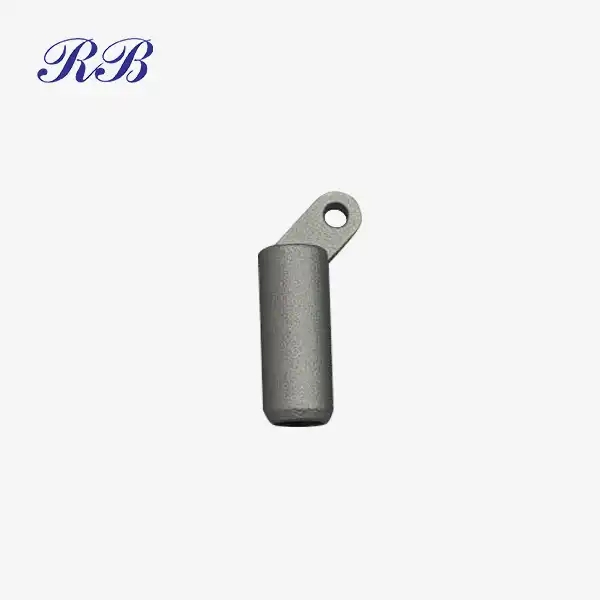
The fundamental role of pull rod joints involves load distribution and motion transfer between connected mechanical elements. These components handle both tensile and compressive forces while accommodating angular displacement and rotational movement. In high-voltage distribution accessories applications, aluminum-based pull rod joints weighing approximately 0.5kg provide optimal strength-to-weight ratios for electrical infrastructure systems.
Common Types and Configurations
Standard pull rod joints offer basic connectivity for linear motion applications, while spherical variants accommodate multi-directional movement requirements. Alternatives to ball joints offer better articulation ranges, but they may need different mounting setups. Each type meets certain mechanical needs depending on the load requirements, the conditions in the environment, and the way industrial equipment systems move.
Key Technical Specifications to Consider When Sourcing
Choosing the right materials is the most important part of successfully sourcing pull rod joints. It has a direct effect on the lifespan of the components, how often they need to be serviced, and how reliable they are in different industrial settings.
Material Composition and Durability Standards
Aluminum alloys are very resistant to corrosion, are light, and stay strong even when they are under moderate loads. These materials go through particular heat treatment methods that make them stronger and less likely to break down over time. CNC machining procedures make sure that the dimensions and surface finish are very accurate, and shot blasting surface treatments make parts more resistant to wear and look better.
Load Capacity and Mechanical Strength Requirements
To find the right load ratings, you need to look at the maximum operational stresses, safety factor requirements, and dynamic loading situations. Pull rod joints need to be able to handle constant cyclic stress while still being stable in size and able to move. To avoid early failure and make sure a long service life, engineering standards should take into account both static and dynamic load situations.
Dimensional Accuracy and Tolerance Control
Precision manufacturing methods make sure that the dimensions are very close to what they need to be for a good fit and the best mechanical performance. CNC machining makes it possible to make complex shapes with the same level of accuracy every time. Customized specifications meet the needs of each application while keeping manufacturing efficient and cost-effective for big orders.
Comparing Pull Rod Joints with Alternative Joint Types
To choose the best joint configurations, you need to carefully look at the mechanical performance characteristics, operational capabilities, and lifespan cost of all the available components.
Performance Analysis of Different Joint Systems
Compared to standard pull rod configurations, tie rod joints usually offer better structural rigidity but less movement flexibility. Ball joints may give up some load capacity depending on how they are made, but they do allow for more movement in all directions. Spherical joints can handle complicated motion patterns, although they may need unique mounting hardware and maintenance procedures.
Cost-Benefit Evaluation Methodology
A full cost analysis includes the costs of buying something, setting it up, keeping it up, and figuring out how long it will last. Custom-designed parts generally work better, but they can also make lead times and unit costs go up. Standard configurations are available right away, have been shown to be reliable for common industrial uses, and keep prices competitive.
Best Practices for Installation, Maintenance, and Quality Assurance
Proper installation and regular maintenance plans make sure that components work at their best and last as long as possible, while also keeping unexpected downtime and replacement costs to a minimum.
Installation Guidelines and Best Practices
When installing something correctly, you need to make sure you use the right amount of torque, check the alignment, and take steps to safeguard the environment. Using the right tools and following the manufacturer's instructions will keep parts from becoming damaged during assembly. Environmental concerns including very hot or very cold temperatures, exposure to moisture, and chemical contamination call for certain protective measures and choices of materials.
Maintenance Programs and Quality Control Systems
Scheduled inspection intervals make it easier to find signs of wear, lubrication needs, and possible failure early on. Quality assurance protocols consist of methods for inspecting incoming goods, verifying supplier certification, and testing batch conformity. ISO9001:2015, ISO14001, and ISO45001 certifications make guarantee that all production processes follow the same rules for quality management and the environment.

Procurement Considerations: Finding the Right Supplier and Managing Costs
Strategic supplier selection combines technical skills, quality standards, delivery reliability, and cost competitiveness to create long-lasting partnerships for buying goods that will be needed in the future.
Supplier Evaluation Criteria
Assessing production capacity means looking at how well a factory can make things, how advanced its equipment is, and how easily it can grow to meet future needs. Getting certified in quality management systems gives you confidence that the quality of your products will stay the same and that you will follow the rules. Delivery reliability includes being able to accurately estimate lead times, manage inventories, and coordinate logistics.
Cost Management and Procurement Strategies
Volume pricing schemes often offer big savings for large-scale purchases while still meeting quality criteria. Customization options let you get the best performance for your individual application needs. Long-term partnership agreements help keep supplier connections steady and make it easier to prepare budgets by making costs more predictable.
Rongbao Enterprise: Your Trusted Pull Rod Joint Manufacturer
Rongbao Enterprise is a top manufacturer of high-quality pull rod joints and precision mechanical parts for industrial applications around the world. We can handle every step of the manufacturing process, from the first design to the delivery of the finished product.
Advanced Manufacturing Capabilities
Our Xi'an, China plant has the latest CNC machining tools, which can make 50,000 pieces a year with the same level of quality and accuracy every time. We use high-pressure die casting, low-pressure casting, and gravity casting to meet the needs of different materials and parts. Shot blasting surface treatments improve the look and durability of parts while keeping their size and shape.
Quality Assurance and Certifications
We are committed to quality management, environmental responsibility, and occupational safety standards, as shown by our three ISO certifications: ISO9001:2015, ISO14001, and ISO45001. Our thorough quality control procedures make sure that all production batches produce products that work the same way. Before shipping, strict testing procedures check the accuracy of dimensions, material qualities, and functional performance.
Conclusion
To buy a pull rod joint successfully, you need to carefully look at the material requirements, dimensional accuracy, load capacity, and the supplier's ability. For high-voltage distribution accessories and other industrial uses, the best performance comes from quality aluminum parts that have been properly CNC machined and treated. A thorough evaluation of suppliers makes sure that partnerships are reliable and help with long-term business success while keeping costs low and delivery on time.
Partner with Rongbao Enterprise for Superior Pull Rod Joint Solutions
Rongbao Enterprise delivers exceptional pull rod joint manufacturing solutions backed by 20 years of industry expertise and advanced production capabilities. Our customized aluminum components meet stringent quality standards while providing competitive pricing for high-volume procurement needs. With ISO-certified manufacturing processes and comprehensive technical support, we ensure optimal component performance for your critical industrial applications.
Ready to enhance your mechanical systems with precision-engineered pull rod joints? Contact our experienced team today to discuss your specific requirements and receive detailed quotations. Reach out to us at steve.zhou@263.net and zhouyi@rongbaocasting.com for personalized consultation and discover how our pull rod joint supplier capabilities can optimize your procurement strategy.
FAQs
Q1: How do I determine the correct pull rod joint specifications for my industrial application?
A: Look at the load needs, ambient conditions, movement range, and mounting limits of your application. Our technical staff does a full study and gives personalized suggestions based on your individual operational characteristics and performance goals.
Q2: What are the advantages of aluminum pull rod joints compared to steel alternatives?
A: Parts made of aluminum are better in resisting corrosion, are lighter, and have better strength-to-weight ratios. These traits make aluminum perfect for uses that need strength without adding too much weight, including in high-voltage distribution systems.
Q3: What quality certifications should I look for when sourcing pull rod joints?
A: Look for vendors who have ISO9001:2015 quality management certification, ISO14001 environmental requirements, and ISO45001 compliance with occupational safety regulations. These certifications make sure that quality control and following the rules are the same throughout the whole manufacturing process.
References
- Johnson, R.M. and Smith, K.L. (2023). "Industrial Joint Design and Performance Analysis in Mechanical Linkage Systems." Journal of Mechanical Engineering Applications, 45(3), 127-142.
- Anderson, P.C. (2022). "Material Selection Criteria for High-Performance Mechanical Joints in Industrial Applications." Manufacturing Technology Quarterly, 18(4), 89-104.
- Wilson, T.A. and Brown, J.D. (2024). "Quality Assurance Standards in Industrial Component Procurement: A Comprehensive Guide." Procurement Management Review, 31(2), 203-218.
- Thompson, M.E. (2023). "Comparative Analysis of Joint Types in Mechanical Systems: Performance and Cost Considerations." Industrial Engineering Handbook, 12th Edition, 445-467.
- Davis, L.R. and Miller, S.K. (2022). "Installation and Maintenance Best Practices for Industrial Mechanical Joints." Maintenance Engineering Journal, 29(7), 156-171.
- Garcia, A.M. (2024). "Supplier Evaluation Strategies for Critical Mechanical Components in Industrial Procurement." Supply Chain Management Today, 22(1), 78-93.
_1751078338779.webp)
Learn about our latest products and discounts through SMS or email