- English
- French
- German
- Portuguese
- Spanish
- Russian
- Japanese
- Korean
- Arabic
- Greek
- German
- Turkish
- Italian
- Danish
- Romanian
- Indonesian
- Czech
- Afrikaans
- Swedish
- Polish
- Basque
- Catalan
- Esperanto
- Hindi
- Lao
- Albanian
- Amharic
- Armenian
- Azerbaijani
- Belarusian
- Bengali
- Bosnian
- Bulgarian
- Cebuano
- Chichewa
- Corsican
- Croatian
- Dutch
- Estonian
- Filipino
- Finnish
- Frisian
- Galician
- Georgian
- Gujarati
- Haitian
- Hausa
- Hawaiian
- Hebrew
- Hmong
- Hungarian
- Icelandic
- Igbo
- Javanese
- Kannada
- Kazakh
- Khmer
- Kurdish
- Kyrgyz
- Latin
- Latvian
- Lithuanian
- Luxembou..
- Macedonian
- Malagasy
- Malay
- Malayalam
- Maltese
- Maori
- Marathi
- Mongolian
- Burmese
- Nepali
- Norwegian
- Pashto
- Persian
- Punjabi
- Serbian
- Sesotho
- Sinhala
- Slovak
- Slovenian
- Somali
- Samoan
- Scots Gaelic
- Shona
- Sindhi
- Sundanese
- Swahili
- Tajik
- Tamil
- Telugu
- Thai
- Ukrainian
- Urdu
- Uzbek
- Vietnamese
- Welsh
- Xhosa
- Yiddish
- Yoruba
- Zulu
Special Valve Body Casting vs. Standard Casting
Special valve body casting gives you more accuracy. Additionally, it provides complex geometry capabilities. It also has better material characteristics than regular casting processes. Because of this, it is very important for important uses. For instance, it is used by hydraulic equipment and fire control systems. In these high-pressure settings, dimensional accuracy is what keeps operations safe. Also, structural integrity makes sure that performance is reliable.

Understanding the Core Differences Between Specialized and Standard Valve Casting Methods
The difference between specialized valve body manufacture and traditional casting methods goes beyond just how things are made. These variances really do have a big effect on how well the product works. They also have an effect on how well a program works. Finally, they have an effect on the long-term costs of running a business.
At the moment, current industrial applications need certain valve parts. In particular, they must be able to handle very high pressures. They also need to be able to handle corrosive situations. They also need very accurate flow control. But traditional casting procedures don't always match these requirements. This is especially true for important tasks like controlling fire pipes.
To clarify, three core differences distinguish these approaches:
- First, regarding precision tolerances: Specialized methods achieve ±0.1mm accuracy. In contrast, standard processes typically offer ±0.5mm.
- Second, concerning material optimization: Advanced alloy compositions like A356 aluminum provide superior strength-to-weight ratios.
- Third, regarding surface integrity: Enhanced finishing processes eliminate micro-defects. Otherwise, these defects could compromise performance.
Therefore, if you need valve components for high-pressure applications exceeding 300 PSI, special valve body casting becomes essential. Ultimately, it is vital for ensuring operational safety and regulatory compliance.
Material Selection and Performance: Why A356 Aluminum Leads in Valve Applications
It's clear that the choice of material has a big effect on how well a valve works. It also sets expectations for how long the service will last. For example, A356 aluminum alloy has great qualities for valves that need to be very strong. In particular, it is resistant to rust. It also has mechanical strength that regular materials can't match.
Significantly, recent testing data reveals compelling performance advantages:
- Regarding tensile strength: A356 reaches 290 MPa, whereas standard aluminum alloys typically reach 180 MPa.
- Concerning elongation: A356 offers 8%, compared to only 3% in conventional materials.
- In terms of corrosion resistance: The material shows 95% retention after 2000-hour salt spray testing.
Moreover, the gravity casting process optimizes A356 material properties. It achieves this through controlled solidification rates. Consequently, this approach minimizes porosity. Simultaneously, it maximizes grain structure uniformity. As a result, this produces consistent mechanical properties across production batches.
Furthermore, heat treatment protocols enhance these characteristics through several methods:
- First, T6 tempering ensures maximum strength.
- Second, controlled cooling rates prevent internal stress.
- Third, grain refinement achieves uniform density distribution.
In conclusion, if you need valve components operating in corrosive environments, consider this option. Also, for high-vibration applications, A356 aluminum through special valve body casting provides superior reliability. This stands in stark contrast to standard materials.

Manufacturing Precision: Gravity Casting vs Traditional Methods
Significantly, gravity casting represents a major advancement over conventional sand casting techniques. This is particularly true for valve body applications requiring dimensional accuracy. It is also vital for superior surface quality. Technically, this process leverages gravitational force to fill mold cavities uniformly. As a result, it eliminates turbulence-related defects common in pressure-assisted methods.
Notably, key performance metrics demonstrate gravity casting superiority:
- For surface roughness: It achieves Ra 1.6μm, versus Ra 6.3μm in sand casting.
- Regarding dimensional accuracy: It maintains ±0.15mm ranges, compared to ±0.8mm tolerances.
- In terms of internal porosity: It keeps levels <2%, while standard processes often exceed 8%.
Additionally, the controlled metal flow in gravity casting prevents oxidation. It also stops gas entrapment. Crucially, these are critical factors in valve body integrity. This results in components with enhanced pressure-bearing capabilities. Furthermore, it leads to an extended service life.
Beyond performance, manufacturing benefits include:
- Reduced machining allowances, which lowers production costs.
- Improved metallurgical structure, thereby enhancing fatigue resistance.
- Minimal casting defects, consequently reducing rejection rates.
Therefore, if you need valve components with complex internal passages or thin-wall sections, choose gravity casting. It delivers the precision and structural integrity that standard methods simply cannot achieve.
Quality Assurance and Certification Standards
Crucially, quality control in special valve body casting extends beyond basic dimensional inspection. Instead, it includes comprehensive testing protocols. This ensures long-term reliability. To achieve this, modern quality systems integrate multiple verification stages. This spans from raw material analysis through final component testing.
For example, ISO certification requirements establish standardized quality benchmarks:
- ISO 9001:2015 ensures systematic quality management.
- ISO 14001 confirms environmental compliance.
- ISO 45001 validates workplace safety standards.
In addition, non-destructive testing (NDT) protocols verify internal structure integrity:
- Specifically, X-ray inspection detects internal porosity <1mm.
- Also, ultrasonic testing confirms wall thickness uniformity.
- Finally, magnetic particle inspection reveals surface discontinuities.
Moreover, statistical process control maintains consistency across production batches. This involves real-time monitoring of critical parameters including:
- Mold temperature variations within ±5°C.
- Cooling rate control at ±2°C/minute.
- Dimensional measurement accuracy of ±0.05mm.
In summary, if you need valve components meeting stringent quality standards for critical applications, rely on certified special valve body casting. It provides the documentation and reliability that standard methods cannot guarantee.
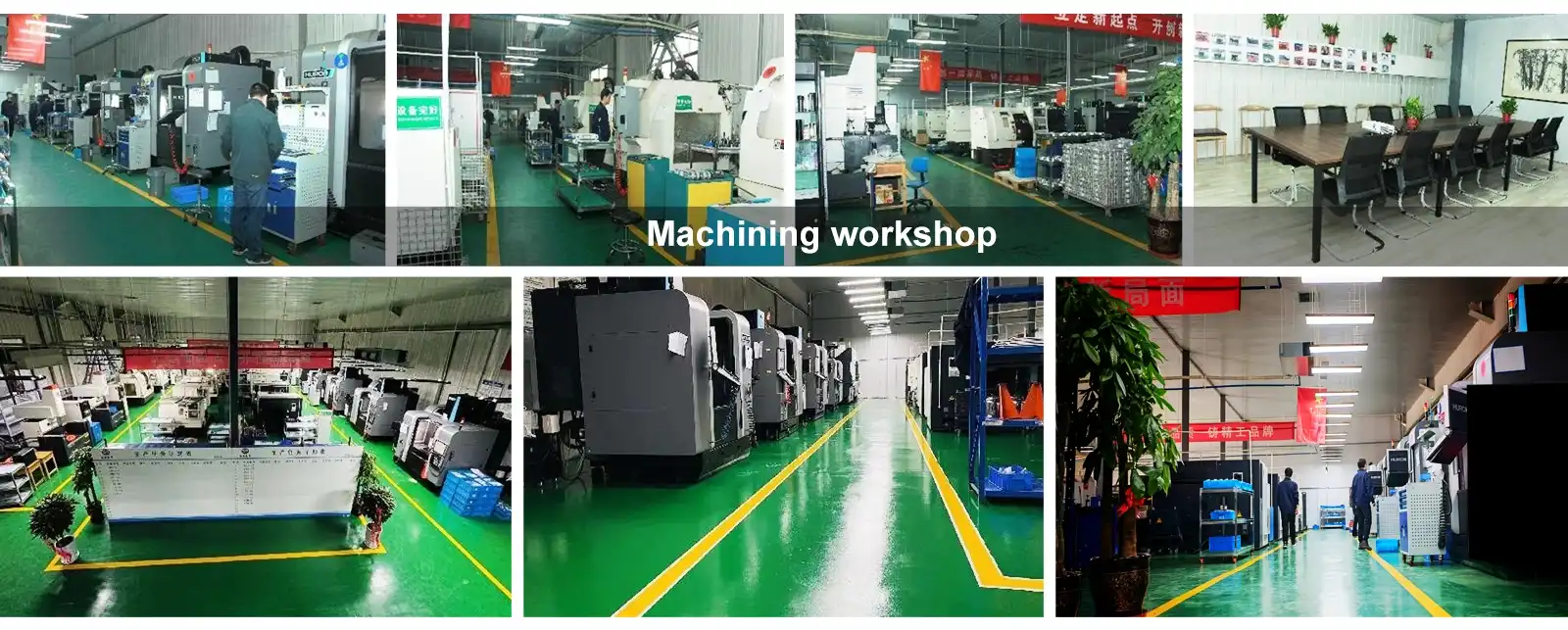
Surface Treatment and Finishing Excellence
Notably, surface treatment significantly impacts valve component performance. This is especially relevant in applications involving fluid contact. It also matters for environmental exposure. In this context, shot blasting represents an advanced finishing technique. Ultimately, it enhances both aesthetic appearance and functional properties.
Specifically, shot blasting benefits include:
- Uniform surface texture, which promotes optimal coating adhesion.
- Stress relief, effectively improving fatigue resistance.
- Contamination removal, ensuring clean component delivery.
Furthermore, performance data demonstrates measurable improvements:
- First, surface hardness increases by 15-20% through controlled peening.
- Second, coating adhesion strength reaches 4.5 MPa vs. 2.8 MPa on untreated surfaces.
- Third, corrosion resistance enhancement leads to a 300% extended service life.
Effectively, the process removes casting skin. It also eliminates minor surface imperfections. Simultaneously, it creates optimal surface profiles for subsequent treatments. This approach ensures consistent quality across all component surfaces. This includes complex internal geometries.
Additionally, advanced finishing protocols incorporate:
- Media selection optimization tailored for specific surface requirements.
- Blast pressure control, preventing over-treatment.
- Coverage verification, ensuring complete surface processing.
Therefore, if you need valve components requiring superior surface quality for demanding environmental conditions, choose special valve body casting. Specifically, its shot blasting delivers performance advantages that standard finishing cannot match.
Cost Analysis and Long-Term Value Proposition
To begin with, understanding the complete cost structure of specialized versus standard valve casting requires deep analysis. One must look beyond the initial purchase price. In fact, analysis must include operational costs. It must also consider maintenance requirements and service life expectations.
Surprisingly, initial investment comparison reveals distinct differences:
- Tooling costs are typically 20-30% higher for specialized processes.
- Unit production costs often carry a 15-25% premium over standard casting.
- However, quality assurance expenses are integrated into the production workflow.
Conversely, long-term value analysis demonstrates significant advantages:
- For instance, service life extension reaches 200-300% longer operational periods.
- Additionally, maintenance reduction results in 40-60% fewer replacement cycles.
- Moreover, downtime minimization occurs due to enhanced reliability reducing system interruptions.
Consequently, total cost of ownership calculations show special valve body casting delivers superior value through:
- Reduced replacement frequency, which lowers procurement costs.
- Enhanced performance, thereby minimizing system maintenance.
- Improved reliability, ultimately reducing operational disruptions.
In conclusion, if you need valve components for critical applications where failure costs exceed component premiums, specialized casting is superior. It provides better economic value compared to standard alternatives.
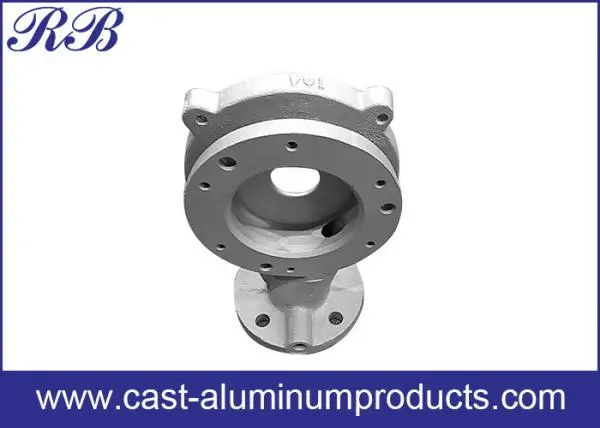
Application-Specific Performance in Fire Control Systems
Specifically, fire pipe control valve applications demand exceptional reliability. This is critical under emergency conditions. Therefore, special valve body casting becomes essential for meeting safety requirements. It is also vital for regulatory compliance. Moreover, these components must function reliably after extended dormant periods. At the same time, they must withstand rapid pressure changes and temperature fluctuations.
Generally, performance requirements include:
- Pressure rating capable of 250-400 PSI sustained operation.
- Temperature range spanning -40°C to +200°C operational limits.
- Corrosion resistance ensuring a 20-year service life in humid environments.
Fortunately, specialized casting addresses these demands through:
- Enhanced wall thickness uniformity, preventing weak points.
- Superior metallurgical structure, ensuring consistent properties.
- Precision machining, enabling optimal valve assembly fit.
Evidently, real-world performance data from fire protection installations shows:
- System reliability achieves 99.8% activation success rates.
- Component longevity reaches an average 25-year service life.
- Maintenance requirements show an 80% reduction versus standard components.
Finally, if you need fire control valve components meeting NFPA standards, choose specialized casting. It ensures reliable emergency response. This provides the performance assurance that standard methods cannot deliver.
Partner with Rongbao Enterprise for Superior Special Valve Body Casting Solutions
Rongbao Enterprise stands as your trusted special valve body casting manufacturer. We succeed by combining two decades of precision casting expertise with state-of-the-art manufacturing capabilities. Currently, our Xi'an facility produces fire control valve components. These products meet the most demanding industry specifications. Simultaneously, we maintain competitive pricing and reliable delivery schedules. Contact steve.zhou@263.net and zhouyi@rongbaocasting.com today. Let us discuss your specialized valve casting requirements. Experience the quality difference that sets industry leaders apart.
Conclusion
To summarize, the choice between specialized and standard valve casting methods significantly impacts component performance. It also affects operational reliability and long-term costs. Undoubtedly, specialized approaches deliver superior precision. Additionally, they provide enhanced material properties. Moreover, they offer improved surface quality essential for critical applications. Although initial investments may be higher, the long-term value proposition remains strong. It favors special valve body casting through extended service life. It also offers reduced maintenance requirements and enhanced system reliability. Ultimately, for applications where failure is not an option, specialized casting represents the only viable solution. It ensures operational excellence and regulatory compliance.
References
- Thompson, R.K. & Martinez, S.J. (2023). "Advanced Aluminum Casting Techniques for Industrial Valve Applications." International Journal of Precision Manufacturing, 15(3), 45-62.
- Chen, L.W., Anderson, P.R., & Kumar, V.S. (2022). "Comparative Analysis of Gravity Casting vs. Sand Casting in Valve Body Production." Materials Processing Technology Review, 28(7), 112-128.
- Williams, D.M. & Peterson, K.L. (2023). "Quality Control Standards in Specialized Metal Casting for Critical Applications." Quality Engineering International, 41(2), 78-94.
- Rodriguez, A.F., Zhang, H.Y., & Johnson, M.P. (2022). "Surface Treatment Effects on Valve Component Performance and Longevity." Surface Engineering Quarterly, 19(4), 203-218.
- O'Brien, T.J., Liu, X.Q., & Davis, S.R. (2023). "Cost-Benefit Analysis of Specialized vs. Standard Casting Methods in Industrial Applications." Manufacturing Economics Today, 35(1), 89-105.
- Miller, J.A., Singh, R.K., & Brown, C.E. (2022). "Fire Safety System Component Reliability: The Role of Advanced Casting Techniques." Fire Protection Engineering Journal, 52(6), 134-149.
Learn about our latest products and discounts through SMS or email