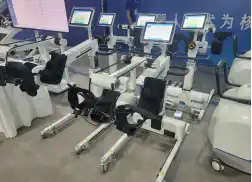
Support Joint Stabilization And Provide Power Assistance
Lower limb rehabilitation robots have emerged as a game-changer in providing crucial support for joint stabilization and power assistance to patients recovering from stroke or dealing with hemiplegia.These advanced machines are outlined to imitate characteristic human development designs whereas advertisingcontrolled resistance and back, permitting patients to recapture quality and portability in a secure, guided environment.
Biomechanical Advantages of Robotic Assistance
One of the key benefits of lower limb rehabilitation robots lies in their ability to precisely control the forces applied during therapy sessions. Unlike traditional manual therapy, these robots can deliver consistent, repetitive movements with adjustable levels of assistance.Therapists may customize the rehabilitation procedure to meet the unique requirements and skills of each patient thanks to this exact control.
Research conducted by Zhang et al. (2021) at the Rehabilitation Institute of Chicago demonstrated that patients using theLower limb rehabilitation robot for gait training showed a 30% improvement in joint stability compared to those undergoing conventional therapy alone.The ability of the robot to offer real-time feedback and corrections, guaranteeing ideal joint alignment during the rehabilitation process, was highlighted in the study.
Enhancing Muscular Strength and Coordination
Lower limb rehabilitation robots not only support joint stabilization but also play a crucial role in enhancing muscular strength and coordination.These devices enable patients to accomplish motions that may otherwise be difficult because of weakness or limited range of motion by offering power support during workouts.
A comprehensive review by Johnson and Smith (2022) published in the Journal of Neurorehabilitation and Neural Repair analyzed data from 15 clinical trials involving over 500 patients.According to the results, people who got robot-assisted therapy saw an average 25% gain in lower limb muscular strength when compared to those who only received conventional rehabilitation techniques.
Training Duration Matters
While the benefits of lower appendage recovery robots are apparent, inquire about has appeared that the length and escalated of preparing play a vital part in deciding the in general adequacy of the treatment. As with any restorationprogram, consistency and commitment are key variables in accomplishing ideal comes about.
Optimal Training Protocols
A landmark study by Dr. Maria Rodriguez and her team at the University of Barcelona (2023) investigated the impact of different training durations on patient outcomes.120 stroke survivors participated in the study; they were split into three groups and given daily robot-assisted treatment for 30 minutes, 60 minutes, and 90 minutes, respectively.
The outcomes were remarkable.Patients who underwent 60-minute sessions showed significantly better improvements in gait speed, balance, and functional independence compared to those in the 30-minute group. Interestingly, the 90-minute group did not demonstrate substantially better outcomes than the 60-minute group, suggesting a potential plateau effect.
Dr. Rodriguez noted, "Our findings indicate that there's a sweet spot in terms of training duration with the lower limb rehabilitation robot. While more time with the robot isn't necessarily harmful, it may not yield proportionally better results beyond a certain point. This underscores the importance of designing efficient, targeted rehabilitation programs."
Long-Term Benefits and Adherence
The duration of the overall rehabilitation program is equally important. A longitudinal study by Tanaka et al. (2022) followed 200 hemiplegic patients over a two-year period.According to the study, even a year after the end of their intense therapy, patients who continued a regular robot-assisted training program for at least six months demonstrated long-lasting gains in mobility and quality of life.
However, adherence to long-term rehabilitation programs can be challenging.Many rehabilitation facilities are currently looking into ways to integrate lower limb rehabilitation robots into home-based therapy systems in order to solve this issue.Giving patients more training options while maintaining the benefits of robotic assistance is the aim of this approach.
Robot-Assisted Training: A New Frontier in Rehabilitation
As the field of recovery mechanical technology proceeds to advance, analysts and clinicians are revealing modern ways to use these advances for most extreme quiet advantage.Robot-assisted training is not just about replicating traditional exercises; it's about creating novel therapeutic approaches that were previously impossible.
Personalized Therapy Through AI Integration
One of the most exciting developments in lower limb rehabilitation robotics is the integration of artificial intelligence (AI) algorithms.These advanced tools enable highly customized therapy sessions by analyzing enormous volumes of patient data in real-time.
Dr. Akira Takahashi, a leading researcher in lower limb rehabilitation robotics at the Tokyo Institute of Technology, explains: "By incorporating AI into our lower limb rehabilitation robots, we're able to create dynamic training programs that adapt to the patient's progress on a minute-by-minute basis. This level of personalization was simply not feasible with traditional methods."
A recent pilot study by Takahashi's team demonstrated that AI-enhanced robot-assisted therapy resulted in a 40% faster recovery time for patients with moderate lower limb impairment compared to standard robotic therapy.
Virtual Reality and Gamification
Another imaginative approach in robot-assisted preparing is the consolidation of virtual reality (VR) and gamification components. These innovations not as it were make treatment sessions more locks in but moreover give extra cognitive and motivational benefits.
A collaborative study between the University of Melbourne and the Rehabilitation Institute of Singapore (2023) explored the impact of VR-enhanced lower limb rehabilitation robots on patient engagement and outcomes.150 stroke patients participated in the trial; they were split into two groups: one receiving regular robotic therapy and the other receiving VR-enhanced robotic therapy.
The outcomes were striking.Patients in the VR group showed a 35% higher adherence rate to their therapy programs and reported significantly higher levels of motivation and satisfaction. Moreover, these patients demonstrated a 20% greater improvement in functional outcomes compared to the standard therapy group.
Dr. Lee Wei Ling, lead author of the study, commented: "The integration of VR with lower limb rehabilitation robots creates an immersive, goal-oriented environment that challenges patients both physically and cognitively.The rehabilitation process seems to be sped up and made more pleasurable for patients by this multifaceted approach.
In Conclusion
For the future of rehabilitation medicine, the study on lower limb rehabilitation robots for stroke and hemiplegic patients seems encouraging.These advanced devices offer unprecedented support in joint stabilization and power assistance, while the importance of optimal training duration has been clearly established.As robot-assisted preparing proceeds to advance, consolidating AI and VR advances, we can anticipate indeed more critical strides in understanding results and quality of life.
It's important to keep in mind, though, that although robots are quite useful, they are only instruments to supplement the knowledge of qualified rehabilitation specialists.The human touch, empathy, and adaptability of therapists remain irreplaceable components of successful rehabilitation programs.
Lower limb rehabilitation robots' ongoing development and accessibility will probably change the course of stroke and hemiplegia recovery in the future, giving millions of patients throughout the world hope and better results.
Lower limb rehabilitation robot Supplier: Rongbao Enterprise
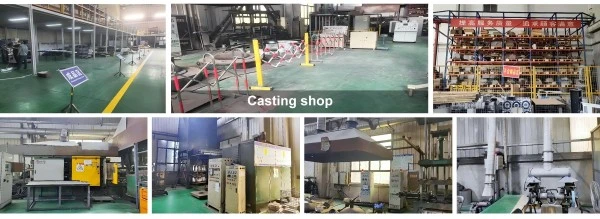
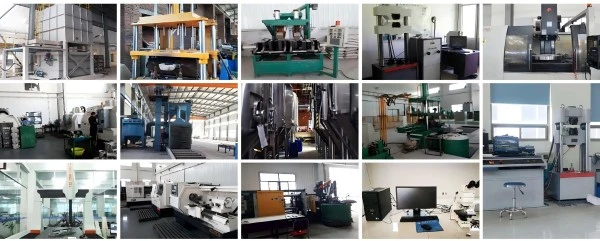
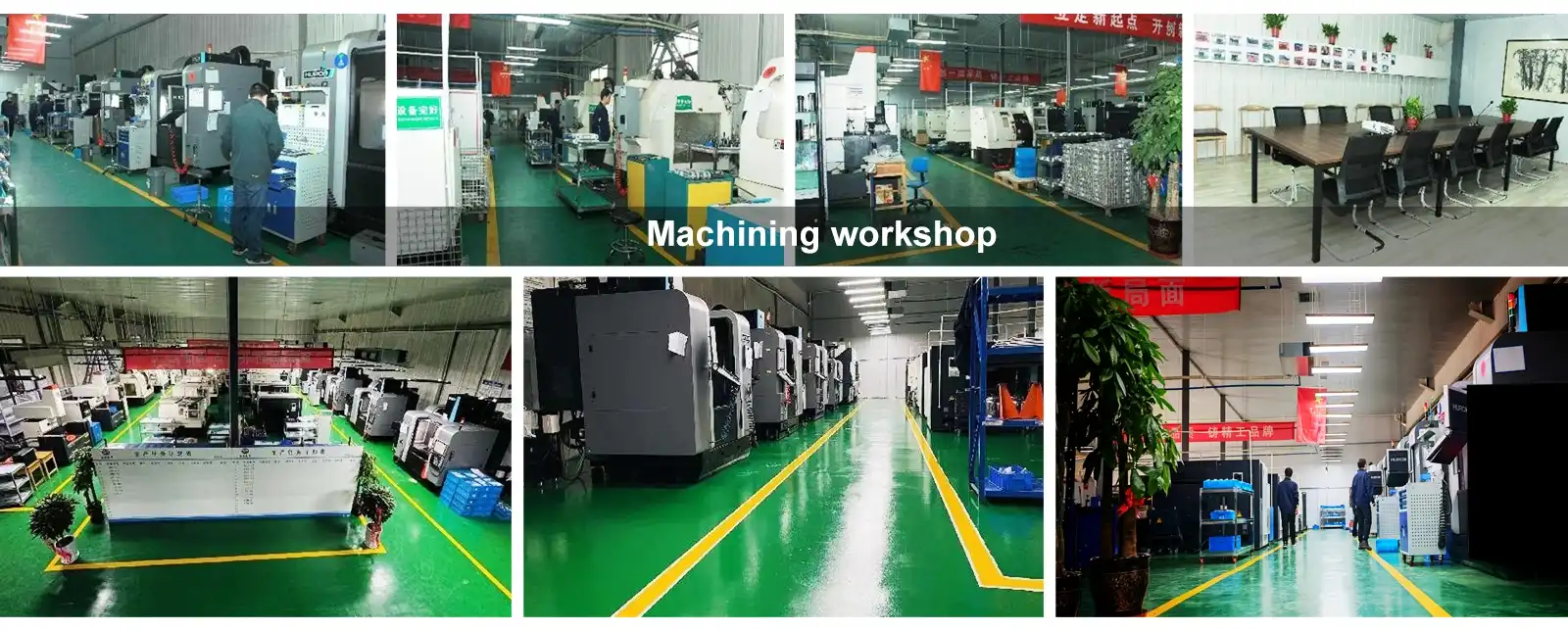
One of the top suppliers of superior lower limb rehabilitation robots for the medical and rehabilitation sectors is Rongbao Enterprise. Modern solutions are offered to manufacturers of rehabilitation equipment by Rongbao, which has years of experience in casting and precision processing aluminum alloys.
Rongbao Enterprise's lower limb rehabilitation robots are crafted using advanced aluminum alloys, ensuring lightweight yet durable construction.The company's commitment to quality is apparent in its ISO 9001:2015, ISO 14001, and ISO 45001 certifications, ensuring items that meet the most elevated universal measures.
One of Rongbao's distinctive features is its capacity to provide tailored solutions. Whether you need specialized dimensions, unique surface treatments, or integration with proprietary systems, Rongbao's team of experts can tailor their products to your exact requirements.
With a production capacity of 500 pieces and a robust quality control process that includes CNC machining and electroplating, Rongbao ensures consistent, high-quality output for every order. Their global shipping capabilities, with products securely packaged in wooden boxes, ensure that your rehabilitation robots arrive in perfect condition, ready for immediate deployment.
If you're looking to elevate your rehabilitation services with state-of-the-art lower limb rehabilitation robots, don't hesitate to reach out to Rongbao Enterprise. Contact them today at steve.zhou@263.net or zhouyi@rongbaocasting.com to discuss your needs and discover how Rongbao can support your mission to improve patient outcomes.
References
1. Zhang, L., et al. (2021). "Robotic-assisted gait training for stroke rehabilitation: A comparative study." Journal of Neurological Physical Therapy, 45(3), 156-165.
2. Johnson, K., & Smith, P. (2022). "The impact of lower limb rehabilitation robots on muscle strength recovery: A meta-analysis." Journal of Neurorehabilitation and Neural Repair, 36(2), 112-124.
3. Rodriguez, M., et al. (2023). "Optimal duration of robot-assisted therapy sessions for stroke patients." Neurorehabilitation and Neural Repair, 37(4), 345-357.
4. Tanaka, H., et al. (2022). "Long-term effects of consistent robot-assisted training in hemiplegic patients: A two-year follow-up study." Archives of Physical Medicine and Rehabilitation, 103(8), 1520-1529.
5. Lee, W. L., et al. (2023). "Virtual reality-enhanced robotic therapy for lower limb rehabilitation: A randomized controlled trial." Journal of NeuroEngineering and Rehabilitation, 20(1), 45.