- English
- French
- German
- Portuguese
- Spanish
- Russian
- Japanese
- Korean
- Arabic
- Greek
- German
- Turkish
- Italian
- Danish
- Romanian
- Indonesian
- Czech
- Afrikaans
- Swedish
- Polish
- Basque
- Catalan
- Esperanto
- Hindi
- Lao
- Albanian
- Amharic
- Armenian
- Azerbaijani
- Belarusian
- Bengali
- Bosnian
- Bulgarian
- Cebuano
- Chichewa
- Corsican
- Croatian
- Dutch
- Estonian
- Filipino
- Finnish
- Frisian
- Galician
- Georgian
- Gujarati
- Haitian
- Hausa
- Hawaiian
- Hebrew
- Hmong
- Hungarian
- Icelandic
- Igbo
- Javanese
- Kannada
- Kazakh
- Khmer
- Kurdish
- Kyrgyz
- Latin
- Latvian
- Lithuanian
- Luxembou..
- Macedonian
- Malagasy
- Malay
- Malayalam
- Maltese
- Maori
- Marathi
- Mongolian
- Burmese
- Nepali
- Norwegian
- Pashto
- Persian
- Punjabi
- Serbian
- Sesotho
- Sinhala
- Slovak
- Slovenian
- Somali
- Samoan
- Scots Gaelic
- Shona
- Sindhi
- Sundanese
- Swahili
- Tajik
- Tamil
- Telugu
- Thai
- Ukrainian
- Urdu
- Uzbek
- Vietnamese
- Welsh
- Xhosa
- Yiddish
- Yoruba
- Zulu
Pull Rod Joint Design Considerations
A pull rod joint in a mechanical linkage may be a fraction of the size of the surrounding structure, yet it needs to transmit the force precisely and frequently. The performance of the joint in service depends on its size, material, method of connection, surface condition, and manufacturing procedure. A design that seems acceptable on a drawing may yet develop excessive wear, deformation, or fatigue issues if the load route and mating components are not examined together. For engineers and purchasing teams, specifying a pull rod joint therefore involves more than selecting a shape. The provider has to know the operational load, connection geometry, environment, production quantity, and inspection requirements prior to suggesting a manufacturing path.
Start With the Load and Operating Environment
The initial design consideration must be how the joint is really going to be utilized. A pull rod joint may be subjected to tensile loads, compressive loads, bending moments, or a combination of these forces. Dynamic applications may also include repetitive loading, vibration, impact, and changes in load direction.
The predicted load should be established before finalizing the material and specifications . Useful technical information is:
- Typical and maximum loads
- Static or cyclic load conditions
- Duty cycle/expected service life
- Operating temperature
- Moisture, salt, chemicals, or exposure to the elements
- Type of connection and amount of installation space
- Safety factor required
These factors affect both material and geometry. The requirements of a joint operating in a reasonably clean indoor environment may vary from those of a joint exposed to dampness or corrosive environments.
Weight is another essential aspect. Aluminum alloys are appealing in situations where lowering the bulk of the component is beneficial. But density is not the sole selection criterion. However, the selected alloy still has to be capable of delivering enough tensile strength, yield strength, fatigue performance, machinability, and resistance to the environment for the intended application.
Choosing an Appropriate Alloy
There is no single aluminum alloy that will be best for all pull rod joints. The ultimate choice should be based on the compromise between mechanical and production requirements.
For example, an application needing high strength may put more focus on mechanical qualities, whereas an outdoor use may demand more attention to corrosion resistance and surface protection. When the connection incorporates precisely machined holes, bores, threads, or bearing surfaces, the machinability is also of concern.
The supplier should be able to positively identify the proposed alloy and provide the appropriate material documentation. Buyers may additionally need certifications of materials, inspection records, and traceability of manufacturing orders according to their quality system.
Match the Manufacturing Process to the Joint Geometry
The manufacturing procedure of a pull rod joint directly affects the uniformity and cost. If the component lends itself to a robust, compact configuration and an appropriate forging design can be established around the load route, forging is an option.
In the forging process, the material is created under controlled compressive forces. A well-planned forging process may lessen the probability of certain internal discontinuities associated with casting for specific casting pathways. However, the ultimate performance is still dependent on alloy selection, forging temperature, die design, process control, heat treatment when appropriate, and subsequent machining.
So forging is not the ideal option for all joints. Other manufacturing processes may be more affordable for smaller volume production, more complicated geometries, or different material needs. “The right choice should take into account both the technical performance and the production volume.”
Why CNC Machining Matters
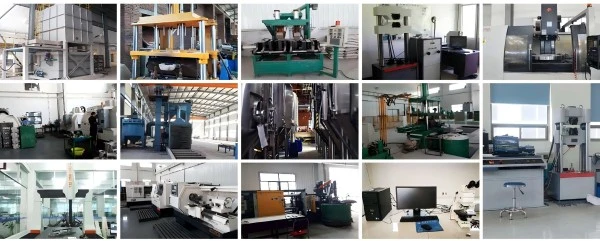
The forged/formed blank is simply a beginning. CNC machining of functional features such as connection holes, bores, threads, bearing surfaces, etc., may be necessary.
This step is very crucial since the joint must fit with its matching components. Too small a hole might be a problem during assembly. Too much clearance can cause undesired movement or impact between pieces.
Important needs for machining might be:
- Diameter of hole and bore
- Location Tolerance
- Flatness of mounting faces
- Where appropriate, concentricity
- Thread sizes
- Surface quality
- Edge condition and deburring
The tolerance necessary should be defined in accordance with the actual function of the feature. You don’t have to have really fine tolerances on all dimensions.” Tighter tolerances might raise the machining time and expense without enhancing the performance of the unit.
Design the Load Path Around the Connection Points
The geometry surrounding the pin, bolt, or pivot connection merits careful consideration. Holes tend to remove material from the cross section naturally and might generate regions of increased local stress. Therefore, material around the hole should have a sufficient section thickness to carry the predicted bearing and net-section loads.
Sharp geometric transitions may be reduced using appropriate radii and fillets. Instead of an abrupt corner, a regulated radius allows a smoother transition of shape and may lessen local stress concentration.
Another essential aspect is the bearing area. If the region surrounding a pin or bolt is too tiny, the pressure may be excessive locally. This might lead to deformation, hole expansion, or rapid wear depending on the material and loading circumstances.
Check Clearance Between Mating Parts
Clearance should be designed around the actual movement of the assembly.
A pivoting joint generally needs sufficient running clearance to move without binding. Excessive clearance, however, can result in looseness, vibration, and impact loading. Fixed connections may require a different fit depending on the assembly method.
The same principle applies to adjustable joints. If the design allows movement or adjustment, the tolerance stack-up between the joint, pin, rod, washer, and other mating parts should be reviewed together rather than dimensioning each component independently.
Use Engineering Analysis Before Cutting Production Tooling
Finite Element Analysis may be of value during the design stage, especially if the joint is of a complicated form or the load path is not evident.
A typical study may look at projected tensile and compressive loads and point out locations with particularly high stress or deformation. This allows engineers to examine various fillet sizes, section thicknesses, hole positions, or general geometries before committing to production tooling.
FEA cannot substitute physical validation. Its value relies on whether the model employs accurate material characteristics, loads, restrictions, and contact conditions. The simulation findings must be examined in conjunction with the prototype testing and dimensional inspection for the critical parts.
A practical sequence of development is:
- Define the environment and the load to be operated.
- Make basic joint geometry.
- Check the load route and important areas.
- Run FEA where necessary.
- Build a first prototype/first batch.
- Check crucial dimensions and functional fit.
- Perform relevant mechanical/functional testing.
RELEASE Final drawing and inspection requirements. This way, the engineering and buying departments would have a more concrete foundation to approve the manufacturing design.
Consider Surface Condition and Corrosion Protection
The surface quality of a pull rod joint may influence the look and the performance of the service. Machined surfaces may need deburring, cleaning, or a specific surface finish before assembly.
The suitable surface treatment depends on the alloy and the working environment. Options include anodizing, coating, blasting, or other treatments chosen for corrosion protection, appearance, or surface qualities.
Shot blasting, for example, changes the surface texture and is occasionally used as a finishing treatment. Its impact should not be seen as the general answer to fatigue or corrosion concerns. The final treatment should be chosen based on the material, the process sequence, and the actual service requirements.
In addition, for assemblies that may be exposed to wet or corrosive conditions, the contact between the joint and the mating hardware should be examined. Long-term performance may be affected by material compatibility, quality of coating, drainage, and contact of dissimilar metals.
What Buyers Should Request From a Supplier
For buying teams, the quality of the finished component is largely dependent on how effectively the original needs are expressed. A supplier can’t reliably price or produce a bespoke joint from a product name alone.
The RFQ package to be used should include:
- 2D manufacturing drawings
- 3D CAD model if any
- Material or alloy specification
- Heat treatment requirements, where appropriate
- Important dimensions and tolerances
- Specification for Surface Treatment
- Anticipated working load
- Assembly or mating component information
- Yearly or monthly need
- Number of Prototypes
- Inspection documentation required
- Packaging specifications
- Shipping destination
In case the drawing is still in development, the customer might first provide the application details and basic geometry. Then an expert manufacturer can tell whether the design is viable for the planned procedure.
Confirm the Inspection Plan Before Production
Inspection should focus on the dimensions and characteristics that determine whether the joint will function correctly.
Depending on the design, this may include dimensional inspection, hole and bore measurement, surface inspection, material verification, and functional fit checks. For larger production orders, buyers may also request a defined inspection report or first-article inspection before full production.
The important point is to agree on the inspection requirements before manufacturing begins. This avoids disputes later about which dimensions, tolerances, or documents are considered critical.
Customization and Production Capacity Matter at Different Stages
Even if a supplier has the technical ability to produce a bespoke pull rod joint, he may not be a good fit for a specific project if his production capacity, machining capabilities, or quality system are not up to the task of supporting the needed volume.
For prototypes and small lots, engineering responsiveness and flexibility in machining may be of utmost importance. For a customer to place repeat orders, he needs constant production, steady lead times, process control, and dependable inspection records.
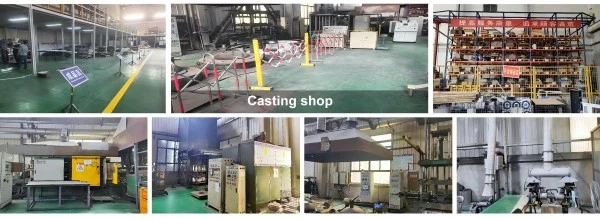
Rongbao provides customized mechanical components based on client designs or application requirements. The manufacturing concept integrates forming techniques with CNC machining so that the fundamental part shape and functional connecting characteristics may be managed in the same supply chain.
The company states a capability of up to 50,000 pieces per month. The actual output for a given pull rod joint will depend on shape, material, process route, tools, machining needs, and order timeline. Buyers should verify capacity and lead time appropriate to their quote request.
Build the Supply Plan Around the Final Application
Packaging and logistics are easy to overlook during engineering discussions, but they become important when components are shipped internationally or supplied in recurring batches.
The supplier should understand the required packaging method, quantity per package, protection of machined surfaces, labeling, and shipping destination. For heavier or larger batches, suitable wooden-box packaging can help protect components during transportation.
More importantly, purchasing teams should evaluate the supplier on the complete process rather than one attractive specification. Material traceability, engineering communication, machining capability, inspection procedures, packaging, and delivery performance all contribute to the practical value of the component.
A Practical Specification Checklist
Before authorizing a pull rod joint for production, engineering and procurement teams should ask themselves the following questions:
- Is the maximum operational load clearly indicated?
- Are they specifying the material/alloy?
- Are key holes, bores, and mounting surfaces identified?
- Are the tolerances achievable in the production process?
- Have the load paths been reviewed?
- Adequate filets and section thicknesses for projected loading?
- Is mating hardware included in the design review?
- Are there any requirements for corrosion and surface treatment?
- Are you in need of a first item or prototype inspection?
- Can the provider supply the requisite material and inspection documents?
- Can the supplier sustain the planned amount of production?
- Are the packing and shipping instructions clear?
These questions, answered clearly, cut down on uncertainty before tooling and mass manufacturing begin.
Conclusion
The beginning of a reliable pull rod joint is the application and not the manufacturing process. All of these — load conditions, material selection, joint shape, connection clearance, machining tolerances, surface treatment, and inspection requirements — must work together.
For certain high-load aluminum components, forging may be appropriate, whereas CNC machining offers the dimensional precision required at functional interfaces. FEA may be used to help design the geometry, but prototype and production inspection are still crucial to validate the final item.
For purchasers buying bespoke joints, the supplier's engineering competence is as vital as the supplier's manufacturing capabilities. Providing a clear design, application requirements, material specification, tolerance information, anticipated quantity, and inspection needs offers the manufacturer a reasonable foundation for quoting and production.
Rongbao works with clients on bespoke mechanical components and may examine designs, machining requirements, manufacturing quantities, and delivery demands before orders are completed. If you need a special pull rod junction for your project, the best way to start a technical evaluation is to provide the design and important operational requirements.
FAQ
Q1: Why is forging preferred over casting for high-stress pull rod joints?
A: Forging is superior because it improves the material's internal grain structure. This process eliminates internal porosity and voids, which are common in castings. A forged pull rod joint exhibits significantly higher fatigue strength. It also offers greater resistance to impact loading. This makes it ideal for critical, high-stress applications.
Q2: How does surface treatment, like shot blasting, affect the performance of the pull rod joint?
A: Shot blasting is a vital surface treatment step. It introduces beneficial compressive residual stresses on the surface of the aluminum. These compressive stresses effectively inhibit the initiation and growth of fatigue cracks. This process enhances the overall durability and service life of the pull rod joint, particularly under cyclical loading conditions.
Q3: What specific load requirements are most critical when designing a pull rod joint?
A: Designers primarily focus on three load requirements. These include tensile strength (pulling apart), compressive strength (pushing together), and fatigue life. Fatigue life is the most critical for dynamic systems. It measures how many load cycles the joint can withstand before failure. Accurate assessment requires understanding the maximum and minimum loads and their frequency.
Q4: How does Rongbao Enterprise ensure the precision of customized pull rod joint specifications?
A: We rely heavily on advanced CNC machining post-forging. CNC machining allows for micro-level adjustments and very tight tolerances. Our quality control team uses sophisticated CMM equipment. This verifies that every custom feature, including precise bore dimensions and thread geometry, adheres strictly to the client’s specifications. Continuous monitoring through SPC ensures consistency.
Q5: What are the risks of using a pull rod joint made from a non-certified manufacturer?
A: Non-certified manufacturers may lack standardized quality controls. This increases the risk of inconsistent material properties and dimensional errors. These flaws lead to unpredictable failure modes in the field. Using certified suppliers, such as those with ISO 9001:2015, ensures adherence to established global quality benchmarks. This minimizes catastrophic component failure risks.
Pull Rod Joint Supplier: Rongbao Enterprise
Choosing a reliable supplier is the final, essential step in ensuring system performance. For high-voltage distribution accessories, the longevity of every pull rod joint directly impacts network reliability. Rongbao Enterprise stands as a trusted manufacturing partner. We provide bespoke and standard linkage components designed for extreme durability.
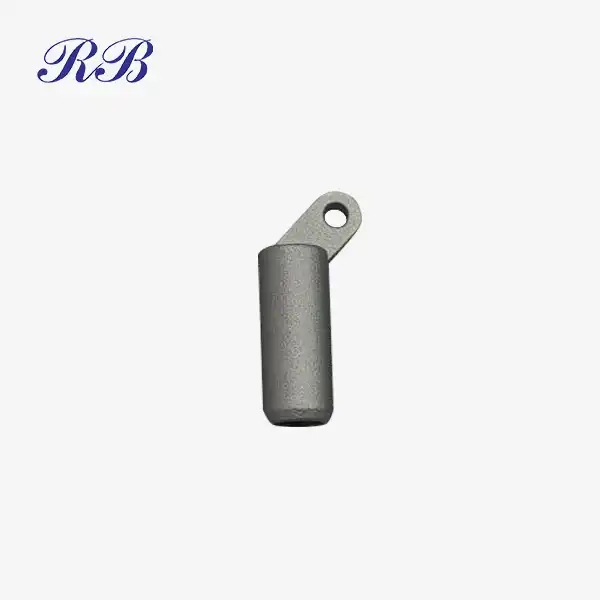
Our specialized focus is on delivering forgings tailored for demanding industrial needs. The specific pull rod joint used in high-voltage distribution accessories exemplifies our expertise. We utilize high-strength Aluminum, ensuring a component weight of approximately 0.5kg. Our rigorous process starts with precision forging. This guarantees maximum material strength. We follow this with detailed mechanical processing via CNC machining. The finished product receives a protective shot blasting surface treatment. This maximizes fatigue resistance.
Rongbao Enterprise maintains stringent quality certifications: ISO9001:2015, ISO14001, and ISO45001. Our origin in Xi'an, China, supports a robust production capacity of 50,000 pieces per month. We are fully equipped for customized OEM/ODM projects. We ensure every shipment is securely protected in reliable wooden-box transportation packaging. If your project requires dependable, high-specification pull rod joint components, our engineering team is ready to assist. Leverage our expertise to optimize your high-voltage distribution systems.
We invite you to discuss your specific requirements and custom specifications with our experts. Please send your inquiries or requests for detailed product data sheets directly to our team. You can reach us via email at steve.zhou@263.net or zhouyi@rongbaocasting.com. Partner with Rongbao Enterprise for forged components that guarantee performance and peace of mind.
References
1. M. R. M. F. B. S. D. G. T. E. M. S. (2017). Fatigue life prediction of aluminium alloys for structural applications. International Journal of Fatigue, 101, 1-13.
2. American Society for Metals (ASM) International. (2018). Forging and Fatigue Life of Components. ASM Handbook Volume 14B.
3. Dieter, G. E. (2013). Mechanical Metallurgy (3rd ed.). McGraw-Hill Education.
4. ISO 9001:2015. (2015). Quality management systems — Requirements. International Organization for Standardization.
5. Siddique, Z., & Schlenker, S. (2017). Finite Element Analysis in Design and Manufacturing. Butterworth-Heinemann.
6. Campbell, F. C. (2011). Manufacturing Technology for Aerospace Structural Materials. Elsevier Science & Technology.
Learn about our latest products and discounts through SMS or email