- English
- French
- German
- Portuguese
- Spanish
- Russian
- Japanese
- Korean
- Arabic
- Greek
- German
- Turkish
- Italian
- Danish
- Romanian
- Indonesian
- Czech
- Afrikaans
- Swedish
- Polish
- Basque
- Catalan
- Esperanto
- Hindi
- Lao
- Albanian
- Amharic
- Armenian
- Azerbaijani
- Belarusian
- Bengali
- Bosnian
- Bulgarian
- Cebuano
- Chichewa
- Corsican
- Croatian
- Dutch
- Estonian
- Filipino
- Finnish
- Frisian
- Galician
- Georgian
- Gujarati
- Haitian
- Hausa
- Hawaiian
- Hebrew
- Hmong
- Hungarian
- Icelandic
- Igbo
- Javanese
- Kannada
- Kazakh
- Khmer
- Kurdish
- Kyrgyz
- Latin
- Latvian
- Lithuanian
- Luxembou..
- Macedonian
- Malagasy
- Malay
- Malayalam
- Maltese
- Maori
- Marathi
- Mongolian
- Burmese
- Nepali
- Norwegian
- Pashto
- Persian
- Punjabi
- Serbian
- Sesotho
- Sinhala
- Slovak
- Slovenian
- Somali
- Samoan
- Scots Gaelic
- Shona
- Sindhi
- Sundanese
- Swahili
- Tajik
- Tamil
- Telugu
- Thai
- Ukrainian
- Urdu
- Uzbek
- Vietnamese
- Welsh
- Xhosa
- Yiddish
- Yoruba
- Zulu
What's a common size die cast to go with accessories?
A die-cast item doesn’t have a single defined size. The size of die-casting accessories is usually governed by their purpose, the material used, the wall thickness, the mold design, the machining requirements, and the installation space. A simple bracket may only weigh a few hundred grams, but a housing or enclosure part might be a few kilos. For buyers researching die casting accessories, it is therefore more useful to understand typical production ranges than to look for one fixed industry size. Medium-sized components are typical for aluminum casting applications because they may offer a viable compromise between structural requirements, tooling cost, machining effort, and shipping. However, the engineering design and the die casting accessories technique chosen still need to check the suitable size.
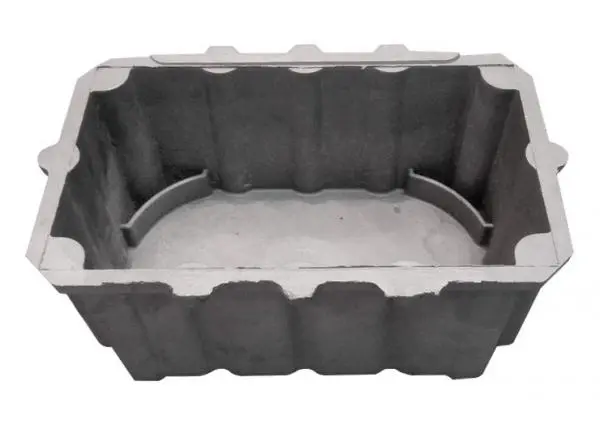
There is no universal size for die-cast accessories
“Common size” might be deceiving as accessories have quite varied uses.
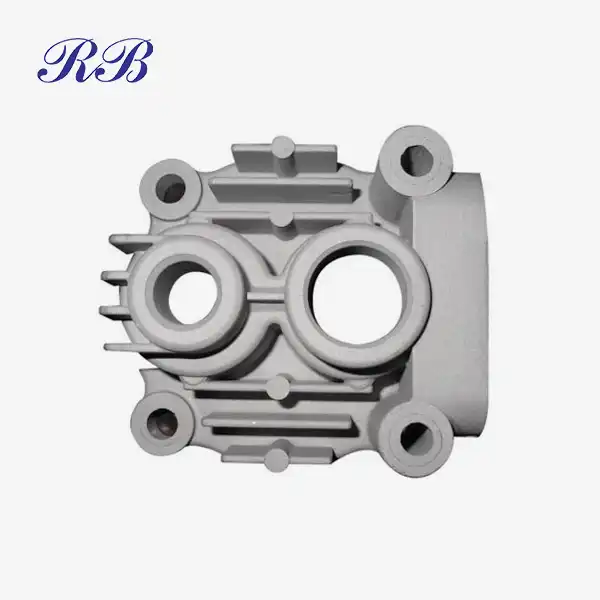
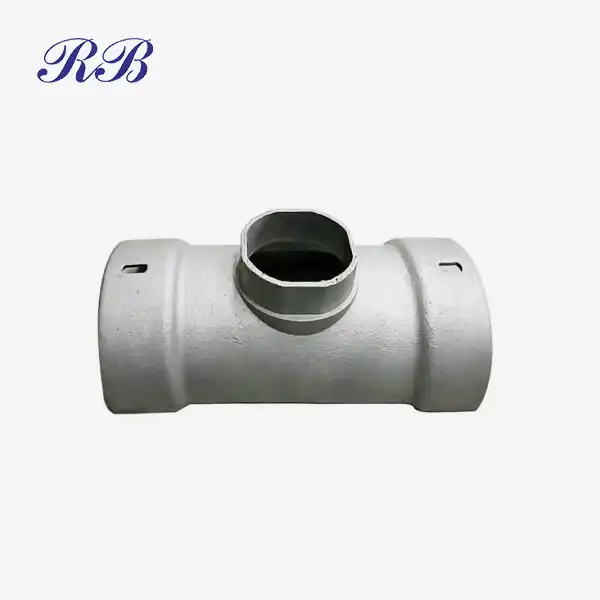
Accessories might be a mounting bracket, an electrical enclosure component, a bearing support, a connection housing, and a structural cover, but their sizes can be totally different.
Function determines the basic dimensions
The first question is not how big the casting should be, but what the component needs to perform.
For example, a mounting bracket may require sufficient material surrounding bolt holes to resist the predicted load. A housing may also need some extra room for internal components, cabling, or heat dissipation. The cover may need a bigger total surface yet relatively low weight.
These functional criteria define the initial geometry.
This enables the provider to check the suitability of the form for casting and determine which parts need to be CNC machined after casting.
Weight is also a useful reference
For medium-sized aluminum accessories, castings of several kilos may be suitable for various industrial applications. Rongbao also produces casting equipment in the 4 to 5 kilogram range.
This should be seen as a project reference, not a global standard. But a 4-kilogram component is not always superior to a 2 kg component. The right weight is dependent on wall thickness, ribs, mounting features, material quality, and structural requirements.
Reducing the material that is not needed may save material expenses and handling costs. Excessive weight can increase the casting and machining required.
What dimensions are practical for aluminum castings?
A rough range for the dimensions of the kinds of medium-sized components described in the original manufacturing information is around 80–300 mm wide and up to roughly 400 mm long.
These numbers are not to be taken as set limitations for any die casting accessories. The actual dimensions of the casting are determined by the equipment, mold design, alloy, geometry, and production needs.
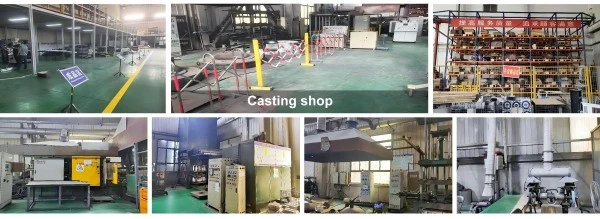
Wall thickness affects casting design
Wall thickness is one of the design features that must be handled carefully.
Some aluminum casting applications refer to around 3–6 mm walls as original manufacturing material. In reality, the appropriate wall thickness varies with the alloy, shape of the component, flow channel, local reinforcement, and casting procedure.
You don't always need a consistent wall. Some locations need bigger parts for the mounting holes or load-bearing areas, and ribs may offer rigidity without adding weight to the overall component unnecessarily.
The design objective should be to get a casting that can fill and solidify reliably, and at the same time provide the appropriate mechanical performance.
Overall dimensions affect the mold
Larger castings may need greater attention to metal flow, feeding, cooling, mold management, and dimensional stability.
The original document indicated mold dimensions in the range of 450–600 mm for several aluminum gravity casting applications. This should be used as a production guideline, not a standard limit for all casting suppliers.
Before the start of tooling, the foundry should check the real mold size, machine capacity, part orientation, parting line, and projected output quantity.

What determines the final casting size?
Several factors influence whether a proposed accessory can be manufactured efficiently.
Alloy and casting process
Different alloys respond differently in filling and solidification. A356 aluminum alloy is utilized for many cast parts; however, the designation of the alloy is not the only factor that determines the final output.
The die casting accessories process, mold design, pouring parameters, cooling behavior, and part shape influence the final product.
This is why a provider should check the design before he confirms whether a certain size is appropriate or not.
Machining allowance
The dimensions of the casting are not always the final dimensions of the part.
If a bearing surface, a mounting face, a threaded hole or other feature is to be CNC machined, the casting may need to supply extra material.
The supplier should consequently take machining allowance into account in the design of the casting. If too much material is removed, machining time rises. If too little is allowed, the final size may not be obtained.
Production quantity
The quantity also affects the most affordable size and way of manufacture.
A design which needs costly tooling may not be acceptable for a modest prototype order. However, for OEM manufacturing that is repeated, specialized tooling might make sense, since the tooling expense is spread across a greater number of pieces.
Buyers must provide the estimated quantity per order or the yearly demand when placing a request for quote.
Why custom sizing is often better than a standard part
Standard dimensions are convenient when an off-the-shelf component fits the application. Customized casting becomes more useful when the accessory has to match a specific enclosure, machine, or assembly.
A customized component can incorporate the exact mounting-hole pattern, overall envelope, internal clearance, ribs, bosses, and machining features required by the customer's design.
Custom geometry can reduce assembly problems
Suppose an enclosure requires mounting holes in a non-standard position. A standard accessory may require additional brackets or adapters.
A customized casting can incorporate those mounting points directly into the component.
This can reduce the number of separate pieces and simplify assembly. It can also reduce the number of interfaces that need to be aligned during installation.
Casting simulation can support design decisions
For complex components, casting simulation can be useful during the design stage.
The engineering team can review potential metal-flow and shrinkage areas before tooling is completed. This does not replace physical inspection, but it can help identify design issues earlier.
The result is particularly valuable for OEM projects where changing tooling after production has started can increase both cost and lead time.

How buyers should specify die casting accessories
The total size you need is typically not adequate when asking for a quote.
A good RFQ should include the following information:
overall dimensions, 2D engineering sketch, 3D CAD model if available, material grade, approximate casting weight, wall thickness, crucial tolerances, machining needs, surface treatment necessary, quantity, tooling expectations, inspection requirements, packaging requirements
This information enables the provider to decide if the component can be manufactured using the proposed casting process and whether regions need to be machined afterward.
Tolerance should be specified by feature
The original information says that Rongbao's CNC machining capabilities are around ±0.02 mm. You cannot use such a statistic to justify the notion that all dimensions on all castings are tolerated.
In an actual project, tolerances have to be allocated according to function.
A non-critical exterior surface doesn’t need the same accuracy as a mounting hole or machined interface. Too tight a tolerance may increase the cost and time of machining, without increasing the performance of the finished assembly.
Hence, engineers and purchasers should include crucial dimensions in the design.
Rongbao Enterprise for customized casting sizes
Rongbao Enterprise offers customized casting and machining services for industrial components. It includes manufacturing details on aluminum castings used in accessories and enclosure-related components.
For clients establishing a new die casting accessories project, the engineering process may start with drawings, material requirements, target dimensions, quantity, and application circumstances.
If necessary, Rongbao may combine casting with CNC machining and surface finishing. This permits the fundamental casting geometry and important finishing dimensions to be seen as an integral part of the same manufacturing process.
The firm says it has ISO 9001:2015, ISO 14001 and ISO 45001 certifications. In supplier assessment, these management-system certifications may be examined along with real casting capabilities, machining equipment, inspection processes, and quality documents.
Packaging has to be agreed upon for foreign OEM and ODM projects prior to shipping. Wooden boxes may be utilized for acceptable components; however, the ultimate packing technique must be dictated by the size, weight, transit circumstances, and customer needs of the component.
Conclusion
What size die cast is often used with accessories? There is no one answer.
For certain applications, medium-sized castings of several kilograms may be viable, and aluminum parts with a width on the order of 80–300 mm and a length of up to around 400 mm can be used as reference. But they aren’t universal measuring sticks.
The final size should be defined by the purpose of the component, the material, wall thickness, casting method, machining requirements, available installation space, and manufacturing quantity.
The best way for purchasers to do this is to provide the supplier with a comprehensive design and explicitly define important dimensions and tolerances. This enables the foundry to analyze the casting design, tooling needs, machining allowance, and manufacturing cost before placing the order.
Custom die casting accessories may be a more practical choice when conventional proportions do not fit the purpose. This allows casting, CNC machining, inspection, and finishing to be synchronized, and the finished component to be designed to the exact needs of the machine, rather than pushed into a generic dimension.
FAQ
Q1: What are the typical sizes of die casting accessories?
A: Common die cast accessories range between 80 mm and 400 mm in dimension and from 0.1 kg to about 5 kg in weight. The exact size varies according to the accessory’s usage, thickness, and alloy flow performance during casting.
Q2: How does the size of a die cast affect its mechanical properties?
A: Size directly impacts cooling rate and internal density. Smaller castings solidify faster, forming denser microstructures, while larger parts must be controlled for internal porosity. Proper mold design ensures balanced thermal distribution and structural stability.
Q3: Can Rongbao Enterprise produce customized casting sizes beyond typical ranges?
A: Yes. Our team designs molds for non-standard sizes through OEM/ODM cooperation. We assess your drawings, simulate casting flow, and deliver A356 aluminum components with precision CNC finishing and surface treatments adapted to your specifications.
Q4: What certifications do Rongbao’s die casting accessories meet?
A: Our factory is certified under ISO9001:2015, ISO14001, and ISO45001. Each item passes stringent inspections for dimensions, surface integrity, and mechanical performance before shipment.
Q5: What industries benefit most from custom-sized accessories?
A: Industries like energy, communications, automotive, and industrial control systems rely on custom sizes to integrate die-casting parts efficiently. Explosion-proof box bodies, in particular, demand exact molds suitable for safe electrical installations.
Rongbao Enterprise
Rongbao Enterprise specializes in manufacturing die-casting accessories that combine advanced die casting accessories science with modern engineering aesthetics. Using high-performance A356 aluminum, gravity casting ensures uniform density, while CNC machining refines each unit to high dimensional accuracy. Shot blasting, as a finishing process, provides corrosion resistance and a sleek surface appeal.
We operate from Xi’an, China, delivering 5,000 customized components annually for industries requiring explosion-proof box bodies and other precision castings. OEM/ODM flexibility enables made-to-order designs, from prototype to volume production, according to each customer’s dimensional and functional specifications. Reliable packaging in wooden boxes and efficient logistics guarantee safe international delivery.
Whether you’re evaluating standard or customized die casting accessory sizes, our experts are ready to guide your selection and tailor your requirements into functional reality. Contact Rongbao Enterprise today through steve.zhou@263.net or zhouyi@rongbaocasting.com for detailed quotations and technical consultation. Trust in precision. Trust in durability. Trust in Rongbao.
References
1. Grand View Research. (2023). Aluminum Die Casting Market Analysis Report.
2. Materials Science Forum. (2022). Mechanical Properties of A356 Aluminum in Gravity Casting.
3. SpringerLink. (2023). Advances in Metal Processing and CNC Machining Control.
4. ISO. (2024). Global Standards for Quality and Safety in Manufacturing.
5. ScienceDirect. (2023). Microstructure and Solidification Behavior of Aluminum Alloys in Industrial Applications.
Learn about our latest products and discounts through SMS or email