- English
- French
- German
- Portuguese
- Spanish
- Russian
- Japanese
- Korean
- Arabic
- Greek
- German
- Turkish
- Italian
- Danish
- Romanian
- Indonesian
- Czech
- Afrikaans
- Swedish
- Polish
- Basque
- Catalan
- Esperanto
- Hindi
- Lao
- Albanian
- Amharic
- Armenian
- Azerbaijani
- Belarusian
- Bengali
- Bosnian
- Bulgarian
- Cebuano
- Chichewa
- Corsican
- Croatian
- Dutch
- Estonian
- Filipino
- Finnish
- Frisian
- Galician
- Georgian
- Gujarati
- Haitian
- Hausa
- Hawaiian
- Hebrew
- Hmong
- Hungarian
- Icelandic
- Igbo
- Javanese
- Kannada
- Kazakh
- Khmer
- Kurdish
- Kyrgyz
- Latin
- Latvian
- Lithuanian
- Luxembou..
- Macedonian
- Malagasy
- Malay
- Malayalam
- Maltese
- Maori
- Marathi
- Mongolian
- Burmese
- Nepali
- Norwegian
- Pashto
- Persian
- Punjabi
- Serbian
- Sesotho
- Sinhala
- Slovak
- Slovenian
- Somali
- Samoan
- Scots Gaelic
- Shona
- Sindhi
- Sundanese
- Swahili
- Tajik
- Tamil
- Telugu
- Thai
- Ukrainian
- Urdu
- Uzbek
- Vietnamese
- Welsh
- Xhosa
- Yiddish
- Yoruba
- Zulu
Precision Sand Casting vs. Die Casting: Which is Better for Your Project?
The volume, complexity, and budget of your manufacturing project will determine whether die casting or precision sand casting is the better option. Ideal for medium-volume production runs, Precision sand casting parts are masters at creating complicated geometries and big components with outstanding material diversity. Die casting is the material of choice for high-volume applications that need precise dimensions and flawless surface treatments. In order to choose the best casting process for their project, engineers and procurement managers need to understand these basic distinctions.

Understanding the Core Differences Between Sand Casting and Die Casting
Your project's schedule, budget, and component quality are all profoundly affected by the foundry technique you choose. Die casting makes use of reusable metal molds subjected to high-pressure injection, while sand casting uses disposable molds made of specifically mixed sand.
These mechanisms are influenced by three main differences:
- To build a mold: sand molds are thrown out after every casting cycle, whereas die casting molds may withstand hundreds of cycles without deterioration
- Unlike sand casting, which uses air pressure, die casting uses pressures between 10 and 175 MPa while pouring metal
- Compatibility of Materials: Die casting is most often used with aluminum, zinc, and magnesium alloys, but sand casting can handle both ferrous and non-ferrous metals
Sand casting routinely achieves ±0.3mm tolerances for crucial dimensions, according to recent industry statistics, whereas die casting consistently produces ±0.1mm precision. In contrast to die casting, which usually caps pieces at 45 kg, sand casting can handle weights ranging from 0.1 kg to many tons.
Sand casting works well when big component sizes or intricate interior features are required. On the other hand, die casting is the way to go if your project requires a lot of parts to be consistently measured.
Cost Analysis: Initial Investment vs. Long-Term Production
When comparing various casting technologies from an economic perspective, the tooling costs are the most noteworthy difference. Die casting tooling may cost anywhere from $25,000 to 150,000 USD per mold set, whereas sand casting pattern manufacturing can cost anywhere from $2,000 to $15,000 USD, depending on intricacy.
When looking at the cost breakdown, it shows:
- The initial investment is lower with sand casting, but the cost each piece is more
- Tooling costs are higher up front with die casting, but unit prices go down as production increases
- The typical break-even threshold for a given application is anywhere between five thousand and ten thousand units
The efficiency of production differs greatly across techniques. For complicated components, sand casting might take anywhere from one to eight hours per piece, while die casting can finish cycles in thirty seconds to five minutes. At larger quantities, this efficiency yields considerable cost savings.
Testing data from automotive suppliers indicates die casting reduces per-piece costs by 40-60% compared to precision sand casting parts when production exceeds 10,000 units annually. However, sand casting maintains cost advantages for prototype development and low-volume specialized applications.
Sand casting is more cost-effective for low-volume manufacturing runs (less than 1,000 pieces) or for quick prototypes. Die casting offers superior long-term cost effectiveness for high-volume production surpassing 5,000 units per year.

Quality and Precision Comparison
The quality of the surface polish varies greatly across various production techniques. The surface finishes achieved by die casting are better than those of sand casting, which usually range from 6.3 to 25 Ra micrometers. Both the secondary machining needs and the final component appearance are affected by this variation.
Measurement precision results:
- Die casting important features: ±0.05-0.1mm
- The usual tolerance for sand casting is ±0.2-0.5mm
- Sand casting is great at handling complex geometries, especially those with many internal passageways
- Requirements for wall thickness: 0.6 mm for die casting and 3 mm for sand casting
Each method has its own unique way that casting faults show up. Surface roughness and inclusion flaws are typical in sand casting, while porosity and cold shuts are possible in die casting. These problems are handled by quality control procedures by implementing inspection processes and controlling process parameters properly.
Different solidification patterns and cooling speeds result in different mechanical characteristics. The fast cooling process in die casting results in fine grain structures and tensile strengths that are 15-20% greater than those of sand cast components of the same kind. When it comes to enhancing mechanical qualities, sand casting offers a better heat treatment response.
Die casting yields better results when precise dimensional control and a high level of surface quality are required. Sand casting is the way to go when having a complicated internal geometry or a high-quality heat treatment response are your top goals.
Production Volume and Lead Time Considerations
To properly design manufacturing capacity, one must be aware of the time and volume constraints of each process. Die casting is a great method for high-volume situations since it can produce 100-1,000 pieces a day, depending on the size and complexity of the component. Standard daily production for medium-sized components in sand casting ranges from tens to hundreds of pieces.
Comparison of lead times:
- Development of patterns and tools: 2–6 weeks for sand casting, 8–16 weeks for die casting
- Initial product manufacturing time: 1–2 weeks for sand casting, 3–4 weeks for die casting
- Sand casting: immediately, die casting: one to two weeks after setup for volume manufacturing
Methods vary greatly in their capacity scalability. Design changes and volume variations may be readily accommodated in sand casting without the need for costly tooling alterations. Capacity improvements in die casting need extensive planning, and design changes tend to be costly after tooling is complete.
Supply chain flexibility favors precision sand casting parts for custom applications and varying production requirements. Die casting demands consistent volume commitments to justify tooling investments and achieve competitive pricing structures.
Sand casting offers more flexibility in terms of production schedule and the frequency of design revisions. Die casting provides more efficient manufacturing when there is a steady demand for large quantities with predictable design specifications.
Material Selection and Performance
When choosing a casting procedure, alloy compatibility is of the utmost importance. Iron, bronze, steel, sand, and almost any other castable metal may be worked with in sand casting. Because of limits in mold material, die casting is most often used with aluminum, zinc, magnesium, and a few copper alloys.
Features of the material's performance:
- Metals made of aluminum: Both methods provide materials with remarkable strength-to-weight ratios
- Due to temperature constraints, steel components are only sand cast
- Complex alloys: Sand casting is more adept at working with unusual materials
- Recycled materials: Both methods make good use of used metal
The procedures might differ in terms of heat treatment compatibility. By using solution heat treatment and aging methods, sand cast components are able to get mechanical qualities that are second to none. Because of their quick solidification and possible porosity, die cast parts may not respond well to heat treatment.
Material choice and surface treatment alternatives determine corrosion resistance and longevity. Coatings and surface changes may be applied using either technique, but die casting offers greater adherence due to its improved surface quality.
Sand casting is your only choice when working with steel parts or specialist alloy materials. Die casting is the way to go when you need a high-quality surface finish for common uses involving aluminum, zinc, or magnesium.
Industry-Specific Applications and Requirements
Both methods are strategically used by the automotive and commercial vehicle makers. Sand casting is a common technique for producing strong and heat-treatable engine blocks, gearbox housings, and suspension components. Die casting offers superior surface polish and dimensional accuracy, making it ideal for interior trim, brackets, and lightweight structural components.
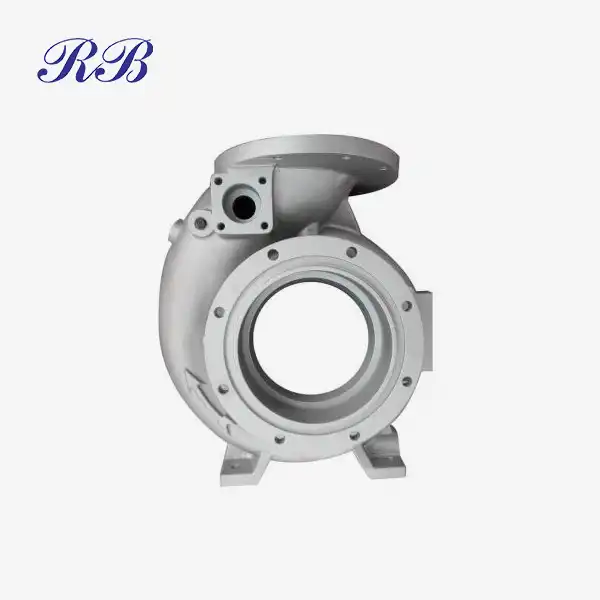
Construction and heavy machinery applications predominantly use precision sand casting parts for large, complex components like pump housings, valve bodies, and hydraulic manifolds. The ability to produce large, thick-walled components with excellent machinability makes sand casting ideal for these demanding applications.
The aerospace and high-precision sectors give significant consideration to both choices. The exceptional heat treatment response and metallurgical qualities of sand casting make it an ideal material for critical structural components. Die casting may be used to reduce weight and achieve accuracy in secondary components and housings.
Sand casting is the material of choice for energy sector applications such as wind power and oil and gas equipment due to its outstanding mechanical qualities and ability to accommodate big and complicated geometries. Because of stringent quality and traceability standards, sand casting is the only material used in nuclear applications.
Sand casting is the way to go if you're in the heavy sector or need components that are big and complicated. The results produced by die casting are ideal for consumer goods, automobile trim, and electronics housings.
Ready to Choose the Right Precision Sand Casting Parts Manufacturer
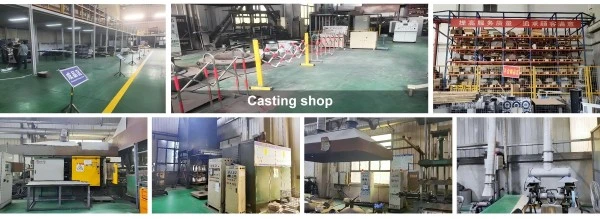
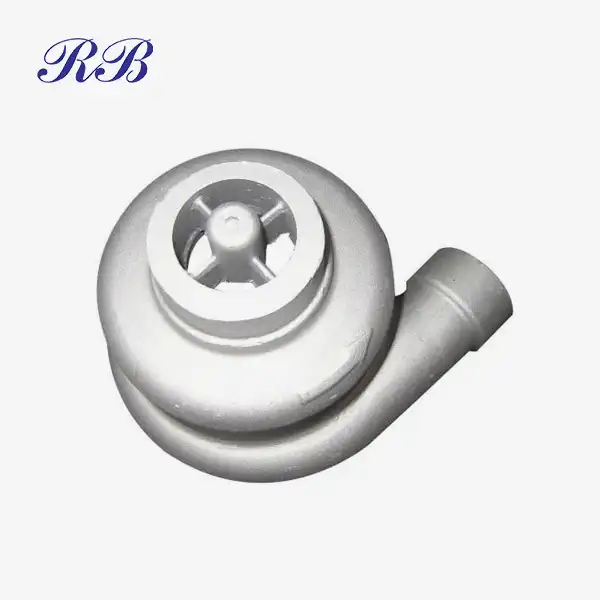
Rongbao Enterprise combines 20 years of casting expertise with cutting-edge manufacturing capabilities to deliver superior precision sand casting parts for your critical applications. Our ISO-certified facility in Xi'an, China produces complex components like pump housings with exceptional dimensional accuracy and mechanical properties. Contact steve.zhou@263.net and zhouyi@rongbaocasting.com to discuss your specific requirements and receive expert guidance on optimizing your casting project for cost, quality, and delivery performance.
Conclusion
Selecting between precision sand casting parts and die casting requires careful evaluation of volume requirements, dimensional tolerances, material specifications, and budget constraints. Sand casting excels in producing complex geometries, large components, and specialized materials with superior mechanical properties through heat treatment capability. Die casting dominates high-volume applications requiring tight tolerances, excellent surface finishes, and consistent dimensional accuracy. Understanding these fundamental differences enables informed decision-making that optimizes project success while minimizing total cost of ownership.
References
1. Campbell, John. "Complete Casting Handbook: Metal Casting Processes, Metallurgy, Techniques and Design." Butterworth-Heinemann, 2nd Edition, 2015.
2. Beeley, Peter R. and Smart, Richard F. "Investment Casting: Principles and Practice." Institute of Materials, Communications and Technology, 2019.
3. Schlegelmilch, Klaus and Krampe, Hubert. "Sand Casting: Fundamentals of Sand, Patterns, Molding, and Melting." American Foundry Society, 2018.
4. Vinarcik, Edward J. "High Integrity Die Casting Processes: Advanced Manufacturing Technologies for Precision Components." McGraw-Hill Professional, 2020.
5. Kaufman, J. Gilbert and Rooy, Elwin L. "Aluminum Alloy Castings: Properties, Processes, and Applications." ASM International Materials Engineering, 2017.
6. Brown, John R. "Foseco Ferrous Foundryman's Handbook: Sand Casting Fundamentals and Advanced Techniques." Butterworth-Heinemann, 11th Edition, 2021.
Learn about our latest products and discounts through SMS or email