- English
- French
- German
- Portuguese
- Spanish
- Russian
- Japanese
- Korean
- Arabic
- Greek
- German
- Turkish
- Italian
- Danish
- Romanian
- Indonesian
- Czech
- Afrikaans
- Swedish
- Polish
- Basque
- Catalan
- Esperanto
- Hindi
- Lao
- Albanian
- Amharic
- Armenian
- Azerbaijani
- Belarusian
- Bengali
- Bosnian
- Bulgarian
- Cebuano
- Chichewa
- Corsican
- Croatian
- Dutch
- Estonian
- Filipino
- Finnish
- Frisian
- Galician
- Georgian
- Gujarati
- Haitian
- Hausa
- Hawaiian
- Hebrew
- Hmong
- Hungarian
- Icelandic
- Igbo
- Javanese
- Kannada
- Kazakh
- Khmer
- Kurdish
- Kyrgyz
- Latin
- Latvian
- Lithuanian
- Luxembou..
- Macedonian
- Malagasy
- Malay
- Malayalam
- Maltese
- Maori
- Marathi
- Mongolian
- Burmese
- Nepali
- Norwegian
- Pashto
- Persian
- Punjabi
- Serbian
- Sesotho
- Sinhala
- Slovak
- Slovenian
- Somali
- Samoan
- Scots Gaelic
- Shona
- Sindhi
- Sundanese
- Swahili
- Tajik
- Tamil
- Telugu
- Thai
- Ukrainian
- Urdu
- Uzbek
- Vietnamese
- Welsh
- Xhosa
- Yiddish
- Yoruba
- Zulu
Benefits of Precision Sand Casting for Complex Geometries
When it comes to making complicated, delicate parts, precision sand casting is typically the best option since it eliminates the limitations of conventional production processes. Producing precision sand casting parts across varied sectors is made perfect with this advanced casting technology, which combines the adaptability of conventional sand casting with better accuracy and surface quality. Using this manufacturing technology, complicated geometric pieces may be created with tight tolerances and excellent structural integrity. These parts find applications in aircraft housings and automobile engine components. For medium to high-volume production runs, this procedure is a cost-effective alternative to more costly manufacturing processes. It achieves dimensional precision that approaches more expensive ways by using refined sand combinations and controlled pouring techniques.
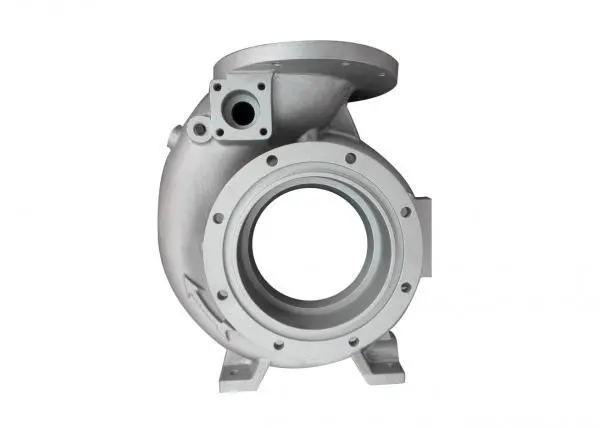
Understanding Precision Sand Casting and Its Key Parameters
Thanks to improvements in regulated procedures and the use of high-quality sand combinations, foundry technology has taken a giant leap forward with precision sand casting. This technique uses improved binding agents, finer sand particles, and precise temperature controls to pour metal, unlike traditional sand casting.
Dimensional tolerances usually ranging from ±0.5mm to ±2mm, surface polish quality attaining Ra 6.3 to Ra 25 micrometers, and casting thickness capabilities ranging from 3mm to several hundred millimeters are the main characteristics that characterize precision sand casting. Components with complicated internal geometries, elaborate exterior features, and exacting fitting requirements may be manufactured according to these criteria.
Achieving consistent outcomes relies heavily on temperature control. To reduce internal stress and dimensional fluctuations, it is necessary to carefully manage cooling rates while keeping molten metal temperatures within tight limits that are particular to each alloy type. To optimize compaction pressure and keep the mold intact without sacrificing surface detail replication, careful control of the sand's moisture content is required during preparation. This percentage is usually kept between 3-5%.
Core Benefits of Precision Sand Casting for Complex Geometries
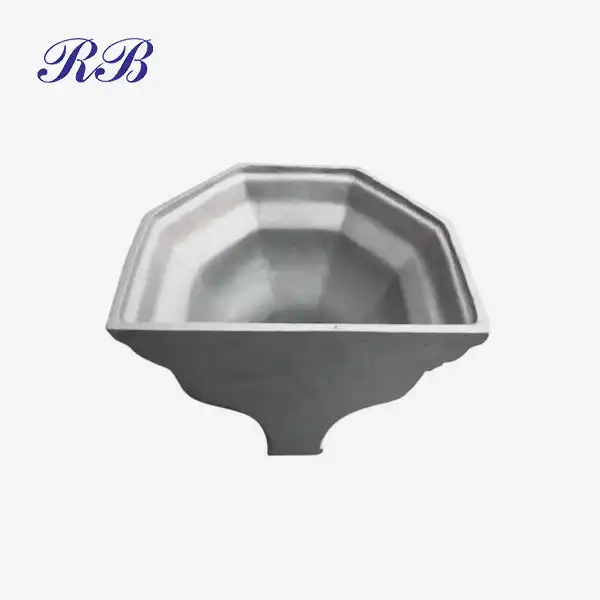
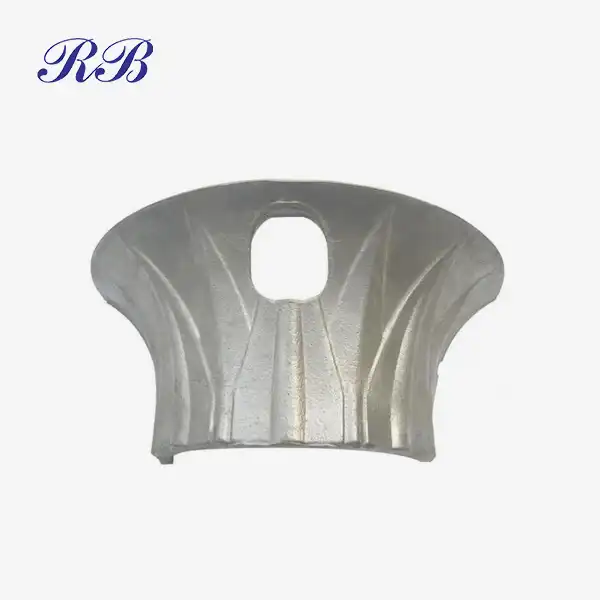
Precision sand casting parts provide several production benefits beyond just cost. Components with complicated exterior curves, integrated mounting elements, and intricate internal channels are best produced with this technique, as opposed to other processes that would need lengthy machining operations.
The greatest advantage, arguably, is the adaptability of the design. Castings allow engineers to include in features like undercuts, internal cooling ducts, and complicated joint interfaces. With this capacity, we can improve structural integrity via continuous material flow, reduce total component weight, and remove the need for several assembly procedures.
Another major benefit is the material's adaptability. Various alloy kinds, such as ZL101A aluminum alloy, cast iron grades, steel alloys, and application-specific materials, may be accommodated by the method. Casting materials vary in their reactions, giving producers more leeway to prioritize mechanical property needs above production constraints when making material selections.
When it comes to surface finish quality, further machining procedures are usually unnecessary or much reduced when precision sand casting is used. Industrial equipment housings and structural components are two areas that greatly benefit from the ready-to-use surfaces made possible by modern molding processes and surface treatments like shot blasting.
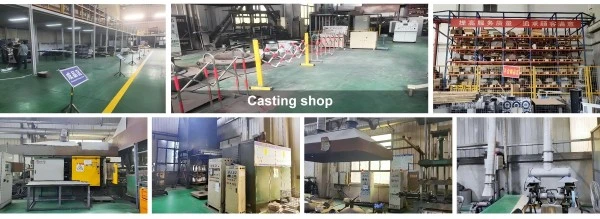
Rongbao Enterprise's Precision Sand Casting Parts vs. Competitors
Precision Sand Casting Parts from Rongbao Enterprise Compete with the Best in the Industry
Comprehensive quality control systems and modern production capabilities characterize our approach to precision sand casting. We provide full-chain production services, including design optimization of molds, pattern creation, and post-casting machining, in contrast to many foundries that just deal with casting.
Our activities are differentiated by quality certification. Consistent process control and environmental compliance are guaranteed by our ISO9001:2015, ISO14001, and ISO45001 certifications, which are lacking among many of our rivals. For procurement managers, these certifications mean less uncertainty when it comes to supply chain dependability issues, consistent part quality, and predictable delivery timelines.
Our ability to produce distinguishes us from competitors. With the same level of accuracy needed for complicated geometries, our facility can process orders as large as 5,000 pieces. With our flexibility to expand, we can meet the demands of both big and small batches with flexible scheduling, while still offering affordable price for medium to high volume requirements.
After working in the field for 20 years, we have mastered the technical aspects of complicated geometry casting. To ensure that our clients' ideas are cast efficiently while still meeting all functional criteria, our engineering team offers design for manufacturability consulting. When compared to original design thoughts, this collaborative approach often leads to improved performance and reduced costs.
Maximizing Benefits Through Strategic Implementation
It is crucial to give considerable thought to the design parameters and material choices while implementing precision sand casting parts. Having a good grasp of the casting process's capabilities and limits at the early design phase is crucial for components with complex geometries.
Maintaining a consistent wall thickness is essential for getting the best possible outcomes. Even cooling rates and minimal internal stress buildup are achieved by maintaining consistent wall sections, which are usually between 6 and 12 mm for most applications. To eliminate casting flaws like shrinkage or hot ripping and keep the structure intact when thickness fluctuations are inevitable, use gentle transitions.
Incorporating a draft angle—usually between one and three degrees depending on the component depth—makes pattern removal easier and results in a better surface finish. Proper fit and function in final assemblies are ensured by including these angles into dimensions calculations early in the design phase.
The mechanical needs and casting qualities of the material should be considered simultaneously. With their high strength-to-weight ratios and remarkable fluidity, aluminum alloys such as ZL101A are ideal for use in complicated geometries. Alloy selection affects surface finish quality, dimensional stability, and mechanical qualities.

Critical Considerations for Optimal Results
For complicated geometries, consistently successful precision sand casting parts requires careful attention to many parameters. Pattern material selection and maintenance are essential factors since pattern quality directly effects final product accuracy. When compared to wood equivalents, metal designs provide better dimensional stability, especially for runs of a large quantity.
Both the precision of the dimensions and the quality of the casting are greatly affected by the design of the gate system. If the gates are well-designed, the mold will be filled uniformly without any porosity or surface flaws caused by turbulence. When designing the component's finishing, it is important to take into account both metallurgical variables and the machining procedures that will follow when placing the gate.
As the complexity of the geometry grows, the importance of controlling the cooling rate grows. Part performance may be negatively impacted by uneven cooling, which can lead to dimensional changes and internal stress. To make sure the casting solidifies evenly, cooling vents should be placed strategically, and differences in section thickness should be carefully considered.
By including quality control measures at every stage of the casting process, we can avoid expensive mistakes and guarantee reliable outcomes. Prior to shipping, components undergo non-destructive testing to ensure their integrity. This includes dimensional inspection, visual examination, and pressure testing. Applications with a high degree of safety sensitivity in the aerospace and automotive sectors need these quality standards.
Depending on the alloy used and the desired mechanical properties, heat treatment issues can be relevant. Aged and treated with solution heat, some aluminum alloys may achieve their maximum strength potential. Production schedules and budgets need to account for these post-casting procedures.
Partner with Rongbao Enterprise for Superior Precision Sand Casting Solutions
Rongbao Enterprise stands ready to transform your complex component requirements into precisely manufactured solutions through our advanced precision sand casting capabilities. As a leading precision sand casting parts manufacturer, we combine decades of foundry expertise with state-of-the-art equipment to deliver components that exceed industry standards. Our comprehensive services encompass everything from initial design consultation through final component delivery, ensuring your projects achieve both technical and commercial success. Contact us at steve.zhou@263.net and zhouyi@rongbaocasting.com to discuss how our precision casting solutions can address your specific complex geometry challenges.
Conclusion
Precision sand casting parts emerges as an optimal manufacturing solution for complex geometries, offering unmatched design flexibility combined with cost-effective production capabilities. The process enables manufacturers to create intricate components with integrated features that would be prohibitively expensive through traditional machining methods. Success depends on proper design consideration, material selection, and partnership with experienced foundries who understand the nuances of complex geometry casting. Rongbao Enterprise's comprehensive approach, backed by international certifications and decades of experience, positions us to deliver superior results for the most challenging casting applications across diverse industries.
FAQ
Q1: What dimensional tolerances can be achieved with precision sand casting for complex geometries?
A: Precision sand casting typically achieves dimensional tolerances of ±0.5mm to ±2mm depending on part size and complexity. Critical dimensions can often meet tighter tolerances through strategic design optimization and controlled processing parameters.
Q2: How does precision sand casting compare to investment casting for complex parts?
A: While investment casting may offer slightly better surface finish, precision sand casting provides superior cost-effectiveness for larger components and higher production volumes. The process also accommodates a wider range of alloy types and part sizes while maintaining excellent dimensional accuracy.
Q3: What surface finish quality can be expected from precision sand casting?
A: Surface finish typically ranges from Ra 6.3 to Ra 25 micrometers, with shot blasting and other surface treatments capable of achieving even better results. Many applications can use cast surfaces directly without additional machining operations.
References
1. Campbell, John. "Complete Casting Handbook: Metal Casting Processes, Metallurgy, Techniques and Design." Second Edition, Butterworth-Heinemann, 2015.
2. Brown, James R. "Foseco Ferrous Foundryman's Handbook: Fundamentals of Iron Casting and Sand Casting Technology." Eleventh Edition, Butterworth-Heinemann, 2000.
3. Beeley, Peter R. "Foundry Technology: A Source Book of Information on the Theory and Practice of Foundry Work." Second Edition, Butterworth-Heinemann, 2001.
4. Jolly, Mark R. "Sand Casting: Computer-Aided Design and Analysis." Professional Engineering Publishing, 2002.
5. Stefanescu, Doru Michael. "Science and Engineering of Casting Solidification." Third Edition, Springer International Publishing, 2015.
6. Ravi, B. "Casting Simulation and Optimization: Benefits, Bottlenecks and Best Practices." Indian Foundry Journal, Vol. 54, No. 2, February 2008.
Learn about our latest products and discounts through SMS or email