- English
- French
- German
- Portuguese
- Spanish
- Russian
- Japanese
- Korean
- Arabic
- Greek
- German
- Turkish
- Italian
- Danish
- Romanian
- Indonesian
- Czech
- Afrikaans
- Swedish
- Polish
- Basque
- Catalan
- Esperanto
- Hindi
- Lao
- Albanian
- Amharic
- Armenian
- Azerbaijani
- Belarusian
- Bengali
- Bosnian
- Bulgarian
- Cebuano
- Chichewa
- Corsican
- Croatian
- Dutch
- Estonian
- Filipino
- Finnish
- Frisian
- Galician
- Georgian
- Gujarati
- Haitian
- Hausa
- Hawaiian
- Hebrew
- Hmong
- Hungarian
- Icelandic
- Igbo
- Javanese
- Kannada
- Kazakh
- Khmer
- Kurdish
- Kyrgyz
- Latin
- Latvian
- Lithuanian
- Luxembou..
- Macedonian
- Malagasy
- Malay
- Malayalam
- Maltese
- Maori
- Marathi
- Mongolian
- Burmese
- Nepali
- Norwegian
- Pashto
- Persian
- Punjabi
- Serbian
- Sesotho
- Sinhala
- Slovak
- Slovenian
- Somali
- Samoan
- Scots Gaelic
- Shona
- Sindhi
- Sundanese
- Swahili
- Tajik
- Tamil
- Telugu
- Thai
- Ukrainian
- Urdu
- Uzbek
- Vietnamese
- Welsh
- Xhosa
- Yiddish
- Yoruba
- Zulu
ODM Gravity Sand Casting Parts: From Design to Efficient Mass Production
The engineers usually know what a component has to accomplish long before they know how it has to be manufactured. Perhaps a housing must contain a mechanical assembly. Or a bracket must endure repeated stress. Or an electrical component must have accurate mounting surfaces and consistent operation in outside environments. These objectives require more than a perfect mold which can be converted to a casting which can be manufactured reliably at a competitive price. It has to be a good engineering choice up front. ODM gravity sand casting parts provide manufacturers with a feasible path for developing custom components with a foundry that can help with product design, tooling development and production planning. An ODM partner can look at the geometry, provide casting-friendly modifications and help establish a process that matches the target production quantity rather than just producing a given drawing. Gravity sand casting is particularly effective for aluminum parts and other metal parts that require flexible mold design and changeable tooling. “Mass production at high efficiency doesn’t happen automatically. The final result depends on the material selection and feeding design, the position of the core, machining allowances and inspection requirements. These variables are related to each other and knowledge of them enables buyers to avoid unnecessary development costs and to choose the proper production partner who can support the project beyond the first sample.
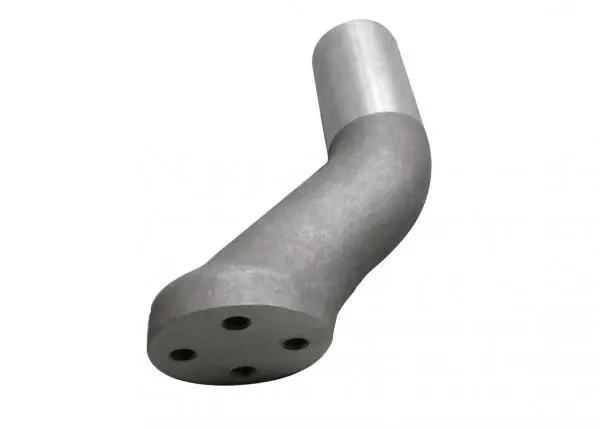
Turning Product Requirements into a Manufacturable Casting Design
Reviewing drawings before committing to tooling
A good casting project does not begin with the mold but with the reason for which it is to be employed. Before patterns or core boxes can be created, the engineering team must first know the operating environment, mechanical stresses, dimensional requirements, and assembly interfaces of the component.
Industrial housing walls can be thin and may have bosses, ribs, and internal channels for mounting. Each feature has a purpose, but the way they are arranged is also crucial in how the molten metal will flow into the mold and solidify. A heavy boss on a thin wall might create a hot spot, and a rapid change in section thickness can increase the chance of shrinkage problems.
The transitions will be checked by the engineers for draft angles, filets, core requirements, machining allowances, etc. during the first design review. They also identify areas of the part that require tighter dimensional control than the remainder of the cast part.
This is an important difference since not all surfaces require the same degree of accuracy. The face or bearing seat of the mount may require CNC machining, but the outside surface can be left as-cast if it is not functional. By determining these needs early, needless machining is reduced, and the manufacturing cost is helped to be limited.
A professional design review should be more than just broad recommendations. It should identify any potential production concerns, any unresolved specifications, and any features on the drawing that require special attention before tooling commences.
Selecting an alloy that fits the application
The material is chosen according to the actual service condition of the component. Aluminum alloys are often used for housings, brackets, equipment supports, and other items where weight, corrosion resistance, and machinability are crucial. Alternative applications may call for alternative alloys for strength, temperature, wear, or environmental requirements.
It is used for A356 aluminum casting. This depends upon the mechanical qualities required, the shape of the casting, the heat treatment, and the standards to be applied. Buyers shall not presume that the specification of a particular alloy grade guarantees a certain level of performance. The process used for the casting and the following treatment also determine the characteristics achieved in the final part.
During ODM development, the supplier shall check the proposed alloy designation, applicable material standard, required condition, and any mechanical or chemical acceptance requirements. If the component will be exposed to large loads, the team should also determine whether the design requires certain tensile qualities, restrictions on hardness, or further tests.
Decisions regarding gravity sand casting parts must be documented before production release. - Otherwise, a provider may deliver a component that is the right shape approximately but does not meet the required performance in other respects.
Designing for gravity-driven mold filling and solidification
In sand casting, the molten metal is poured into the sand mold by gravity through a gating system. The procedure does not use high-pressure injection to fill the cavity as in high-pressure die casting. Therefore, the gate placement, pouring conditions, and the mold design are critical for the uniform output.
Engineers need to evaluate the rate at which the metal is entering each portion, if air can leave, and where the solidification process is going to start. Poorly designed flow channels can create turbulence, oxide films, partial filling, or other casting flaws. Inadequate feeding can lead to solidification of sections without enough liquid metal to fill shrinkage voids.
The dangers can be assessed before real experiments are conducted by simulating casting. Engineers can use the software to analyze the filling behavior, temperature distribution, solidification patterns, and hot spots based on the important material data. The statistics are vital for decisions about gates, runners, risers, and local geometry.
Simulation is crucial for production validation. The value is quite sensitive to the quality of the input data and the assumptions used in the model. Physical trials and inspection should be carried out to confirm the proposed design and to establish the performance of the proposed design as envisaged.
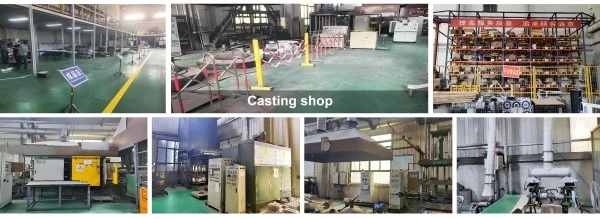
Developing Tooling and Preparing for Repeatable Production
Building patterns and core boxes around the part geometry
The design is reviewed, and then pattern and tooling development starts. The pattern defines the cavity shape on the exterior, while the cores provide inside channels and other features that cannot be directly produced by the pattern.
The tooling plan should also consider parting lines, draft, core location, and pattern tolerances and limits of the foundry’s molding machines. Cores require core prints and finding features to properly locate the cores in the mold assembly for pouring.
These features are particularly important for ODM gravity sand casting goods with complex inner structures. Wall thickness, dimensional correctness, and machining stock can be affected by pouring a moving core. A separation line in the wrong position might also generate unnecessary flash or more finishing work.
The buyer should review required drawings and verify critical dimensions, material requirements, and interfaces prior to tool release. The supplier should notify of any further design revisions possible and the effect of such changes on tooling cost or delivery.
This review is normally the last real chance to change design assumptions before large tooling expenditures are incurred.
Planning sample production before the full production run
You don’t have a finished pattern, and the casting isn’t ready for full production. “We need the first samples to prove that the design, tooling, and process are working together as intended.
At the trial stage the foundry verifies the effectiveness of mold filling, solidification, surface condition, dimensional accuracy, and all essential machining operations. If problems occur, the team may need to adjust the gating arrangement, the riser location, the location of the core, or the pouring parameters.
Sample acceptance criteria should be agreed upon by the buyer prior to the first trial. This may include critical dimensions, visual inspection requirements, material verification, mechanical testing, and non-destructive examination if the application demands it.
The first article inspection report may record the measurable characteristics of the first sample of production. The report should indicate which revision of the drawing is applicable and include actual measurements and not just if the part passed inspection.
Finished features and the casting as suitable should be inspected for components to be machined. A casting may look good before it is machined and yet seem to be porous or have insufficient stock when a critical area is cut.
Thus, the goal of sample approval should be to verify that the part conforms to the specified requirements in its intended final form. "We have to sort out all the problems before the project goes into regular production.
Controlling the Process During Mass Production
Keeping sand preparation and mold assembly consistent
The preparation of sand affects the strength of the mold, permeability, surface quality, and dimensional stability. The foundry can control sand moisture, binder content, compactability, strength, and other attributes needed depending on the molding technology. The particular controls rely on the sand system and the manufacturing process.
In case the characteristics are substantially diverse from each other, the castings may be non-uniform in surface conditions, in dimensions, or in the propensity toward specific flaws. Routine inspections allow operators to check modifications before they affect a large batch.
Repeatable placement is also required in mold construction. Mismatch is due to misaligned mold halves. Dimensional drift is produced by broken patterns or equipment that is not maintained properly. If cores are used, examine their placement and support to the allowed process.
In larger-scale manufacturing, defined operating rules and inspection intervals give more dependable information than operator experience alone. They also allow analysis of faults, as the foundry may cross-verify production data with the state of the affected batch.
Managing melting, pouring, and solidification
Another important control point in the production of gravity sand casting parts is the preparation of the metal. For aluminum gravity sand casting, the foundry should evaluate the alloy chemistry and keep proper melting and pouring conditions. Melt treatment shall include degassing and removal of surface contaminants when applicable, and shall be performed by a technique acceptable to the alloy and component standards.
Temperature control deserves special attention. Thin parts may not be filled by too-cool metal. Too much temperature or time can cause other processing problems. The allowable range depends on the alloy, the casting geometry, the mold quality, and the approved process parameters.
The technique of pouring also matters. An unstable stream or excessive turbulence can produce oxide entrainment and gas problems. The standard pouring procedure is used to avoid any variance between different operators, different shifts, and different manufacturing batches.
After pouring, the casting must be cooled and solidified at conditions acceptable to the material and geometry involved. Gate removal, fettling, and surface cleaning are done for shakeout when the casting is ready. Where a heat treatment is specified, the foundry shall control the treatment cycle and maintain suitable records.
These phases should not be viewed as discrete procedures but rather as a continuous process. One-stage adjustment can affect downstream machining, inspection, and final acceptance.
Coordinating finishing and machining operations
Most sand castings made by gravity will need considerable polishing before they can be assembled. Gates and risers are cut off. Flash from the parting line may need to be handled, and surfaces may be shot blasted or otherwise cleaned as specified.
Holes, mounting faces, threaded features, bearing locations, and other interfaces are standard requirements for CNC machining. The machining plan must be developed in conjunction with the casting design to leave sufficient stock on essential areas without additional material or machining time.
Designing the fixture and selecting the datum are important for repeatability. Even if the casting is uniform, dimensional variance can occur if the operators place the part differently between sets. Well-defined machining datum and inspection processes suitable for this purpose will assist in limiting this risk.
Finish specifications should also be included in the drawing or purchase documentation. Cost and lead time might be affected by surface treatment, coating, deburring, thread requirements, and cosmetic approval criteria. If these parameters aren’t set at the quoting stage, disputes can arise when manufacturing begins.
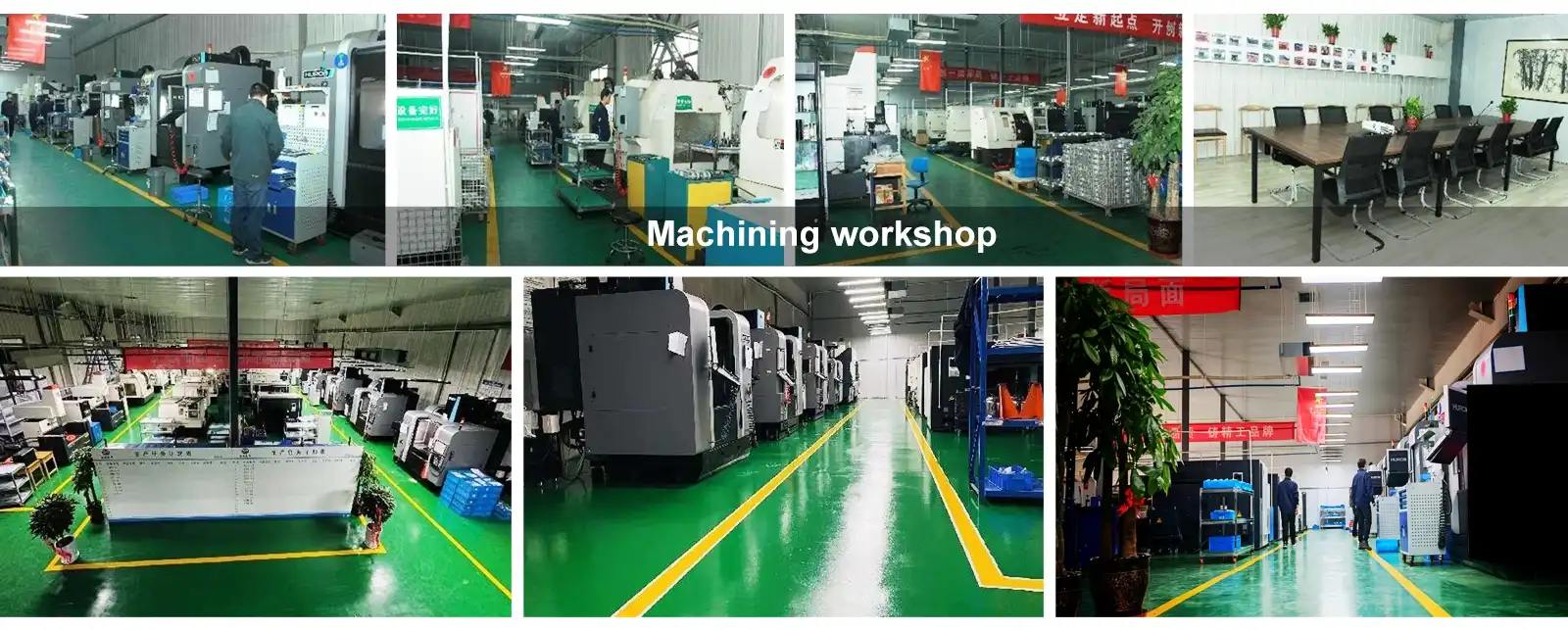
Verifying Quality Before Parts Reach the Customer
Establishing inspection criteria that match the drawing
The quality control shall be adjusted to the risks and needs of the component. The actual inspection plan may involve visual inspection, dimensional measurement, material verification, hardness testing, mechanical testing, and nondestructive testing as specified.
It is not necessary to test all parts in all ways. The extent of inspection is appropriate to the drawing, material specification, service conditions, contractual requirements, and consequences of failure. For example, the verification strategy for a cover on a non-critical piece of equipment may be less rigorous than a major pressure retention or safety-related component.
Dimensional inspection shall be based on the set tolerances and functional interface. There are a number of properties that can be well measured with calipers and ordinary measurement equipment. For more complex geometries or tighter tolerances, coordinate measurement devices or specialized gages may be needed.
Where suitable to the material, geometry, type of defect, and applicable acceptance standards, radiography, ultrasonic, or other methods of examination may be considered where internal soundness is a concern. The acceptance limits and the inspection technique should be determined before production, not after a problem has been found.
ISO 9001 certification in quality management systems can support documented procedures, corrective action, and traceability. But certification doesn't assure that the person doing the casting will satisfy its drawing specs. The buyer shall check that the supplier’s methods are suitable to the project by reviewing real inspection records.
Maintaining traceability and managing changes
Repeatable production implies knowing what was produced, what the requirements were, and how the batch was assessed. Depending on the project, material certificates, heat or melt identification, manufacturing dates, heat treatment records, inspection findings, and the drawing revision utilized for manufacture may need to be provided.
When a problem occurs, this data allows the provider to determine if it is an isolated incident or part of a larger batch. The documented corrective action process should include identification of the problem, description of the containment measures, and development of verification of the corrective action.
Engineering changes should be handled with the same discipline. Changes to a mounting hole, wall thickness, alloy, or machining allowance can affect tools, process settings, inspection requirements, and delivery dates. The modifications must be formally approved between the foundry and the buyer before they may be introduced in production.
The quality strategy includes packaging as well. Components must be protected from collision, moisture, contamination, and surface damage during storage and transit. Heavy or machined items will need to be separated and covered for safety or placed in special boxes. All export shipments must be accompanied by agreed identification and paperwork to enable receiving teams to inspect the contents quickly.
Conclusion
ODM gravity sand casting parts are a high-efficiency approach for you to get custom metal parts with design flexibility, cheap tooling costs, and steady manufacturing. The only way to gain benefits is to make decisions during the project, from alloy selection and casting shape to tooling development, process control, machining, and final inspection.
The best policy for the buyer is to take account of the full process of manufacture and not to rely on the unit price alone as indicated. Explicit designs, explicit acceptance criteria, sample validation, traceable production records, and rigorous engineering change management all serve to reduce unnecessary risk.
When you request a quotation, please include the most recent drawings or 3D models, the material you desire, the quantity you expect to order, the most significant tolerance, the finishing requirements, and the testing standards you need. Request the supplier to identify design modifications, outline the manufacturing route, and explain preparations for tooling, inspection, and delivery. This info will help you to better choose an ODM partner and progress from a basic design to a reliable mass production.
FAQ
1: When should I choose gravity sand casting instead of gravity die casting?
Both processes rely on gravity, yet they serve different needs. Gravity die casting uses permanent metal molds. These molds offer better surface finish and tighter tolerances, but they cost more and take longer to build. The method suits very stable designs and higher volumes.
Gravity sand casting uses expendable sand molds built around patterns. Tooling costs less, and changes are easier. You can integrate complex geometry using cores, and you can test several design iterations without scrapping expensive dies. If your project volume sits in the low to medium range, or if your design may change, gravity sand casting usually offers better flexibility and overall cost control.
2: How can I make sure my ODM gravity sand casting parts meet electrical and mechanical requirements?
Start by sharing more than a simple drawing. Describe current levels, temperature range, mechanical loads, and safety margins. For power transmission components, include line tension, clamp forces, and expected environmental conditions. This information lets the ODM supplier choose suitable alloys and heat treatments.
Next, agree on a clear technical specification. Define alloy grades, mechanical property targets, surface treatments, and critical dimensions. Then align on validation steps. Many buyers require initial sample inspections, mechanical tests, and fit trials on their own fixtures. When you and the supplier follow this structured path, you greatly reduce the chance of surprises during mass production.
Gravity Sand Casting Parts Supplier: Rongbao Enterprise
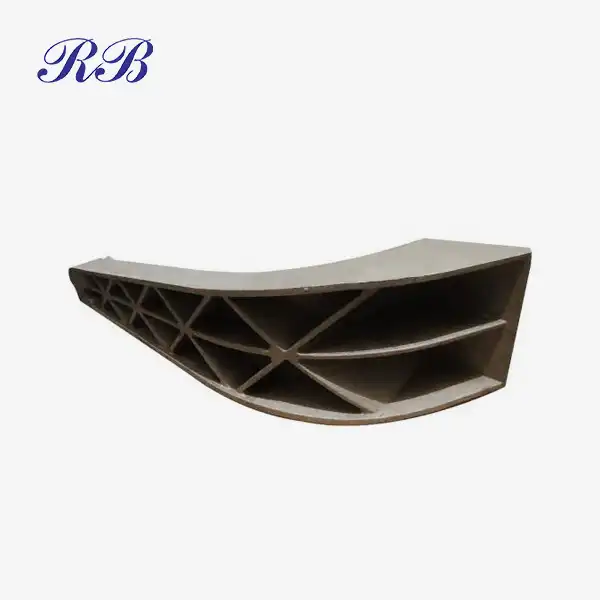
If you are now considering a move from drawings to real gravity sand casting parts, you likely want a supplier who can handle both design support and stable output. Rongbao Enterprise focuses on this combination. The company manufactures custom gravity cast components in A356 aluminum for demanding applications, including conductors used in power transmission systems.
A typical conductor component produced by Rongbao weighs about 2.3 kilograms and uses A356 alloy poured by gravity casting. CNC machining then finishes critical faces and holes to match your assembly requirements. Shot blasting cleans the surface and gives a consistent visual appearance that helps field inspectors check installations.
If you want to discuss a new conductor design or any other custom gravity sand casting parts, you can contact Rongbao Enterprise directly. Send your drawings, expected quantities, and technical requirements to steve.zhou@263.net and zhouyi@rongbaocasting.com. The engineering team will review your information, suggest suitable casting and machining routes, and prepare a detailed proposal with lead times and pricing.
References
ASM International. ASM Handbook, Volume 15: Casting. ASM International, Materials Park, OH.
Stefanescu, D. M. Science and Engineering of Casting Solidification. 3rd ed., Springer, 2015.
American Foundry Society. AFS Technical Publications on Aluminum and Sand Casting. Accessed for process and quality guidance.
MatWeb Material Property Data. A356.0 Aluminum Casting Alloy Data Sheet. Typical mechanical and casting properties.
Ravi, B. “Casting Simulation and Optimization: Benefits, Bottlenecks, and Best Practices.” Journal of Materials Processing Technology, Vol. 203, 2008, pp. 9–13.
Campbell, J. Complete Casting Handbook: Metal Casting Processes, Metallurgy, Techniques and Design. 2nd ed., Butterworth‑Heinemann, 2015.


Learn about our latest products and discounts through SMS or email