- English
- French
- German
- Portuguese
- Spanish
- Russian
- Japanese
- Korean
- Arabic
- Greek
- German
- Turkish
- Italian
- Danish
- Romanian
- Indonesian
- Czech
- Afrikaans
- Swedish
- Polish
- Basque
- Catalan
- Esperanto
- Hindi
- Lao
- Albanian
- Amharic
- Armenian
- Azerbaijani
- Belarusian
- Bengali
- Bosnian
- Bulgarian
- Cebuano
- Chichewa
- Corsican
- Croatian
- Dutch
- Estonian
- Filipino
- Finnish
- Frisian
- Galician
- Georgian
- Gujarati
- Haitian
- Hausa
- Hawaiian
- Hebrew
- Hmong
- Hungarian
- Icelandic
- Igbo
- Javanese
- Kannada
- Kazakh
- Khmer
- Kurdish
- Kyrgyz
- Latin
- Latvian
- Lithuanian
- Luxembou..
- Macedonian
- Malagasy
- Malay
- Malayalam
- Maltese
- Maori
- Marathi
- Mongolian
- Burmese
- Nepali
- Norwegian
- Pashto
- Persian
- Punjabi
- Serbian
- Sesotho
- Sinhala
- Slovak
- Slovenian
- Somali
- Samoan
- Scots Gaelic
- Shona
- Sindhi
- Sundanese
- Swahili
- Tajik
- Tamil
- Telugu
- Thai
- Ukrainian
- Urdu
- Uzbek
- Vietnamese
- Welsh
- Xhosa
- Yiddish
- Yoruba
- Zulu
How to Choose the Right Casting Junction Box?
A casting junction box should be selected for it. An enclosure suitable for a clean indoor control cabinet may not be sufficient for a coastal site, a chemical processing plant or an outdoor automation system. The performance is not guarantyd by the mere choice of the materials. The ultimate result depends on the casting technique, the machining accuracy, the sealing arrangement, the cable entrance and the quality testing process. The first step for the engineer or procurement team in selecting the correct casting junction box is to understand the use for the enclosure. Well-chosen standards ensure that electrical connections are maintained, installation is simplified and the possibility of premature replacement is reduced. These give organizations with a clear basis on which to assess tooling requirements, production costs and delivery times. Taking these issues into consideration before asking for a price may help buyers better appraise vendors and avoid costly adjustments once manufacturing is underway.
Understand the Application Before Choosing an Enclosure
Consider the Installation Environment.
The first stage is to define the conditions to which the enclosure will be subjected in service. The main purpose of protection of electrical equipment for indoor usage is to protect it from dust, accidental contact, and normal handling. Other issues when put outdoors are rain, humidity, UV exposure, temperature changes, and wind-driven pollution. Industrial facility enclosures can house oil mist, cleaning chemicals, caustic vapors, and constant vibration.
These conditions impact the material, surface treatment, sealing system, and enclosure design. If the enclosure is close to water, special attention may be needed to corrosion resistance, the type of fasteners to be used, and galvanic compatibility with other materials. The box near the moving machinery may need secure fasteners and techniques of installation to avoid loosening caused by vibration.
Temperature shall also be taken at the actual site of installation. The enclosure needs to be qualified for the estimated ambient range. The components within can generate heat when they are running. Engineers should examine not just the overall temperature capability of a material but also the complete assembly, including terminal blocks, wires, seals, coatings, and other components.
The manufacturer might be given the working environment of the casting junction box at the quotation stage to help determine realistic requirements. In cases of uncertain or severe conditions, representative testing may be necessary prior to design approval.
Match the Enclosure to Its Electrical Function
A junction box is a simple connection point, a housing for terminal blocks, or part of a more complicated assembly for control and distribution. The function determines the internal space, the cable layout, the grounding needs, and the access requirements.
In a simple wiring application, the primary problem may be enough space to route cables and make terminal connections. If more terminal blocks or monitoring devices need to be installed, inspected, and maintained within an enclosure, more clearance is needed. Where the equipment produces large quantities of heat, engineers should not assume that the metal enclosure will supply sufficient cooling but rather look into the rise in temperature within.
The interior arrangements are also dictated by electrical needs. The working voltage, conductor size, terminal spacing, insulation requirements, and applicable electrical code all must be examined together. It’s not just the number of connection points that determines the size of the enclosure; the installer needs room to bend wire, tighten connections, and replace components.
A practical specification will include the equipment to be accommodated, the number and size of incoming cables, the needed terminal architecture, and any provision for future extension. This information gives the maker a lot more knowledge of the application than just the outer dimensions.
Select the Right Material and Casting Method
Evaluate Aluminum Alloy and Other Metal Options
For cast electrical enclosures, aluminum alloys are often selected because of a combination of relatively low weight, superior corrosion resistance, and great casting qualities. But their fitness is a function of the alloy, the casting process, the heat treatment, and the service circumstances.
For applications where castability, machinability, and a combination of mechanical qualities are required, one of the options is aluminum alloy A356. It is from the family of Al-Si-Mg alloys. Silicon helps to improve fluidity during the entire casting process, and magnesium helps to provide precipitation hardening when the alloy is properly heat treated. The obtained qualities rely on the material specification, quality of the casting, and processing conditions. A356 shall not be considered interchangeable with all alloys of the same commercial designation.
Cast aluminum is used for outdoor equipment, industrial automation, and general electrical housings where weight and corrosion resistance matters. However, if appearance, chemical exposure, or long-term environmental resistance are factors, then an aluminum housing may require an excellent surface treatment.
For other applications with differing mechanical, thermal, or environmental conditions, cast iron or other metals may be more appropriate. When making the final decision, you have to evaluate more than just the cost of the raw material; you also have to consider the enclosure weight, structural loading, corrosion exposure, machining needs, and cost of the finished object.
Always ask for the alloy identification and material papers with a supplier proposal. If a specific strength level or heat treatment condition is specified, it shall be documented in the technical specification and verified by relevant test records.
Choose a Casting Process That Fits Production Needs
The casting method influences the tooling investment, viable geometry, dimensional uniformity, surface polish, and the economics of production. The three main methods of casting include sand casting, permanent mold casting, and die casting. There isn't a universally applicable response for each casting connection box.
Sand casting is suitable for prototypes, low-volume orders, and designs that are fairly large or need greater flexibility in development. Tooling investment is often lower than for high-pressure die casting; however, a little more machining may be required to meet surface polish and dimensional tolerances. Sand casting is a useful way of testing fit, mounting arrangements, and overall structure for continuing developments.
Permanent mold casting employs reusable metal molds. It can give higher surface consistency and dimensional control than traditional sand casting. If the part geometry, alloy, and production volume justify the tooling, it can be appropriate for repeat manufacture. The real results are the complexity of the enclosure, the mold design, and the process control.
Die casting is generally used for higher-volume production of suitable nonferrous metal products. It can produce predictable geometries and typically smooth surfaces, but tooling investment can be costly. Design considerations include thin walls, complicated internals, sealing surfaces, and machining allowances. Don't pick pressure die casting because it has something to do with precision. The producer will have to demonstrate that the approach is capable of attaining the required mechanical and sealing performance.
The choice is based on more than just the size of the annual order. Buyers should also look at predicted product life, design stability, ownership of tooling, changes between revisions, and the cost of secondary operations. A supplier who has a clear understanding of the manufacturing path might help discover a good compromise between initial investment and unit price.
Check Dimensions, Sealing, and Installation Details
Confirm the Size and Internal Layout
The outside dimensions are used to determine whether the enclosure will fit in the installation space, while the inside geometry is used to determine whether the electrical assembly can be properly installed and maintained. Before approving a design, review usable internal volume, wall thickness, cover clearance, mounting points, and locations of terminal blocks or other components.
You also need to be careful about how you manage the cables. Must have room for bending conductors, and entry points must not obstruct access to terminals or interfere with mounting hardware. Where multiple cables are brought in from different directions, the design has to allow the installer to fix them without undue strain on the electrical connections.
Dimensions of the casting junction box may also be subject to future increase. Additional terminals or monitoring components may take up more space than was allowed for the first installation. Instead of a predetermined proportion of spare capacity, anticipate prospective changes in the real project and provide room where future expansions are foreseen.
A two-dimensional drawing is useful to validate dimensions and tolerances, but a three-dimensional model can demonstrate interference between components, coverings, fasteners, and cables. For more complex designs, a prototype or first-article sample lets you confirm installation access before committing to a production order.
Verify the IP Rating and Sealing Arrangement
Entry Protection (IP) ratings are a measure of the enclosure’s capacity to prevent the entry of solid items and water (under specific test conditions). The first digit refers to the protection against infiltration of solid items, and the second to water. For example, IP65 certification indicates that the product is dust tight and protected against water jets under the conditions specified in the test. This is not to say that the enclosure is suitable for all types of immersion, chemical exposure, or long-term outdoor use.
The rating required should be appropriate for the installation environment and the project specification. Criteria for a box put in a dry interior environment may be different for a box exposed to severe rain, washdown, or temporary floods. If the application involves immersion, the depth of immersion and the period of immersion must be tested with the appropriate rating and test standard.
The casting quality of the enclosure is only one aspect of the sealing performance. The result is dependent upon cover flatness, mating surface polish, gasket material, compression, fastener spacing, and cable entrance hardware. The outer surfaces of castings may be sound, but they might still leak if the contact to the cover is distorted or the gasket is not applied properly.
Ask if the rating is for the bare enclosure or for the whole assembly with cover, fasteners, glands, and other penetrations. If a contract calls out an IP rating, review the relevant test report or certification and confirm that the tested configuration is the same as the supplied product.
Plan Cable Entries, Mounting, and Grounding
The cable entrance shall be of the same number, outside diameter, and type of cable or conduit used in installation. The elements shall be so positioned as to give enough clearance from enclosure borders, mounting features, internal terminals, and sealing surfaces. Threaded entrances, cable glands, and conduit fittings shall be selected according to the respective system requirements and not considered interchangeable.
Standard designs may include predetermined entrance points for convenience of production. Custom design can be beneficial if the enclosure must fit around an existing machine or control panel. Any additional aperture, however, would compromise the structural integrity and ingress protection. Hence, the entry spots and thread requirements should be agreed upon prior to concluding the machining/tooling.
Similar consideration is also deserved by the rising features. Depending on the weight of the enclosure and the attached components, wall-mounted boxes may require reinforced bosses or brackets. Panel mounting designs may contain a unique flange arrangement or anchoring holes at the proper position. These ingredients can be introduced in the casting to reduce secondary procedures. The design should take into account machining tolerances and projected installation loads.
Grounding and bonding requirements shall be specified. They may have particular grounding bosses, threaded holes, or other appropriate connecting features depending on the electrical design. The contact surfaces, fasteners, and related electrical requirements must be suitable for the intended assembly. “Grounding performance must be judged according to the circumstances surrounding the complete installation and not just because the enclosure is metal.
Conclusion
Choosing the right casting junction box is more than just choosing a metal alloy or an enclosure size. Engineers and buyers should treat the operating environment, electrical arrangement, sealing requirements, cable entry, mounting details, casting method, and inspection criteria as one integrated design decision. Materials and manufacturing procedures should be chosen based on actual application, expected production quantity, and service conditions required, rather than broad performance claims.
Drawings Material Requirements Installation conditions require ingress protection rating, target surface finish, and quality documentation requirements. Get them ready before you ask for a quote. It's possible to compare proposals, understand design risks, and control costs before production begins by talking through these points with a qualified manufacturer. A properly defined enclosure, with suitable production controls and recorded inspection, provides a more stable platform for long-term performance of the electrical system.”
FAQ
1: What advantages does casting offer compared to other junction box manufacturing methods?
Casting produces junction boxes with superior structural integrity and design flexibility compared to sheet metal fabrication or plastic molding. The process creates one-piece construction without welds or joints that can fail under stress. Complex internal features, mounting provisions, and cable entries integrate directly into the casting design. This eliminates assembly operations and potential weak points. Cast aluminum offers excellent electromagnetic shielding properties that protect sensitive electronic components. The thermal conductivity of cast metal helps dissipate heat from enclosed electrical connections. Manufacturing research indicates that cast enclosures demonstrate 40% longer service life in corrosive environments compared to fabricated alternatives.
2: How do I determine the appropriate IP rating for my application?
The required IP rating depends on environmental exposure conditions at your installation site. Indoor installations in controlled environments may only require IP54 protection against dust and water splashes. Outdoor applications typically need IP65 or IP66 ratings to withstand rain and direct water jets. Marine and chemical processing environments often demand IP67 or IP68 ratings for temporary submersion protection. Consider both normal operating conditions and potential emergency scenarios when specifying protection levels. Higher IP ratings increase enclosure cost, so match specifications to actual environmental threats. Consulting published IP rating guides helps translate environmental conditions into appropriate protection standards.
3: What lead times should I expect for custom casting junction boxes?
Lead times for custom junction boxes vary based on design complexity and production method. Standard modifications to existing designs typically require 4-6 weeks from order to delivery. Completely custom designs need 8-12 weeks to accommodate tooling fabrication and first article approval. Die casting tooling requires longer lead times than sand casting patterns. Production quantities affect scheduling, with larger orders receiving priority in manufacturing queues. Manufacturers with 5,000-piece annual capacity can usually accommodate rush orders for premium pricing. Communication with suppliers early in your project planning helps establish realistic delivery schedules.
Casting Junction Box Supplier: Rongbao Enterprise
Rongbao Enterprise specializes in manufacturing high-quality casting junction boxes for demanding industrial applications. Our expertise in aluminum casting delivers enclosures that combine superior protection with exceptional durability. We utilize aluminum alloy 356 to produce junction boxes with excellent corrosion resistance and mechanical strength. Each unit undergoes rigorous quality control to ensure consistent performance in challenging environments.
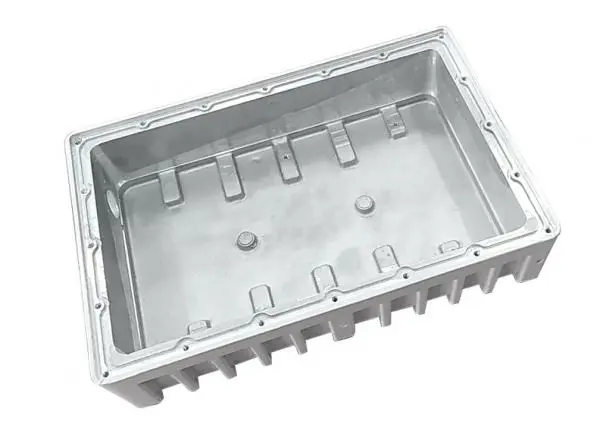
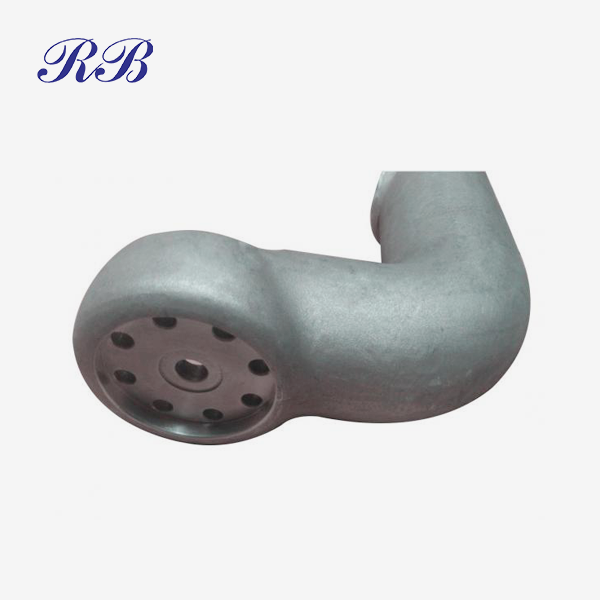
Our compressor control box bodies demonstrate the precision and reliability that define our manufacturing approach. These enclosures weigh approximately 1.2 kg, providing robust protection without excessive bulk. The casting process creates integral mounting features and cable entry provisions that simplify installation. CNC machining operations ensure precise dimensions and smooth mating surfaces for optimal seal performance. Shot blasting surface treatment removes casting residue and prepares surfaces for long-term environmental exposure.
Our location in Xi'an, China positions us strategically for efficient global logistics. Careful transportation packaging protects products during international shipment to your facility. We understand that reliable supply chains matter as much as product quality for your operations. Documentation packages include material certifications, dimensional inspection reports, and compliance declarations. This comprehensive approach ensures smooth customs clearance and receiving inspection at your facility.
Contact our experienced team to discuss your casting junction box requirements and explore customization possibilities. Steve Zhou, our technical sales specialist, brings extensive knowledge of casting applications and material selection. Reach him directly at steve.zhou@263.net for immediate assistance with technical questions. For quotations and order processing, contact Zhou Yi at zhouyi@rongbaocasting.com. We respond promptly to inquiries and provide detailed technical support throughout your evaluation process.
References
- Journal of Materials Engineering and Performance, "Long-term Corrosion Resistance of Aluminum Alloys in Marine Environments" (2022), Springer Publishing.
- Railway Technical Research Institute, "Electrical Enclosure Reliability Study in Transportation Systems" (2021), Tokyo, Japan.
- The Aluminum Association, "Aluminum Advantages: Corrosion Resistance Technical Paper" (2023), Arlington, VA.
- International Electrotechnical Commission, "IEC 60529: Degrees of Protection Provided by Enclosures (IP Code)" (2023), Geneva, Switzerland.
- ASM International, "Casting Design and Performance: Aluminum Alloy 356 Properties Handbook" (2022), Materials Park, OH
Learn about our latest products and discounts through SMS or email