- English
- French
- German
- Portuguese
- Spanish
- Russian
- Japanese
- Korean
- Arabic
- Greek
- German
- Turkish
- Italian
- Danish
- Romanian
- Indonesian
- Czech
- Afrikaans
- Swedish
- Polish
- Basque
- Catalan
- Esperanto
- Hindi
- Lao
- Albanian
- Amharic
- Armenian
- Azerbaijani
- Belarusian
- Bengali
- Bosnian
- Bulgarian
- Cebuano
- Chichewa
- Corsican
- Croatian
- Dutch
- Estonian
- Filipino
- Finnish
- Frisian
- Galician
- Georgian
- Gujarati
- Haitian
- Hausa
- Hawaiian
- Hebrew
- Hmong
- Hungarian
- Icelandic
- Igbo
- Javanese
- Kannada
- Kazakh
- Khmer
- Kurdish
- Kyrgyz
- Latin
- Latvian
- Lithuanian
- Luxembou..
- Macedonian
- Malagasy
- Malay
- Malayalam
- Maltese
- Maori
- Marathi
- Mongolian
- Burmese
- Nepali
- Norwegian
- Pashto
- Persian
- Punjabi
- Serbian
- Sesotho
- Sinhala
- Slovak
- Slovenian
- Somali
- Samoan
- Scots Gaelic
- Shona
- Sindhi
- Sundanese
- Swahili
- Tajik
- Tamil
- Telugu
- Thai
- Ukrainian
- Urdu
- Uzbek
- Vietnamese
- Welsh
- Xhosa
- Yiddish
- Yoruba
- Zulu
Finding the Right Metal Casting Company: A Simple Guide
When choosing a metal casting supplier, price is not the only factor. Your ideal partner should be able to create your parts to spec, with the same quality from batch to batch, and fill orders on time, when you need them. A great bargain on a supplier but poor dimensional accuracy or production planning might generate pricey difficulties farther down the supply chain. Buyers of industrial equipment, automotive parts, machinery and electronic enclosures should also consider potential partners’ manufacturing process, material expertise, inspection methods and production capacity in addition to the product. The choice depends on the part, the application you plan to use it for, the volume you need to produce it in and the quality control standard your project requires. A reliable metal casting manufacturing partner should also communicate clearly during product development and respond effectively when drawings, specifications, or order quantities change.By considering these characteristics before ordering, customers can limit the danger of unwanted manufacturing and develop a more reliable supply relationship.
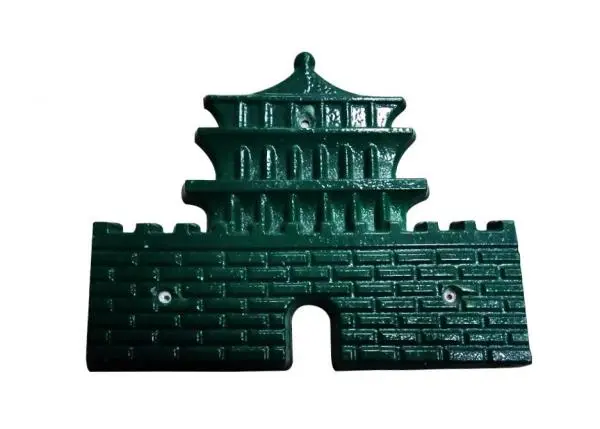
Start with the Casting Process That Fits Your Component.
Each of the many methods of casting has its merits. Know what you need from your component and what manufacturing procedures are appropriate before you start comparing vendors. What counts is whether the supplier’s capabilities match the real demands of your project.
Investment Casting for Complex Geometries
Investment casting, also known as lost-wax casting, is a commonly utilized procedure for manufacturing metal parts with intricate shapes, thin walls, and excellent surface finish. A wax pattern is made, a ceramic shell is built around it, the wax is melted away, and molten metal is poured into the hollow space.
This method helps minimize the machining required for complex-shaped items. It is frequently recommended for pump components, valve parts, impellers, industrial hardware, and some aerospace or automotive applications. The investment castings’ dimensional accuracy and surface polish could be useful depending on the alloy, casting geometry, and controls of the manufacture.
But it’s not necessarily the cheapest option. Ceramic shell preparation and pattern fabrication raise costs, as does process management, especially in development. Buyers will have to balance the cost of more expensive castings against savings in machining.
When considering an investment casting company, ask about pattern design, shell preparation, alloy selection, and dimensional checking. For complex components it is also worthwhile to check whether critical surfaces, holes, or mating features will need to be finished machined after casting.
Die Casting for Repeated High-Volume Production
Die casting is a method that involves forcing molten metal under pressure into a reusable metal mold. Aluminum, zinc, and other nonferrous alloys are usually suitable when the volume of manufacturing supports the tooling expense.
Common applications include automotive housings, electronic enclosures, brackets, and other predictable geometry elements. When tooling and process conditions are established, die casting can be used to produce fairly rapid cycle times and uniform manufacturing in high volumes.
What matters is the cost up front. Die-casting tooling is expensive, and design changes after the equipment is created can be expensive and time-consuming. The technique also has limitations in the design of materials and components; hence, it is vital to determine the suitability of the alloy and structural requirements before choosing a mold.
Discuss mold life expectancy, maintenance processes, dimensional inspection, and tooling cost allocation with potential vendors. Competitive unit pricing has to be balanced against initial tooling cost and estimated quantities of parts to be produced.
Sand Casting for Larger Parts and Flexible Production
Sand casting is the formation of the component in a sand mold. It is utilized for a wide range of ferrous and nonferrous alloys and is typically used to pump bodies, machine bases, valve bodies, industrial housings, and other moderately large components.
Sand molds are a cheaper cost option for lower volume production and components that would require a large investment in tooling with other processes compared to permanent metal molds. This also provides versatility in component size and metal choice.
Its limitations should be kept in mind when designing. Surface quality and dimensional consistency are not as excellent as other casting methods, and additional machining may be required for precision interfaces. Internal cavities, wall thickness transitions, and feeding systems also have to be carefully designed.
If it’s a sand casting shop, check out their experience with your particular alloy, the usual size of the parts they make, whether they can design your pattern, and what they do to control shrinkage and porosity. These things are more valuable than a blanket statement that the provider can create pieces of almost any size.
Gravity Casting for Suitable Medium-Volume Applications
Gravity casting is the process of filling a mold with gravity rather than high injection pressure. Depending on the equipment and mold design, it is possible to achieve a sensible balance between tooling costs, production efficiency, and part quality.
It is often considered for some aluminum components, housings, brackets, and industrial parts when more repeatability is needed than some sand-cast designs, but high-pressure die casting is not cost-efficient.
Suitability depends upon part geometry, alloy, required mechanical properties, and quantity to be produced. Buyers should not select a treatment simply solely on its name. Sometimes it could be useful to make a technical appraisal of the picture to evaluate if gravity casting is suitable for the project.
A smart metal casting manufacturing supplier should be able to tell you why a particular method is a fit for a component, not merely tout the process it uses most often.
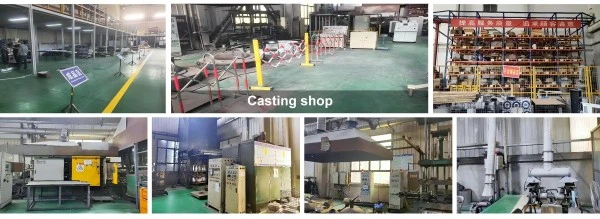
Check Quality Certifications and Inspection Procedures
In supplier evaluation, quality certification is a significant factor but not the only one. A certificate is a document that confirms that a management system has been audited against a certain standard and within a specified scope. By itself it does not prove that each part will meet your drawing or that a supplier will deliver a particular defect rate.
Match Certifications to Your Industry Requirements
ISO 9001 is a relatively common quality management methodology. It helps buyers determine if a supplier has procedures in place for document control, corrective action, process management, and continual improvement.
IATF 16949 applies to automotive supply chains if needed by the client or suitable supply chain agreements. This also speaks to quality control in the auto sector, to risk prevention, and to manufacturing consistency. Buyers should verify the authenticity and scope and verified site of the certificate and not just the badge on a website.
AS9100 is for aerospace supply chains with a particular focus on configuration control, traceability, risk management, and documented production procedures. ISO 13485 also requires suppliers to meet certain customer requirements or operate within controlled supply chains for medical device projects. The exact criteria will determine what the component is to perform, what it is for, and what it is contractually obliged to do.
Environmental and occupational safety certifications such as ISO 14001 and ISO 45001 provide additional insight into the company’s management procedures. But these certifications do not substitute the quality assurance of the product itself.
Before you authorize a supplier, ask for copies of the credentials you need, and assess the issuing bodies, validity periods, facilities covered, and activities applied. Just because one site is certified does not mean that other manufacturing sites of the same company are certified.
Review the Actual Inspection and Testing Capabilities
“Your supplier’s inspection system should be commensurate with the perils of your part. For example, a precision-machined mounting surface may require dimensional verification, while a pressure-containing casting may require further testing based on the design and applicable criteria.
Coordinate measurement equipment can be used for inspection of complicated geometric features and measurements. If the test method and equipment are suitable for the material, the alloy composition can be checked with spectrometers. Some applications may require hardness testing, tensile testing, metallographic inspection, and nondestructive testing.
X-ray examination can reveal some internal discontinuities; however, the application of this method depends on the thickness of the material, the nature of the discontinuities, the inspection procedures, and the acceptance criteria. Casting cannot and should not be a universal warranty against fault.
Ask the provider what characteristics are tested, how often, and what data is retained. The first article inspection report will allow you to confirm the manufacturing process of a new component is compliant with the drawing standards. Depending on the project, the quality package may include material certificates, dimension reports, heat treatment records, and non-destructive testing results.
It is also vital to know what is done with the nonconforming objects. Make the supplier document the errors and investigate causes and take corrective action. Please confirm whether this issue is relevant to other production lots. “The strategies give a clearer picture of quality control day-to-day than a certificate alone.
Confirm Traceability and Batch Consistency
Traceability is particularly crucial where a component has stringent material, performance, or regulatory standards. The level of traceability has to be agreed before production.
Depending on the project, records may link a finished part to its raw material certification, melt/heat identification, production batch, treatment, inspection data, and machining activities. The supplier must be capable of meeting the given standards consistently, although not every part needs to be documented to the same level.
Buyers can also ask about sample permission, how engineering changes are documented, and if the supplier keeps inspection records for needed periods. If a change to a drawing impacts a vital dimension, the proper change must be on the shop floor.
Standardized documentation is useful in metal casting manufacturing for the examination of quality concerns and the control of repeat orders. It also allows the buying, engineering, and quality teams to work from the same information throughout the product’s service life.
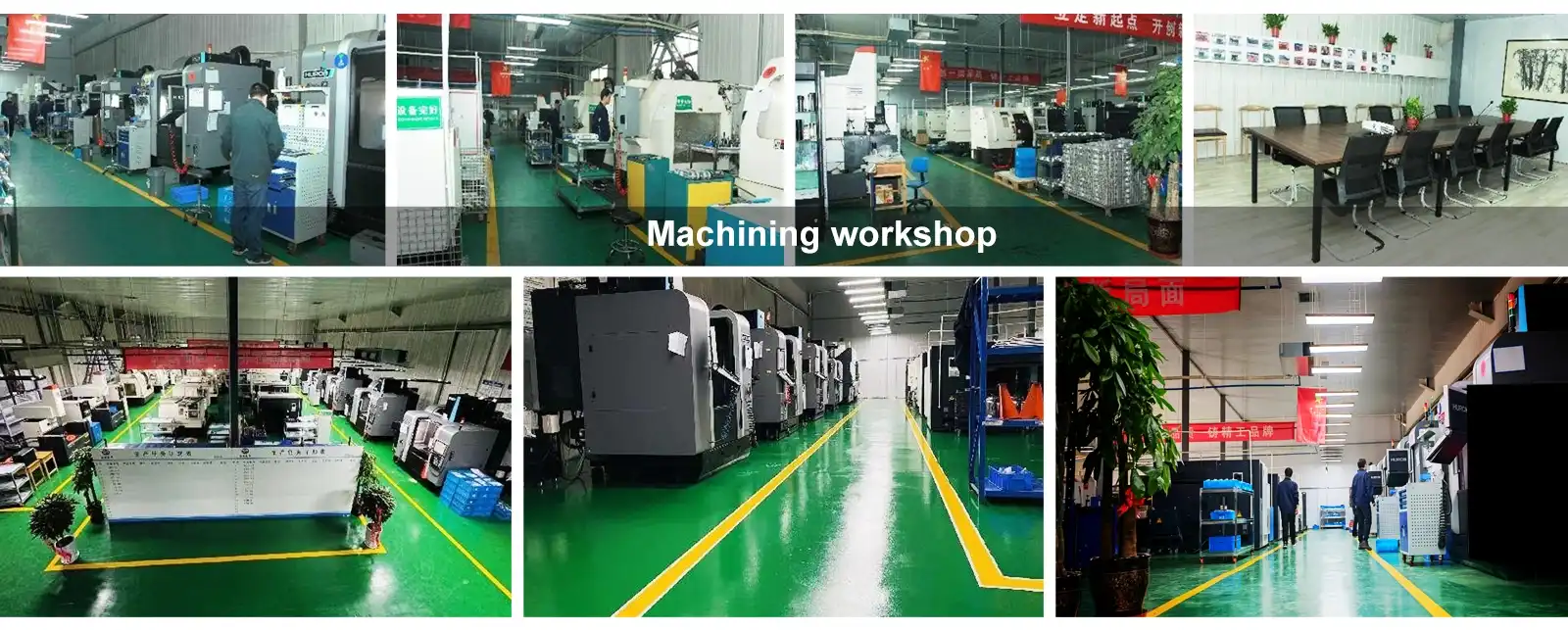
Evaluate Engineering Support and Production Capacity
This is only part of the story. The equipment shown in the supplier's brochure... The key to effective casting is the company’s ability to use its equipment, engineering knowledge, and process controls for your individual product.
Look for Engineering Input Before Tooling Begins
Occasionally casting problems are the result of design decisions made before manufacturing. Changes in wall thickness, sudden changes, wrong feeding arrangements, and wrong-placed gates can all influence the flow and solidification of metal. If these errors are not detected until after the tooling is made, the cost to repair the job may increase and the project schedule may slide.
Casting simulation software allows engineers to forecast filling patterns and solidification behavior and probable shrinkage before making samples. The results depend on the quality of the data entered and the engineer's ability to analyze it. Simulation shall be used as a complement of the physical validation and not as a replacement for it.
Ask your supplier if they review your designs before giving you a quote and if they can suggest any sections of the design that may be changed. A design-for-manufacturability review of a new part may identify opportunities to reduce the geometry, minimize unnecessary machining, or improve material yield.
The provider should provide evidence to back its suggestions and explain any changes that may affect performance, assembly, or inspection. Customer approval is required for the entry of any design changes into production.
Verify Equipment and Available Production Capacity
The foundry might have the right technique theoretically, but they might not have the equipment or capacity for your order. Check real production resources available for your part of the assignment, i.e., melting equipment, molding system, core production facilities, casting machines, heat treatment equipment, and machining centers if needed.
The equipment capabilities must meet the real working conditions. Ask about the average production lot sizes, current capacity, maintenance plans, and how the supplier handles rush orders. "A lot of installed capacity doesn't indicate that you have production slots available when you need them.
If you have repeat orders, having a solid procedure is considerably more important. Check if the supplier can supply the same material spec, tooling setup, and inspection requirements for future quantities. If production is subcontracted out to another facility, determine who will be responsible for quality control and final release.
People's knowledge of the procedures is capacity. Experienced foundry engineers, pattern designers, machinists, and quality inspectors ensured the consistency of the finished product. If manufacturing isn’t doing what it should, a supplier should be able to tell you who to contact regarding technical difficulties and how things are escalated.
Consider Machining and Other Finishing Services
Most of the cast parts are not ready to be assembled in the as-cast condition. Secondary procedures can be heat treatment, CNC machining, drilling, tapping, surface finishing, coating, or others.
This can be solved with one supplier for casting and machining because the same team is responsible for the relationship of the casting allowance and the final dimensions. It also lowers the time spent transferring between plants and makes it easier to cope with datum surface or machining stock concerns.
But integrated services may not be the best decision for a project. Make sure that the supplier’s machining capability will meet the tolerances, surface finishes, and inspection requirements on your drawing. Check measurements on key interfaces after machining, not just on the rough casting.
If there are numerous subcontractors, identify who conducts the procedure, who inspects the finished item, and who is accountable for non-conforming parts. It is not about lowering the number of suppliers to the minimum but about having clear accountability in the manufacture.
Conclusion
Choosing the correct metal casting firm for metal casting manufacturing is considerably more than simply collecting quotes or reviewing a list of requirements. Buyers should verify that the supplier has the required casting processes, engineering skills, inspection facilities, and manufacturing capacity to meet the component standards. Before ordering, consideration should be given to secondary machining delivery timetables, traceability and communication, and any tooling expenses.
The beginning point should be an approved drawing, material specification, estimate of yearly demand, critical tolerances, and the inspection papers necessary to the supplier. Request a price with a detailed description of the planned process, tooling setups, finishing operations, and lead time. When you compare suppliers on the same technical foundation, the differences in cost and capability become apparent.
A good metal casting production partner will explain why it does what it does, back up its quality guarantees with documentation, and apply the same quality standards on repeat orders. Checking these factors before production takes time, but it helps to reduce wasted expenses and build a more stable manufacturing partnership.
FAQ
1: What is the main difference between investment casting and die casting?
Investment casting (lost wax) is best for complex geometries, high-melting-point alloys like steel, and achieving a superior surface finish. Die casting is faster and suited for high-volume production of non-ferrous metals like aluminum, offering excellent dimensional accuracy but with higher tooling costs.
2: Why is IATF16949 certification important for casting suppliers?
IATF16949 is a rigorous standard specifically for the automotive industry. It ensures the supplier focuses on defect prevention, reduction of variation, and waste reduction. It guarantees that the supplier can meet strict delivery targets and quality metrics required by major automotive OEMs.
3: How can early design involvement reduce casting costs?
Involving the foundry during the design phase allows for "value engineering." Engineers can suggest design modifications that make the part easier to cast without compromising performance. This leads to reduced material usage, fewer defects, and optimized production cycles, lowering the total cost.
Investment Casting Supplier: Rongbao Enterprise
Rongbao Enterprise delivers comprehensive metal casting solutions backed by two decades of manufacturing excellence. We understand the nuances of international market expertise. Our full-process capabilities span high-pressure die casting, investment casting, and precision machining. We support diverse industry requirements ranging from automotive powertrains to medical device components.
Our triple certification system, ISO 9001, ISO 14001, and ISO 45001, ensures compliance with global quality standards. We maintain exceptional workplace safety records while delivering superior products. Advanced automated equipment allows us to achieve the demanding tolerances required by global manufacturers. With 70% of our production serving international markets across Europe, America, and Japan, we understand cross-cultural business practices. We manage the complexities of global supply chains so you do not have to.
Our integrated approach to metal casting manufacturing extends beyond component manufacturing. We include mold development, surface treatment, and complete assembly solutions. This reduces your supplier base complexity while improving quality consistency. Whether you need precision housings, our engineering team provides concurrent design support. We invite you to discuss your requirements with us. Please contact our team at steve.zhou@263.net or zhouyi@rongbaocasting.com. Discover how our comprehensive capabilities can optimize your manufacturing strategy.
References
1. Campbell, J. (2015). "Complete Casting Handbook: Metal Casting Processes, Metallurgy, Techniques and Design." Butterworth-Heinemann.
2. Stefanescu, D.M. (2017). "Science and Engineering of Casting Solidification." Springer International Publishing.
3. Groover, M.P. (2020). "Fundamentals of Modern Manufacturing: Materials, Processes, and Systems." John Wiley & Sons.
4. ASM International Handbook Committee. (2008). "ASM Handbook Volume 15: Casting." ASM International.
5. Brown, J.R. (2014). "Foseco Ferrous Foundryman's Handbook." Butterworth-Heinemann.
_1751074553490.webp)
Learn about our latest products and discounts through SMS or email