- English
- French
- German
- Portuguese
- Spanish
- Russian
- Japanese
- Korean
- Arabic
- Greek
- German
- Turkish
- Italian
- Danish
- Romanian
- Indonesian
- Czech
- Afrikaans
- Swedish
- Polish
- Basque
- Catalan
- Esperanto
- Hindi
- Lao
- Albanian
- Amharic
- Armenian
- Azerbaijani
- Belarusian
- Bengali
- Bosnian
- Bulgarian
- Cebuano
- Chichewa
- Corsican
- Croatian
- Dutch
- Estonian
- Filipino
- Finnish
- Frisian
- Galician
- Georgian
- Gujarati
- Haitian
- Hausa
- Hawaiian
- Hebrew
- Hmong
- Hungarian
- Icelandic
- Igbo
- Javanese
- Kannada
- Kazakh
- Khmer
- Kurdish
- Kyrgyz
- Latin
- Latvian
- Lithuanian
- Luxembou..
- Macedonian
- Malagasy
- Malay
- Malayalam
- Maltese
- Maori
- Marathi
- Mongolian
- Burmese
- Nepali
- Norwegian
- Pashto
- Persian
- Punjabi
- Serbian
- Sesotho
- Sinhala
- Slovak
- Slovenian
- Somali
- Samoan
- Scots Gaelic
- Shona
- Sindhi
- Sundanese
- Swahili
- Tajik
- Tamil
- Telugu
- Thai
- Ukrainian
- Urdu
- Uzbek
- Vietnamese
- Welsh
- Xhosa
- Yiddish
- Yoruba
- Zulu
Investment Casting Material Selection Guide:Stainless Steel, Carbon Steel, and Alloy Steel Comparison
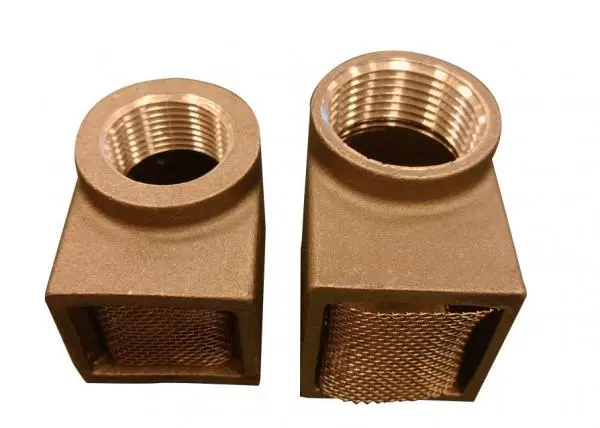
Sand casting cannot match the tolerances and surface finish of investment casting, which produces near net shape steel parts from a single ceramic shell, but the process is only economical if the material is suitable for the service environment. The first engineering decision on any investment casting project is the selection of stainless, carbon and alloy steel. It locks in cost, weight and corrosion behavior before the first pattern is cut. This guide compares the three families with named grades such as 316L, CF8M, 1045 and 4140, the ASTM specs that govern them, verified property values and the honest trade offs.
Investment Casting Material Fundamentals
Before comparing grades, it helps to look at what the investment casting process asks of a material. Molten steel must flow through thin ceramic shell cavities, freeze with predictable shrinkage and respond to heat treatment without warping delicate sections. Steels with good fluidity and stable solidification give the foundry a wide processing window, which shows up later as lower scrap and tighter dimensions.
Verification belongs to material selection, not to the end of the project. A capable investment casting supplier confirms the chemistry of every heat by spectrometric analysis, pulls tensile bars to the governing specification and applies radiographic or dye penetrant inspection where internal shrinkage would be dangerous. Expect this documentation to run inside an ISO 9001:2015 quality system, and ask at quoting stage which test reports accompany each shipment.
Stainless Steel: Premium Corrosion Resistance and Durability
Stainless steel is the premium branch of this comparison, and the choice is driven less by strength than by environment. Wherever chlorides, acids, sterilization cycles or food contact define service life, the passive chromium oxide layer that gives these grades their name does work that no coating on carbon steel can match over decades of exposure. That is why the family dominates marine, medical and food processing investment casting work despite its price.
Key Grades: 316L, CF8M and the Numbers Behind Them
The workhorse here is 316L and its cast counterpart CF8M. 316L is a molybdenum bearing austenitic grade holding 16 to 18 percent chromium, 10 to 14 percent nickel and 2 to 3 percent molybdenum. In the annealed condition it carries a minimum tensile strength of 515 MPa and a minimum yield strength of 205 MPa, at a density of 8.0 g/cm3.
The molybdenum lifts the pitting resistance equivalent number above 24, which is the margin between surviving a marine or chemical environment and pitting within a year. CF8M is the same chemistry in cast form, produced to ASTM A351, the governing specification for austenitic castings in pressure containing parts. Continuous service temperatures approach 870 °C, far beyond what carbon or alloy steel tolerates, which makes this the default answer for hot, corrosive duty.
Trade Offs Buyers Should Weigh
Stainless steel is the heaviest and most expensive option in this guide, and it machines more slowly than the other two families. The premium buys corrosion performance that no plated carbon steel part reproduces: there is no coating to scratch, no repainting cycle and no galvanic surprise when the casting is welded into a stainless assembly. For pump and valve bodies, medical instruments and food contact parts, that lifecycle arithmetic usually settles the argument. For dry, indoor or oil immersed service the premium is wasted money, which is exactly why the next section exists.
Carbon Steel: Strength and Cost Effectiveness Combined
Carbon steel answers the question stainless steel cannot: what happens when the environment is benign but the budget is not? In automotive chassis hardware, machinery frames and general industrial components the corrosion argument weakens, and strength per dollar takes control of the decision.
Working Grades from 1020 to 1045
Carbon content sets the behavior. A low carbon grade such as 1020, around 0.20 percent carbon, casts and welds easily, which suits brackets and housings under light loads. Stepping up to 1045, with about 0.45 percent carbon, brings normalized tensile strength of roughly 600 MPa, enough for shafts, levers and wear surfaces, and it responds to induction hardening where a local surface must resist abrasion.
ASTM A732 is the specification that covers carbon steel investment castings for general applications, and it is the correct reference line on a drawing in this family. One limit deserves respect: continuous service is generally capped near 425 °C, above which strength falls away and long exposure invites graphitization in the steel.
Surface Protection and Cost Control
Without chromium, carbon steel rusts, so the finish strategy belongs in the design stage rather than after the fact. Zinc plating, powder coating and paint systems are inexpensive and effective for indoor and sheltered outdoor use, and the smooth as cast surfaces that investment casting produces give coatings an even base. The family remains the cheapest route to strength in this comparison, and it scales better than either alternative, which is why high volume automotive investment casting work concentrates here. The honest trade off is maintenance: every coating has a service life that stainless steel simply does not need.
Alloy Steel: Advanced Performance for Demanding Applications
Alloy steel exists for loads that break the other two families. When a part sees cyclic stress, impact, elevated temperature or several of these at once, small additions of chromium and molybdenum change the behavior of the steel in ways carbon content alone cannot achieve.
4140 and the Chromium Molybdenum Family
The most frequently specified grade in steel investment casting is 4140, which carries roughly 0.40 percent carbon, about 1 percent chromium and 0.20 percent molybdenum. Quenched and tempered 4140 commonly delivers tensile strength between 850 and 1000 MPa depending on tempering temperature, with enough toughness to survive shock loading that would crack a harder carbon steel. For parts that retain pressure, ASTM A487 defines the steel castings suitable for pressure service and is the reference buyers should cite on drawings. Heat treated alloy steel holds useful strength to around 400 °C, past the point where carbon steel has begun to soften.
Heat Treatment Is Part of the Process
Unlike stainless steel, alloy steel reaches its published properties only after quenching and tempering, so the foundry and the heat treatment shop act as one link in the supply chain. The sequence on a typical investment casting part runs as follows:
- Rough machine the casting while the steel is still soft and quick to cut.
- Quench and temper to the target hardness before any critical dimension is final.
- Finish machine after tempering so distortion is removed rather than designed in.
- Stress relieve welded repairs on complex geometries before final inspection.
Buyers who outsource heat treatment separately from the casting usually pay for that split in scrapped tolerances.
Application-Specific Material Selection Strategies
With the three families characterized, selection becomes a matter of matching the driving requirement instead of weighing every property. Corrosion points to stainless steel, cost per unit of strength points to carbon steel, and load points to alloy steel. The table below places the recommended investment casting grades side by side.
| Material family | Named grades | Governing specification | Strength class | Service temperature ceiling | Best fit |
|---|---|---|---|---|---|
| Stainless steel | 316L, CF8M | ASTM A351 | 515 MPa tensile minimum, annealed | near 870 °C | marine, chemical, medical and food duty |
| Carbon steel | 1020, 1045 | ASTM A732 | roughly 600 MPa, normalized 1045 | about 425 °C | automotive and general machinery |
| Alloy steel | 4140 | ASTM A487 | 850 to 1000 MPa, quenched and tempered | about 400 °C | gears, shafts, pressure parts |
Two cost notes sit outside the table. Material price climbs from carbon steel through alloy steel to stainless, but heat treatment adds a step cost that narrows the alloy to stainless gap on small parts. Volume rewards the two cheaper families most, because simpler inspection and shorter processing stack up across an investment casting production run of thousands.
Conclusion
Material selection for investment casting comes down to one honest question per part: what will actually break it? Corrosion points at CF8M or 316L under ASTM A351, with capability approaching 870 °C. Structural duty at the lowest cost points at 1020 or 1045 under ASTM A732. Heavy cyclic loads point at quenched and tempered 4140 under ASTM A487. Investment casting rewards this decision made early, because grade, shell design, heat treatment and inspection all hang from the same choice. State the environment, the load and the volume on the drawing, and the right family usually names itself.
FAQs
Can investment castings match the properties of machined bar stock?
Cast grades are specified to their own minimums, not to wrought ones. CF8M produced to ASTM A351 meets casting minimums close to those of wrought 316L, and sound investment casting practice with proper feeding produces a dense structure. For fatigue critical parts, ask the foundry for tensile data from the actual heat and specify radiographic inspection on the most stressed zones.
Which designation belongs on a drawing for a cast 316L valve body?
Use CF8M, the cast designation, together with ASTM A351. The number 316L describes the wrought product form, so a drawing that lists it for a casting forces the foundry to guess the intent. Adding the pressure class and any supplementary non destructive examination requirements to the drawing removes the back and forth before quoting even starts.
Is carbon steel a false economy for outdoor equipment?
Not when the coating system is engineered rather than assumed. A 1045 casting with zinc plating under powder coating handles sheltered outdoor service for years at a fraction of stainless cost. For direct salt spray exposure or marine fittings, stainless steel wins over the life of the part, because repainting a complex casting costs more than the grade premium.
Can 4140 investment castings be welded?
Yes, with discipline. Preheat in the region of 300 °C, use a low hydrogen process and post weld heat treat to avoid cracking in the heat affected zone. Better still, cast the feature instead: investment casting reproduces bosses and brackets that a machined design would need welded on, which removes the risk at the pattern stage.
Partner with Rongbao Enterprise for Expert Investment Casting Solutions
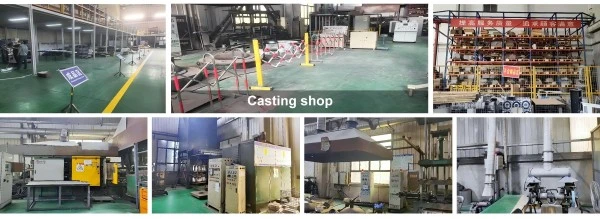
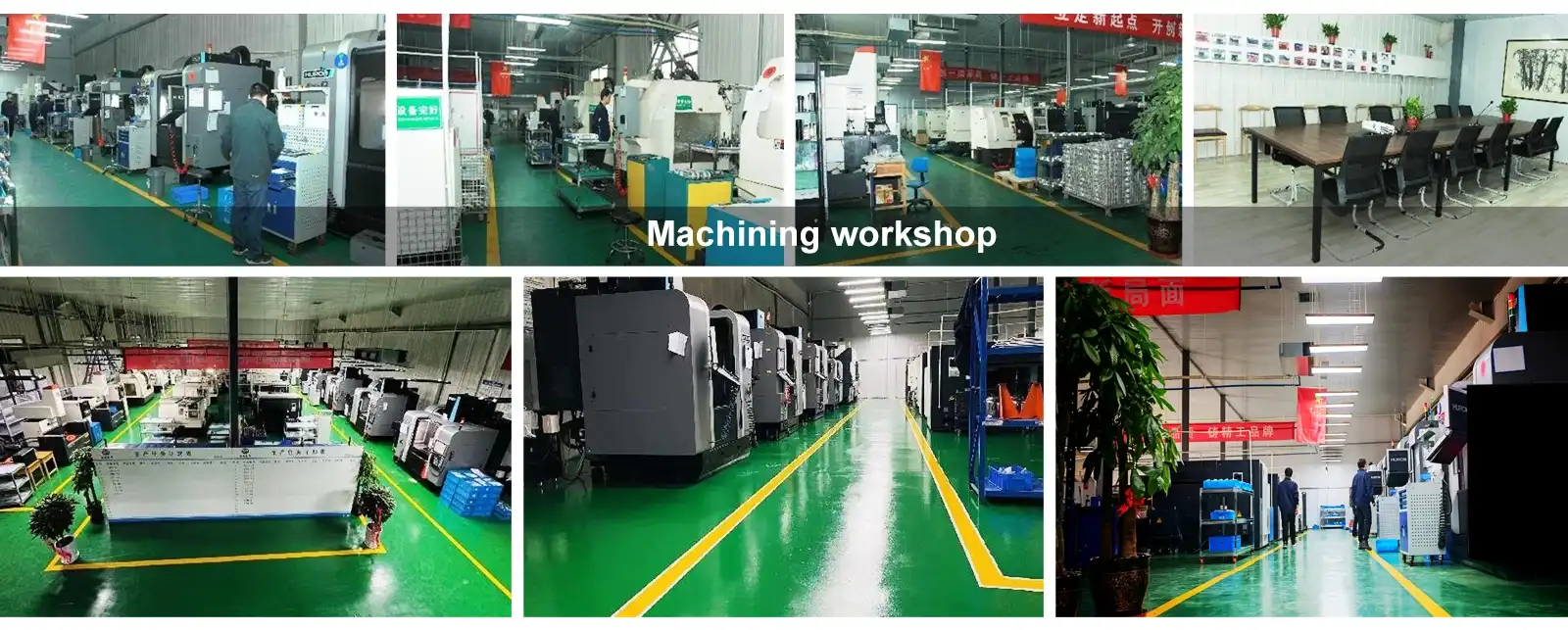
We are Rongbao Enterprise, a casting manufacturer founded in 2003 in Xi'an, China, with more than 6,000 square meters of production space in the Fengjing Industrial Park. Alongside high pressure die casting, low pressure die casting and gravity casting, we run precision CNC machining and shot blasting in house, so castings arrive finished to your drawing rather than as raw parts. Our quality system is certified to ISO 9001:2015, ISO 14001 and ISO 45001, shipped parts run at PPM defect rates below 50, and about 70 percent of our output serves customers in the United States, Europe and Japan across industrial machinery, automotive, marine and medical rehabilitation sectors.
Tell us about the part, the environment it works in, and the volumes you need, and our engineering team will answer with a grade recommendation, the governing specification, and a quotation. Write to steve.zhou@263.net and zhouyi@rongbaocasting.com to start the conversation about your investment casting project.
References
ASTM International. ASTM A732/A732M-20, Standard Specification for Castings, Investment, Carbon and Low Alloy Steel for General Application, and Cobalt Alloy for High Strength at Elevated Temperatures. ASTM International, 2020.
ASTM International. ASTM A351/A351M-18e1, Standard Specification for Castings, Austenitic, for Pressure Containing Parts. ASTM International, 2018.
ASTM International. ASTM A487/A487M-24, Standard Specification for Steel Castings Suitable for Pressure Service. ASTM International, 2024.
ASTM International. ASTM A985/A985M-21, Standard Specification for Steel Investment Castings General Requirements, for Pressure Containing Parts. ASTM International, 2021.
ASM International. ASM Handbook, Volume 1: Properties and Selection: Irons, Steels, and High Performance Alloys. ASM International, 1990. ISBN 978-0-87170-377-4
International Organization for Standardization. ISO 9001:2015, Quality Management Systems: Requirements. ISO, 2015.
Learn about our latest products and discounts through SMS or email