- English
- French
- German
- Portuguese
- Spanish
- Russian
- Japanese
- Korean
- Arabic
- Greek
- German
- Turkish
- Italian
- Danish
- Romanian
- Indonesian
- Czech
- Afrikaans
- Swedish
- Polish
- Basque
- Catalan
- Esperanto
- Hindi
- Lao
- Albanian
- Amharic
- Armenian
- Azerbaijani
- Belarusian
- Bengali
- Bosnian
- Bulgarian
- Cebuano
- Chichewa
- Corsican
- Croatian
- Dutch
- Estonian
- Filipino
- Finnish
- Frisian
- Galician
- Georgian
- Gujarati
- Haitian
- Hausa
- Hawaiian
- Hebrew
- Hmong
- Hungarian
- Icelandic
- Igbo
- Javanese
- Kannada
- Kazakh
- Khmer
- Kurdish
- Kyrgyz
- Latin
- Latvian
- Lithuanian
- Luxembou..
- Macedonian
- Malagasy
- Malay
- Malayalam
- Maltese
- Maori
- Marathi
- Mongolian
- Burmese
- Nepali
- Norwegian
- Pashto
- Persian
- Punjabi
- Serbian
- Sesotho
- Sinhala
- Slovak
- Slovenian
- Somali
- Samoan
- Scots Gaelic
- Shona
- Sindhi
- Sundanese
- Swahili
- Tajik
- Tamil
- Telugu
- Thai
- Ukrainian
- Urdu
- Uzbek
- Vietnamese
- Welsh
- Xhosa
- Yiddish
- Yoruba
- Zulu
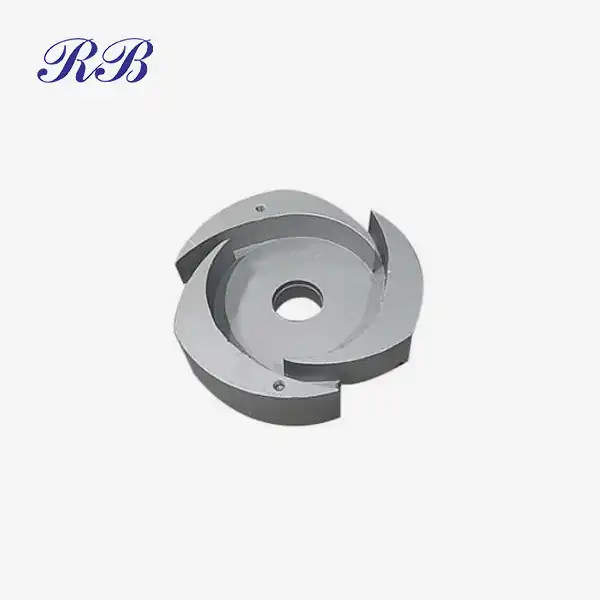
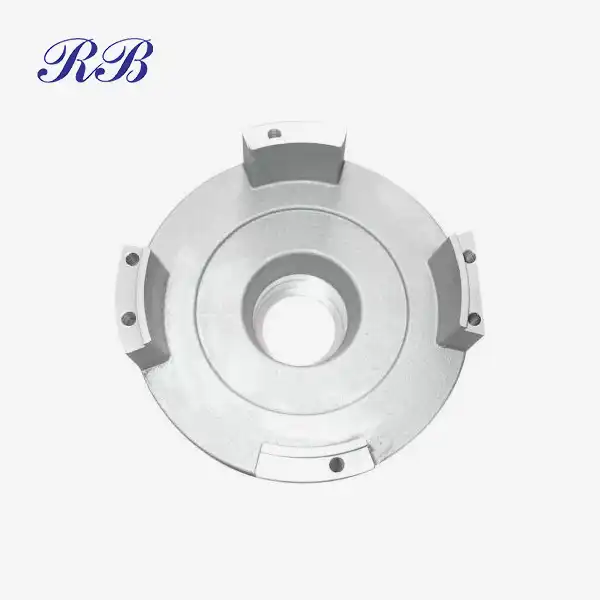
What is a Cast Coupling Disc A356-T6 and Why It’s Critical in Elevator Parts?
A cast coupling disk A356-T6 is a safety critical aluminum component connecting an elevator traction motor to its gear box or sheave. The coupling disk transmits torque and absorbs tiny angular misalignments and dampens torsional vibration. The designation A356-T6 is an aluminum silicon magnesium casting alloy containing 6.5 to 7.5 percent silicon and 0.25 to 0.45 percent magnesium, solution treated near 540 °C, water quenched and artificially aged near 155 °C to lock in the T6 mechanical qualities.
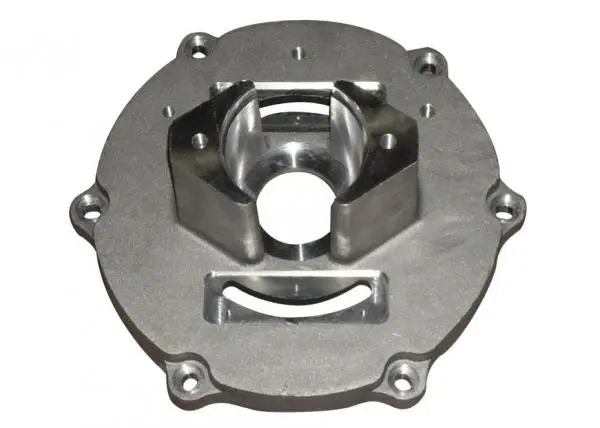
Cast Coupling Disc A356-T6 Technology
ASTM B26/B26M covers the composition of A356 for sand castings, and ASTM B108/B108M covers the composition of A356 for permanent mold castings, therefore all foundry specs have a documented chemical window that a metallurgist can audit. That window and the heat treat cycle that follows is what makes a generic aluminum blank a controlled elevator grade cast coupling disk A356-T6.
A356 alloy chemistry and the T6 heat treat cycle
The alloy is aluminum with 6.5 to 7.5 percent silicon for castability, 0.25 to 0.45 percent magnesium for age hardening and strict ceilings on iron, copper, manganese, zinc and titanium to keep brittle intermetallics under control. After pouring the portion is solution treated at about 540 °C, water quenched and artificially aged at approximately 155 °C to precipitate a fine dispersion of strengthening phases.
This T6 sequence brings a cast coupling disk A356-T6 from as cast tensile of around 172 MPa to a minimum of 234 MPa by ASTM B26 sand cast, with 165 MPa yield and 3.5 percent elongation minimum. Typical manufacturing values are around 262 MPa tensile, 186 MPa yield, 5 to 8 percent elongation, and Brinell about 75 to 80.
|
ASTM B26 chemistry limits for A356 aluminum (weight percent) |
||
|
Element |
Minimum |
Maximum |
|
Silicon (Si) |
6.5 |
7.5 |
|
Magnesium (Mg) |
0.25 |
0.45 |
|
Iron (Fe) |
— |
0.20 |
|
Copper (Cu) |
— |
0.20 |
|
Manganese (Mn) |
— |
0.10 |
|
Zinc (Zn) |
— |
0.10 |
|
Titanium (Ti) |
— |
0.20 |
|
Aluminum (Al) |
balance |
— |
Casting process choice and microstructural outcome
Gravity casting and permanent mold casting are the two procedures most typically employed for a cast coupling disk A356-T6, with low pressure die casting reserved for thinner webs. Gravity casting fills the mold beneath a static head which maintains the fill gradual and prevents oxide entrainment. Permanent mold casting employs a reusable steel or iron die for shorter cycle times. Both techniques employ controlled risers and chills to directionally cool the section, feeding shrinkage to the riser instead of the working face.
The T6 aged microstructure consists of thin alpha aluminum dendrites, silicon particles uniformly distributed and Mg2Si precipitates, which contribute to the fatigue strength of around 90 MPa at 10^7 cycles under rotational bending. The pristine microstructure is also the reason for the density of 2.68 g/cm3 which is roughly a third of the density for a similar stainless part.
Solving Problems in Elevator Use
Chemistry and heat treat alone do not address elevator issues. What counts is how the disk performs in a hoistway, day in day out, taking everything the cabin, motor and structure throw at it. The cast coupling disk A356-T6 IS the solution to four functioning difficulties in almost all elevator duty cycles.
Mass, inertia, and the weight carried above the cabin
A cast coupling disk A356-T6 weighs roughly 66 percent less (2.68 g/cm3) than stainless 316L equivalents (about 8.0 g/cm3) with the same shape. That’s around 2.4 kg saved per connection on a standard 3.6 kg stainless item, less rotational mass for the traction motor to accelerate, decelerate and maintain during a stop. High rise bank mass reduction decreases peak motor current and reduces the support structure.
Less spinning inertia also means less wear on the brake pads and less torsional spikes when the cabin rests on a soft cushion. Those per stop savings add up to a considerable maintenance cost difference over a 20 year service life. One reason elevator engineers choose a cast coupling disk A356-T6 over its steel counterpart.
Vibration, noise, and ride quality
In contemporary elevators, vibration is not simply a comfort problem, it is a service call waiting to happen. The aluminum silicon magnesium microstructure provides internal dampening to absorb torsional vibration at the source and the distributed silicon particles deflect stress waves that would otherwise go up the motor shaft. Passengers experience it as a quieter journey. Building owners feel it as fewer noise complaints. Service staff feel it as fewer re-tightening operations.
The same disk also tends to reduce transmitted vibration in the 50 to 200 Hz region where cabin boom is most visible, compared to a steel connection, and prevents the disk from magnifying engine noise during a soft start. That’s important in hospitals and hotels where elevator noise is part of the design brief.
Advanced Features and Useful Advantages
Other designed qualities of the cast coupling disk A356-T6, besides mass and vibration, only become apparent when the component is operating hot, weary or in a damp hoistway. A good cast coupling disk A356-T6 earns its position in four areas: thermal performance, fatigue life, surface polish and dimensional tailoring.
Thermal conductivity and fatigue under cyclic load
Aluminum is an excellent thermal conductor, A356-T6 being about 151 W/(m·K), high enough to drain heat out of the coupling face and into the motor housing. The disc’s mechanical characteristics may take years of starts and stops, since heat that doesn’t remain in the part can’t soften the T6 temper or grow the silicon particles that give the alloy its strength. The same conductivity keeps the bore temperature stable, which protects any elastomer insert the OEM may specify for noise isolation.
The opposite side of the same coin is fatigue life. At 90 MPa rotational bending fatigue strength at 10^7 cycles the disk withstands tens of millions of elevator rides before any fracture initiation may occur. This is why A356-T6 is specified by elevator OEMs in their connection specs, and why the part is approved by ISO 8100-1 based lift assemblies.
Surface finish, post machining, and application fit
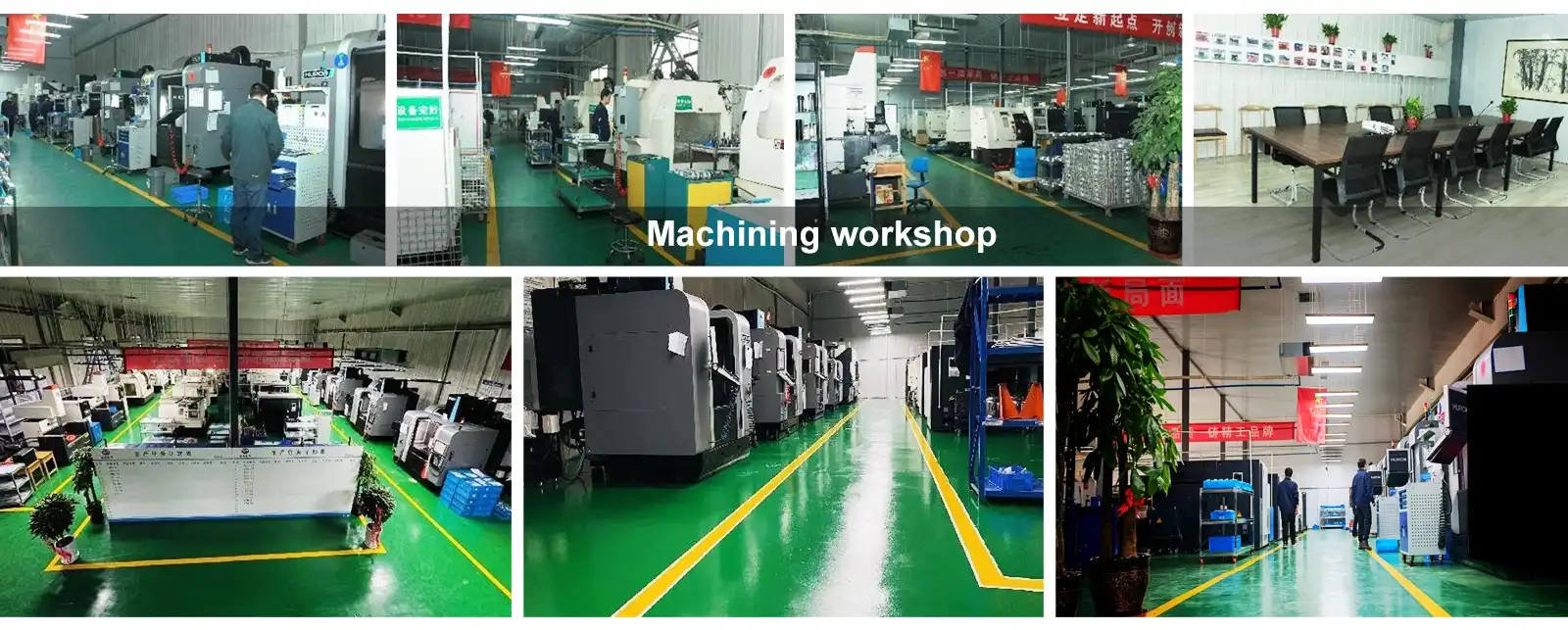
Once cast and T6 the rough section is sent to a CNC machine for the pilot bore, the bolt circle, keyway and any registration face that mates to the motor or gearbox flange. Where critical bores are machined to tolerances of +/- 0.05 mm, and the sealing faces are finished to something like Ra 1.6 micrometers, it is only enough to ensure that the TIR runout at the bore does not exceed 0.05 mm. Shot blasting is used to relieve residual tension in the casting skin prior to machining.Because the disk is cast, the foundry may adjust the bolt pattern, outer diameter, hub thickness or spoke geometry without having to re-tool a forging die. Flexibility that allows the same A356-T6 disk to fit:
- Low rise freight elevators with geared traction machines;
- Passenger elevators with permanent magnet motors;
- High speed MRL elevators operating 4 m/s and higher;
- Modernization packages that adapt obsolete couplings to modern motor interfaces.
It’s the same flexibility that allows most elevator OEMs to have an authorized design on file rather than certifying a new part for every order.
Technical Excellence in Manufacturing
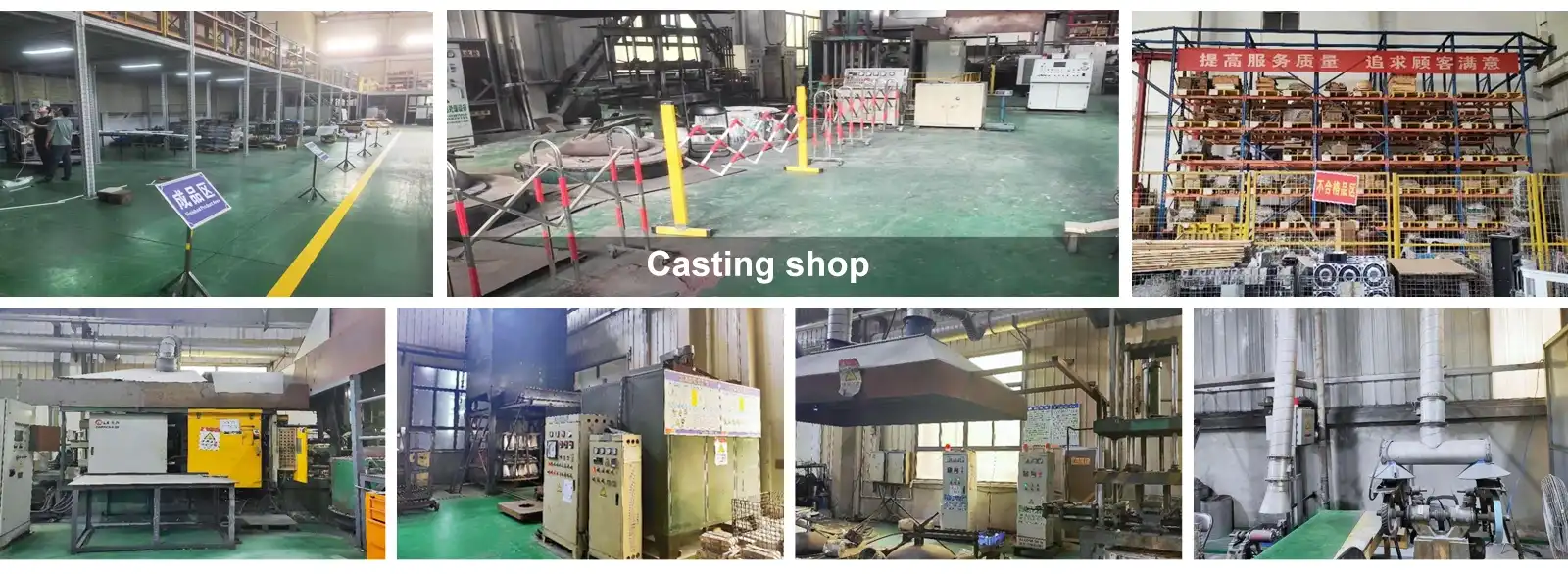
Production is dependent upon continuously hitting the T6 temper window, batch after batch. Heat treat furnaces are charted with pyrometers attached to chart recorders. The quench tank is timed within seconds of the spec and the aging ovens are loaded so air flows around every fixture and no part underages or overages.
Final inspection includes tensile bars taken from the same melt, Brinell hardness spot checks on real disks, coordinate measuring machine reports on each important dimension, and liquid penetrant examination on each machined sealing face. The ultrasonic sampling examination captures subsurface porosity not visible by surface inspection, thus the lot release is uniform throughout the run.
Conclusion
Elevator coupling material choice is a safety decision. The alloy system that satisfies that threshold with proven chemistry, heat treat and mechanicals is the cast coupling disk A356-T6. A356-T6 has a minimum tensile strength of 234 MPa per ASTM B26, weighs about a third of a comparable stainless part, damps torsional vibration at the source and endures tens of millions of cycles at 90 MPa rotating bending fatigue. It is that combination that takes the cast coupling disk A356-T6 out of the catalog and into a safety-relevant elevator component.
FAQ
1. What alloy and heat treat state is a cast coupling disc A356-T6 made from?
A cast coupling disc A356-T6 is poured from A356 aluminum, an Al Si Mg alloy with 6.5 to 7.5 percent silicon and 0.25 to 0.45 percent magnesium. It is then solution treated near 540 °C, water quenched, and artificially aged near 155 °C to reach the T6 temper that carries its published strength.
2. Why use A356-T6 instead of stainless for an elevator coupling disc?
A356-T6 weighs about 66 percent less than 316L stainless at the same disc geometry, around 2.4 kg saved on a typical 3.6 kg stainless part. That mass drop lowers motor current and cuts peak torque and transmitted vibration, which together shrink the elevator support structure and improve ride comfort.
3. What tolerances does a machined cast coupling disc A356-T6 typically hold?
Pilot bores and bolt patterns are machined to plus or minus 0.05 mm, sealing faces around Ra 1.6 micrometers, and total indicated runout at the bore below 0.05 mm. These numbers come from CNC machining after the T6 heat treat, not from the as cast surface of the cast coupling disc A356-T6.
4. What standards apply to a cast coupling disc A356-T6 used in an elevator?
ASTM B26/B26M controls the sand cast A356 chemistry and mechanical minimums, ASTM B108/B108M covers the permanent mold variant, and ISO 8100-1:2019 sets the safety rules for the passenger or goods lift the disc goes into. Together these define chemistry, properties, and end use.
5. How long does a cast coupling disc A356-T6 typically last in service?
Designed properly against 90 MPa rotating bending fatigue at 10^7 cycles, the disc covers tens of millions of elevator trips before any fatigue crack initiates. Actual service life depends on load profile and adherence to OEM inspection intervals rather than on the alloy itself.
Partner with Rongbao Enterprise for Premium Cast Coupling Disc A356-T6 Manufacturing
Rongbao Enterprise has cast coupling disk A356-T6 safety relevant aluminum components in Xi'an since 2003, running high pressure die casting, low pressure die casting, gravity casting, precision CNC machining, and shot blasting under ISO 9001:2015, ISO 14001, and ISO 45001 across a 6,000 square meter facility on Fengwu East Road in Fengjing Industrial Park. About 70 percent of our output ships to customers in the United States, Europe, and Japan across elevator, automotive, marine, and medical rehabilitation programs, with PPM defect rates below 50 on released lots.
Send your drawing, torque cycle, and bore tolerance to steve.zhou@263.net and zhouyi@rongbaocasting.com, and our engineering team will return a DFM note, a PPAP level, and a quoted lead time for your order.
References
1. ASTM International. ASTM B26/B26M-18, Standard Specification for Aluminum Alloy Sand Castings. ASTM International, 2018.
2. ASTM International. ASTM B108/B108M-19, Standard Specification for Aluminum Alloy Permanent Mold Castings. ASTM International, 2019.
3. Kaufman, J. Gilbert, and Elwin L. Rooy. Aluminum Alloy Castings: Properties, Processes, and Applications. ASM International, 2004. ISBN 978-0-87170-803-8
4. Campbell, John. Complete Casting Handbook: Metal Casting Processes, Metallurgy, Techniques and Design, 2nd edition. Butterworth Heinemann, 2015. ISBN 978-0-444-63518-3
5. ASM International. ASM Handbook, Volume 15: Casting. ASM International, 2008. ISBN 978-0-87170-711-6
6. International Organization for Standardization. ISO 8100-1:2019, Lifts for the Transport of Persons and Goods, Part 1: Safety Rules for the Construction and Installation of Passenger and Goods Passenger Lifts. ISO, 2019.
Learn about our latest products and discounts through SMS or email