- English
- French
- German
- Portuguese
- Spanish
- Russian
- Japanese
- Korean
- Arabic
- Greek
- German
- Turkish
- Italian
- Danish
- Romanian
- Indonesian
- Czech
- Afrikaans
- Swedish
- Polish
- Basque
- Catalan
- Esperanto
- Hindi
- Lao
- Albanian
- Amharic
- Armenian
- Azerbaijani
- Belarusian
- Bengali
- Bosnian
- Bulgarian
- Cebuano
- Chichewa
- Corsican
- Croatian
- Dutch
- Estonian
- Filipino
- Finnish
- Frisian
- Galician
- Georgian
- Gujarati
- Haitian
- Hausa
- Hawaiian
- Hebrew
- Hmong
- Hungarian
- Icelandic
- Igbo
- Javanese
- Kannada
- Kazakh
- Khmer
- Kurdish
- Kyrgyz
- Latin
- Latvian
- Lithuanian
- Luxembou..
- Macedonian
- Malagasy
- Malay
- Malayalam
- Maltese
- Maori
- Marathi
- Mongolian
- Burmese
- Nepali
- Norwegian
- Pashto
- Persian
- Punjabi
- Serbian
- Sesotho
- Sinhala
- Slovak
- Slovenian
- Somali
- Samoan
- Scots Gaelic
- Shona
- Sindhi
- Sundanese
- Swahili
- Tajik
- Tamil
- Telugu
- Thai
- Ukrainian
- Urdu
- Uzbek
- Vietnamese
- Welsh
- Xhosa
- Yiddish
- Yoruba
- Zulu
What is cast engine bearings?
Cast engine bearings are precision-manufactured components that support rotating shafts inside an engine assembly, reducing friction between the crankshaft, connecting rods, and the engine block under continuous load and thermal stress. Unlike rolling-element bearings, these components rely on a thin hydrodynamic oil film to separate metal surfaces. They are produced through controlled casting processes using materials such as copper alloys, aluminum-based compounds, and lead-based babbitt metals. The right material selection directly determines how well a bearing handles heat, load cycles, and wear over its service life.

Cast Engine Bearings: Definition and Fundamentals
At their core, cast engine bearings are plain bearings, which means they don't have moving balls or spheres and instead work through surface contact and lubrication. Manufacturers can make complex shapes with tightly controlled wall thicknesses and surface profiles using the casting process, which is hard to do with rolling.
One of the most important decisions in bearing design is what materials to use. Copper-lead and tri-metal structures are very strong against fatigue when loaded many times. In moderate-duty diesel applications, aluminum-tin alloys work reliably and don't rust. Even though Babbitt (white metal) linings are softer, they are very flexible and trap contaminants so they don't damage the shaft.
The way of lubrication doesn't matter. Most current engines use hydrodynamic lubrication, which moves the shaft away from the bearing surface with pressurized oil. Even the best bearings wear out quickly if the oil flow isn't kept steady. Because of this, procurement teams need to look at both the bearing material and the way the target engine system is lubricated.
Types and Applications of Cast Engine Bearings
Different engine environments need different types of bearings. Knowing the differences between types keeps you from using them in the wrong way or failing too soon.
When it comes to the crankshaft and camshaft, plain journal bearings are the most common type. They carry horizontal loads along the shaft. On the other hand, thrust bearings control axial forces and keep the crankshaft from moving forward or backward when the engine is under pressure. Specialty types, like flanged and grooved bearings, can handle mixed loads in heavy-duty or high-performance platforms.
There are many ways to use it. Most gasoline-powered cars have cast engine bearings made of aluminum-tin or copper-lead that are sized to handle modest heat loads. Heavy-duty diesel engines, like those in cars, industrial generators, and farm equipment, need bearings that can handle higher temperatures and less wear and tear. Industrial engines like those in compressors, pumps, and hydraulic power units often run nonstop for thousands of hours. This puts a lot of stress on the bearings' ability to last and keep the oil in them.
Standards in the industry, like SAE J506 and DIN 1494, spell out tolerances for clearance, surface finish needs, and heat resistance levels. When purchasing bearings for OEM uses, procurement professionals should make sure that sellers certify their goods against relevant standards, not just say that they do so directly.

Diagnosing and Preventing Cast Engine Bearing Failure
Bearing failure doesn't usually happen without warning, but it's easy to miss the signs if you don't have a structured way to check them.
When an engine is running, strange banging or rumbling sounds are often a sign of too much bearing clearance due to wear. If the oil pressure drops below what is required, it means that the bearing surfaces are worn down enough to let oil pass through without building up the film pressure needed for separation. Metallic bits in the oil filter, changes in color caused by heat, and cutting on the shaft are all signs of faster wear or contamination.
Lack of lubrication, abrasive contamination, material fatigue, and incorrect installation are the four most common reasons why things break. If there isn't enough lubrication, even for a short time, the protective film is removed and the surface is damaged right away. Hard particles are introduced by contaminated oil and scratch bearing surfaces, which speeds up wear geometrically. Fatigue cracking happens when engines are overloaded over and over again, exceeding the bearing's stated capacity. Installation mistakes, like using the wrong torque values or not drilling the housing holes properly, cause the load to be spread out unevenly, which puts a lot of stress on a small area.
Regular maintenance plans that include checking the oil, filters, and clearances and analyzing it every so often can greatly increase the life of bearings and protect the engine's overall investment.
Comparing Cast Engine Bearings with Other Bearing Solutions
You don't have to use cast engine bearings. Procurement managers can make decisions that can be defended when they know how their choices compare to other options.
When heat rejection and physical stability are important, thin-film cast bearings are the best choice. Extreme temperatures and chemically hostile environments don't bother ceramic bearings, but they cost a lot more per unit. Rolling-element bearings have less friction when they are first started up, but they have trouble with the high radial loads that are typical in crankshaft uses.
OEM-certified bearings have recorded material traceability, dimensional validation reports, and guarantee coverage. These are all important things to keep in mind when putting parts into systems that could be liable. Aftermarket bearings can offer low prices, but buyers should insist on proof of similar quality rather than assume it based on size alone.
Instead of comparing products in a catalog, the best way for B2B procurement managers to find the best balance between price and dependability is to test each competing supplier against a clear set of criteria. When you look at the total cost of ownership, which includes how often you have to repair things, the risk of downtime, and insurance claims, verified-quality sourcing is almost always better than the lowest unit price.

Procurement Guide for Cast Engine Bearings
To find the best cast engine bearings, you need to look at a number of interconnected factors, such as the certification of the material, the ability to track dimensions, the consistency of lead times, the flexibility of customization, and the supplier's process capabilities.
Here are the core evaluation criteria that experienced procurement managers apply when qualifying a new bearing supplier:
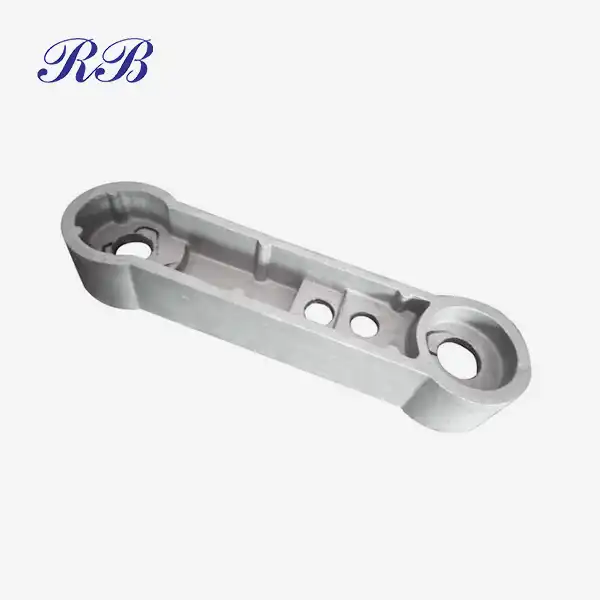
- Material certification: Check that each batch comes with a document from the mill that processed the raw materials. ZL101A, which is the same as A356, is a well-known casting alloy for aluminum-based bearings that has a good balance of silicon content and mechanical strength. Rongbao Enterprise makes cast parts from ZL101A using sand casting, CNC machining, and shot blasting as the usual surface treatment. This process setup works well for the size and surface quality needs of industrial bearing housings and related parts.
- Process capability: Suppliers that can do more than one process, like sand casting, gravity casting, and precision machining, all under one roof avoid the risk of handoffs between suppliers and make lead times more stable. Rongbao can make up to 5,000 items in a single run, and all of their goods are shipped from Xi'an, China, in secure wooden boxes.
- Quality system compliance: ISO9001:2015, ISO14001, and ISO45001 standards show that management systems oversee safety at work, protecting the environment, and producing goods. These three marks are on all Rongbao Enterprise products.
- OEM/ODM customization: Companies that make a lot of different kinds of equipment need suppliers that are willing to do customization based on drawings without charging too much for tools. With unique specs, Rongbao can do both OEM and ODM work.
These criteria, regularly used, create a group of providers that can maintain quality over long-term purchasing relationships. This is what strategic sourcing is all about.
Conclusion
Cast engine bearings are an important part of how well and how long an engine lasts. How well a bearing works over its lifetime depends on the materials used, how precisely they are made, how they are oiled, and how reliable the supplier is. The right supplier partnership lowers quality variation, shortens lead times, and makes it easier for procurement professionals who are in charge of making industrial equipment to source multiple parts. Rongbao Enterprise has been casting for 20 years, has approved process systems, and can truly make everything in one place. This makes it a reliable long-term partner for serious corporate buyers.

FAQ
What materials are cast engine bearings typically made from?
Most of the time, copper-lead alloys, aluminum-tin mixtures, and babbitt (white metal) are used. Each has a different mix of heat tolerance, wear resistance, and conformability. Because they are strong for their weight and don't rust, aluminum-based metals like ZL101A are being used more and more in industrial casting.
How do I know when a cast engine bearing needs replacing?
Listen for banging sounds coming from the engine, drops in oil pressure that you can't explain, metal pieces in the oil filter, or cutting you can see on the shaft journals. Regular checks of the clearance at service intervals find wear before it causes a fatal failure.
Can cast engine bearings be customized for OEM applications?
Yes, reputable companies that make cast engine bearings offer OEM/ODM services that can accommodate special sizes, metal requirements, and surface treatments. This is especially important for companies that make industrial tools with their own engine setups.
What certifications should a bearing supplier hold?
For quality control, at least ISO9001:2015. ISO14001 and ISO45001 show that you care about the environment and your workers' safety. This is something that OEM customers around the world, especially in Europe and North America, are asking for more and more.
How does sand casting compare to die casting for engine bearing components?
Sand casting is best for small runs, complicated shapes, and alloys that need more time to solidify. It gives you more options for custom requirements, while die casting is better for making a lot of parts with tight tolerances.
Partner With Rongbao Enterprise for Reliable Cast Bearing Components
Rongbao Enterprise offers approved, custom-made cast engine bearing parts that are the result of 20 years of manufacturing accuracy. We have full OEM/ODM capabilities, are certified by ISO9001:2015, ISO14001, and ISO45001, and have a track record as a trusted cast engine bearings supplier in global markets. This means we can support your production schedule without any problems. To get a price right away, email our team at steve.zhou@263.net or zhouyi@rongbaocasting.com, or go to rongbaocasting.com.
References
- Booser, E. R. (Ed.). Handbook of Lubrication and Tribology, Volume II: Theory and Design. CRC Press, 1984.
- Mang, T., & Dresel, W. (Eds.). Lubricants and Lubrication. Wiley-VCH, 2007.
- SAE International. SAE J506: Bearing and Bushing Alloys. SAE International, 2012.
- Taylor, C. M. "Engine Tribology." Tribology International, Elsevier, 1993.
- Tung, S. C., & McMillan, M. L. "Automotive Tribology Overview of Current Advances and Challenges for the Future." Tribology International, Vol. 37, 2004.
- ASM International. ASM Handbook, Volume 15: Casting. ASM International, 2008.
Learn about our latest products and discounts through SMS or email