- English
- French
- German
- Portuguese
- Spanish
- Russian
- Japanese
- Korean
- Arabic
- Greek
- German
- Turkish
- Italian
- Danish
- Romanian
- Indonesian
- Czech
- Afrikaans
- Swedish
- Polish
- Basque
- Catalan
- Esperanto
- Hindi
- Lao
- Albanian
- Amharic
- Armenian
- Azerbaijani
- Belarusian
- Bengali
- Bosnian
- Bulgarian
- Cebuano
- Chichewa
- Corsican
- Croatian
- Dutch
- Estonian
- Filipino
- Finnish
- Frisian
- Galician
- Georgian
- Gujarati
- Haitian
- Hausa
- Hawaiian
- Hebrew
- Hmong
- Hungarian
- Icelandic
- Igbo
- Javanese
- Kannada
- Kazakh
- Khmer
- Kurdish
- Kyrgyz
- Latin
- Latvian
- Lithuanian
- Luxembou..
- Macedonian
- Malagasy
- Malay
- Malayalam
- Maltese
- Maori
- Marathi
- Mongolian
- Burmese
- Nepali
- Norwegian
- Pashto
- Persian
- Punjabi
- Serbian
- Sesotho
- Sinhala
- Slovak
- Slovenian
- Somali
- Samoan
- Scots Gaelic
- Shona
- Sindhi
- Sundanese
- Swahili
- Tajik
- Tamil
- Telugu
- Thai
- Ukrainian
- Urdu
- Uzbek
- Vietnamese
- Welsh
- Xhosa
- Yiddish
- Yoruba
- Zulu
How to Import Copper Sand Castings?
When bringing in copper sand castings, you need to pay close attention to the material requirements, the production procedures, and the compliance certificates. This detailed guide shows you all the important steps you need to take to get high-quality copper casting parts from China. It covers everything from checking out suppliers to setting quality standards and following trade rules. Knowing the right way to import things makes sure you get parts that are dependable, match your technical needs, and are still cost-effective and legal.
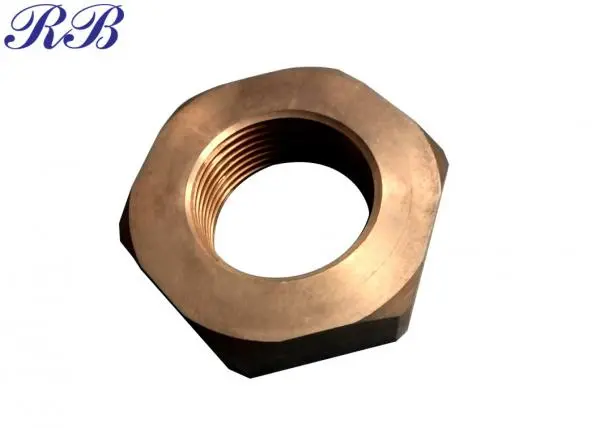
Why Source Copper Casting from China?
China has become the world's main center for metal casting, and it has several benefits that make it an appealing place for procurement managers and engineers from all over the world to buy goods.
Manufacturing Excellence and Scale
Chinese foundries have put a lot of money into automated production methods and modern casting technology. The country's industrial infrastructure can handle both large production runs and small, precise parts. Many facilities have more than one type of casting technique, such as gravity casting, sand casting, and investment casting, all in one place. This makes it easier to work on complicated projects.
Cost-Effectiveness Without Quality Compromise
China's cheap prices are due to its efficient manufacturing methods, competent workers, and supply chains that function together. Because they are close to copper supplies and have established supplier networks, the cost of raw materials stays cheap. This price advantage doesn't imply giving up quality. Many Chinese firms have international certifications and conduct business in tough global markets.
Technological Capabilities
Modern Chinese casting plants use advanced mold design software, casting simulation technologies, and precision machining tools. X-ray testing, dimensional inspection, and metallurgical analysis are all parts of advanced quality control systems that make sure the quality of the products is always the same. The ability to heat treat and choose a surface finish gives you all the production options you need.
Critical Technical Specifications and Industry Standards
To successfully buy copper casting, you need to know the material characteristics and technical requirements. Different applications need different alloy compositions and performance characteristics.
Copper Alloy Grades and Properties
H62 brass is one of the most popular copper alloys used for casting. It is made up of 62% copper and 38% zinc. This composition has great machinability, corrosion resistance, and strength, making it great for usage in kitchens and in general industry. The alloy flows well when poured and shrinks very little as it hardens.
Other notable copper alloys are bronze compositions that have tin added to them to make them more resistant to wear, and specialty alloys that have aluminum or silicon added to them to give them certain mechanical qualities. Knowing how melting points work helps you choose the best casting parameters and reduce the number of defects.
Manufacturing Process Requirements
Gravity casting offers superior dimensional accuracy and surface finish compared to other casting methods. The process involves pouring molten metal into molds under gravitational force, allowing controlled solidification and reduced turbulence. This method works particularly well for complex geometries and thin-wall sections.
Pattern making accuracy directly impacts final component dimensions. Core making techniques enable internal features and complex cooling passages. Proper gating design ensures uniform metal flow and minimizes casting defects like porosity or shrinkage.
Quality Standards and Testing Protocols
International quality standards provide criteria for the qualities of materials and the steps involved in making them. Dimensional tolerances must match the needs of the application. For example, precision parts usually have tolerances of ±0.1mm, whereas ordinary applications have tolerances of ±0.5mm.
Non-destructive testing procedures check the integrity of the inside. Pressure testing makes assurance that parts that handle fluids are leak-proof. Testing mechanical properties checks for strength and ductility under real-world settings.

Navigating Regulations and Compliance Requirements
Regulatory compliance makes ensuring that copper castings brought into the country fulfill safety and legal criteria in the markets where they will be sold. Different fields have different rules on what materials may be used and what certifications are needed.
Essential Certifications
Getting ISO 9001:2015 certification shows that you have put a quality management system in place. This standard includes techniques for controlling design, managing suppliers, and making things better all the time. ISO 14001 environmental certification covers ways to make things more sustainably and cut down on waste.
ISO 45001 occupational health and safety certification makes ensuring that workers are safe while they are working. These certifications give you confidence in how well suppliers can do their jobs and how well they manage risk.
Industry-Specific Requirements
IATF 16949 certification is needed for automotive applications. It builds on ISO 9001 by adding standards that are particular to the automobile industry. AS9100 certification and material traceability paperwork are required for aerospace parts. Food-grade uses must follow either FDA rules or European food contact guidelines.
ISO 13485 certification and biocompatibility testing are needed for parts of medical devices. For pressure vessel parts, energy industry applications may need ASME certification, and for oil and gas equipment, they may need API certification.
Documentation and Traceability
Material test certificates verify alloy composition and mechanical properties. Heat treatment records document processing parameters and achieved properties. Dimensional inspection reports confirm geometric accuracy and tolerance compliance.
Traceability documentation links raw materials to finished components, enabling quality issue investigation and corrective action implementation. This documentation becomes crucial for regulatory audits and customer quality requirements.

Understanding International Trade Terms and Processes
International trade involves complex procedures and terminology that affect cost allocation, risk transfer, and logistics coordination. Understanding these elements prevents misunderstandings and ensures smooth transactions.
Common Trade Terms Explained
FOB (Free On Board) indicates that the supplier brings the products to the port of departure, and the customer is in charge of shipping, insurance, and customs when they arrive in another country. When commodities cross the ship's rail at the port of shipment, the risk changes.
CIF (Cost, Insurance, and Freight) covers the cost of the goods, shipping them internationally, and maritime insurance to the port of destination. Buyers take care of clearing imports and moving goods across the country. The provider is still responsible until the products get to the port of arrival.
EXW (Ex Works) means that the seller has the least amount of responsibility. The buyer is responsible for all shipping, insurance, and customs processes from the manufacturer. This word makes costs as clear as possible, but it needs a lot of collaboration between buyers.
Complete Import Process Workflow
Initial inquiry should include detailed specifications, quantity requirements, delivery timelines, and quality standards. Suppliers provide quotations with technical proposals, material certifications, and commercial terms.
Contract negotiation covers pricing, payment terms, delivery schedules, and quality acceptance criteria. Proforma invoice (PI) formalizes the agreement and initiates production planning. Production monitoring ensures schedule adherence and quality compliance.
Pre-shipment inspection verifies product quality and quantity before shipping. Booking confirmation secures vessel space and establishes shipping schedules. Export documentation includes commercial invoice, packing list, bill of lading, and certificates of origin.
Payment Methods and Risk Management
Telegraphic Transfer (T/T) provides direct bank-to-bank payment with options for advance payment, production payment, and balance payment upon delivery. Letter of Credit (L/C) offers payment security through bank guarantees tied to document compliance.
Documentary Collection provides moderate security through banking channels without payment guarantees. Trade finance options include factoring and export credit insurance for additional risk protection.
Essential Documentation Requirements
Commercial invoices describe goods, quantities, values, and commercial terms. Packing lists detail package contents, dimensions, and weights for customs clearance. Bills of lading serve as receipt, contract of carriage, and document of title.
Certificates of origin verify product manufacturing location for tariff determination. Quality certificates document material properties and test results. Insurance certificates provide coverage documentation for damage claims.
Why Rongbao Enterprise is Your Ideal Import Partner?
Rongbao Enterprise combines advanced manufacturing capabilities with international market experience, providing comprehensive solutions for copper casting requirements across diverse industries.
Comprehensive Manufacturing Capabilities
The company operates full-chain manufacturing processes including high-pressure die casting, low-pressure die casting, and gravity casting. CNC machining capabilities provide precision finishing for tight tolerance applications. Surface treatment options include shot blasting, painting, and specialized coatings.
Mold development services support custom designs and prototype development. The integrated approach from design to finished product eliminates coordination challenges and ensures consistent quality throughout the manufacturing process.
Quality Assurance and Certifications
Triple ISO certification (ISO 9001:2015, ISO 14001, ISO 45001) demonstrates commitment to quality, environmental responsibility, and worker safety. The quality control system encompasses incoming material inspection, in-process monitoring, and final product verification.
Advanced testing equipment includes coordinate measuring machines, material analyzers, and non-destructive testing capabilities. Statistical process control ensures consistent product quality and early detection of process variations.
Global Market Experience
With 70% of products exported to Europe, America, and Japan, Rongbao Enterprise understands international quality expectations and regulatory requirements. The company maintains stable partnerships with global equipment manufacturers and suppliers.
Twenty years of industry experience provides deep understanding of customer requirements and market trends. Multiple production capacity upgrades and facility expansions demonstrate growth capability and financial stability.
Cost Structure Analysis and Transparency
Understanding cost components helps buyers make informed decisions and optimize total procurement costs while maintaining quality standards.
Manufacturing Cost Components
Raw material costs typically represent 40-60% of total manufacturing costs, depending on alloy composition and market conditions. Labor costs remain competitive due to skilled workforce availability and efficient production processes.
Tooling and mold costs vary based on complexity and production volumes. Amortization over production runs affects unit costs significantly. Energy costs for melting and heat treatment operations impact overall manufacturing expenses.
Quality control and testing costs ensure compliance with specifications and standards. Packaging costs for wooden box transportation protect products during international shipping. Administrative costs cover documentation, certifications, and export procedures.
Value-Added Services
Integrated manufacturing eliminates multiple supplier coordination and reduces total costs. Design for manufacturability (DFM) consultation optimizes products for efficient production. Supply chain management reduces material costs through volume purchasing.
Logistics coordination simplifies shipping and reduces delays. Quality assurance programs minimize incoming inspection requirements and reduce total cost of ownership.
Supply Chain Reliability and Communication Excellence
Effective communication and reliable delivery performance form the foundation of successful long-term partnerships in international trade.
Production Capacity and Lead Times
Standardized production capacity of 5000 pieces supports both prototype quantities and volume production runs. Scalable manufacturing systems accommodate varying demand levels and seasonal fluctuations.
Typical lead times range from 2-4 weeks for standard products to 6-8 weeks for complex custom components. Production scheduling systems provide visibility into capacity availability and delivery commitments.
Communication and Customer Service
Technical support teams assist with specification development and application engineering. Regular production updates provide visibility into manufacturing progress and potential schedule changes.
Responsive customer service addresses questions quickly and provides solutions to technical challenges. Cultural understanding and international business experience facilitate smooth communication across different time zones and business practices.
Common Import Pitfalls and Best Practices
Learning from common mistakes helps buyers avoid costly delays, quality issues, and relationship problems with suppliers.
Specification and Communication Issues
Incomplete technical specifications lead to misunderstandings and quality problems. Clear drawings, material requirements, and acceptance criteria prevent confusion. Regular communication during production ensures alignment with expectations.
Cultural and language differences require patience and clear communication. Written confirmation of verbal agreements prevents misunderstandings. Technical drawings and visual aids supplement verbal communications effectively.
Quality and Compliance Challenges
Inadequate supplier qualification leads to quality and delivery problems. Verification of certifications, facility capabilities, and customer references reduces risks. Pre-production samples confirm understanding of requirements.
Insufficient quality control during production results in receiving defective products. Third-party inspection services provide independent verification. Clear quality acceptance criteria enable objective evaluation.
Logistics and Documentation Problems
Incorrect documentation causes customs delays and additional costs. Proper documentation preparation and review prevents clearance problems. Understanding import regulations in destination countries ensures compliance.
Inadequate packaging results in transportation damage. Appropriate packaging for international shipping protects products and reduces claims. Wooden box packaging provides superior protection for heavy metal components.
Conclusion
Successfully importing copper sand castings requires careful attention to technical specifications, supplier qualifications, and trade procedures. China offers compelling advantages in manufacturing capabilities, cost-effectiveness, and technological sophistication. Understanding material standards, regulatory requirements, and quality systems ensures successful procurement outcomes. Proper supplier selection, clear communication, and comprehensive documentation prevent common pitfalls and build lasting partnerships. The combination of technical expertise, manufacturing excellence, and international experience makes Chinese suppliers attractive partners for copper casting requirements.
Partner with Rongbao Enterprise for Reliable Copper Casting Supply
Rongbao Enterprise delivers exceptional copper casting solutions with comprehensive manufacturing capabilities and proven international experience. Our integrated approach combines advanced gravity casting processes, precision CNC machining, and rigorous quality control systems. With triple ISO certification and 20 years of industry expertise, we understand the demanding requirements of automotive, industrial equipment, and energy sector applications.
Ready to source high-quality copper casting components for your projects? Our technical team provides expert consultation on material selection, design optimization, and manufacturing processes. Experience reliable delivery, competitive pricing, and superior customer service that has earned trust from global partners across Europe, America, and Japan. Contact us at steve.zhou@263.net and zhouyi@rongbaocasting.com to discuss your specific requirements and discover why leading manufacturers choose Rongbao Enterprise as their preferred copper casting supplier.
FAQs
Q1: What certifications should I look for when sourcing copper castings from China?
A: Look for ISO 9001:2015 for quality management, ISO 14001 for environmental management, and ISO 45001 for occupational health and safety. Industry-specific certifications like IATF 16949 for automotive or AS9100 for aerospace may also be required depending on your application.
Q2: How can I verify the quality of copper alloys before shipment?
A: Request material test certificates showing alloy composition and mechanical properties. Arrange for pre-shipment inspection by third-party services. Implement incoming inspection procedures including dimensional checks and material verification upon receipt.
Q3: What are typical lead times for copper sand castings from China?
A: Standard products typically require 2-4 weeks, while custom or complex components may need 6-8 weeks. Lead times depend on order quantity, complexity, tooling requirements, and current production schedules. Always confirm delivery commitments during quotation.
Q4: How should copper castings be packaged for international shipping?
A: Wooden box packaging provides optimal protection for heavy metal components during international transportation. Proper cushioning prevents damage from vibration and impact. Moisture protection prevents corrosion during ocean transport.
Q5: What payment terms are typically available for copper casting imports?
A: Common options include T/T (telegraphic transfer) with various payment schedules, Letters of Credit for larger orders, and documentary collection. Payment terms depend on order value, supplier relationship, and risk tolerance.
References
1. American Foundry Society. "Sand Casting Process Guidelines and Quality Standards." Technical Manual Series, 2023.
2. International Organization for Standardization. "ISO 9001:2015 Quality Management Systems - Requirements and Implementation Guide." Geneva: ISO Publications, 2022.
3. Copper Development Association. "Copper Alloy Properties and Applications in Industrial Manufacturing." Technical Reference Guide, 2023.
4. Institute of Materials, Minerals and Mining. "Modern Foundry Practices for Non-Ferrous Metal Casting." London: IOM3 Publishing, 2022.
5. International Chamber of Commerce. "Incoterms 2020: Rules for International Trade and Commercial Terms." Paris: ICC Publications, 2023.
6. American Society for Testing and Materials. "ASTM Standards for Copper and Copper Alloy Castings." West Conshohocken: ASTM International, 2023.
Learn about our latest products and discounts through SMS or email