- English
- French
- German
- Portuguese
- Spanish
- Russian
- Japanese
- Korean
- Arabic
- Greek
- German
- Turkish
- Italian
- Danish
- Romanian
- Indonesian
- Czech
- Afrikaans
- Swedish
- Polish
- Basque
- Catalan
- Esperanto
- Hindi
- Lao
- Albanian
- Amharic
- Armenian
- Azerbaijani
- Belarusian
- Bengali
- Bosnian
- Bulgarian
- Cebuano
- Chichewa
- Corsican
- Croatian
- Dutch
- Estonian
- Filipino
- Finnish
- Frisian
- Galician
- Georgian
- Gujarati
- Haitian
- Hausa
- Hawaiian
- Hebrew
- Hmong
- Hungarian
- Icelandic
- Igbo
- Javanese
- Kannada
- Kazakh
- Khmer
- Kurdish
- Kyrgyz
- Latin
- Latvian
- Lithuanian
- Luxembou..
- Macedonian
- Malagasy
- Malay
- Malayalam
- Maltese
- Maori
- Marathi
- Mongolian
- Burmese
- Nepali
- Norwegian
- Pashto
- Persian
- Punjabi
- Serbian
- Sesotho
- Sinhala
- Slovak
- Slovenian
- Somali
- Samoan
- Scots Gaelic
- Shona
- Sindhi
- Sundanese
- Swahili
- Tajik
- Tamil
- Telugu
- Thai
- Ukrainian
- Urdu
- Uzbek
- Vietnamese
- Welsh
- Xhosa
- Yiddish
- Yoruba
- Zulu
How to Find a Reliable Stainless Steel Drive Shaft Supplier?
Finding a reliable stainless steel drive shaft supplier starts with knowing exactly what to look for. A drive shaft transmits mechanical power between components, and when it's machined from SS304 stainless steel, it must deliver both structural strength and corrosion resistance. For kitchenware manufacturers, food-grade compliance is non-negotiable. The right supplier combines certified materials, precision CNC machining, consistent batch quality, and stable delivery schedules. This guide walks you through the full process — from reading the market to sending your first RFQ.
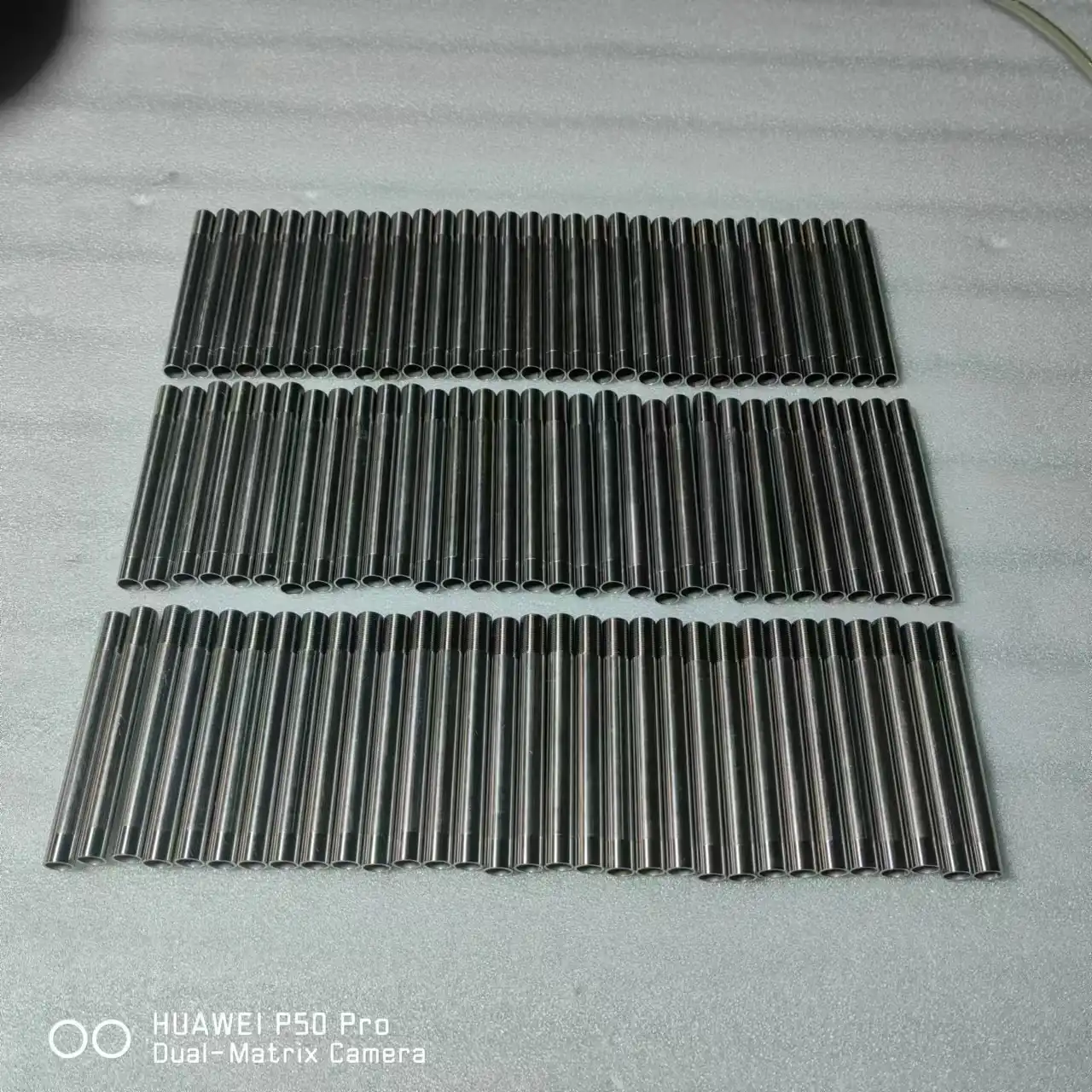
Stainless Steel Drive Shaft Market
What Is a Stainless Steel Drive Shaft?
A drive shaft turns and moves force from one part of a system to another. In the kitchen, people use stand mixers, food grinders, and industrial blenders. While still being safe for food to touch, the shaft has to be strong enough to handle repeated heavy loads. This grade is the norm. 18% chromium and 8% nickel make it up, so it doesn't rust. It also meets FDA and LFGB standards for food contact.
Key Material Grades in the Market
Each stainless steel shaft is different. A lot of kitchen items are made with SS304. Chloride can't damage SS316 because molybdenum is added to it. In other words, it can be used in the ocean or with chemicals. It's easier to make SS303, but it rusts more easily. If someone wants to buy drive shafts for kitchen appliances, they should be clear about whether they want SS304 or SS316. Low-cost providers won't be able to move up or down in grade.
Common Procurement Challenges
Things keep going wrong in this market for three reasons. The first thing that has changed is the goods that are used. They send parts that say they are SS304 but are really SS201, which doesn't meet food safety standards and rusts more quickly. Second, the better or worse the surface gets between runs, it can change how a product looks and how it works. Last but not least, it's tough to make long-term plans since nickel and chrome spot prices change all the time. Clients can write better RFQs and set stricter rules for acceptance once they know about these risks.
Key Criteria to Identify a Reliable Stainless Steel Drive Shaft Supplier
Certifications and Compliance Documentation
Quality control that meets at least ISO 9001:2015 standards means that the service provider is honest. Also, people who sell home goods or kitchenware should have ISO 14001 (for taking care of the environment) and ISO 45001 (for health and safety at work). The ASTM standards for test materials make you feel even safer. You should always ask for mill certificates and test reports from a third party, not just what the supplier says.
Manufacturing Capabilities
They're not the same as other makers because they know how to use CNC tools to make things. To make a stainless steel drive shaft with very tight tolerances (±0.01 mm is common for useful cooking parts), you need tools that don't change and multi-axis CNC machines. You also need to measure the shaft while the machine is running. When you shot blast the surface, it gets a smooth, even finish that makes it less rough and less likely to rust. Suppliers who offer OEM/ODM services and can work with brand owners to meet their needs will give them more for their money.
Logistics Reliability and Lead Time
A good part is important, but a steady shipping rate is even more so. Suppliers should write down wait times instead of guessing them. Putting shafts in wooden boxes before sending them overseas keeps them safe and keeps the surface from getting damaged. This is a normal OEM order for KitchenAid. There are 500 to 5,000 pieces in each batch. Make sure the source can handle small test runs before putting it online. A lot of buyers learn about secret speed limits here.
Comparing Stainless Steel Drive Shafts and Supplier Solutions
SS304 vs. Alternative Materials
Rods made of carbon steel are cheaper at first, but they rust if they are not coated or polished. This could leave weak spots and make the process take longer. Titanium rods are stronger than steel rods, but they are very expensive and have to be cut in a certain way. SS304 is a good choice for kitchenware drive shafts that weigh about 0.5 kg because it is easy to make, meets food safety standards, and doesn't need extra surface protection to last a year of daily mechanical spinning.
Off-the-Shelf vs. Custom Manufacturing
When kitchen appliances are made to order, standard catalog shafts don't always fit perfectly. With CNC machining and OEM/ODM deals, brand owners can be very specific about the shaft's diameter, length, keyway measurements, and surface finish. In two to three weeks, suppliers in places like Xi'an, China, that are known for making things can make custom models. This is because the city already has ways to send goods to North America, Europe, and Japan. This speeds up the process of making new things.
Total Cost of Ownership
One part of how much something costs is its unit price. Some of the hidden costs are having to redo work because the measurements weren't right, sending new batches to replace batches that were rejected, and stopping the production line because of late deliveries. You should look at how often the seller fixes problems, how well they package their goods, and how quickly they answer technical questions when you compare prices. Working with a service that charges a little more per piece but keeps the failure rate below 0.5% for runs of 5,000 pieces will save you money in the long run.
Best Practices for Engaging and Vetting Drive Shaft Suppliers
Building an Effective RFQ
A strong Request for Quote includes the material grade (e.g., SS304), drawing with GD&T annotations, surface finish specification (Ra ≤ 3.2 μm is standard for visible kitchenware components), required certifications, target quantity, and expected lead time. Vague RFQs attract vague responses. Suppliers who reply with detailed technical questions — rather than just a price — signal genuine manufacturing competence.
Before finalizing any supplier, ask three direct questions: What is your monthly production capacity for this part type? Can you provide material PMI (Positive Material Identification) test results? What is your warranty policy for dimensional non-conformance? These questions surface capability gaps before they become production problems.
Sample Evaluation and Approval
Request machined samples before committing to a production order. Evaluate surface finish visually and with a profilometer if precision matters. Check stainless steel drive shaft runout with a dial indicator. Confirm material grade with XRF testing if food-safety certification is at stake. A supplier confident in their quality will not hesitate to provide samples with full dimensional inspection reports.
Building a Long-Term Supplier Relationship
The best procurement outcomes come from suppliers treated as partners, not commodities. Share your production forecast quarterly so the supplier can plan raw material procurement and machine scheduling. Visit the facility when possible — or request a live video audit. Suppliers who invest in ISO management systems and maintain transparent quality records are more likely to flag issues proactively rather than ship non-conforming parts and hope the buyer doesn't notice.

Maintenance, Longevity, and Post-Procurement Support
Expected Warranty Terms
A reputable supplier will fix mistakes in size and material for at least one year. People who claim a guarantee should get a new package, not just a credit note. The reason for this is that the buyer wants to keep the line of work going. Before you place your first order, make sure that the guarantee covers both the work and the supplies.
Technical Support After Delivery
As part of the support offered after delivery, customers are helped to understand inspection reports, given information on how much force is needed to fit, and asked to do failure analysis in the field. Better and faster service comes from providers with separate technology teams than from those whose sales staff are also developers. If a kitchenware company has to recall a product, they need to quickly figure out what went wrong. This is important for them.
Supplier Audits and Continuous Improvement
Has your provider been checked once a year to see if the quality or method has changed and to see how much space is still available? Check how often packages are delivered and how often they don't arrive on time. Also, see how long it takes to respond to reports of nonconformance. It's good to grow with sellers who are willing to let you check up on them and give you tips on how to do better. You should be wary of people who don't want to be open, even if their price seems low on paper.
Conclusion
To find a stainless steel drive shaft for kitchen appliances, you need to do more than just compare prices. They will tell you how safe their products are for food, how good the surface is, and how well their assembly line works. You should give a service more weight if they have clear quality records, ISO certificates that have been checked, and the ability to do CNC machining. Don't lie about how much money you can make. Instead, look at how much it costs altogether, not just to buy one item. You need a supply partner you can trust to help you plan for the growth of your product line and keep your good name.

FAQ
1. What material grade is standard for kitchenware drive shafts?
SS304 (18/8 stainless steel) is the standard grade. It passes FDA and LFGB food-contact requirements, machines to tight tolerances, and resists the moisture and mild acids present in kitchen environments. SS316 is an upgrade for high-chloride applications but is rarely necessary for standard kitchen appliances.
2. What surface finish should I specify for a kitchenware shaft?
Ra ≤ 3.2 μm is the typical specification for functional kitchenware components. Shot blasting achieves this range while also removing scale and improving corrosion resistance. For visible external components, a finer finish may be required.
3. What certifications should a food-equipment supplier hold?
ISO 9001:2015 for quality management, ISO 14001 for environmental compliance, and ISO 45001 for workplace safety are the baseline. Material test certificates and food-contact compliance reports (FDA/LFGB) are additional requirements for kitchenware applications.
4. Can suppliers handle small custom batches?
Yes — suppliers offering OEM/ODM services with CNC machining can often accommodate trial runs of 500 to 1,000 pieces. Confirm this before submitting your RFQ, as some high-volume facilities set minimum order quantities that exclude smaller product lines.
5. How do I verify that a supplier's SS304 is genuine?
Request XRF (X-ray fluorescence) spectrometry test results for each batch. This confirms chromium and nickel content and distinguishes genuine SS304 from lower-grade alternatives like SS201.
Partner With Rongbao Enterprise for Your Next Stainless Steel Drive Shaft Order
Precision casting and CNC machining have been done by Rongbao Enterprise for 20 years. They make drive shafts out of stainless steel drive shaftl. They have buyers from Japan, Europe, and North America. Rongbao has rules like ISO 9001:2015, ISO 14001, and ISO 45001 in place. Their SS304 shafts can be used with food and have a shot-blasted finish. One order can include up to 5,000 items. The shafts are shipped on time after being put in safe wooden boxes. To get a price right away, email the team at steve.zhou@263.net or zhouyi@rongbaocasting.com.
References
1. ASM International. Stainless Steels for Design Engineers. ASM International, 2008.
2. American Society for Testing and Materials (ASTM). ASTM A276: Standard Specification for Stainless Steel Bars and Shapes. ASTM International, 2017.
3. International Organization for Standardization. ISO 9001:2015 Quality Management Systems — Requirements. ISO, 2015.
4. European Commission. Regulation (EC) No 1935/2004 on Materials and Articles Intended to Come into Contact with Food. Official Journal of the European Union, 2004.
5. Kutz, Myer (ed.). Mechanical Engineers' Handbook: Manufacturing and Management, 4th ed. Wiley, 2015.
6. Davis, J.R. (ed.). Handbook of Materials for Medical Devices. ASM International, 2003.
Learn about our latest products and discounts through SMS or email