- English
- French
- German
- Portuguese
- Spanish
- Russian
- Japanese
- Korean
- Arabic
- Greek
- German
- Turkish
- Italian
- Danish
- Romanian
- Indonesian
- Czech
- Afrikaans
- Swedish
- Polish
- Basque
- Catalan
- Esperanto
- Hindi
- Lao
- Albanian
- Amharic
- Armenian
- Azerbaijani
- Belarusian
- Bengali
- Bosnian
- Bulgarian
- Cebuano
- Chichewa
- Corsican
- Croatian
- Dutch
- Estonian
- Filipino
- Finnish
- Frisian
- Galician
- Georgian
- Gujarati
- Haitian
- Hausa
- Hawaiian
- Hebrew
- Hmong
- Hungarian
- Icelandic
- Igbo
- Javanese
- Kannada
- Kazakh
- Khmer
- Kurdish
- Kyrgyz
- Latin
- Latvian
- Lithuanian
- Luxembou..
- Macedonian
- Malagasy
- Malay
- Malayalam
- Maltese
- Maori
- Marathi
- Mongolian
- Burmese
- Nepali
- Norwegian
- Pashto
- Persian
- Punjabi
- Serbian
- Sesotho
- Sinhala
- Slovak
- Slovenian
- Somali
- Samoan
- Scots Gaelic
- Shona
- Sindhi
- Sundanese
- Swahili
- Tajik
- Tamil
- Telugu
- Thai
- Ukrainian
- Urdu
- Uzbek
- Vietnamese
- Welsh
- Xhosa
- Yiddish
- Yoruba
- Zulu
How is sand casting done?
Sand casting represents a fundamental manufacturing process that transforms molten metals into precise components through expendable sand molds. This versatile technique involves creating a cavity within specially prepared sand using a pattern, then pouring molten aluminum, iron, or bronze into the void. Upon cooling, the sand mold breaks away to reveal the finished casting, making this method particularly valuable for producing large, complex geometries that would challenge other manufacturing approaches.
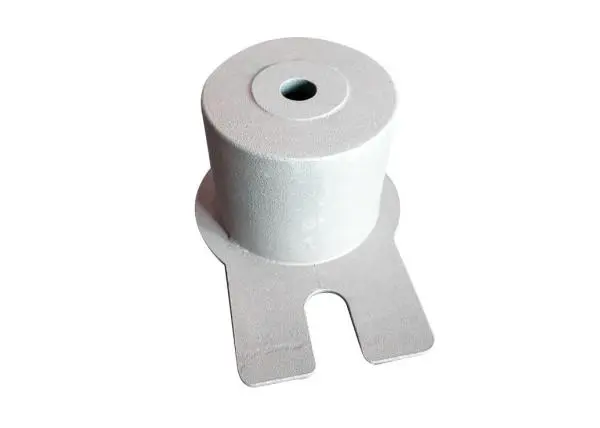
Understanding the Sand Casting Process
Sand casting is an important part of manufacturing that uses disposable sand molds to shape molten metals into exact parts. Using a pattern to make a hole in carefully prepared sand and then putting molten aluminum, iron, or bronze into the hole is a flexible method. The sand mold breaks off to show the finished casting once it has cooled. This makes this method especially useful for making big, complicated shapes that would be hard to make any other way.
The basic ideas behind sand casting have changed a lot over the years, but they are still very useful in modern industry. With this method of making things, temporary models are made from carefully mixed sand, which is used to make metal parts. These parts can be anything from engine blocks for cars to complex machinery parts.
Fundamental Principles of Sand Mold Creation
Understanding how different types of sand affect the quality of the end part is the first step in making a good sand mold. Because they contain clay agents and water, green sand molds are easy to shape and don't cost much for most uses. Dry sand molds are perfect for making accurate parts because they give the best surface finish and accuracy in size. Resin-bonded sand systems are very strong and good at reproducing details. They are especially useful for complicated shapes that need to be made with very tight tolerances.
The choice of sand has a direct effect on the success of casting in many ways. Silica sand is still the most popular choice because it is easy to find and doesn't change much when it gets hot or cold. However, specialized sands like chromite or olivine are used in situations where better heat transfer or less metal penetration is needed. The surface finish and mold porosity are both affected by the grain size distribution. Finer grains make surfaces smoother, but during metal pours, they need to be carefully watched to make sure that gas doesn't escape.
Material Selection Impact on Manufacturing Outcomes
People who work in procurement need to know how the materials they choose affect both costs and quality. The amount of clay in green sand systems affects how strong and how many times a mold can be used. The best range for moldability and physical stability is usually between 8 and 12 percent clay. The choice of binder has a big effect on both the initial cost of the tools and the long-term cost of production, especially when mold recovery and environmental compliance needs are taken into account.
When evaluating a provider, it is important to think carefully about the link between the properties of the sand and casting flaws. If the sand isn't prepared properly, metal can get through and cause rough areas and differences in size. Mold erosion can happen when the binder isn't strong enough, and gas-related flaws that weaken the part's structure can happen when the binder is too wet.
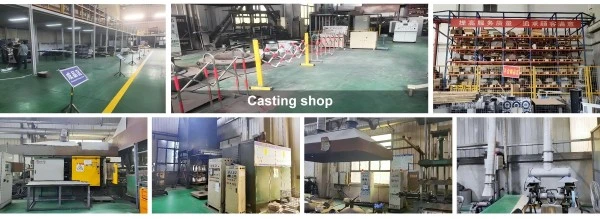
Step-by-Step Breakdown of How Sand Casting Is Done
Manufacturing complex components through sand casting is a method of making complex parts by carefully following a series of steps that all work together to improve the quality of the end part and the speed of production. When procurement workers know these steps, they can evaluate the skills of suppliers and predict quality problems before they affect production plans.
Pattern Development and Mold Preparation
When making a pattern, you have to pay close attention to shrinkage limits and draft angles because they set the standard for the rest of the sewing process. For prototypes and low-volume production, wood patterns are cheaper, while metal or steel patterns offer more stable dimensions for higher-volume uses. When designing patterns, they need to include closing systems that keep the metal flowing smoothly and stop turbulence and oxide formation as much as possible.
To get the best qualities, flask selection and sand conditions come first in the mold preparation process. To keep the splitting lines from being off, the cope and drag halves need to be carefully lined up. The ram density affects both the mold's strength and its ability to let gas through. To make sure that mold qualities stay the same from one production run to the next, the right way to prepare sand is to control its moisture content, clay activity, and compactability.
Core Integration and Assembly Procedures
For complicated castings, sand cores are often needed to make holes and cuts inside the metal that patterns can't make directly. To make cores, special sand mixtures with chemical agents are used. These mixes cure through heat or catalytic action. Core box design and manufacturing quality have a direct effect on the geometry and accuracy of the end part's dimensions.
Pay close attention to the core prints and support systems when putting the core together and setting it in the mold hole. Core shift can happen during metal casting if the core isn't supported properly, which can cause changes in wall thickness and even scrap conditions. Core venting makes sure that gases can escape properly and keeps the structure strong during the casting process.
Metal Melting and Pouring Operations
To get the desired mechanical qualities, careful temperature control and composition management are needed for metal melting to go well. Pouring temperatures for aluminum metals are usually between 1300°F and 1400°F, while temperatures for iron molds can go over 2500°F. Monitoring the temperature and the steps used for melt treatment have a big effect on the quality and uniformity of the finished part.
The pouring method affects the quality of the casting by changing the patterns of mold filling and the formation of inclusions. Controlled, steady pouring reduces noise and oxidation while making sure that the mold hole is fully filled. To keep shrinking flaws and hot spots to a minimum, the design of the gate system must strike a balance between the speed at which it fills and the direction at which it solidifies.

Cooling and Finishing Operations
Controlled cooling stops thermal stress and physical distortion while improving the growth of the metal's structure. Rates of cooling change the size of the grains, the mechanical qualities, and the amount of stress that is still present in final castings. To manage cooling curves correctly, you need to know how different alloys solidify and how part shape affects cooling.
The time of shakeout affects both the quality of the casting and how well the sand is reused. If you shake out the casting too soon, it can warp, and if you wait too long to remove it, the sand may be hard to separate, and the cost of finishing will go up. To get the best total manufacturing prices, post-casting processes like trimming, grinding, and machining need to be thought about during the early stages of planning.
Advantages and Limitations of Sand Casting for B2B Procurement
Procurement professionals require comprehensive understanding of sand casting strengths and weaknesses to make smart sourcing choices that combine cost, quality, and delivery needs. While this way of making things has its own benefits, it also has some problems that make it hard to choose a source and plan a project.
Economic and Technical Benefits
When you think about how much tools cost and how flexible your design needs to be, the economic benefits of sand casting become clear. Pattern costs are very low compared to the costs of die casting or investment casting tools, which means that this method can be used to make prototypes and small to medium-sized batches. Because patterns can be changed for a reasonable price, design improvement can happen throughout the entire product development cycle.
Material compatibility is another big benefit. Aluminum, brass, bronze, gray iron, ductile iron, and steel are just a few of the alloys that can be made in sand molds. Because of this, buying teams can choose the best materials based on performance needs instead of process limits. Sand casting is different from other methods because it can make large parts that would not be possible with other methods. These parts can weigh several tons.
Design freedom goes beyond size limits and includes the ability to use complicated shapes and internal features that are made possible by core integration. Undercuts, internal cooling channels, and detailed surface features can be built right into the casting design. This cuts down on the need for assembly and improves the performance of the whole component. This ability often leads to chances to combine parts, which makes managing the supply chain easier and lowers the overall cost of the system.
Process Limitations and Mitigation Strategies
For sand castings to have precise size specs and smooth surfaces, they usually need extra machining steps to get the surface finish they need. The roughness of an as-cast surface is usually between 250 and 1000 microinches, which means that important areas need extra work. Dimensional limits for small parts are usually within ±0.030 inches, and they get bigger as the part size gets bigger.
Lead time concerns come from the fact that sand casting requires a lot of work compared to highly automatic options. Preparing the mold, making the core, and finishing the product all take skilled work, which could make delivery times longer during times of high demand. Because of its slow production rate, sand casting isn't as good for high-volume uses where die casting or fixed mold methods are more cost-effective.
Quality consistency problems happen because a lot of sand casting has to be done by hand, especially in smaller foundries that don't have a lot of technology. Changes in the properties of the sand, the way it is poured, and the temperature at which it cools can affect the accuracy of measurements and the material's mechanical qualities. For supplier approval programs to work, they need to take these factors into account through process checks and putting in place statistical process control.

Choosing the Right Sand Casting Supplier for Your Business
Supplier selection decisions significantly impact both immediate project success and long-term supply chain performance. Procurement professionals must evaluate multiple criteria beyond initial pricing to ensure sustainable partnerships that support business growth and quality objectives.
Manufacturing Capability Assessment
When you evaluate someone's technical skills, you should look at how well they can use process controls and how well their quality management systems work. Modern sand casting factories use digital pattern storage, automatic sand handling systems, and statistical process control to make sure the quality of their work is always the same. Foundries with a variety of melting furnaces and alloys can make a wide range of complicated products that need different material specs.
When evaluating production capacity, it's important to look at both how much is being used now and how much more can be added to meet future growth needs. When suppliers are close to their full capacity, it can be hard for them to meet pressing needs or handle higher volumes without affecting their delivery performance. Location affects both the cost of transportation and how well people can talk to each other. This is especially true for complicated parts that need a lot of expert conversation during the development stages.
Quality Systems and Certification Standards
International approval guidelines give objective measures of how well quality management is done by suppliers. An ISO 9001 certification shows that you are committed to systematic quality management, while an IATF 16949 certification for car uses shows that you have specialized knowledge. Environmental management systems (ISO 14001) and workplace safety standards (ISO 45001) show that a business is committed to long-term sustainability and operational success.
As part of quality control, methods should include the use of statistical process control, the ability to check dimensions, and non-destructive testing tools that are right for the job. Suppliers who have coordinate measure machines, X-ray inspection systems, and steel analysis tools can check the quality of a product completely, which cuts down on the need for new inspections and the costs that come with them.
Communication and Collaboration Effectiveness
Respondent contact during all stages of a project sets exceptional sellers apart from average ones. Having access to technical help during the design development stages opens up chances for improvement that are good for both parties. Regular reports on the project's progress and the early detection of problems keep scheduling problems and quality problems from happening.
A collaborative method to continuous growth creates value for everyone by lowering costs and raising quality. Suppliers who are ready to spend money on custom tools, training, and process changes for their customers show that they want the partnership to work in the long run. Documentation quality and tracking systems help businesses meet legal requirements and make it easier to solve problems quickly when they happen.
Conclusion
Additionally, sand casting is still an important way for many businesses to make complex metal parts in a cost-effective and flexible way. This guide lays out a systematic way to do things that helps procurement workers make smart choices about process selection, supplier review, and quality management. Understanding the complex connection between the choice of material, process factors, and the quality of the finished part allows buyers to clearly state their needs while maximizing the trade-offs between cost and performance. Instead of just looking at prices at first, it's important to choose sources with the right technical skills, quality systems, and willingness to work together for sand casting to go smoothly.
Partner with Rongbao Enterprise for Superior Sand Casting Solutions
Rongbao Enterprise combines two decades of sand casting expertise with comprehensive manufacturing capabilities spanning high-pressure die casting, low-pressure die casting, gravity casting, and precision machining services. Our ISO 9001, ISO 14001, and ISO 45001 certifications ensure consistent quality management while serving automotive, construction machinery, industrial equipment, and energy sector applications. As a trusted sand casting manufacturer with 70% export volume to European, American, and Japanese markets, we provide complete solutions from initial design through finished component delivery. Contact our technical team at steve.zhou@263.net or zhouyi@rongbaocasting.com to discuss your specific requirements and discover how our integrated approach can optimize your supply chain efficiency while maintaining the highest quality standards.
FAQ
What metals are commonly used in sand casting applications?
Aluminum alloys, gray iron, ductile iron, brass, bronze, and steel alloys are just some of the metals that can be used in sand casting. For use in cars and spacecraft, aluminum alloys are great because they are easy to make and don't rust. Heavy machinery parts made from iron casts are stronger and last longer than other materials. The choice of material is based on specific performance needs, such as strength, resistance to rust, and temperature ranges for use.
How does sand casting cost compare to alternative manufacturing methods?
Sand casting typically offers lower initial tooling costs compared to die casting or investment casting, making it economically advantageous for prototype development and low-to-medium volume production. However, higher worker costs and longer cycle times may result in higher per-piece costs for large volume applications. When comparing options, the total cost study should take into account quality, long-term supply chain flexibility, and secondary activities.
What quality inspection procedures are recommended for sand castings?
A full quality check should include using coordinate measuring tools to check the dimensions, looking for flaws on the surface, and mechanical tests to check the strength. For important tasks, you might need non-destructive testing methods like X-ray checking, magnetic particle testing, or penetrant testing. Statistical sample plans that are based on production numbers and how important an application is make sure that quality checks are done properly while keeping checking costs low.
References
- Campbell, John. "Complete Casting Handbook: Metal Casting Processes, Metallurgy, Techniques and Design." 2nd Edition. Butterworth-Heinemann, 2015.
- Brown, John R. "Foseco Foundryman's Handbook: Facts, Figures and Formulae." 11th Edition. Butterworth-Heinemann, 2000.
- American Foundry Society. "Sand Casting Process Guidelines and Quality Control Procedures." AFS Technical Publication, 2018.
- Beeley, Peter R. "Foundry Technology." 2nd Edition. Butterworth-Heinemann, 2001.
- Heine, Richard W., Carl R. Loper Jr., and Philip C. Rosenthal. "Principles of Metal Casting." 2nd Edition. McGraw-Hill Education, 1967.
- International Organization for Standardization. "ISO 8062: Geometrical Product Specifications for Castings - System of Dimensional Tolerances and Machining Allowances." ISO Standards, 2007.

Learn about our latest products and discounts through SMS or email