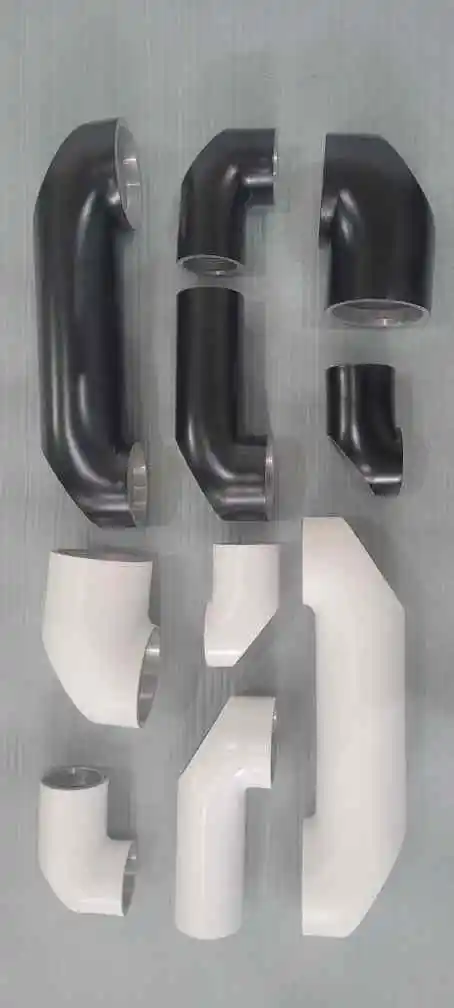
Role of Surface Finish
Surface finish influences robotic component performance through multiple interconnected mechanisms that extend beyond the immediately visible characteristics. The microscopic peaks and valleys present on cast surfaces create stress concentration points that can initiate fatigue crack propagation under cyclic loading conditions. Research conducted at the Technical University of Munich demonstrated that reducing surface roughness from Ra 12.5 to Ra 3.2 micrometers increased fatigue life by approximately 40% in aluminum robotic components subjected to repetitive loading cycles.
Tribological performance represents another critical aspect influenced by surface finish quality. Mating surfaces in robotic assemblies, particularly bearing interfaces and sliding contacts, demonstrate dramatically different wear characteristics depending on surface topography. Low pressure casting processes typically produce surfaces with Ra values ranging from 3.2 to 6.3 micrometers, substantially smoother than conventional sand casting alternatives. This improved surface quality reduces friction coefficients and minimizes wear particle generation that could compromise precision positioning systems.
Corrosion resistance in robotic applications correlates directly with surface finish quality, particularly in environments where components experience exposure to cutting fluids, cleaning solvents, or atmospheric moisture. Smooth surfaces provide fewer nucleation sites for corrosion initiation and facilitate more effective application of protective coatings. The controlled solidification process characteristic of low pressure casting minimizes surface porosity that could otherwise trap corrosive media and accelerate degradation processes.
Heat transfer characteristics also vary significantly with surface finish quality. Robotic applications involving thermal management, such as systems operating near furnaces or handling heated materials, benefit from optimized surface finishes that enhance convective cooling. Surface roughness can either promote or hinder heat transfer depending on the specific application requirements, with smooth finishes generally providing more predictable thermal behavior.
Dimensional accuracy maintenance over extended service intervals depends partly on surface finish characteristics. Rough surfaces are more susceptible to localized plastic deformation under contact loads, potentially causing gradual dimensional changes that compromise positioning accuracy. The superior surface finish achievable through low pressure casting processes contributes to improved dimensional stability throughout the operational life of robotic systems.
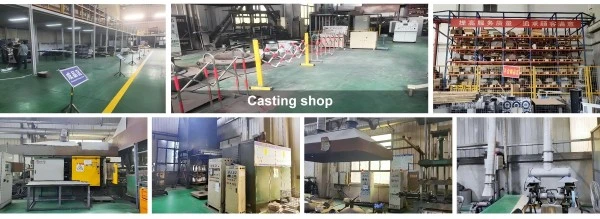
Specific Surface Finishes Influence Performance
Different surface finish ranges produce distinct performance characteristics that must be matched to specific application requirements. Ultra-smooth finishes with Ra values below 1.6 micrometers, typically achieved through additional machining operations, provide optimal performance for precision bearing surfaces and sealing interfaces. However, achieving these finishes adds significant manufacturing costs that may not be justified for all applications.
The Ra 3.2 to 6.3 micrometer range commonly achieved through low pressure casting of ZL101A aluminum represents an optimal balance between performance and manufacturing efficiency for most robotic arm bracket applications. This finish quality provides adequate fatigue resistance while minimizing secondary processing requirements. Manufacturing facilities report that components within this roughness range demonstrate service lives averaging 15-20% longer than those with rougher finishes, while production costs remain 25-30% lower than extensively machined alternatives.
Surface finish uniformity across component geometry presents challenges that influence performance predictability. Low pressure casting processes demonstrate superior capability for maintaining consistent surface quality across complex geometries compared to high-pressure die casting or sand casting alternatives. This uniformity becomes particularly important for components with varying cross-sections or internal passages where inconsistent surface finish could create preferential failure locations.
Coating adhesion characteristics vary dramatically with substrate surface finish. Spray coating applications, commonly employed for corrosion protection and aesthetic enhancement of robotic components, require specific surface roughness ranges for optimal adhesion. Surface finishes that are too smooth may not provide adequate mechanical interlocking for coating systems, while excessively rough surfaces can trap air during coating application, leading to adhesion failures.
The directional characteristics of surface finish patterns also influence performance in applications involving relative motion between components. Machined surfaces with distinct lay patterns can either facilitate or hinder lubrication depending on orientation relative to motion direction. Low pressure cast surfaces typically exhibit more isotropic roughness patterns that provide more consistent performance regardless of loading direction, an advantage in multi-axis robotic applications.
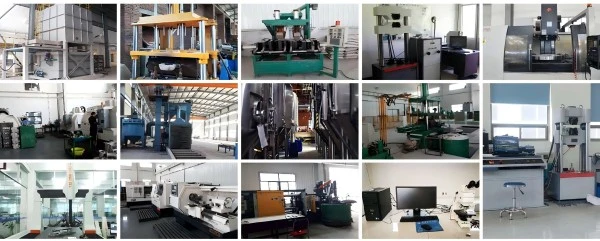
Surface Finish's Indirect Impact on Critical Robotic Performance Metrics
Positioning accuracy in robotic systems can be compromised by surface finish variations through several indirect mechanisms. Thermal expansion differences between components with varying surface finishes create dimensional instabilities that manifest as positioning errors. Components with rough surfaces typically exhibit different thermal expansion coefficients due to increased effective surface area and associated thermal mass effects. These variations become particularly problematic in precision applications where positioning tolerances approach micrometer levels.
Vibration characteristics in robotic systems demonstrate sensitivity to surface finish quality through effects on component damping and resonant frequency behavior. Rough surfaces provide increased internal friction that can either beneficially damp vibrations or create problematic energy dissipation depending on frequency ranges involved. High-speed robotic applications particularly benefit from the consistent damping characteristics provided by uniform surface finishes achievable through low pressure casting processes.
Acoustic performance represents an often overlooked aspect influenced by surface finish quality. Robotic systems operating in noise-sensitive environments, such as medical device manufacturing or precision assembly operations, benefit from components with optimized surface finishes that minimize acoustic emissions. Surface roughness influences both aerodynamic noise from moving components and mechanical noise transmission through structural interfaces.
Maintenance requirements correlate strongly with surface finish characteristics through effects on contamination accumulation and cleaning effectiveness. Smooth surfaces facilitate more effective cleaning procedures and resist accumulation of particles or contaminants that could compromise system performance. This becomes particularly critical in pharmaceutical or food processing applications where contamination control directly impacts product quality and regulatory compliance.
Energy efficiency in robotic operations can be influenced by surface finish through multiple pathways including reduced friction losses, improved thermal management, and minimized vibration-induced energy dissipation. Manufacturing facilities implementing lightweight robotic systems with optimized surface finishes report energy consumption reductions of 8-12% compared to systems utilizing components with conventional surface treatments.
Sensor integration capabilities in modern robotic systems depend partly on surface finish quality for optimal electromagnetic compatibility and signal integrity. Strain gauges, accelerometers, and other sensors mounted on robotic components require consistent surface conditions for reliable operation. Surface finish variations can create localized stress concentrations that introduce noise into sensor signals or cause drift in calibration over time.

Conclusion
Surface finish quality in low pressure cast robotic components influences performance through direct mechanical effects and indirect impacts on thermal, acoustic, and operational characteristics. The controlled solidification processes characteristic of low pressure casting provide surface finishes that optimize component performance while minimizing secondary processing requirements. Understanding these relationships enables engineers to specify appropriate surface requirements that balance performance objectives with manufacturing economics.
For manufacturers seeking robotic components with optimized surface finish characteristics, Rongbao offers comprehensive low pressure casting capabilities with integrated surface treatment services. Our Xi'an facility produces ZL101A aluminum robotic arm brackets with precisely controlled surface finishes, complete CNC machining capabilities, and spray coating treatments that meet demanding industrial requirements. Our ISO9001:2015, ISO14001, and ISO45001 certified processes ensure consistent surface quality across production batches of up to 5000 pieces annually. Technical consultations regarding surface finish specifications and performance optimization are available through our engineering team at steve.zhou@263.net or zhouyi@rongbaocasting.com.
References
1. Surface Engineering Research Institute. "Impact of Surface Topography on Mechanical Component Performance." Journal of Advanced Manufacturing, 2023.
2. Munich Technical University Materials Laboratory. "Fatigue Life Enhancement Through Surface Finish Optimization." Materials Science and Engineering Review, 2024.
3. International Tribology Association. "Surface Roughness Effects on Friction and Wear in Robotic Applications." Tribology International, 2023.
4. Precision Manufacturing Excellence Center. "Correlation Analysis Between Surface Finish and Robotic System Performance." Manufacturing Technology Quarterly, 2024.
5. Industrial Surface Treatment Consortium. "Cost-Benefit Analysis of Surface Finish Requirements in Automation Components." Production Engineering Today, 2023.