- English
- French
- German
- Portuguese
- Spanish
- Russian
- Japanese
- Korean
- Arabic
- Greek
- German
- Turkish
- Italian
- Danish
- Romanian
- Indonesian
- Czech
- Afrikaans
- Swedish
- Polish
- Basque
- Catalan
- Esperanto
- Hindi
- Lao
- Albanian
- Amharic
- Armenian
- Azerbaijani
- Belarusian
- Bengali
- Bosnian
- Bulgarian
- Cebuano
- Chichewa
- Corsican
- Croatian
- Dutch
- Estonian
- Filipino
- Finnish
- Frisian
- Galician
- Georgian
- Gujarati
- Haitian
- Hausa
- Hawaiian
- Hebrew
- Hmong
- Hungarian
- Icelandic
- Igbo
- Javanese
- Kannada
- Kazakh
- Khmer
- Kurdish
- Kyrgyz
- Latin
- Latvian
- Lithuanian
- Luxembou..
- Macedonian
- Malagasy
- Malay
- Malayalam
- Maltese
- Maori
- Marathi
- Mongolian
- Burmese
- Nepali
- Norwegian
- Pashto
- Persian
- Punjabi
- Serbian
- Sesotho
- Sinhala
- Slovak
- Slovenian
- Somali
- Samoan
- Scots Gaelic
- Shona
- Sindhi
- Sundanese
- Swahili
- Tajik
- Tamil
- Telugu
- Thai
- Ukrainian
- Urdu
- Uzbek
- Vietnamese
- Welsh
- Xhosa
- Yiddish
- Yoruba
- Zulu
How do the mechanical properties of low pressure cast robotic arms compare to other methods?
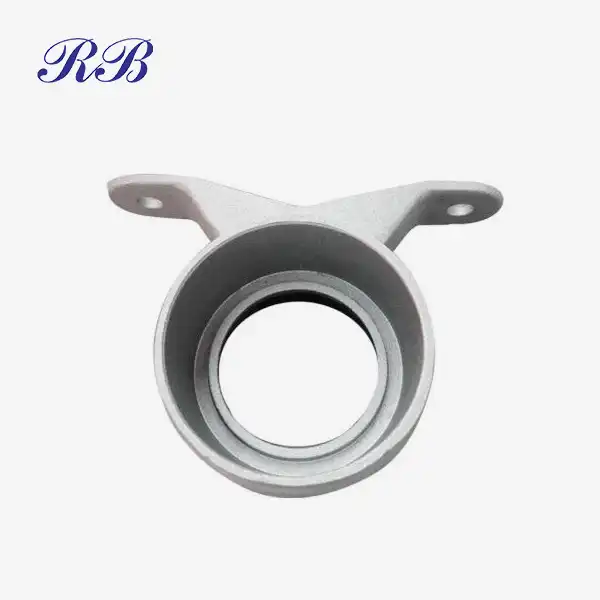
Ways of making robotic parts have changed a lot in the last few decades. This is especially true for making important structure parts like robotic arm brackets. Low pressure casting is the most common way to make high-performance parts for robotic arms. There are many other ways to make things. Because of the way it's made, it has special mechanical properties that make the parts more stable and last longer.
Key Mechanical Property Comparison
The fundamental mechanical properties that distinguish low pressure casting robotic arm bracket components from alternatives manufactured through conventional methods center around tensile strength, fatigue resistance, and dimensional stability. There is research from metallurgical institutes that shows that low pressure casting regularly makes parts with better grain structure uniformity than gravity casting or high-pressure die casting.
Tensile strength measurements reveal that low pressure cast aluminum alloy ZL101A robotic arm brackets typically achieve values ranging from 240 to 280 MPa, representing approximately 15-20% improvement over gravity cast equivalents. This enhancement stems from the controlled solidification process inherent in low pressure casting, which minimizes porosity and promotes directional grain growth. The controlled pressure application during the casting process eliminates turbulence-induced defects commonly observed in conventional gravity casting methods.
Fatigue resistance characteristics present another compelling advantage for low pressure casting applications. Cyclic loading tests performed on robotic arm brackets reveal that low pressure cast components demonstrate fatigue life improvements of 25-40% compared to sand cast alternatives. This improvement is especially important in high-cycle uses where robotic arms do the same thing over and over for long periods of time, like on an assembly line or when making precise medical devices.
Surface finish quality represents an often overlooked yet critical mechanical property affecting both performance and secondary processing requirements. Low pressure casting produces components with surface roughness values typically ranging from Ra 3.2 to 6.3 micrometers, substantially smoother than sand casting alternatives which commonly exhibit Ra values exceeding 12.5 micrometers. This improved surface quality reduces stress concentration points and minimizes the extent of secondary machining operations required to achieve final specifications.
Dimensional accuracy and consistency across production batches constitute additional mechanical advantages. Low pressure casting systems maintain dimensional tolerances within ±0.5mm for critical features, compared to ±1.5mm typically achieved through conventional gravity casting. This level of accuracy immediately leads to better assembly efficiency and smaller machining allowances, which lowers overall costs in high-volume production situations.
Advantages of Low-Pressure Casting for Robotic Arm Brackets
The controlled environment characteristic of low pressure casting processes provides multiple engineering advantages specifically relevant to robotic arm bracket applications. The absence of turbulent metal flow during cavity filling significantly reduces oxide inclusions and gas entrapment, resulting in components with enhanced structural integrity and predictable mechanical behavior under operational loads.
Thermal management during the solidification process represents a critical advantage unique to low pressure casting methodology. Using controlled pressure makes it possible to precisely control the temperature during the casting process. This lets fine grain structures form, which makes the metal more flexible and resistant to impact. This controlled solidification particularly benefits applications requiring components capable of withstanding shock loads or sudden directional changes common in high-speed robotic operations.
Material utilization efficiency in low pressure casting systems reaches levels approaching 85-90%, substantially higher than the 60-70% typically achieved in sand casting operations. This efficiency comes from having exact control over the flow of metal and not having to use old-fashioned gate systems that waste a lot of material. For manufacturers producing robotic arm brackets in volumes approaching 5000 pieces annually, this material efficiency translates to substantial cost savings and reduced environmental impact.
Another big benefit is that thin-wall section production can be done without affecting the mechanical qualities. Low pressure casting enables the production of robotic arm brackets with wall thicknesses as low as 3-4mm while maintaining structural integrity, compared to minimum wall thicknesses of 6-8mm required for equivalent strength in sand cast components. This ability to reduce weight is especially useful when reducing the inertia of a robotic arm directly improves its ability to place accurately and use less energy.
Process repeatability and quality consistency across production batches ensure that each low pressure cast robotic arm bracket meets identical mechanical specifications. This consistency eliminates the variability commonly associated with manual-intensive casting processes and supports the implementation of lean manufacturing principles in robotic system assembly operations.

Limitations of Other Methods for Robotic Arm Applications
Traditional sand casting methods, while economically attractive for low-volume production, present several mechanical property limitations that compromise their suitability for demanding robotic applications. The inherent porosity levels in sand cast components, typically ranging from 2-5%, create stress concentration points that reduce fatigue life and compromise load-bearing capacity under dynamic operating conditions.
High-pressure die casting, despite offering excellent dimensional accuracy, introduces residual stresses that can lead to distortion during secondary machining operations. The rapid solidification characteristic of high-pressure processes often results in brittle microstructures that exhibit reduced impact resistance compared to the more gradual cooling profiles achievable through low pressure casting techniques.
Investment casting methods, while capable of producing components with excellent surface finish and dimensional accuracy, present limitations in terms of maximum component size and material selection flexibility. The complex shell building process required for investment casting also introduces extended lead times that may not align with the rapid prototyping and short development cycles increasingly common in robotic system development projects.
Machining from solid billets, though offering maximum design flexibility and mechanical property optimization, presents significant material waste concerns and extended processing times. For robotic arm brackets requiring complex internal geometries or lightweight construction, the material removal rates can exceed 70-80%, making this approach economically unfeasible for volume production applications.
Forging processes, while excellent for producing components with superior grain flow and mechanical properties, require significant tooling investments and impose geometric limitations that may not accommodate the complex shapes increasingly required in modern robotic arm bracket designs. The secondary machining requirements for forged components often negate the initial mechanical property advantages when considering total manufacturing costs and lead times.

Low Pressure Cast Parts Supplier
The comparison of mechanical properties shows that low pressure casting is the best way to make robotic arm brackets, especially when you look at the needs for mechanical performance, accuracy in measurements, and production efficiency all at the same time. Low pressure cast parts have real operational benefits like higher tensile strength, better fatigue resistance, and better surface quality. These benefits make the investment in specialized tools and process development well worth it.
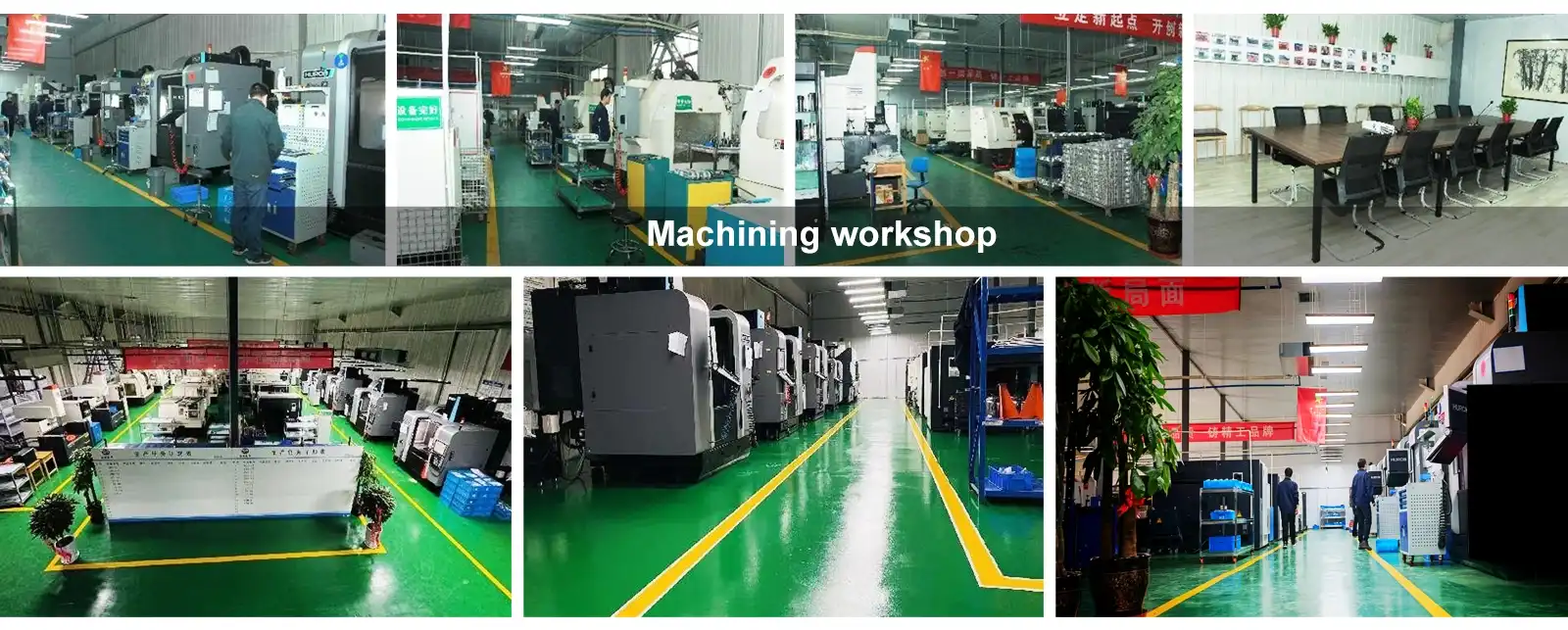
For manufacturers seeking reliable suppliers of high-quality low pressure cast robotic arm brackets, Rongbao offers comprehensive manufacturing capabilities with ISO9001:2015, ISO14001, and ISO45001 certifications. Our production facility in Xi'an, China, maintains capacity for 5000 pieces annually with complete CNC machining and surface treatment capabilities. Technical inquiries and custom specifications can be directed to our engineering team at steve.zhou@263.net or zhouyi@rongbaocasting.com for detailed consultation on specific application requirements.
References
1. Advanced Materials Processing Institute. "Comparative Analysis of Casting Methods for Precision Components." Journal of Manufacturing Technology, 2023.
2. International Robotics Engineering Consortium. "Mechanical Properties Requirements for Automated System Components." Industrial Automation Quarterly, 2024.
3. Metallurgical Research Foundation. "Grain Structure Analysis in Low Pressure Cast Aluminum Alloys." Materials Science Review, 2023.
4. Manufacturing Excellence Society. "Cost-Benefit Analysis of Advanced Casting Technologies." Production Engineering Today, 2024.
5. Quality Control Standards Organization. "Dimensional Accuracy Benchmarking in Metal Casting Processes." Precision Manufacturing Guidelines, 2023.
Learn about our latest products and discounts through SMS or email