- English
- French
- German
- Portuguese
- Spanish
- Russian
- Japanese
- Korean
- Arabic
- Greek
- German
- Turkish
- Italian
- Danish
- Romanian
- Indonesian
- Czech
- Afrikaans
- Swedish
- Polish
- Basque
- Catalan
- Esperanto
- Hindi
- Lao
- Albanian
- Amharic
- Armenian
- Azerbaijani
- Belarusian
- Bengali
- Bosnian
- Bulgarian
- Cebuano
- Chichewa
- Corsican
- Croatian
- Dutch
- Estonian
- Filipino
- Finnish
- Frisian
- Galician
- Georgian
- Gujarati
- Haitian
- Hausa
- Hawaiian
- Hebrew
- Hmong
- Hungarian
- Icelandic
- Igbo
- Javanese
- Kannada
- Kazakh
- Khmer
- Kurdish
- Kyrgyz
- Latin
- Latvian
- Lithuanian
- Luxembou..
- Macedonian
- Malagasy
- Malay
- Malayalam
- Maltese
- Maori
- Marathi
- Mongolian
- Burmese
- Nepali
- Norwegian
- Pashto
- Persian
- Punjabi
- Serbian
- Sesotho
- Sinhala
- Slovak
- Slovenian
- Somali
- Samoan
- Scots Gaelic
- Shona
- Sindhi
- Sundanese
- Swahili
- Tajik
- Tamil
- Telugu
- Thai
- Ukrainian
- Urdu
- Uzbek
- Vietnamese
- Welsh
- Xhosa
- Yiddish
- Yoruba
- Zulu
Aluminum Casting vs. Steel Casting: Choosing the Right Alloy for Your Cast Products
If you want to make something today, you have to think carefully about how the material works, how fast it can be made, and how well it holds up over time .When engineers and buying managers look at casting options for parts for cars, spacecraft, or factories, choosing between steel casting and aluminum alloy casting has a big effect on the quality of the product, how much it costs, and how long it takes to deliver. This article looks at the main ways that these two well-known casting materials are different. People will be able to choose the right metal for their needs with this information.

Material Properties: Aluminum vs. Steel
Aluminum exhibits fundamentally different characteristics compared to steel, beginning with its density advantage. At approximately 2.7 grams per cubic centimeter, aluminum weighs roughly one-third as much as steel, creating immediate benefits for applications where weight reduction translates to improved fuel efficiency or reduced structural loading. This difference in density is very important in the car and aircraft industries, where every gram saved saves money and improves performance.
The thermal properties of aluminum present both opportunities and challenges for casting applications. Aluminum's superior thermal conductivity, approximately four times higher than steel, enables rapid heat dissipation in electronic housings and motor components. This trait is useful when heat needs to be well controlled, like when sensor covers are needed for oil tank safety systems or when electronic link housings are needed. However, this same property demands careful temperature control during the aluminum alloy casting process to prevent premature solidification and ensure uniform material distribution throughout complex geometries.
Another area where aluminum clearly performs better than most steel metals is its resistance to corrosion. The natural oxide layer that forms on metal surfaces protects them from damage from the environment. This is very helpful for digging gear and gear used outside. It takes less work to maintain and lasts longer in harsh settings thanks to this feature. However, some alloy compositions may need extra surface treatments to work at their best in highly corrosive conditions.
Steel is a material that is known for having a high strength-to-cost ratio and being easy to change its makeup. Manufacturers can change the amount of carbon in steel to make it harder, softer, or easier to machine according to the needs of the purpose. Because of this, steel casting can meet a wide range of mechanical needs, from high-stress structure parts to precisely machined surfaces that need to be very stable in terms of their dimensions. Because its qualities stay the same over long production runs, steel is a great material for situations where a lot of things need to be made.
Casting Process Comparison
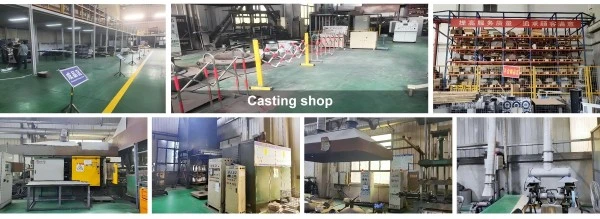
The casting processes for aluminum and steel differ significantly in temperature requirements, equipment specifications, and production cycle times. Aluminum's lower melting point, typically ranging from 660°C to 750°C depending on alloy composition, reduces energy consumption and enables faster production cycles compared to steel's melting temperatures exceeding 1500°C. This temperature differential impacts tooling design, furnace specifications, and overall manufacturing infrastructure requirements.
Aluminum is a good material for die casting because it flows easily and can fit into complicated mold shapes. It's easy for the material to flow through thin walls and complicated internal features, which makes it perfect for making intricate parts like agitator base parts or natural gas control valve accessories. Because aluminum solidifies quickly, cycle times can be cut down. This increases production speed and lowers the cost of making each unit in high-volume situations.
Most steel casting processes use one of three methods: sand casting, investment casting, or centrifugal casting. Each has its own benefits for certain uses. For big parts and prototypes, sand casting is flexible, while investment casting gives you a better surface finish and more accurate measurements for precise tasks. Because of the higher processing temperatures, special refractory materials and longer cooling cycles are needed. This makes the production process take longer, but the final parts may have better mechanical properties.
Quality control considerations vary substantially between aluminum and steel casting operations. Aluminum's tendency toward gas porosity requires careful degassing procedures and modified gating designs to minimize defects. Conversely, steel casting must address shrinkage-related issues and potential segregation in larger components. These differences necessitate specialized inspection techniques and quality assurance protocols tailored to each material's characteristic defect patterns.
Production scalability presents different challenges for aluminum versus steel casting operations. Aluminum alloy casting facilities can achieve rapid production ramp-up due to lower temperature requirements and shorter cycle times. However, steel casting operations may offer greater flexibility in component size ranges and can more readily accommodate design modifications without extensive tooling changes.
Mechanical Performance: Strength, Toughness, and Wear Resistance
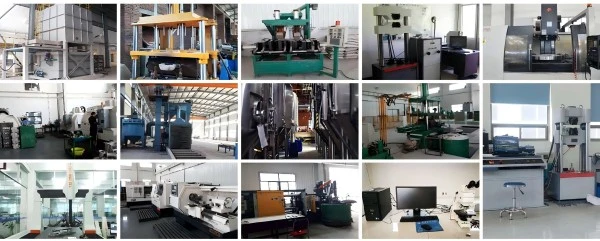
Tensile strength comparisons between aluminum alloy casting, aluminum, and steel reveal distinct performance profiles suited to different application requirements. High-strength aluminum alloys can achieve tensile strengths approaching 400-500 MPa, while maintaining their weight advantages and corrosion resistance properties. Steel alloys routinely exceed 600-800 MPa tensile strength, with specialized compositions reaching considerably higher values. These strength differences influence component design approaches, with aluminum requiring larger cross-sections to achieve equivalent load-carrying capacity in purely strength-limited applications.
The two materials have very different fatigue performance characteristics, especially when loaded and unloaded repeatedly, which is common in automotive and aerospace uses. Steel usually has better wear resistance at high stress levels, which makes it a better choice for parts that are loaded heavily over and over again. Aluminum's wear behavior is more affected by surface finish and stress concentrations, so it needs to be carefully designed for important uses like motor end covers or bearing parts.
Wear resistance properties vary considerably based on specific alloy compositions and surface treatments applied to each material. Steel's inherent hardness provides excellent wear resistance for applications involving sliding or abrasive contact, such as valve components or mechanical linkages. Aluminum's softer nature typically requires surface treatments or specialized alloys to achieve comparable wear performance, though its lower density can reduce impact forces in dynamic applications.
Performance at high temperatures is an important factor for many industry uses. Steel keeps its mechanical qualities over a wider range of temperatures, especially at high temperatures where aluminum starts to lose a lot of its strength. Because of this, steel is better for uses that need to keep temperatures high for a long time, while aluminum is better for uses that need to quickly change temperatures or get rid of heat.
You can see some interesting trade-offs between two materials when you compare their impact toughness. In general, steel is harder to scratch than aluminum because it is made up of crystals. This is especially true at lower temperatures, when aluminum is more likely to break. But aluminum's lower density means there is less kinetic energy available when it hits something. This could make up for its lower toughness in some situations, like when it's used to make protection housings or safety-critical parts.
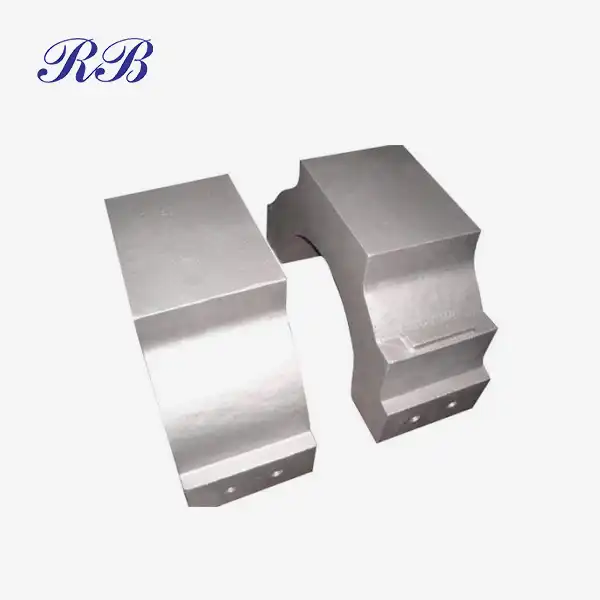
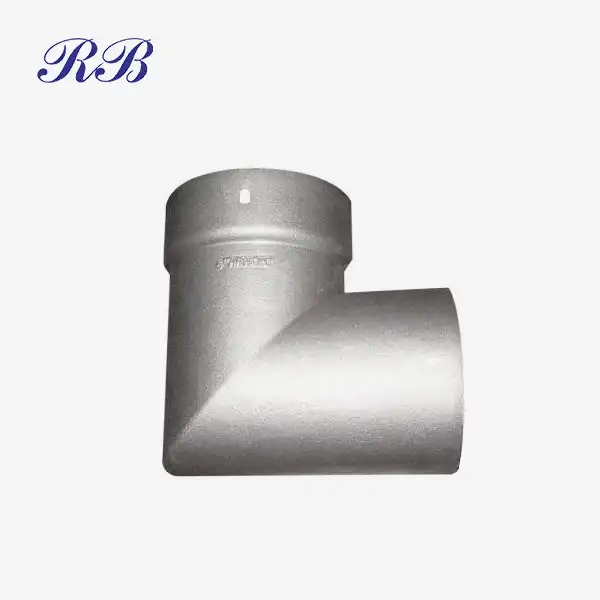
For skilled aluminum alloy casting services that are tailored to your needs, Rongbao has a wide range of manufacturing options, competitive prices, and reliable delivery schedules. Our experienced engineering team can help you choose the right materials and improve your processes so that they work best for your needs. Contact us at steve.zhou@263.net or zhouyi@rongbaocasting.com for technical consultation and free samples of our casting motor end covers, sensor covers, connector housings, agitator base parts, sink filters, and natural gas control valve accessories.
References
1. Campbell, J. (2015). Complete Casting Handbook: Metal Casting Processes, Metallurgy, Techniques and Design. Butterworth-Heinemann.
2. Askeland, D.R., & Wright, W.J. (2016). The Science and Engineering of Materials. Cengage Learning.
4. Beeley, P.R. (2001). Foundry Technology. Butterworth-Heinemann.
5. Brown, J.R. (2000). Foseco Foundryman's Handbook. Butterworth-Heinemann.
6. Stefanescu, D.M. (2018). Science and Engineering of Casting Solidification. Springer International Publishing.

Learn about our latest products and discounts through SMS or email