- English
- French
- German
- Portuguese
- Spanish
- Russian
- Japanese
- Korean
- Arabic
- Greek
- German
- Turkish
- Italian
- Danish
- Romanian
- Indonesian
- Czech
- Afrikaans
- Swedish
- Polish
- Basque
- Catalan
- Esperanto
- Hindi
- Lao
- Albanian
- Amharic
- Armenian
- Azerbaijani
- Belarusian
- Bengali
- Bosnian
- Bulgarian
- Cebuano
- Chichewa
- Corsican
- Croatian
- Dutch
- Estonian
- Filipino
- Finnish
- Frisian
- Galician
- Georgian
- Gujarati
- Haitian
- Hausa
- Hawaiian
- Hebrew
- Hmong
- Hungarian
- Icelandic
- Igbo
- Javanese
- Kannada
- Kazakh
- Khmer
- Kurdish
- Kyrgyz
- Latin
- Latvian
- Lithuanian
- Luxembou..
- Macedonian
- Malagasy
- Malay
- Malayalam
- Maltese
- Maori
- Marathi
- Mongolian
- Burmese
- Nepali
- Norwegian
- Pashto
- Persian
- Punjabi
- Serbian
- Sesotho
- Sinhala
- Slovak
- Slovenian
- Somali
- Samoan
- Scots Gaelic
- Shona
- Sindhi
- Sundanese
- Swahili
- Tajik
- Tamil
- Telugu
- Thai
- Ukrainian
- Urdu
- Uzbek
- Vietnamese
- Welsh
- Xhosa
- Yiddish
- Yoruba
- Zulu
How do cast water gun head parts work?
Cast water gun head parts are precision-engineered components produced through controlled casting processes, designed to regulate water flow, maintain pressure integrity, and withstand repeated hydraulic stress. In fire suppression systems, these parts—including pump housings, discharge pipes, nozzle assemblies, and valve bodies—form the mechanical core of the entire unit. When molten aluminum alloy is poured into a gravity die and cooled under controlled conditions, it solidifies into dimensionally accurate geometries that deliver consistent performance across thousands of operating cycles. Understanding how these components function helps procurement engineers and OEM manufacturers make sharper sourcing decisions.

Cast Water Gun Head Parts Mechanism
How the Core Components Work Together
When used as a fire pump, the head section of a water gun is made up of several cast water gun head parts that work together as a single hydraulic system. The compressed fluid moves toward the output pipe through the pump casing. The impeller changes the energy of rotation into flow speed. Backflow is stopped by check valves, and the spray pattern and pressure at the outlet are controlled by the nozzle system. Tight measurement standards must be met by every part so that there is no pressure loss or mechanical interference during assembly.
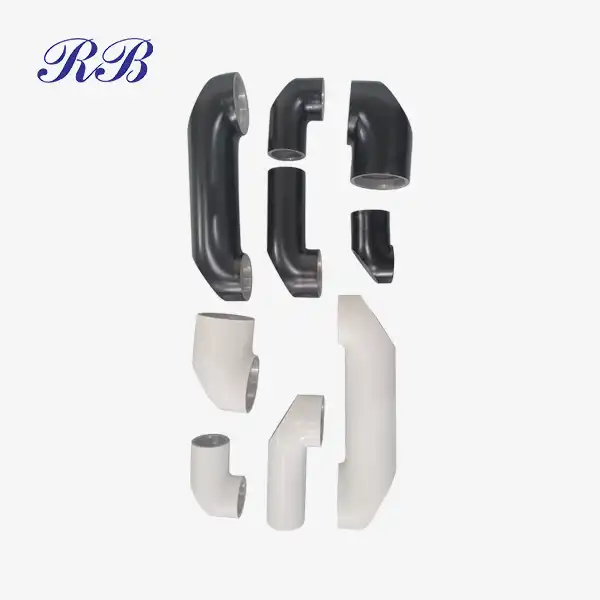
In fire pump discharge pipe applications, the cast part connects the pump outlet to the hose or distribution manifold. It has to be able to handle long-term hydraulic pressure without microcracking or leaking, which are problems that would mean it would fail right away in hydrostatic tests. NFPA 20 (Standard for the Installation of Stationary Pumps for Fire Protection) says that during acceptance tests, fire pump parts must be able to handle 150% of their maximum pressure.
Common Mechanical Challenges and How to Address Them
Porosity flaws, especially gas porosity and shrinkage holes, are the most common way that cast hydraulic parts break. In hydrostatic testing, the part fails when pressure-bearing wall sections meet internal voids. Porosity is much less likely to happen when gravity casting is done with properly aired frames and controlled pouring temperatures. By fixing any residual dimension drift, CNC machining of critical sealing surfaces after casting makes the leak resistance even better.
Material Selection and Design Considerations for Durability and Performance
The choice of material directly affects how long cast water gun head parts last when exposed to weather conditions and hydraulic cycles. A356 aluminum metal has become the best choice for fire pump discharge pipes and other hydraulic casts that go with them. Its silicon content (about 6.5–7.5%) makes it more fluid during casting, which lets complex internal shapes be made without cold shuts. After being heated to T6, its tensile strength is about 262 MPa and its yield strength is about 214 MPa, which is enough for normal fire pump working pressures.
A356 also has a good ratio of strength to weight. A discharge pipe made of A356 weighs only 0.5 kg, which is less than ductile iron pipes of the same size. This makes fitting easier for mobile and trailer-mounted fire pumps. A356 is better at resisting corrosion in wet settings than zinc metals, which means that the part will need less upkeep over its lifetime.
Design choices are just as important as the materials you use. Even wall thickness stops different temperatures from happening at different times during solidification, which directly lowers the amount of shrinkage porosity. Draft angles built into the design of the die make it possible for parts to be ejected cleanly and without surface tears. Ribbed external shape makes the structure stiffer without adding extra mass, which is a good design theory for parts that vibrate when the pump is running.

Repair, Maintenance, and Quality Assurance Tips for Cast Water Gun Head Parts
Checking the dimensions and pressure stability of cast water gun head parts should be the first things that are inspected when they come in. Coordinate measuring machines (CMMs) check that the necessary bore diameters and flatness of the mating face are within the drawing tolerances. Before the part goes onto the assembly line, it is tested hydrostatically at 1.5 atmospheres of working pressure to make sure there are no through-porosities. When there is enough light, a visual inspection can find surface cold shuts, misruns, or mechanical damage that happened during transit.
Shot blasting is the usual way to treat the surface of gravity-cast A356 discharge pipes. It gets rid of casting scale and makes the surface more uniform, which makes the next dimension check more dependable. It also makes a micro-textured surface that helps paint or coating stick better in places where rust protection is needed.
Here are the quality benchmarks procurement engineers should verify when evaluating a new supplier:
- Internal defect rate: Confirmed below 2% across all production runs using X-ray or CT testing on sample parts.
- Dimensional consistency: Key mating dimensions can vary by no more than 0.1 mm from batch to batch.
- Pressure test pass rate: Hydrostatic test results are written down for each batch, and records that can be tracked back to the original source are kept for auditing.
- Certification coverage: ISO 9001:2015, ISO 14001, and ISO 45001 certifications are necessary for compliance in the fire business.
These standards directly keep work plans safe. If a component fails the incoming check, it stops the whole assembly process and delays the delivery of the final unit to the customer.
Procuring Cast Water Gun Head Parts: What B2B Buyers Need to Know
It is riskier to buy cast water gun head parts for fire pumps than to buy things for other industries in general. It's much more important than unit price that a supplier can keep quality consistent across 5,000-piece production runs. Controlling the gravity casting process, keeping the mold in good shape, and being able to use CNC machines after the casting process all play a role in determining whether parts are ready to be put together or need more work.
Lead time stability should also be looked at closely. Fire pump makers have tight production schedules that are tied to meeting project deadlines. When a casting provider is 30 days late with their deliveries, it causes problems all along the value chain. Standard for discharge lines and pump housings is to package heavy cast components in wooden boxes. These boxes protect the parts from damage during shipping, which lowers the number of damaged goods claims that hurt supplier relationships.
OEM and ODM customizable options are important for companies that are making new product lines. A supplier that can make molds from customer drawings, make first-article samples within weeks, and then scale up to production quantities lets you launch products faster without having to manage a bunch of different sub-suppliers.

Future Trends and Innovations in Cast Water Gun Head Parts
Several pressures are putting pressure on the cast water gun head parts industry that makes fire safety equipment. Stricter pollution standards in industrial areas are speeding up the use of closed-loop cooling systems and electric melting furnaces that use less energy. Simulation software, like ProCAST and MAGMASOFT, is now commonly used to model cast fill patterns and predict where shrinkage will happen before cutting tools. This cuts down on the number of first-article iterations and the time it takes to build a mold.
As companies that make fire tools separate their lines, customers want more customization. Suppliers who can adapt to changes in specifications like alloy grade, wall thickness, and port configuration without having to wait a long time for new tools to be made have a big advantage over their competitors. For the best results when making fire pump parts, the best process design right now is to use both gravity casting for strength and CNC milling for precise measurements.
Conclusion
Cast water gun head parts in fire pump assemblies do tough hydraulic work over and over again for thousands of cycles. Using A356 aluminum, being careful with the gravity casting process, CNC cutting on important areas, and shot blasting to prepare the surface all together makes parts that can withstand tough hydrostatic tests and last for a long time. When purchasing engineers and technical directors look at different sources, the things that set them apart are consistent quality across batches, approved management systems, and the ability to make a lot of different types of parts from one source.
FAQ
How do I confirm whether a cast component will pass hydrostatic pressure testing?
Before you ship, ask your supplier for records of the batch hydrostatic test. Low porosity rates are always achieved in A356 aluminum parts that are made by gravity casting with the right vents and a controlled pouring temperature. The best quality assurance comes from a supplier with documented internal defect rates below 2% and pressure test records that can be tracked.
What is the typical production lead time for gravity-cast fire pump discharge pipes?
Depending on how complicated the mold is and how many pieces are being made, standard production runs of 500 to 5,000 pieces usually take 3 to 5 weeks after the mold is approved. It usually takes two to four weeks to get first-article samples from new molds. Your production schedule will be safe if you confirm lead time promises in writing before you place an order.
Can cast discharge pipe specifications be customized for OEM applications?
Yes, reputable gravity casting suppliers with their own mold-making facilities can make custom discharge pipes based on drawings provided by the customer. You can change the material grade, wall thickness, port sizes, and surface treatment choices. With OEM and ODM services, makers can find parts that are exactly what they need for their products without having to change the design.
What certifications should a fire pump casting supplier hold?
The basic certifications for supply chains in the fire industry are ISO 9001:2015 for quality management, ISO 14001 for environmental management, and ISO 45001 for occupational health and safety. If a supplier has these certifications, it means that they follow audited, standard procedures instead of random quality checks.
Source Your Next Cast Water Gun Head Parts Through Rongbao Enterprise
Rongbao Enterprise provides fire pump parts and gravity-cast A356 aluminum discharge pipes that are precisely the right size and pressure stability for your production line. As an experienced cast water gun head parts manufacturer based in Xi'an, China, we combine 20 years of casting expertise with full ISO 9001:2015, ISO 14001, and ISO 45001 certification. Our production capacity of 5,000 pieces per run, CNC cutting, shot blasting, and OEM customization services make us a genuine one-stop casting partner for companies around the world that make fire equipment. Reach out at steve.zhou@263.net or zhouyi@rongbaocasting.com, or visit rongbaocasting.com to request a sample or bulk quote.
References
- National Fire Protection Association. NFPA 20: Standard for the Installation of Stationary Pumps for Fire Protection. 2022.
- American Foundry Society. Casting Source Directory and Metalcasting Industry Report. 2023.
- ASM International. Aluminum Alloy Castings: Properties, Processes, and Applications. 2004.
- International Organization for Standardization. ISO 9001:2015 Quality Management Systems—Requirements. 2015.
- Kaufman, J.G., and Rooy, E.L. Aluminum Alloy Castings: Properties, Processes, and Applications. ASM International, 2004.
- Campbell, John. Complete Casting Handbook: Metal Casting Processes, Metallurgy, Techniques and Design. Butterworth-Heinemann, 2015.
Learn about our latest products and discounts through SMS or email