- English
- French
- German
- Portuguese
- Spanish
- Russian
- Japanese
- Korean
- Arabic
- Greek
- German
- Turkish
- Italian
- Danish
- Romanian
- Indonesian
- Czech
- Afrikaans
- Swedish
- Polish
- Basque
- Catalan
- Esperanto
- Hindi
- Lao
- Albanian
- Amharic
- Armenian
- Azerbaijani
- Belarusian
- Bengali
- Bosnian
- Bulgarian
- Cebuano
- Chichewa
- Corsican
- Croatian
- Dutch
- Estonian
- Filipino
- Finnish
- Frisian
- Galician
- Georgian
- Gujarati
- Haitian
- Hausa
- Hawaiian
- Hebrew
- Hmong
- Hungarian
- Icelandic
- Igbo
- Javanese
- Kannada
- Kazakh
- Khmer
- Kurdish
- Kyrgyz
- Latin
- Latvian
- Lithuanian
- Luxembou..
- Macedonian
- Malagasy
- Malay
- Malayalam
- Maltese
- Maori
- Marathi
- Mongolian
- Burmese
- Nepali
- Norwegian
- Pashto
- Persian
- Punjabi
- Serbian
- Sesotho
- Sinhala
- Slovak
- Slovenian
- Somali
- Samoan
- Scots Gaelic
- Shona
- Sindhi
- Sundanese
- Swahili
- Tajik
- Tamil
- Telugu
- Thai
- Ukrainian
- Urdu
- Uzbek
- Vietnamese
- Welsh
- Xhosa
- Yiddish
- Yoruba
- Zulu
What is a valve body for transmission?
A valve body is the hydraulic control hub of an automatic transmission system. It directs pressurized fluid through a network of channels and passages to activate clutch packs and bands, triggering the correct gear ratio at the right moment. In industrial and automotive applications, a cast valve body—manufactured through precision casting processes—delivers the dimensional accuracy and internal integrity that hydraulic systems demand. Without a properly functioning valve body, gear shifts become erratic, fluid pressure drops, and transmission wear accelerates significantly.
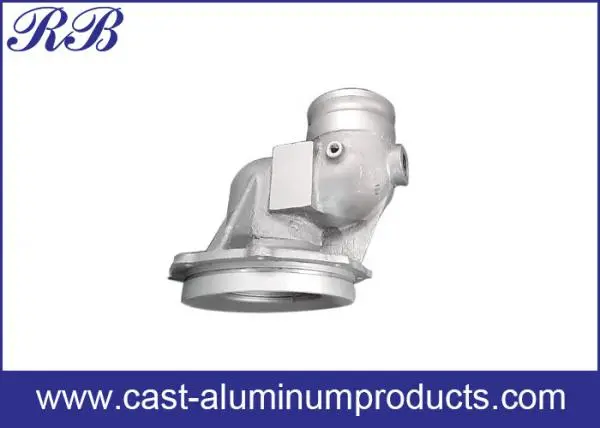
Valve Bodies in Transmission Systems
How a Valve Body Controls Gear Engagement
The valve body is the brains of an automatic transmission. It makes all the decisions. Solenoids inside the valve body open or close certain fluid paths when the transmission control unit sends a signal. This sends hydraulic pressure to the right clutch pack. In milliseconds, this sequence takes place. Shift speed and reaction time are directly related to how precisely each internal channel is made. This is why the casting quality of the valve body housing itself is so important to system performance.
Integration with Hydraulic and Electronic Components
These days, transmission valve bodies don't work by themselves. Pressure controllers, solenoid valves, and computer control units all work with them. To keep the bore from leaking inside, the housing has to have tight tolerances. If it doesn't, pressure loss and delayed engagement would happen. Many people like aluminum alloy cast housings, like those made from A356 material, because they are light and good at transferring heat, which is important for hydraulic systems that cycle all the time. With this combination, choosing the right materials and making them accurately are now required for all B2B purchases.
Exploring Cast Valve Bodies: Materials, Types, and Design Principles
Why A356 Aluminum Alloy Is a Preferred Material
A356 aluminum is one of the best alloys for cast valve body because it is easy to work with and doesn't break down easily. It has about 7% silicon and 0.3% magnesium in it, which together make a fine-grained microstructure that is very good at keeping pressure inside. After being cast in gravity and then machined with a CNC, A356 parts are the right size for hydraulic route alignment. It doesn't rust and lasts longer in places where fluid leakage is a problem, which is very important for fire pump conversion joints and other important industry parts.
Gravity Casting vs. Other Manufacturing Approaches
Gravity casting, which is sometimes called "permanent mold casting," uses metal models that can be used again and again. Molten metal is poured into the molds by gravity. When compared to sand casting, this method makes parts that are thicker and more regular. This makes it a good choice for parts that need to maintain internal pressure integrity. High-pressure die casting has shorter cycle times, but it can make thicker parts with tiny holes in them. Gravity casting is a good compromise because it can handle complicated shapes, low production numbers (up to 5,000 pieces per run), and better control over dimensions, all of which are important when the part is used in a hydraulic transfer circuit.
Casting is not the end of the industrial process. To tight specs, CNC machining smooths out mating surfaces and hole sizes. Shot blasting, on the other hand, gets rid of surface oxides and makes it easier for any secondary covering to stick. All of these steps make sure that the finished valve body housing meets all requirements for both function and appearance.
Comparison Guide: Cast Valve Body vs. Other Valve Body Types
Procurement teams often look at more than one way to make something. Knowing the trade-offs helps you decide how to spend your money without sacrificing performance.
This is an organized list of the most popular types of valve bodies:
- Cast aluminum valve body (e.g., A356 gravity cast): Lightweight, has good pressure strength, isn't too expensive, and can be used for high-volume production. Cast valve body is perfect for gears in cars, fire pump systems, and hydraulic equipment that needs to save weight.
- Cast iron valve body: Better for heavy industrial machinery that needs to keep up with a high temperature because they are denser and keep heat in better. It is heavier than aluminum alternatives, which makes shipping big units more expensive.
- Forged steel valve body: Highest mechanical strength and resistance to wear. They are usually used in high-pressure situations. The complex cutting needs mean that each unit costs a lot more and takes longer to make.
- Machined billet valve body: This type of body has the tightest tolerances, but it also wastes a lot of material and costs more. Mostly used for prototyping in motorsport and aerospace instead of mass production.
Each of these choices is good for a different type of application. For mid- to high-volume B2B purchases in hydraulic systems, cast aluminum frames always offer the best value for money. When you add up the weight, the time it takes to machine, and the amount of scrap that you get, gravity-cast aluminum is usually the cheaper option for things like fire pump conversion joints and transmission housings.
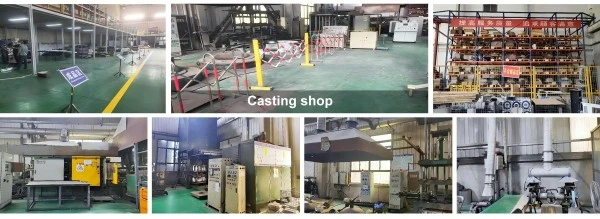
Procurement Insights: How to Source Quality Cast Valve Bodies
Certifications and Compliance Standards to Verify
Certification standing is the first thing that you should look at when judging a cast valve body supplier. The quality control system meets international norms, as shown by ISO 9001:2015. ISO 14001 shows that environmental management rules are being followed, and ISO 45001 talks about health and safety at work. These three certifications show that the supplier has a mature, audited production environment, which is needed in the supply chain for fire safety equipment and is becoming more and more required by OEM buyers in North America and Europe.
Key Sourcing Criteria for B2B Buyers
In addition to qualifications, procurement experts should look at a number of practical factors before making large orders:
- Tooling and mold development capability: A supplier with in-house mold design cuts down on the time it takes to start a new project and keeps track of changes. Launch dates for new products are directly affected by how long it takes to make a mold.
- Sampling and first-article inspection: Before starting full production, ask for a report on the dimensions of the first-article samples and data from the pressure test. This step finds early signs of possible porosity or tolerance drift early.
- Production capacity and delivery reliability: A factory that can make 5,000 pieces per run and has standard workshop plans can handle sudden increases in demand without affecting delivery times, which is a common problem in the fire equipment industry.
- Packaging for transit integrity: Heavy cast parts (1.8 kg or more) that are shipped internationally are usually packed in wooden boxes to keep them safe from damage during sea or air freight.
These factors make up a useful rating check list. When you buy from a supplier that meets all four criteria, you can be sure that the total buying risk is smaller and that quality is better on the assembly line.
Maintenance Tips and Troubleshooting for Cast Valve Bodies
Understanding failure modes is the first step to making operations last longer. The most common problem is internal passage contamination, where bits from old transmission oil get stuck in the solenoid bores and cause the shift time to be all over the place or the solenoid to lock up completely. Most failures caused by contamination can be avoided by changing the fluids at the times suggested by the maker.
It's not easy to deal with material tiredness. When pressure changes over millions of shift events, it can cause tiny cracks to form at sharp inside corners, especially in alloys that don't have enough silicon. This risk is greatly reduced by buying parts made from certified A356 alloy that come with papers that show their chemical makeup.
If a valve body has signs like taking too long to engage, shifting too quickly, or fluid leaking at the connecting faces, the first thing that needs to be done to figure out what's wrong is a hydraulic pressure test at the circuit level. It looks like a lot of valve body failures are caused by problems with the upstream pressure control or old seals, not problems with the housing. This difference is important when deciding whether to fix or replace something, because replacing a cast housing that still works raises upkeep costs without reason.
FAQ
What makes a cast valve body different from a machined billet version?
A cast valve body starts out as a part with a shape similar to a net that is made by gravity casting or die casting. During the molding process, holes are made inside the part. A machined billet version is made from a single piece of solid metal. Castings are usually a better way to use materials and are cheaper when making more than a few hundred pieces. Billet models have tighter starting specs, but they are much more expensive and take longer to make.
Can cast valve bodies be customized for OEM applications?
Yes. Gravity cast aluminum valve bodies can be customized by OEMs and ODMs to have different passage geometries, porting configurations, and surface specifications. When suppliers have CNC machines on-site, they can change standard tools to fit new designs without having to replace the whole mold. This lowers the cost of developing new products.
How do I verify casting quality before bulk ordering?
Ask for a first-article inspection report that includes the alloy's chemical make-up, measurements, and the result of a hydrostatic pressure test. For fire pump parts, this testing is required before they can be put together on an assembly line. Suppliers who are ISO 9001:2015 qualified keep written review plans that you can give to your quality engineering team.
What is the standard lead time for gravity cast valve body components?
Lead times depend on the number of orders and the state of the tools. With the tools that are already available, it usually takes four to six weeks to ship a batch of 5,000 pieces that have been CNC machined and shot-blasted. Developing new tools adds about three to five weeks to the time it takes to make a mold and get approval for the first product.
Partner with Rongbao Enterprise for Reliable Cast Valve Body Solutions
Based in Xi'an, China, Rongbao Enterprise has been precision casting for 20 years and can help B2B buyers who need a reliable cast valve body manufacturer. Our gravity-cast A356 parts are approved to ISO 9001:2015, ISO 14001, and ISO 45001, and they come with normal post-processing like CNC machining and shot blasting. We can customize for OEMs, package items for export in wooden boxes, and make up to 5,000 pieces at a time. To get a unique price, email our team at steve.zhou@263.net or zhouyi@rongbaocasting.com, or go to rongbaocasting.com.
Conclusion
A transmission cast valve body is not just an inactive housing; it is a precision hydraulic control part that directly affects how reliable the system is. Gravity-cast aluminum alloys, such as A356, give modern transmission and fire pump systems the consistent sizes, pressure integrity, and weight savings they need. Teams in charge of buying things will always get better results in terms of quality, service, and total cost if they focus on certified suppliers, tested sample methods, and the ability to make things in more than one way. It's not a seller decision; it's a product quality decision that you need to make when choosing a casting partner.
References
- ASM International. ASM Handbook, Volume 15: Casting. ASM International, 2008.
- Society of Automotive Engineers. SAE J1269: Transmission and Drivetrain Fluid Classification. SAE International, 2019.
- Bosch Automotive Handbook. Automotive Electrics and Electronics, 5th ed. Robert Bosch GmbH, 2007.
- American Foundry Society. Casting Source Directory and Casting Design Guide. AFS, 2020.
- ISO. ISO 9001:2015 Quality Management Systems — Requirements. International Organization for Standardization, 2015.
- Aluminum Association. Aluminum Alloy Castings: Properties, Processes and Applications. The Aluminum Association, 2004.
Learn about our latest products and discounts through SMS or email