- English
- French
- German
- Portuguese
- Spanish
- Russian
- Japanese
- Korean
- Arabic
- Greek
- German
- Turkish
- Italian
- Danish
- Romanian
- Indonesian
- Czech
- Afrikaans
- Swedish
- Polish
- Basque
- Catalan
- Esperanto
- Hindi
- Lao
- Albanian
- Amharic
- Armenian
- Azerbaijani
- Belarusian
- Bengali
- Bosnian
- Bulgarian
- Cebuano
- Chichewa
- Corsican
- Croatian
- Dutch
- Estonian
- Filipino
- Finnish
- Frisian
- Galician
- Georgian
- Gujarati
- Haitian
- Hausa
- Hawaiian
- Hebrew
- Hmong
- Hungarian
- Icelandic
- Igbo
- Javanese
- Kannada
- Kazakh
- Khmer
- Kurdish
- Kyrgyz
- Latin
- Latvian
- Lithuanian
- Luxembou..
- Macedonian
- Malagasy
- Malay
- Malayalam
- Maltese
- Maori
- Marathi
- Mongolian
- Burmese
- Nepali
- Norwegian
- Pashto
- Persian
- Punjabi
- Serbian
- Sesotho
- Sinhala
- Slovak
- Slovenian
- Somali
- Samoan
- Scots Gaelic
- Shona
- Sindhi
- Sundanese
- Swahili
- Tajik
- Tamil
- Telugu
- Thai
- Ukrainian
- Urdu
- Uzbek
- Vietnamese
- Welsh
- Xhosa
- Yiddish
- Yoruba
- Zulu
Is sand casting ideal for custom work?
Sand casting is genuinely ideal for custom work, and the evidence is hard to argue with. Over 70% of the world's metal castings are produced through sand casting, according to the American Foundry Society. When it comes to custom sand casting specifically, the process excels at producing complex geometries, accommodating a wide range of alloys, and keeping tooling costs manageable for low-to-medium volume runs. For procurement engineers sourcing fire pump components or heavy industrial parts, this method offers a practical balance of precision, flexibility, and cost efficiency that few alternatives can match.

What Is Custom Sand Casting and How Does It Work?
For custom sand casting, a part pattern is used to shape a sand mold. The mold is cut away to show the finished casting after molten metal is poured into the hole and left to harden. It looks easy, but handling every variable in this process is where the real skill lies.
Sand Types and Their Impact on Output Quality
Green sand, which is made with clay and water as binders, and chemically bonded sand, which uses resin systems for better control of dimensions, are the two main types of sand used in foundries today. Green sand is cheap and quick, so it works well for runs with a lot of people. Chemically bound sand gives a smoother surface and tighter specs, which is very important when the casting will be CNC machined later on. One of the most common mistakes buyers make when they're shopping is picking the wrong type of sand for the job.
Common Alloys and Defect Prevention
Sand casting is most often used to work with iron, bronze, steel, aluminum alloys (especially ZL101A), and aluminum alloys. Accessories for fire pumps are often made of ZL101A aluminum because it has a good strength-to-weight ratio and doesn't rust. The most common flaws are still porosity and misruns. Controlling the pouring temperature, making the gate design work better, and inspecting in real time at key stages lower internal void rates to below 2%, which is a level that fire pump manufacturers consider essential for hydraulic integrity.
Comparing Custom Sand Casting with Other Casting Methods
There is no one casting method that works in all situations. When procurement teams know the trade-offs, they can choose the best process from the start and avoid making expensive changes in the middle of a project.
When you cast a lot of things, die casting gives you a great surface finish and consistent dimensions, but the cost of the tools is much higher, and it can take weeks to get new dies. Investment casting makes parts with surfaces that are very smooth and almost net-shaped, but it costs a lot for parts that weigh more than 5 kg. CNC milling from billet has the tightest standards, but it wastes a lot of material and isn't usually the best way to go for hollow shapes that aren't simple.
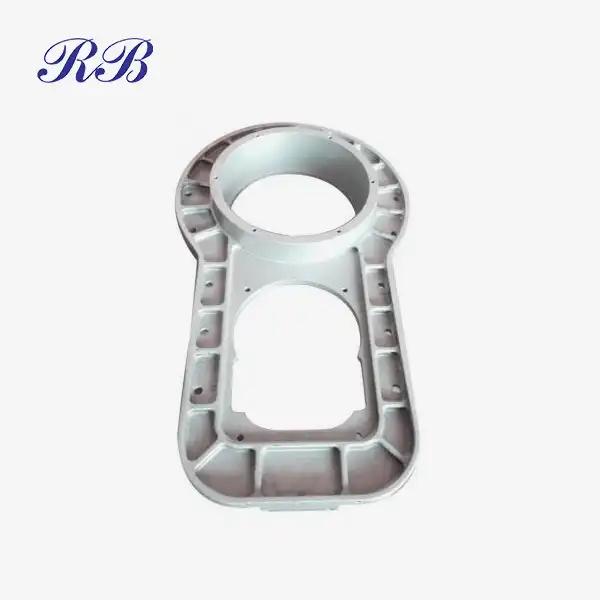
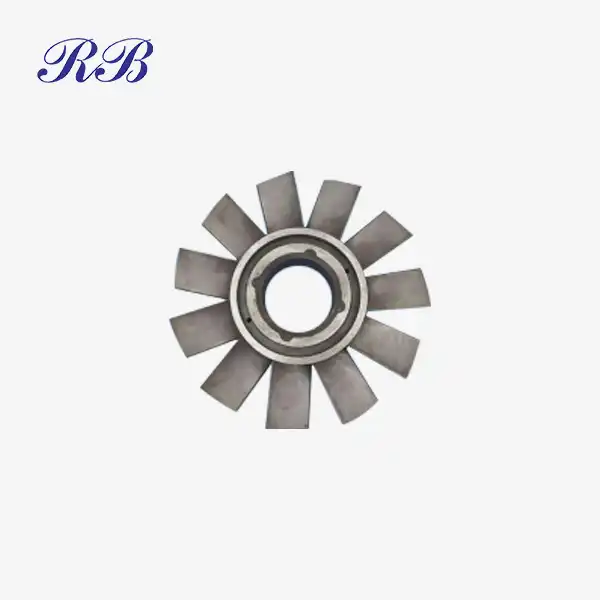
In a unique way, sand casting is in the middle. It can work with parts that weigh less than 1 kg and more than 50 tons, can handle changes to the design without having to throw away expensive tools, and can be used for both prototyping and production. Sand casting and gravity casting are usually the best ways to make fire pump housings, impellers, valves, and pipe fittings. These parts weigh between 3 kg and 15 kg and need to be fairly accurate in terms of size.

Benefits and Challenges of Using Sand Casting for Custom Work
Before you agree to a supplier, you need to know where custom sand casting works well and where it needs careful control.
Here are the main production benefits that this method gives to businesses that buy it:
- Design adaptability: Mold designs can be changed without having to pay a lot of money for die casting tools. During the development cycle of a product, changes to the geometry are no longer catastrophic events that break the budget.
- Material breadth: Aluminum, iron, metal, and steel can all be worked with, which means that one casting partner can make a lot of different types of parts at the same time.
- Scale range: Sand casting can be used for both small prototypes and large batches of 5,000 or more pieces, which means it can work with the changing order plans that fire equipment makers usually use.
- Large-part capability: Parts that weigh more than 10 kg, like pump casings, are natural candidates for this method, since die casting isn't practical or cost-effective at that weight.
Because of these benefits, sand casting is a good choice for supply chains that value flexibility and cross-component consolidation. Still, buyers should set realistic goals for two problems that won't go away.
When you sand cast something, the finish is rougher than when you die cast or invest cast something. Standard fixes include shot blasting and CNC cutting. Asking for these methods during the quote process makes sure that size and look requirements are met before the parts are sent to the production line. Batch-to-batch consistency in dimensions also needs disciplined process controls, especially when it comes to pattern maintenance and managing the sand mixture. This is what sets good foundries apart from average ones.
How to Source Reliable Custom Sand Casting Services?
It's important to think about the long term effects of your choice of foundry partner. When a supplier misses delivery dates or sends out batches that don't match up, it affects more than just one purchase order.
When looking at possible custom sand casting companies, these factors should come first:
- Certification status: ISO 9001:2015, ISO 14001, and ISO 45001 certifications show that the foundry follows quality, environmental, and safety management systems that are regularly checked by experts from around the world. This is a strict requirement for parts that go into fire safety equipment.
- Multi-process capability: A foundry that does precision machining, gravity casting, and sand casting all in-house gets rid of the organizational risk that comes with supply chains with multiple vendors.
- Documented defect rates: Ask for internal failure rate statistics from the past. Anything above 2% should be looked at closely when it comes to hydraulic parts.
- Sampling responsiveness: How quickly a foundry can make and deliver dimensional samples for pressure testing and fit verification affects how long it takes to develop a new product.
- Packaging and logistics competence: Castings that are too heavy to be properly protected during shipping arrive broken. Parts that weigh more than 5 kg must be packed in a wooden box with the right amount of padding.
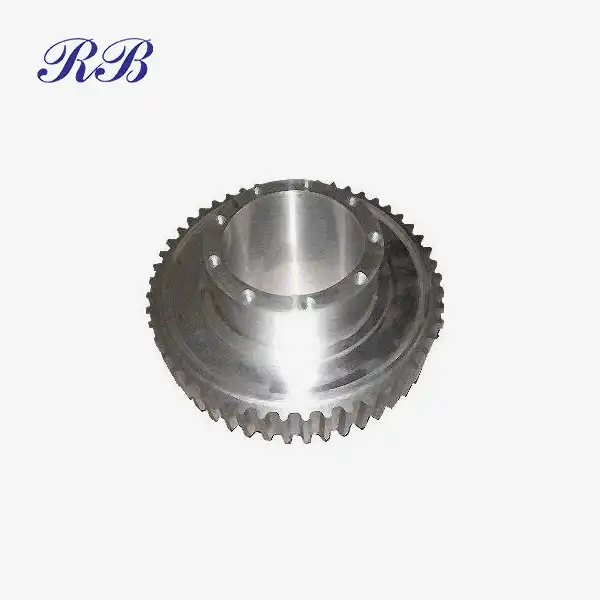
Gravity-cast ZL101A is sold by Rongbao Enterprise, which is based in Xi'an, China. A fire pump accessory made of metal that can be made in batches of 5,000 pieces. For critical mating surfaces, parts are CNC machined, and for surface preparation, they are shot blasted. The three ISO certifications are all up to date. Rongbao has been making things for 20 years, and 70% of their products are sent to markets in North America and Europe. They are a verified custom sand casting manufacturer for procurement teams that can't risk quality variations.

Best Practices and Future Trends in Custom Sand Casting
When foundries put money into process control now, they set themselves and their customers up for stable supply during the coming problems. Lean mold design, tracking of pouring parameters in real time, and organized material proof upon arrival are no longer things that set you apart; they are now expected.
3D-printed sand molds are radically cutting down on the time it takes to introduce new products. Pattern making used to take weeks, but now it only takes days. This shortens the testing phase, which usually takes a lot of time at the beginning of a buying cycle. Better resin binder systems are cutting down on dangerous fumes when molds break down and making surface treatments cleaner without adding more steps to the process.
When it comes to sustainability, aluminum sand casting already has an advantage because aluminum can be melted down and remelted many times without losing much of its properties. Foundries that use closed-loop sand recycling systems use less raw materials and get uniform sand quality from one production run to the next.
FAQ
How long does custom sand casting typically take from order to delivery?
Lead times change based on volume and complexity. For standard part shapes, it usually takes 4–6 weeks after the order is confirmed to make a batch of 5,000 pieces. Two to three weeks are added for new part sampling, which includes making the pattern. Instead of seeing sampling rounds as surprises, buyers should plan for them in their product development schedules.
Can sand casting produce the tight tolerances fire pump components require?
ISO 8062 says that the limits for sand casting are usually in the CT8–CT11 range. To make surfaces that fit together and seal, CNC machining gets the key measurements down to IT7 or lower. By telling the manufacturer which areas need to be machined during the planning phase, you can be sure that they will quote the right amount of machining time.
How does sand casting compare in cost to CNC machining for small batches?
When making more than a few hundred pieces, custom sand casting is usually 40–60% cheaper than CNC machining from billet for complex hollow geometries that weigh less than 10 kg. This is mostly because there is less material waste and cycle times are shorter. CNC machining is still the best way to go for very small quantities or profiles with very tight tolerances.
Partner with Rongbao Enterprise for Your Next Custom Sand Casting Project
Rongbao Enterprise makes approved, high-quality metal castings for fire pump assemblies and other industry machinery. They are backed by ISO 9001:2015, ISO 14001, and ISO 45001. We are a reliable custom sand casting supplier with 20 years of proven export experience. We support OEM and ODM programs with quick samples, consistent batch quality, and on-time delivery. You can email our engineering team at steve.zhou@263.net or zhouyi@rongbaocasting.com to get a quote right away, or go to rongbaocasting.com.
Conclusion
Industrial procurement teams can still use sand casting as one of the most flexible and cost-effective ways to make things. When it comes to special parts, like fire pump fittings that must have hydraulic integrity and batch stability, the results from combining gravity casting, CNC machining, and approved quality management are what make this method the best. The factory running the process is what's important, not the method itself. If you choose a partner with verifiable licenses, recorded defect controls, and export experience, sand casting will work well for your supply chain.
References
- American Foundry Society. Casting Source Directory and Metalcasting Industry Overview. 2023.
- Campbell, John. Complete Casting Handbook: Metal Casting Processes, Metallurgy, Techniques and Design. Butterworth-Heinemann, 2015.
- ASM International. ASM Handbook, Volume 15: Casting. ASM International, 2008.
- International Organization for Standardization. ISO 8062-3: Geometrical Product Specifications — Dimensional and Geometrical Tolerances for Moulded Parts. ISO, 2007.
- Brown, John R. Foseco Ferrous Foundryman's Handbook. Butterworth-Heinemann, 2000.
- Beeley, Peter. Foundry Technology. Butterworth-Heinemann, 2001.
Learn about our latest products and discounts through SMS or email