- English
- French
- German
- Portuguese
- Spanish
- Russian
- Japanese
- Korean
- Arabic
- Greek
- German
- Turkish
- Italian
- Danish
- Romanian
- Indonesian
- Czech
- Afrikaans
- Swedish
- Polish
- Basque
- Catalan
- Esperanto
- Hindi
- Lao
- Albanian
- Amharic
- Armenian
- Azerbaijani
- Belarusian
- Bengali
- Bosnian
- Bulgarian
- Cebuano
- Chichewa
- Corsican
- Croatian
- Dutch
- Estonian
- Filipino
- Finnish
- Frisian
- Galician
- Georgian
- Gujarati
- Haitian
- Hausa
- Hawaiian
- Hebrew
- Hmong
- Hungarian
- Icelandic
- Igbo
- Javanese
- Kannada
- Kazakh
- Khmer
- Kurdish
- Kyrgyz
- Latin
- Latvian
- Lithuanian
- Luxembou..
- Macedonian
- Malagasy
- Malay
- Malayalam
- Maltese
- Maori
- Marathi
- Mongolian
- Burmese
- Nepali
- Norwegian
- Pashto
- Persian
- Punjabi
- Serbian
- Sesotho
- Sinhala
- Slovak
- Slovenian
- Somali
- Samoan
- Scots Gaelic
- Shona
- Sindhi
- Sundanese
- Swahili
- Tajik
- Tamil
- Telugu
- Thai
- Ukrainian
- Urdu
- Uzbek
- Vietnamese
- Welsh
- Xhosa
- Yiddish
- Yoruba
- Zulu
Custom Nozzle Solutions - Gravity Casting
In gravity custom casting nozzles, the way molten metal enters a mold can influence filling consistency, custom casting nozzle quality, and production efficiency. A nozzle or pouring passage must work with the mold, gating system, alloy, and required production rate. Manufacturers that are considering custom casting nozzles may benefit from a bespoke design that can aid with unique flow constraints, connection needs, and component geometries that conventional solutions may not meet. The proper option will depend on the casting process, operational circumstances, and estimated production volume.
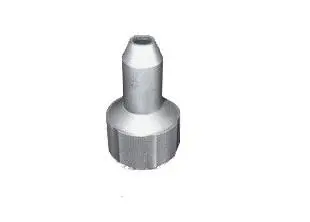
Matching Nozzle Design to the Casting Process
The form of the nozzle should be such as to suit the flow of the molten metal from the pouring source to the mold. Gravity sand casting and gravity die casting differ in their tooling characteristics, heating conditions, and filling requirements. What works well as a design for one application may not work so well in another.
Considering the Casting Method and Operating Conditions
Gravity sand castings utilize sand molds whereas gravity die castings frequently use a reusable metal mold. The adjustments affect heat transfer, mold preparation, filling behavior, and the geometry of the gating system.
The engineers have to consider the alloy to be cast, the quantity of metal to be poured, the available pouring head, and the time of filling before they are able to choose a nozzle. It is also worth mentioning that there is a link between the nozzle, runner, and gate. A change in the size or direction of a channel may increase resistance to flow or break up the stream of the metal.
The design must take these conditions into account and not assume that all gravity casting applications need the same size or shape of nozzle aperture. By looking at the complete flow path, you may discover limitations and probable filling challenges before you start manufacturing.
Selecting Materials for the Intended Application
The material is chosen according to the purpose of the nozzle and the exposure to the casting environment. A part in contact with molten metal must withstand the operating temperature, the thermal cycling, and the chemical environment of that operation. The choice may also depend on variables like resistance to abrasion and the potential for contamination.
A356 Aluminum alloy is typically used for cast parts, but it’s not a certainty that it will be the material of choice for all nozzles. The material to be used for the nozzle itself should be chosen in accordance with actual service conditions and compatibility requirements.
The suggested material should be confirmed by the manufacturer with their casting or tooling provider. The alloy specification and expected service conditions, including operating temperature, are given to aid the supplier in establishing the appropriateness of the selected material.
Controlling Metal Flow for More Consistent Filling
The most important factor in gravity custom casting nozzles is flow management. The purpose is to introduce molten metal into the mold with appropriate speed, without creating additional constraints, sudden changes in direction, and unstable filling behavior.
Adjusting the Outlet and Internal Passage
The flow resistance and the rate at which metal may enter the gating system are dependent on the outlet diameter and the shape of the internal tube. A channel that is too restricted might hinder the filling, and an opening or connection that is not adequate can provide a flow pattern that is not in accord with the needs of the mold.
Engineers are to analyze the nozzle together with the runner and gate dimensions. The volume, wall thickness, and general shape of the part define the amount of metal that has to be located in the cavity.
Smooth transitions and the proper flow route may assist in minimizing unwanted disruption. However, the choice of the optimal size should be made according to the unique application, not according to a general formula.
Designing for Complex Casting Geometries
Thin sections, many branches, or different wall thicknesses may need more careful supervision of the order of filling the components. In cases like these, the location and direction of the entrance might alter the way metal reaches various regions of the mold.
In certain cases, a casting may need metal to enter at various places, in which case several inlets or exits may be useful. Their number and placement should be determined by geometry and flow needs, not by the presumption that more outlets would increase quality.
It is also necessary to separate the regular gravity casting from methods where a liquid is purposely atomized or sprayed. Gravity casting does not need universal fan-shaped sprays, conical sprays, or multi-jet patterns. Flow behavior of this kind should only be taken into account when the equipment and process need such flow behavior.
With a right design, manufacturers may increase uniformity of filling and decrease certain problems connected to flow. Actual outcomes are also dependent on mold temperature, alloy characteristics, venting, pouring technique, and solidification circumstances;
Custom Nozzles or Standard Solutions?
The question for manufacturers is whether they can use an off-the-shelf item or if they need to justify a bespoke design. Both ways might be appropriate depending on the application.
When Customization Makes Sense
Custom casting nozzles may be developed to meet your dimensions, connections, flow requirements, and installation limitations. This may be beneficial when an old component is experiencing recurring filling issues or when a new custom casting nozzle design cannot be handled with normal equipment.
Customization also enables the nozzle and accompanying flow tubes to be treated as a whole. For complicated or repetitive manufacturing parts, this may assist engineers in solving application-specific needs before the design goes into production.
Customization, however, requires technical evaluation and often a specific tooling or extra development labor. Consequently, initial prices and lead times may be greater than for a conventional component.
When a Standard Nozzle Is Sufficient
Standard nozzles are a good solution for typical applications with well-known size and uncomplicated operating conditions. They may have shorter purchase lead times and avoid the development expenditures of a new design.
The fundamental question is whether the given specification is consistent with the actual procedure. A conventional nozzle that needs a lot of adjustment or uneven results may not be the cheapest in the long run.
To ensure a fair comparison, buying teams must evaluate the original cost, the predicted service life, the maintenance requirements, the reliability of manufacturing, and any further machining or rework. If you are doing bigger production runs, even a little gain in process stability can be worth looking at a bespoke solution, if you can show the advantage.
Working with Rongbao Enterprise on Custom Casting Requirements
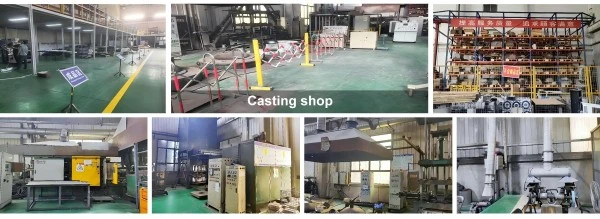
Industrial users may get precision processing and aluminum alloy custom casting nozzles from Rongbao Enterprise. According to the company’s material for this article, the firm was founded in 2003 and serves clients in automotive, aerospace, medical equipment, and electrical applications.
For purchasers who want bespoke nozzle solutions, the first step is to decide if the suggested design works in the real gravity casting process. The supplier should be aware of the intended use of the part, material requirements, installation dimensions, and service conditions before suggesting a method of fabrication.
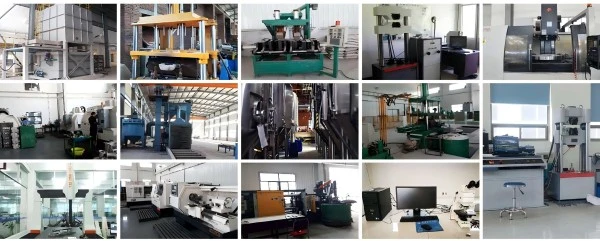
Rongbao has expertise in precision components and aluminum alloy custom casting nozzles, which might be useful for projects that need bespoke shapes or integrated production assistance. Buyers should consult with the manufacturer to determine the manufacturing procedures, material possibilities, machining capabilities, and inspection needs for the particular application.
Certifications ISO 9001, ISO 14001 and ISO 45001 are included in the information provided. Customers should check the current certifications, validity, and scope relevant for the required product or production facility before ordering.
Information to Prepare Before Requesting a Quotation
A good technical brief helps avoid delays in design review and quote. If feasible, buyers must provide the following information:
- Technical drawings: Provide overall dimensions, outlet geometry, connection locations, mounting features, and important tolerances.
- Process details: Determine casting process, alloy, temperature range, and estimated fill needs.
- Material Specifications: Specify the needed material or performance parameters and any compatibility restrictions.
- Production volume: Submit projected order quantity and yearly demand to facilitate cost and lead time forecasting.
- Quality requirements: "Identify any required dimension reports, material certifications, inspection records, or other paperwork.
- Expected delivery: ( Please confirm the desired date of delivery, packing requirements, and if samples or prototype items are needed beforehand.
If the design is still in process, rough sketches along with a description of the manufacturing challenge might be a valuable beginning. The provider may look at the information provided, see what is lacking, and define which criteria need additional confirmation.
Conclusion
Custom nozzle systems may be used by manufacturers to handle unique flow pathways, installation limitations, and filling needs in gravity casting. Their value is determined by the compatibility of design, casting technique, alloy, mold shape and manufacturing circumstances.
The purchase price is not the only thing to consider when choosing between a bespoke nozzle and a conventional option. Considerations should be given to engineering requirements, manufacturing feasibility, lead time, inspection requirements and long-term production consistency.
A precise technical design and a clear explanation of the application are the basis for a successful conversation with a supplier for manufacturers considering custom casting nozzles. Contact us with your designs, material specifications, and production needs for a discussion on viability, potential manufacturing alternatives, and an estimate for your project.
For manufacturers looking for trustworthy bespoke nozzle solutions for gravity casting applications, Rongbao Enterprise is a good choice. We provide experience, quality, and customization capabilities.
To learn more about their offerings or to discuss your specific nozzle requirements, you can reach out to their team at steve.zhou@263.net or zhouyi@rongbaocasting.com.
References
1. Campbell, J. (2015). Complete Casting Handbook: Metal Casting Processes, Metallurgy, Techniques and Design. Butterworth-Heinemann.
2. Askeland, D. R., & Wright, W. J. (2015). The Science and Engineering of Materials. Cengage Learning.
3. Jorstad, J., & Rasmussen, W. M. (2013). Aluminum Casting Technology. American Foundry Society.
4. Beeley, P. (2001). Foundry Technology. Butterworth-Heinemann.
5. ASM International. (2008). ASM Handbook, Volume 15: Casting. ASM International.
Learn about our latest products and discounts through SMS or email