- English
- French
- German
- Portuguese
- Spanish
- Russian
- Japanese
- Korean
- Arabic
- Greek
- German
- Turkish
- Italian
- Danish
- Romanian
- Indonesian
- Czech
- Afrikaans
- Swedish
- Polish
- Basque
- Catalan
- Esperanto
- Hindi
- Lao
- Albanian
- Amharic
- Armenian
- Azerbaijani
- Belarusian
- Bengali
- Bosnian
- Bulgarian
- Cebuano
- Chichewa
- Corsican
- Croatian
- Dutch
- Estonian
- Filipino
- Finnish
- Frisian
- Galician
- Georgian
- Gujarati
- Haitian
- Hausa
- Hawaiian
- Hebrew
- Hmong
- Hungarian
- Icelandic
- Igbo
- Javanese
- Kannada
- Kazakh
- Khmer
- Kurdish
- Kyrgyz
- Latin
- Latvian
- Lithuanian
- Luxembou..
- Macedonian
- Malagasy
- Malay
- Malayalam
- Maltese
- Maori
- Marathi
- Mongolian
- Burmese
- Nepali
- Norwegian
- Pashto
- Persian
- Punjabi
- Serbian
- Sesotho
- Sinhala
- Slovak
- Slovenian
- Somali
- Samoan
- Scots Gaelic
- Shona
- Sindhi
- Sundanese
- Swahili
- Tajik
- Tamil
- Telugu
- Thai
- Ukrainian
- Urdu
- Uzbek
- Vietnamese
- Welsh
- Xhosa
- Yiddish
- Yoruba
- Zulu
Design of casting bracket connection
In the world of industrial robotics and manufacturing, the design of casting bracket connections plays a crucial role in ensuring the stability, efficiency, and longevity of robotic arms and other mechanical systems. This article delves into the intricacies of designing casting bracket connections, focusing on mechanical coupling analysis, coordinate system consistency, and the importance of compatibility and replaceability.
A well-designed casting connection bracket must withstand various forces and stresses while maintaining precise alignment and stability. This is especially crucial in applications such as industrial robot support arms, where precision and reliability are paramount.
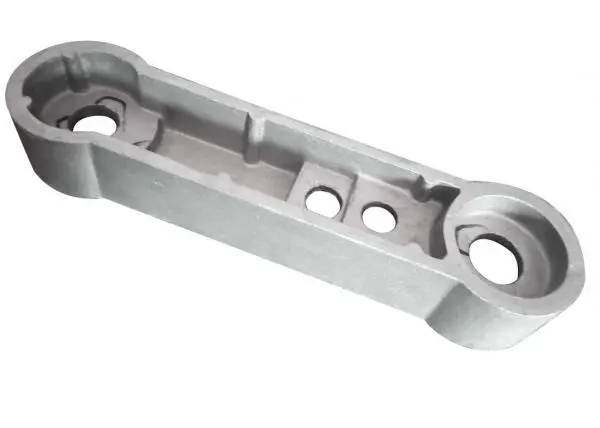
Mechanical Coupling Analysis With the Arm Structure
When designing casting bracket connections for robotic arms or similar structures, mechanical coupling analysis is a critical step. This process involves examining how the connection interacts with the arm structure under various load conditions and operational scenarios.
Key aspects of mechanical coupling analysis for a casting connection bracket include:
- Stress distribution: Examining the forces that are applied to the arm structure and the connecting point.
- Analyzing possible deformations under load to make sure they stay within allowable bounds is known as deformation analysis.
- Characteristics of vibration: Assessing how well the connection reacts to potential vibrations while in use.
- Fatigue resistance: Assessing the connection's long-term resilience to repeated stress cycles.
During the selection process, engineers usually use finite element analysis (FEA) to make sure that the connections' stress distribution under operating loads is appropriate. By identifying possible weak places, this study helps to maximize the design's strength and durability.
Coordinate System Consistency
In the design of casting bracket connections, maintaining coordinate system consistency is crucial for several reasons:
- Accurate motion control is made possible by aligning the connection mounting surfaces with the joint and machine coordinate systems.
- Calibrating the casting connection bracket is made easier by consistent coordinate systems, which guarantee that every part functions as a whole.
- Enhanced interoperability: It is simpler to incorporate new components or swap out old ones when various system components have a similar coordinate reference.
The mounting surfaces of the connections must be precisely matched with the joint coordinate system and the machine coordinate system, according to the designers. This alignment adds to the overall accuracy and effectiveness of the robotic system and is essential for later motion control and calibration procedures.
Compatibility and Replaceability
Component compatibility and replaceability are crucial in the industrial sector, where downtime may be expensive. Engineers give priority to a number of criteria while constructing casting bracket connectors in order to improve these aspects:
- Standardized hole spacing: Connections may be made interoperable with a variety of components by using industry-standard hole designs.
-
Universal bolt specifications: Employing commonly available bolt sizes and types makes replacement and maintenance of the casting connection bracket more straightforward. - Uniform material cross-sections: Consistent material thickness and profiles across connection points facilitate easier manufacturing and replacement.
These strategic design considerations for casting connection brackets significantly streamline spare parts procurement processes while enabling rapid component replacement when maintenance is required. By implementing standardized interfaces and modular designs in casting connection brackets, manufacturers can reduce inventory complexity and eliminate the need for specialized custom parts. For casting connection brackets, this methodical technique significantly lowers long-term maintenance costs and efficiently minimizes operating downtime during maintenance cycles.
Components from various manufacturing batches or suppliers may work together seamlessly thanks to the use of universal mounting patterns and established connection criteria. Additionally, the use of tolerance-absorbing designs and self-aligning features speeds up field replacement processes without the need for specialist technician training or precise instruments. Together, these integrated design techniques maximize total cost of ownership while improving operating efficiency throughout the course of the equipment lifespan. By decreasing reliance on single-source components, the ensuing maintenance-friendly ecosystem enhances supply chain resilience and increases system availability, eventually leading in more economically viable and sustainable industrial operations.
Future Trends in Casting Connection Bracket Design
The design and production of casting connection brackets are changing significantly due to a number of important changes as technology develops.
- Advanced aluminum composites and topology optimization are being used to achieve lightweight design strategies that successfully reduce mass without compromising structural integrity.
- In order to create smart connections, microsensors and Internet of Things modules are embedded. This allows for real-time stress monitoring and makes predictive maintenance plans easier.
- Previously unattainable very complex, integrated geometries with internal cooling channels may now be produced thanks to additive manufacturing methods.
- At the same time, research on sustainable materials focuses on creating environmentally friendly aluminum alloys and putting low-pressure casting techniques into practice that consume less energy.
When taken as a whole, these technical developments help casting connection brackets last longer, operate better, and have a less environmental effect. Standardized connection interfaces guarantee interoperability across industrial robots and automation systems, and the use of digital twin technology enables thorough virtual testing and performance improvement prior to real production. Casting connection brackets are gradually becoming more intelligent, effective, and versatile parts of contemporary industrial applications as a result of these advancements.
Casting Connection Bracket Supplier: Rongbao Enterprise
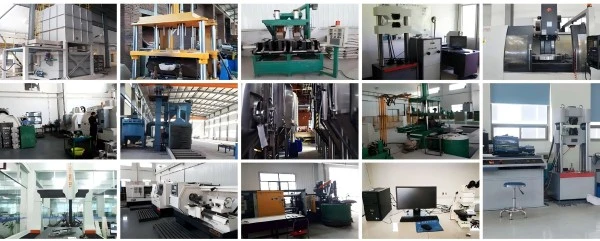
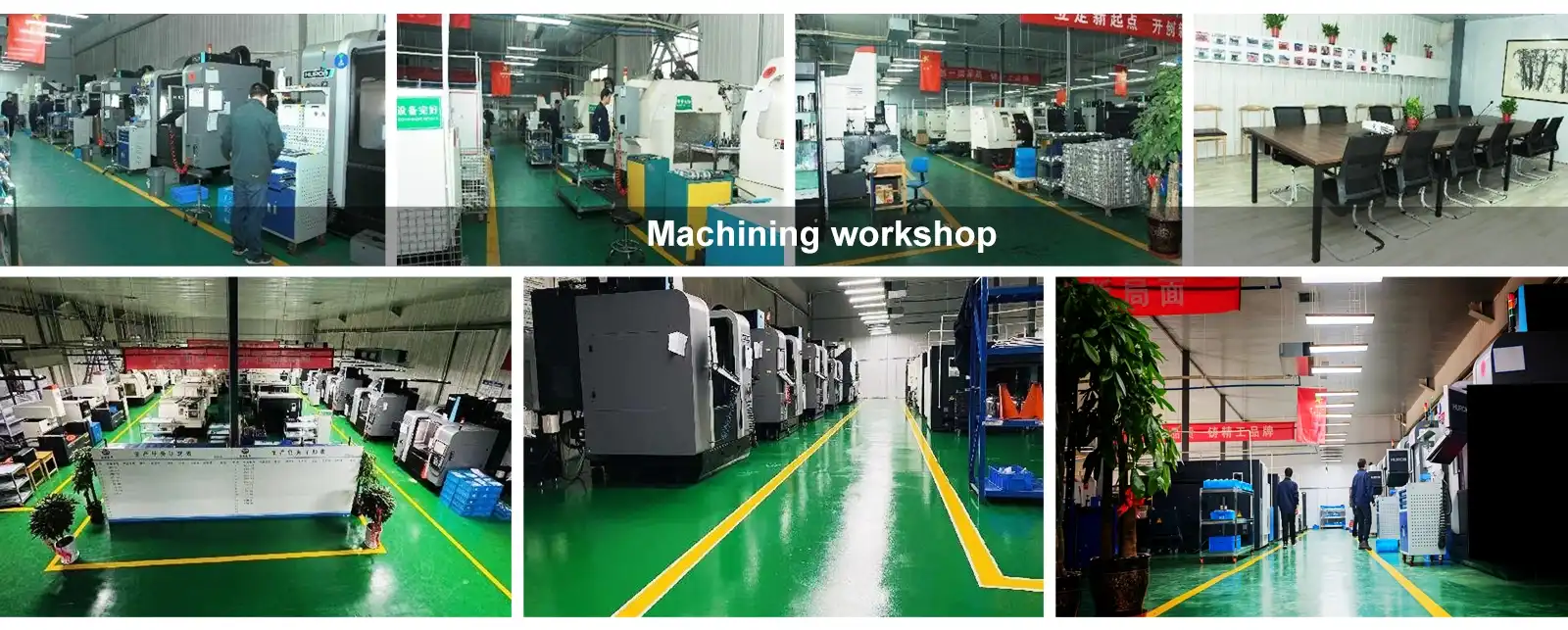
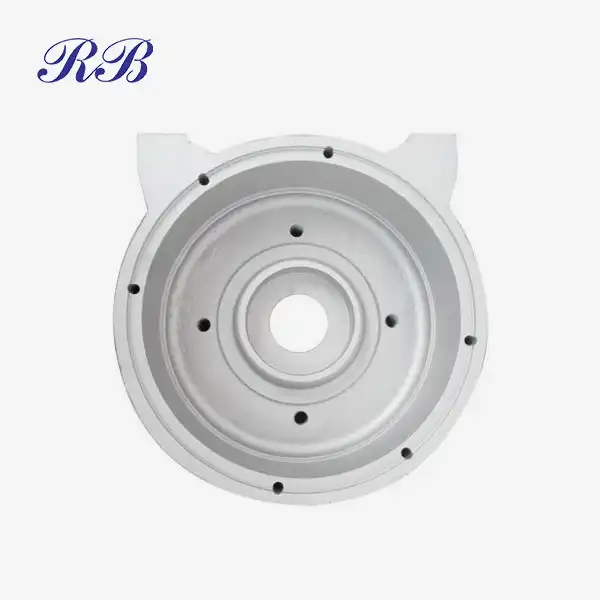
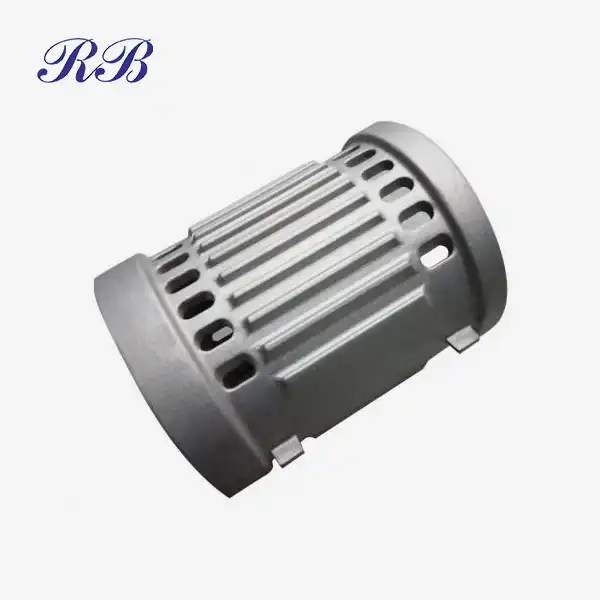
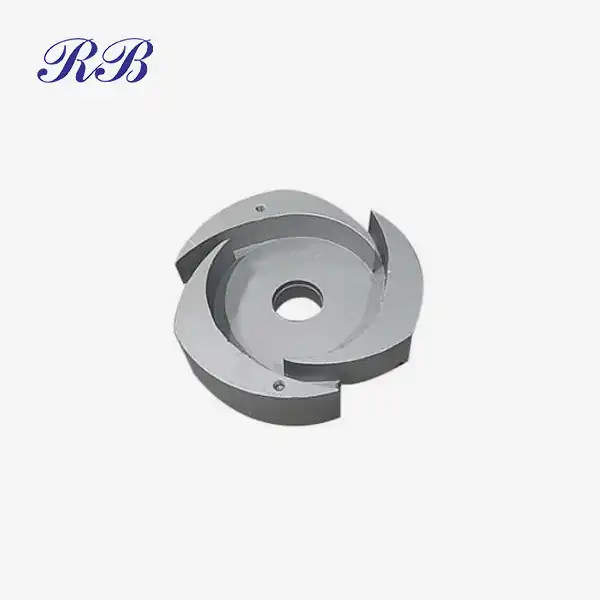
Rongbao Enterprise stands out as a top producer for those looking for casting connection brackets of superior quality. Rongbao was established in 2003 and specializes in precision processing and casting of aluminum alloys. It provides cutting-edge manufacturing techniques such CNC machining and gravity casting. Their 8.9 kg casting connection brackets, which are perfect for industrial robot support arms, are composed of A356 aluminum alloy. With ISO 9001:2015, ISO 14001, and ISO 45001 certifications, Rongbao guarantees superior quality and environmental sustainability. Reach out to Rongbao Enterprise at zhouyi@rongbaocasting.com or steve.zhou@263.net for personalized solutions or other information about their offerings. Rongbao is your reliable partner for all of your casting connection bracket requirements with to its 5000 piece production capacity and dedication to accuracy and innovation.
FAQ
1. What is the importance of mechanical coupling analysis in casting bracket connection design?
Mechanical coupling analysis is crucial in casting bracket connection design as it helps ensure the connection can withstand various forces and stresses during operation. This analysis examines stress distribution, deformation, vibration characteristics, and fatigue resistance, helping to identify potential weak points and optimize the design for maximum strength and durability.
2. Why is coordinate system consistency important in casting bracket connections?
Coordinate system consistency is vital because it facilitates precise motion control, simplifies calibration processes, and improves interoperability between different components of a system. When the mounting surfaces of connectors are aligned with both the machine and joint coordinate systems, it ensures seamless integration and accurate operation of the entire robotic or mechanical system.
3. What are the benefits of using A356 aluminum alloy for casting connection brackets?
A356 aluminum alloy offers several advantages for casting connection brackets, including a high strength-to-weight ratio, excellent castability, good corrosion resistance, and favorable machinability. These properties make it ideal for applications requiring strong, lightweight components that can be easily manufactured and finished to precise specifications.
4. How does gravity casting contribute to the quality of casting connection brackets?
Gravity casting is an effective method for producing high-quality casting connection brackets. It allows for the creation of complex shapes with good dimensional accuracy. The process, which involves pouring molten metal into a mold and letting it solidify under the force of gravity, can produce parts with consistent properties and minimal porosity, contributing to the overall strength and reliability of the connection bracket.
5. What future trends are emerging in the design of casting connection brackets?
Emerging trends in casting connection bracket design include lightweight design techniques, the integration of smart technologies for real-time monitoring, the use of additive manufacturing for complex geometries, and the exploration of sustainable materials and processes. These advancements aim to enhance performance, efficiency, and environmental sustainability in industrial applications.
References
1. Campbell, J. (2015). Complete Casting Handbook: Metal Casting Processes, Metallurgy, Techniques and Design. Butterworth-Heinemann.
2. Groover, M. P. (2020). Fundamentals of Modern Manufacturing: Materials, Processes, and Systems. John Wiley & Sons.
3. Siciliano, B., & Khatib, O. (Eds.). (2016). Springer handbook of robotics. Springer.
4. ASM International. (2008). Casting Design and Performance. ASM International.
5. ISO. (2015). ISO 9001:2015 Quality management systems — Requirements. International Organization for Standardization.
Learn about our latest products and discounts through SMS or email