- English
- French
- German
- Portuguese
- Spanish
- Russian
- Japanese
- Korean
- Arabic
- Greek
- German
- Turkish
- Italian
- Danish
- Romanian
- Indonesian
- Czech
- Afrikaans
- Swedish
- Polish
- Basque
- Catalan
- Esperanto
- Hindi
- Lao
- Albanian
- Amharic
- Armenian
- Azerbaijani
- Belarusian
- Bengali
- Bosnian
- Bulgarian
- Cebuano
- Chichewa
- Corsican
- Croatian
- Dutch
- Estonian
- Filipino
- Finnish
- Frisian
- Galician
- Georgian
- Gujarati
- Haitian
- Hausa
- Hawaiian
- Hebrew
- Hmong
- Hungarian
- Icelandic
- Igbo
- Javanese
- Kannada
- Kazakh
- Khmer
- Kurdish
- Kyrgyz
- Latin
- Latvian
- Lithuanian
- Luxembou..
- Macedonian
- Malagasy
- Malay
- Malayalam
- Maltese
- Maori
- Marathi
- Mongolian
- Burmese
- Nepali
- Norwegian
- Pashto
- Persian
- Punjabi
- Serbian
- Sesotho
- Sinhala
- Slovak
- Slovenian
- Somali
- Samoan
- Scots Gaelic
- Shona
- Sindhi
- Sundanese
- Swahili
- Tajik
- Tamil
- Telugu
- Thai
- Ukrainian
- Urdu
- Uzbek
- Vietnamese
- Welsh
- Xhosa
- Yiddish
- Yoruba
- Zulu
What are benefits of low pressure casting for a custom robot arm?
Robotics makers need components that strike a compromise between structural strength, weight, dimensional precision, and manufacturing cost. The choice of a suitable manufacturing method is particularly crucial for custom robot arms, since the mass and stiffness of the components might affect the movement, positioning, and payload performance. Low pressure casting is a feasible technology for the manufacturing of certain aluminum alloy robot arm parts with complicated shapes and controlled metal fill. For companies sourcing custom robot arms, understanding the benefits and limitations of this process helps engineers select a manufacturing solution that meets their design and production requirements. Controlled gas pressure is used in low-pressure casting to drive molten metal from a holding furnace into a mold, often via a riser tube. Compared with uncontrolled pouring, the filling process can be handled more consistently. The actual results rely on the alloy, the mold design, the pressure settings, and the solidification circumstances.
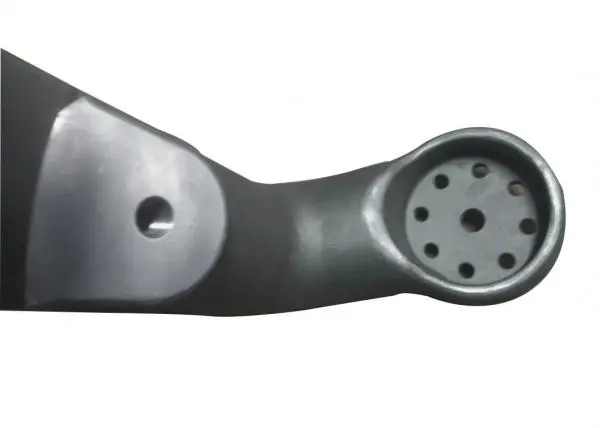
Lightweight Robot Arm Components Without Compromising Design Requirements
Weight reduction of components is a significant aspect in robotic systems. All moving parts add to the stress on the drive system, and more bulk might increase the effort needed for acceleration and deceleration.
Designing Thin Walls and Complex Geometries
When alloy, mold design, and process conditions are appropriate, low-pressure casting may facilitate manufacturing of aluminum components with relatively thin walls. Some designs may be possible to have wall thicknesses of roughly 3-4 mm; however, this is not a universal criterion. The smallest practicable size relies on the size of the component, its flow route, the qualities of the alloy, and the structural requirements.
Controlled filling may let molten metal reach varied portions of a mold while decreasing the likelihood of premature solidification in restricted sections. This is helpful when the robot arm housing has ribs, mounting features, curved surfaces, or other incorporated geometries.
But thin walls should not be selected only to save weight. Engineers also need to consider stiffness, local stress concentrations, fatigue loading, and the forces that are transferred via joints and mounting points. Reinforced ribs and structural elements placed in key locations might help keep it stiff without adding unneeded mass.
Improving Motion Efficiency Through Weight Reduction
A lighter arm component for the custom robot arms reduces the mass that the driving system has to move. This may assist to reduce the rotational inertia and increase the reaction of the acceleration, depending on the arrangement of the robot.
Weight reduction might also affect the entire payload budget. If the structural performance of the arm is still acceptable, lowering the mass of the arm's moving parts may provide more room for the end effector or the workpiece.
These advantages are a function of the whole mechanical design and not just of the casting technique. Robotic performance is also affected by motor size, joint shape, bearing choices, and control parameters. Manufacturers should assess the final component in the planned assembly before making any promises concerning payload or energy savings.
Better Internal Quality Through Controlled Metal Filling
Internal flaws in castings may often affect the reliability of a custom robot arm component, particularly one that often moves, vibrates, or is subject to varying mechanical pressures. Low-pressure casting may help to manage the filling of the metal, but can not eliminate all faults.
Reducing Porosity and Unwanted Flow Disturbances
In low-pressure casting, the mold is filled from the bottom with molten metal under controlled pressure. The correct filling profile may decrease the turbulence, which is known to follow poorly handled metal ingress.
The reduction in turbulence could be useful in retarding the entrainment of oxide film and certain sources of gas-related defects. Repeatability of results still depends on correct mold design, venting, melt preparation, and temperature control.
This distinction is important since porosity may have many different origins. Gas porosity and shrinkage porosity may be modified by various process changes. Engineers should also evaluate the likely source of the issue before adjusting the pressure settings or modifying the mold.
The quality of the interior is particularly important for components of robot arms at highly loaded points of installation, contacts of joints, and thin structural sections. The degree of inspection should be commensurate with the risk level for the component and projected service conditions.
Supporting Strength and Fatigue Performance
A casting with fewer major internal faults may provide a stronger base for structural performance. The density of castings is not the sole element affecting tensile strength, fatigue resistance, or service life.
The properties are also dependent on the composition of the alloy, solidification behavior, heat treatment, form of the component and the distribution of any remaining faults. For frequently loaded objects, the engineering teams would review the expected load spectrum and find the locations where stress concentrations may arise.
Depending upon the application, dimensional inspection, mechanical testing, or other suitable nondestructive examination may be essential. Verification of these requirements prior to production helps the supplier to design an appropriate manufacturing and quality control plan.
Improved Surface Finish and Dimensional Consistency
Some of the pieces of a robot arm might have mounting surfaces and joint interfaces and features that must be aligned appropriately with the adjacent parts. Low-pressure casting may be a method of producing repeatable parts with strong tool and process control.
Achieving More Consistent Mold Filling
The controlled introduction of metal may be employed to fill the mold predictably. Producers may achieve more consistent surface quality and dimensional outcomes with the correct gating system and mold temperature and pressure profile specific to the component.
The final surface finish will still depend on the mold surface, alloy, solidification conditions, and any finishing treatments required. Cast surfaces are not immediately presumed to be suitable for direct assembly.
Additional machining may be required for features such as bearing seats, threaded holes, and accurate interfaces and locating surfaces. Product development is much easier if you keep cast measurements distinct from finished dimensions.
Reducing Unnecessary Machining and Assembly Issues
A carefully designed custom robot arm may integrate several structural features in a single piece, thereby reducing the number of separate parts and machining operations.
Custom robot arm housings with ribs, bosses, and mounting pieces may facilitate the component layout. If the design also allows for consistent dimensional control, then the downstream machining and assembly planning may be more predictable.
But savings depend on component form, production volume, tooling investment, and tolerance requirements. Instead of the casting price, the total cost of making an acceptable component, e.g., gravity casting or any other suitable manufacturing technique, should be compared against CNC machining.
Choosing the Right Process for Your Robot Arm Design
The low-pressure casting process is not always the optimum method to make custom robot arms. When picking a process, engineers have to consider the material, shape, estimated loads, and amount of production.
Confirming Material and Structural Requirements
Robot arm housings and structural components are often made from aluminum alloys, providing a good balance between low density and mechanical qualities. The alloy used should be suitable for the specified strength, ductility, corrosion resistance, heat treatment, and service conditions.
Designers should describe the basic methods of loading, assembling sites and zones of repetitive movement. These metrics are used to evaluate if the proposed casting form can provide sufficient stiffness and structural integrity.
For heavily loaded and safety-essential applications, material specification and acceptance criteria should be set prior to manufacturing. Engineering calculations and/or physical testing may be conducted to verify the fitness of the generated product for the intended purpose.
Evaluating Production Cost and Lead Time
The starting cost and the expected order quantity are crucial considerations. Low-pressure casting may need special equipment. If you repeat creating the same product again and again you can spread the cost of tooling across a lot more units . For prototypes or limited volume applications, another technique may be more cost-effective.
A comprehensive quote would include tooling, casting, heat treatment if necessary, machining, inspection and packing. Buyers must additionally consider the projected time for sample, tooling approval, manufacturing, and delivery.
But unit pricing isn’t a smart way to choose a supplier. It is far more beneficial to think about these characteristics and compare.
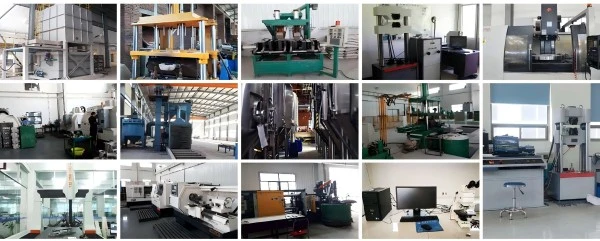
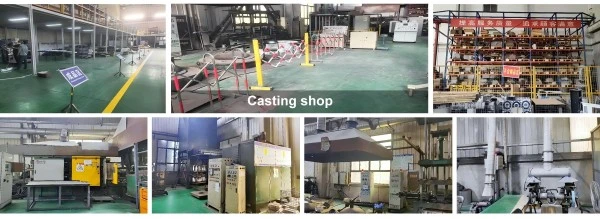
Rongbao Enterprise: Custom Casting Solutions for Robot Arm Components
Rongbao Enterprise is involved in aluminum alloy casting and precision processing operations. It states that it was founded in 2003 and provides casting solutions for clients searching for unique metal components.
When manufacturers are designing, the assessment of suppliers for bespoke custom robot arms should start with the real component requirements. The right partner knows the technical drawing, the material, the crucial dimensions, the machining, and the volume of production.
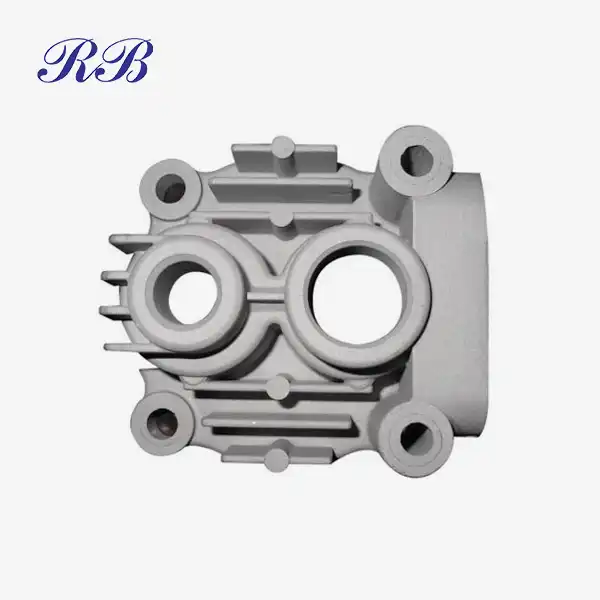
If your project requires an aluminum alloy housing and other components that need to be filled in a regulated mold, you should check out the low-pressure casting abilities of Rongbao. Buyers are advised to check with the technical team on the feasibility of the proposed design before deciding on the manufacturing choice.
When considering Rongbao or similar casting vendors, buying teams should check appropriate quality-management certifications, manufacturing capacity, inspection equipment, and expertise on similar components. The literature offered by the company mentions the certificates ISO 9001, ISO 14001 and ISO 45001, although buyers are encouraged to verify the current certificate versions, validity and scope directly with the provider.
Have component drawings, yearly demand, alloy needed, key tolerances, machining details, and inspection needs ready before you obtain a price. This information allows the suppliers to determine whether the item is possible to create and provides a list of problems that must be addressed prior to building tooling.
Conclusion
Low pressure casting provides a number of advantages for custom robot arms, including the potential for low weight structural designs, controlled filling of the metal, consistent dimensions and minimal machining. The benefits depend on the appropriate selection of alloys, design of the mold, process control, and verification of the final component.
Robotics manufacturers should start with the part’s functional requirements, not how it is produced. Low-pressure casting is an option when structural loads, tolerance requirements, production volume, and total manufacturing cost are taken into consideration.
If you are creating a new robotic arm component or need a custom aluminum casting solution, submit your technical drawings and production requirements to Rongbao Enterprise for a feasibility study and price. A basic discussion of materials, important dimensions, finishing techniques, and quality criteria may assist in creating a practical route from design to manufacturing.
To learn more about how Rongbao can meet your custom robot arm casting needs or to request a quote, please contact our experienced team at steve.zhou@263.net or zhouyi@rongbaocasting.com. Their specialists are ready to assist you in finding the perfect solution for your specific requirements, ensuring you receive high-quality, precision-engineered components that meet the demanding standards of your industry.
References
1. Campbell, J. (2015). Complete Casting Handbook: Metal Casting Processes, Metallurgy, Techniques and Design. Butterworth-Heinemann.
2. ASM International. (2008). ASM Handbook, Volume 15: Casting. ASM International.
3. Kalpakjian, S., & Schmid, S. R. (2014). Manufacturing Engineering and Technology. Pearson.
4. Ndaliman, M. B. (2014). Influence of Sand Casting Process Parameters on the Quality of Cast Aluminum Alloy. Journal of Applied Sciences and Environmental Management, 18(2), 243-248.
5. Sadeghi, M., & Mahmoudi, J. (2017). Experimental and Theoretical Study on the Effects of Process Parameters on the Quality of Aluminum Alloy Casting. Proceedings of the Institution of Mechanical Engineers, Part B: Journal of Engineering Manufacture, 231(4), 677-686.
Learn about our latest products and discounts through SMS or email