Internal Casting Defects and What Causes Them
Internal flaws are formed within the casting or just below its surface. Depending on size, distribution, and position, they may influence mechanical qualities, pressure tightness, machining results, or dependability of a final component. Their suitability should be judged on terms of the drawing and inspection standards that apply and not by appearance.
Gas Porosity
Gas porosity appears as minuscule holes in the casting. These holes may be round or irregular, single or in clusters. They may appear after material removal if they intersect a machined surface. In cases in which pressure tightness is necessary, the connected holes might be a possible leakage route.
Possible causes include gases in the molten metal, bad melt treatment, moisture or contamination, and inadequate filling or venting conditions. This depends upon the alloy, the equipment, and the manner of fabrication.
The maker may limit the possibility of gas porosity by controlling the cleanliness of the melt, employing suitable degassing processes when available, keeping the tools and materials dry, and evaluating the filling process. Buyers are asked to define whether the item requires pressure-tightness and whether internal inspection is required for critical areas.
Shrinkage Cavities and Shrinkage Porosity
Aluminum alloys tend to shrink on solidification. If the casting does not get enough liquid metal to compensate for this contraction, then cavities or distributed shrinkage porosity might occur in the final areas to solidify. Such defects may be seen in the region of thick sections, joints, or other sites where solidification is not uniform.
Gas porosity is not the same as shrinkage defects. They are mostly connected to the solidification and feeding conditions. They are not exactly spherical, but seem irregular.
Contributing factors may include improper casting geometry, lack of feeding, uneven cooling, and process conditions not allowing progressive solidification. Corrective intervention may involve re-investigation of part design, die temperature, cooling systems and pressure profile.
Location of the defect is of key significance to consumers. Discontinuities in a section to be machined, loaded or used as a sealing region may need more attention than a discontinuity in a non-critical location. The inspection criteria should specify the areas of concern and the boundaries of acceptability.
Inclusions
Inclusions: Foreign material entrapped in the casting. These may be oxide layers, non-metallic particles, or refractory material picked up during melting, metal handling, or pouring. Depending on their size and location, inclusions may produce local discontinuities or influence machining and surface quality.
Contaminated charge materials, poor melt cleanliness, oxide formation, and erosion of tools or furnace and handling materials are sources. Process controls must thus cover raw-material management, melt treatment, metal transfer, and equipment maintenance.
Visual inspection may not be enough when inclusions are identified. Radiographic examination, metallographic investigation, or other approved procedures may be used to identify and define the issue. It is contingent upon the sort of inclusion expected, its magnitude, and inspection requirements.
Hot Tears and Solidification Cracks
Hot tears are fissures produced during solidification of the alloy which cannot readily flex. They are related to a mixture of solidification behavior, local stress, limited mobility, alloy properties, and casting geometry.
Areas with sudden changes in section thickness or limited contraction may be particularly vulnerable. Design and temperature conditions might also impact the risk.
If hot ripping does happen, the manufacturers may need to look at the casting shape, alloy choice, die temperature, and cooling conditions. A fracture should not be disregarded or accepted because of its limited length or difficulty of observation. • Location, depth and orientation of the component, its link to service needs
Special attention should be paid to flanged pieces, mounting areas, transitions between thick and thin sections, and other points called out as crucial on the engineering design.
Surface Defects That Require Attention
Surface faults are usually simpler to detect than interior discontinuities, although their significance is related to their location. A surface defect may just influence appearance, or it may impair machining, sealing, assembly, coating, or corrosion protection.
Cold Shuts
A cold shut is an imperfect connection or seam, like a line, when two streams of molten metal meet but do not join properly. It may happen if the metal is cooled down too much before the streams meet or if the filling pattern does not offer appropriate flow conditions.
Possible contributors include inadequate metal temperature, improper filling parameters, poor venting, and die design that causes adverse flow patterns. The true reason should be determined via process assessment rather than inferred from the surface look alone.
Check for indication near a sealing face, mounting surface, or load-bearing area during inspection. Whether you don’t know the depth or relevance of it, you may want to evaluate it more before choosing whether the section is acceptable.
Misruns and Incomplete Filling
A misrun is a condition in which molten metal does not entirely fill the die cavity. The consequence might be a missing edge, an incomplete flange profile, or a portion that falls short of the specified dimensions.
Possible reasons include wrong filling conditions, too high heat loss, wrong die temperature, limited flow routes, or venting difficulties. In rare cases, the filling process might also be affected by overapplication of the releasing agent.
Pay attention to inspection of the margins of flanges, ribs, thin sections, holes, and other characteristics where a lack of full fill might impact assembly or performance. Dimensional checks can determine whether the missing material makes the item out of drawing specifications.
If the same fault occurs more than once, the provider must look at the process, not just the sorting.

Die Soldering and Surface Pickup
Die soldering is the bonding of molten metal to the die surface. The afflicted casting may display localized surface degradation, rough patches, drag marks, or material pickup. Repeated soldering may also influence die condition and manufacturing uniformity.
Possible contributory causes include incorrect die temperature, lack of die-surface protection, alloy-die contact, and process parameters that encourage adhesion. Corrective actions may include assessment of die coatings, release-agent application, thermal balancing and maintenance standards.
The key concern for purchasers is whether the desired surface quality and dimensional tolerances can still be achieved on the affected region. If the item is going to be further machined or coated, the supplier should check that the flaw will not be evident or interfere with the following process.
Surface Porosity and Pitting
Surface porosity is the existence of tiny holes or pits that are visible on the surface of the casting. Some signs include exposed low-pressure casting flange parts of internal pores, while others may be related to gas entrapment, surface reactions, or local process conditions.
These defects matter whether they are on sealing surfaces, on areas crucial to appearance, or in areas that will be coated with a protective coating. They also may become more visible after machining or polishing.
Inspection should include recording the location, distribution, and estimated amount of porosity. If the flange is to be used in a pressure-containing assembly, the approval criteria should be based on the appropriate pressure-tightness requirements rather than appearance alone.
Inspection Methods for LPDC Flange Components
No one inspection technique will find all casting defects. A realistic inspection plan combines visual and dimensional inspection with further testing where required by the drawing, risk assessment or client specification.
Visual Examination
Usually the first stage is visual investigation. Inspectors look at the casting for lack of fill, visible fractures, surface porosity, cold shuts, die marks and other obvious flaws.
The inspection conditions should be appropriate for the item size, surface polish, and degree of detail needed. Magnification or increased illumination may assist in revealing indicators not readily visible under normal circumstances if appropriate.
Internal flaws cannot be confirmed by visual examination. It should thus be considered as part of a broader quality control strategy.
Dimensional Inspection
Dimensional inspection ensures that the casting and any machining elements are to the engineering design. Common tools include calipers, micrometers, gages, height gages, and coordinate measuring machines (CMMs).
Overall diameter, thickness, bolt-hole locations, mounting faces, bore dimensions, flatness, and concentricity (where required) are key qualities for flange parts. It is contingent upon the design and the planned assembly. What characteristics are significant?
The buyer should submit a controlled drawing with tolerances and datum references. They should also state if an examination is needed on the as-cast item, the machined component, or both. A part may pass inspection yet still be out of tolerance on a vital dimension.
Radiographic Testing
Radiographic testing employs X-ray or gamma radiation to analyze interior characteristics. Depending on the wall thickness, kind of defect, part shape, and inspection setup, it may disclose certain forms of porosity, shrinkage cavities, and inclusions.
Radiography is not equally effective for all discontinuities. Detectability may be affected by defect orientation, overlapping geometry, and thickness change. Testing methods and acceptance criteria should be mutually accepted prior to testing.
Buyers should agree which regions are to be radiographed, the level of sensitivity predicted, and how the findings will be recorded for crucial low-pressure casting flange parts.
Ultrasonic Testing
Ultrasonic testing locates interior discontinuities using high-frequency sound waves. Its applicability is a function of the alloy, the casting microstructure, the shape of the part, the surface condition, and the size and direction of the flaws being sought.
The approach might be beneficial in certain setups, but complicated forms and coarse or varied casting structures may make interpretation difficult. A provider should not make an unqualified claim that ultrasonic testing will find every pore or fracture.
Buyers should ensure before picking this methodology that the technique will allow for reliable inspection of the component and that the process is adequate for the acceptance criteria needed.
Dye Penetrant Testing
Dye penetrant testing is performed to locate discontinuities open to the surface. A penetrant penetrates surface-breaking faults, and a developer helps to disclose pertinent signals once excess penetrant is eliminated.
The procedure may be suitable for investigation of suspected surface cracks and certain other surface-open faults. It cannot identify entirely contained internal porosity or fissures which do not reach the surface.
The inspection method must comprise suitable surface preparation and assessment of indicators against the established criteria. If the component is to get a coating or other finishing treatment, the time of inspection should also be indicated.
Metallographic and Hardness Examination
Metallography is the preparation of a sample for microscopic inspection. It may be used to examine microstructure, porosity distribution, inclusions, and other aspects that may assist in explaining a casting-quality problem. As the procedure often involves sectioning and preparing a sample, it does not normally replace regular non-destructive examination of each final item.
Hardness testing gives a measurement which may be used to determine whether the material fulfills a particular criterion. The test method and acceptability range should be chosen for the alloy and component specification. Hardness alone does not define the total mechanical performance or demonstrate a casting flaw free.
They work best when a well-defined test strategy is in place, findings are recorded, and there are obvious ties to the item or production batch being tested.
Building a Practical Quality-Control Plan
A reliable inspection plan begins before production. Buyers and suppliers should agree on the characteristics that matter most, the inspection methods that can verify them, and the criteria for accepting or rejecting a part.
Define Requirements Before Production
The purchase specification should list the alloy, the revised drawing, the key dimensions, the surface finish requirements, the machining tolerances, and any requirements for mechanical properties or pressure tightness. In addition, it should say if any places need to be checked more closely.
If the part has sealing faces or bolt holes that are close together, these features should be made clear. The supplier doesn't have to wait until after the first batch is cast to figure out what needs to be done; they can now set up the right process controls and inspection steps.
Confirm Inspection Records and Traceability
Buyers may need reports on measurements, licenses of materials, records of eye inspections, results of non-destructive testing, or any other quality paperwork that was accepted based on the order. When it's needed, each document should include the part number, drawing change, batch number, and inspection state.
Before production starts, everyone should agree on the papers that are needed. This keeps people from arguing about what tests were done and whether the results match the requirements for the purchase.
Review Samples Before Volume Production
Sample clearance lets both parties see if the product can be made and find any problems before the order goes into normal production. Pay close attention to key dimensions, machining areas, surface condition, and any other testing needs as you compare the sample to the design and approved inspection plan.
If the casting design, tools, alloy, or machining process changes, everyone involved should decide if they need to make a new sample or get more approval.
Sourcing LPDC Flange Parts from Rongbao Enterprise
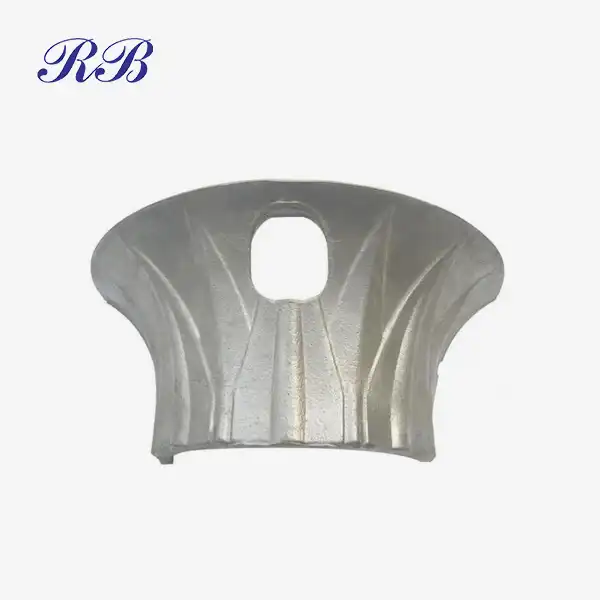
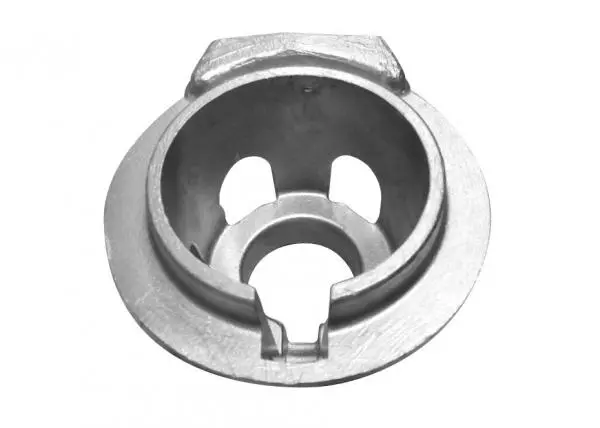
Rongbao Enterprise is a manufacturer of industrial aluminum alloy castings and precision low-pressure casting flange parts. The offered product information states that the firm was founded in 2003 and provides low-pressure casting of flange components.
The product specs are as follows:
Material: ZL101 Aluminum Alloy
Weight: 1.1 lbs
Production Process: Low-Pressure Die Casting
This information will provide the consumer with a first comparison point when considering the goods. Final appropriateness still relies on the customer’s design, dimensional tolerances, material requirements, surface-finish demands, and planned operating conditions.
When talking about a new project with Rongbao, customers should provide the latest technical design and which aspects are important to assembly or performance. It also assists in determining the necessity for CNC machining, identifying areas that need special care, and verifying if the order includes extra testing or inspection reports.
Rongbao said 70 percent of its goods are shipped to the United States, Europe, Japan, and other regions. Provides history on its worldwide company, but purchasers should verify manufacturing capacity, delivery timeline, paperwork, and inspection preparations for every given project.
Before placing a production order, ask the supplier to confirm in writing the agreed material, method, inspection scope, sample-approval procedure, packaging requirements, and acceptance criteria. These specifics provide a better platform to judge quality and set expectations throughout manufacturing.
Conclusion
The quality control for LPDC flange components involves more than the detection of apparent casting faults. The reasons for gas porosity, shrinkage, inclusions, hot tears, cold shuts, partial filling, and surface porosity are all distinct, and the repair methods may also be diverse. The inspection must also be appropriate to the shape, material, and application of the component.
For consumers purchasing low-pressure casting flange parts, the best way is to set important criteria early, choose the right inspection techniques, evaluate samples before volume production, and request traceable quality records.
Open and transparent communication between buyer and supplier helps to decrease misunderstandings, maintain consistency of acceptance choices, and lower the potential to find preventable issues after delivery. The alignment of the design, manufacturing process, and inspection plan enables better assessment of the flange components in comparison to the requirements for the final assembly.
To discuss your unique needs or to inquire about low-pressure casting flange parts, get in touch with Rongbao Enterprise right now at zhouyi@rongbaocasting.com or steve.zhou@263.net. Discover the impact that skill and accuracy may have on the manufacturing of your flange parts.
References
1. Campbell, J. (2015). Complete Casting Handbook: Metal Casting Processes, Metallurgy, Techniques and Design. Butterworth-Heinemann.
2. ASM International. (2008). ASM Handbook, Volume 15: Casting. ASM International.
3. Kaufman, J. G., & Rooy, E. L. (2004). Aluminum Alloy Castings: Properties, Processes, and Applications. ASM International.
4. Shivkumar, S., Wang, L., & Apelian, D. (1991). The lost-foam casting of aluminum alloy components. JOM, 43(1), 26-32.
5. Jorstad, J., & Rasmussen, W. M. (2013). Aluminum Casting Technology. American Foundry Society.