- English
- French
- German
- Portuguese
- Spanish
- Russian
- Japanese
- Korean
- Arabic
- Greek
- German
- Turkish
- Italian
- Danish
- Romanian
- Indonesian
- Czech
- Afrikaans
- Swedish
- Polish
- Basque
- Catalan
- Esperanto
- Hindi
- Lao
- Albanian
- Amharic
- Armenian
- Azerbaijani
- Belarusian
- Bengali
- Bosnian
- Bulgarian
- Cebuano
- Chichewa
- Corsican
- Croatian
- Dutch
- Estonian
- Filipino
- Finnish
- Frisian
- Galician
- Georgian
- Gujarati
- Haitian
- Hausa
- Hawaiian
- Hebrew
- Hmong
- Hungarian
- Icelandic
- Igbo
- Javanese
- Kannada
- Kazakh
- Khmer
- Kurdish
- Kyrgyz
- Latin
- Latvian
- Lithuanian
- Luxembou..
- Macedonian
- Malagasy
- Malay
- Malayalam
- Maltese
- Maori
- Marathi
- Mongolian
- Burmese
- Nepali
- Norwegian
- Pashto
- Persian
- Punjabi
- Serbian
- Sesotho
- Sinhala
- Slovak
- Slovenian
- Somali
- Samoan
- Scots Gaelic
- Shona
- Sindhi
- Sundanese
- Swahili
- Tajik
- Tamil
- Telugu
- Thai
- Ukrainian
- Urdu
- Uzbek
- Vietnamese
- Welsh
- Xhosa
- Yiddish
- Yoruba
- Zulu
Why choose aluminum for the cast lamp holder cover?
Outdoor lighting components must withstand changing weather conditions, support the lamp assembly, and maintain accurate dimensions during installation. Material selection plays an important role in meeting these requirements. For manufacturers and purchasing teams sourcing Cast lamp holder covers, aluminum alloy is a practical option because it combines relatively low weight, good casting characteristics, and useful corrosion resistance. A lamp holder cover is not only an outside housing. Its shape may contain internal features, fastening holes, surfaces, and mounting points that must align with other lighting components. The material used must be compatible with the design of the item and the manufacturing process, as well as the requirements of the environment in which it is to be installed. A356 aluminum alloy for gravity-Cast lamp holder covers lighting components. Zinc alloys may also be an option when the project calls for increased importance of fine surface details or other special production requirements. The correct decision is based on the component size, mechanical requirements, finish, manufacturing volume, and the anticipated service environment.

Why A356 Aluminum Alloy Is a Practical Choice
A356 is a popular casting alloy of aluminum-silicon-magnesium. It is well adapted for certain structural and housing elements, such as pieces of outdoor lighting, because of its casting properties and possible mechanical behavior.
Alloy Composition and Mechanical Performance
Silicon helps molten aluminum flow, letting it fill the mold cavity in casting. Magnesium adds to the alloy’s capacity to react to heat treatment, which may enhance mechanical qualities when the suitable technique is utilized.
The real chemistry will meet the material specification that is agreed upon for the project. Alloy designation must be checked by the purchaser, and material verification must be requested if composition is a restricted buying requirement.
The mechanical characteristics of A356 are dependent on several parameters such as heat-treatment condition, casting quality, component geometry, and test circumstances. Therefore, tensile strength, yield strength, and hardness numbers should be obtained from the suitable material specification or validated test results, and not as general values.
The primary issue for a cast lamp holder cover is whether the completed part will be able to support the light assembly and survive the stresses it will see during installation and operation. That evaluation is based on increasing characteristics, wall thickness, fastening placements, and local stress concentrations.
When the project has specific load needs, buyers should disclose load requirements at the quote stage. This enables the supplier to review the part design and see if there are any further validations that may be required.
Lightweight Construction for Outdoor Lighting
Aluminum is a very lightweight metal compared to steel and most other iron-based metals. This may assist in decreasing the weight of a lighting assembly when the design of the component is similar.
Less weight of components may result in easier handling and installation. It also may lower the load a mounting structure or light post has to carry. These advantages are useful for street lighting, landscape lighting, commercial outdoor fixtures, and other applications where ease of installation and the weight of the assembled product are important.
However, the ultimate weight depends on the size of the product, wall thickness, reinforcement, and the design of the installation. A lightweight material does not inherently mean a lightweight final part if the design demands more material to provide stiffness or strength.
Buyers need to consider the actual part weight combined with the design, dimensional specifications, and mechanical needs when comparing vendors. A weight objective is more effective if assessed in conjunction with structural performance rather than as a separate specification.
How Aluminum Performs in Outdoor Conditions
The outdoor lighting equipment may be subjected to rain, humidity, variations in temperature, dust, and airborne pollutants. The material and surface finish should be appropriate for the environment in which the lamp holder cover will be used.
Corrosion Resistance and Surface Protection
Aluminum oxidizes in air to generate a thin coating of oxide. This layer offers some protection, but it doesn’t mean that each and every metal casting is acceptable for every outdoor setting without further thought.
Conditions of exposure differ. A component put in a protected urban environment may have different issues than a component located by the shore, where salt deposits and high humidity may exacerbate corrosion issues. There may be other pollutants in industrial areas.
Surface treatment may be used to enhance the look or to give an extra level of protection. Depending on the application, appropriate coating or other specified finishing methods may be chosen. The alloy, surface condition, coating compatibility, and desired look should all be considered while making the decision.
If corrosion performance is a factor in buying, buyers need to specify the desired environment and the acceptance criteria. Where salt spray testing is specified, the test technique, specimen preparation, coating system, test duration, and assessment criteria should be agreed upon by all parties prior to testing. The test result alone is not directly to be taken as an indication of service life.

Thermal Conductivity and Temperature Changes
Aluminum alloys are good conductors of heat, better than many conventional structural materials. This characteristic may be advantageous in lighting setups when heat transmission is part of the overall design.
But the thermal behavior of a lamp holder cover relies not just on the material. Wall thickness, component shape, ventilation, contact with adjoining parts, and the heat produced by the lighting system may all affect operating temperatures.
Do not assume that a Cast lamp holder cover will withstand a certain interior temperature or sustain a given power rating without assessment at the application level. Thermal needs in high-power LED lights should be addressed while considering the whole luminaire design.
Temperature restrictions should also reflect the intended environment and any coatings, seals, or connected components. Buyers should describe the anticipated operating conditions to evaluate material and finishing options correctly.
Why Gravity Casting Suits Lamp Holder Covers
Material choice is only one aspect of the production decision. The form, size, and quality standards of the component must also be compatible with the manufacturing process.
Gravity-cast lamp holder covers are one way to make pieces out of aluminum alloy. The desired geometry may be obtained by pouring molten metal into a prepared mold under the influence of gravity. Its applicability is a function of casting design, wall thickness, complexity of features, alloy, and manufacturing requirements.
Design Flexibility and Dimensional Control
Mounting bosses, recesses, ribs and other characteristics necessary for assembly may be included in lamp holder covers. These forms may be made via gravity casting. The practicality of each feature relies on the mold design and casting circumstances.
The drawing should indicate key dimensions and tolerances, particularly those which influence alignment, fastening and contact with neighboring components. Not all surfaces of the casting will be of the same dimensional precision, and certain features may need to be machined subsequently.
Tooling design has to account for casting shrinkage. The dimensional change relies on the alloy, the mold design, the geometry, and the process circumstances. Instead, it is to be regulated by suitable tooling allowances and controls on manufacturing, rather than assuming a constant value for each item.
CNC Machining and Surface Finishing
After casting, several coverings for the light holders have to be CNC machined. Typical processes may include drilling mounting holes, cutting reference surfaces, or completing features that need finer tolerances than the as-cast method can dependably supply.
The machining plan must be based on the drawing and the assembly needs of the part. Rather than thinking every feature must be machined to the same tolerance, buyers should indicate which dimensions are crucial and which surfaces should be machined.
Loose surface residues may also be removed by shot blasting where suitable, to provide a more uniform appearance prior to final finishing. The final surface condition should be decided upon according to the desired finish of the product and any coating needs.
Good co-ordination between the casting, machining and finishing operations helps to eliminate unnecessary re-working. It also offers the purchaser a more thorough foundation for rating the completed product, rather than the casting alone.
When Should Zinc Alloy Be Considered?
But for projects where other goals are more important, zinc alloy may be a better alternative. A356 aluminum is a reasonable option for many outdoor lighting covers. The selection must be made on the basis of the actual grade, design, method of manufacture, and the performance needed.
Surface Detail and Manufacturing Requirements
In certain zinc alloys, the fluidity is excellent and fine details may be produced in appropriate casting techniques. They may be worth considering if a project has a strong focus on fine geometry, surface appearance or certain production features.
However, the surface quality of a completed product relies on the alloy, mold condition, process control, and finishing procedures. The name of the substance does not guarantee a smoother surface.
When appearance is crucial, buyers should compare samples or agreed finish specs. They should also verify that the suggested alloy and Cast lamp holder covers technique will be able to fulfill the dimensional and finishing criteria.

Weight, Environment, and Cost
Zinc alloys tend to be heavier than aluminum alloys. For components of equal size, a zinc alloy variant may consequently be heavier which might influence handling and the strain on the supporting structure.
Whether or not zinc alloy is suitable for outdoor usage depends upon the grade, the surface protection, and the exposure circumstances. Corrosion performance is application-specific and should not be generalized across all zinc alloys.
Cost comparisons should not be limited to raw material pricing. The entire project cost is affected by tooling, casting process, machining, finishing, inspection, transport, and the estimated production volume.
Hence, aluminum and zinc alloy alternatives should be considered to meet the same drawing and approval criteria. This provides buying teams with a more relevant comparison than just the price of material.
What Buyers Should Confirm Before Ordering
“Specifying engineering and purchasing requirements prior to production helps ease the selection of the right material. This information may allow a supplier to appraise the project and to generate a more accurate price.
- Material spec: Verify the requisite alloy designation and whether material documentation is required.
- Part Drawing: Provide the latest revision of the drawing containing dimensions, tolerances, datum references, mounting features and any machining allowances.
- Installation requirements: Determine what assembly is supported, attachment technique, anticipated loads, and key interfaces.
- Operating environment: Describe exposure to moisture, salt, dust, temperature fluctuations, or industrial pollutants.
- Surface finish: Describe the finish needed, coating, or other finishing treatment.
- Inspection Plan: Determine important measurements, needed material inspections, and other tests or documentation.
- Order quantity and schedule: Estimate volume, Target Delivery Dates, Packaging Requirements.
If a sample is necessary before mass production, find out what the approval procedure and inspection standards will be in advance. This gives both parties an idea of what has to be validated before the order can go forward.
Cast Lamp Holder Covers from Rongbao Enterprise
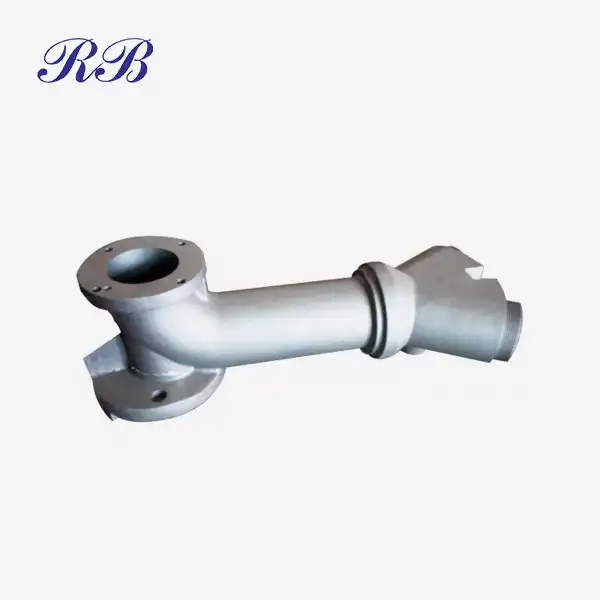
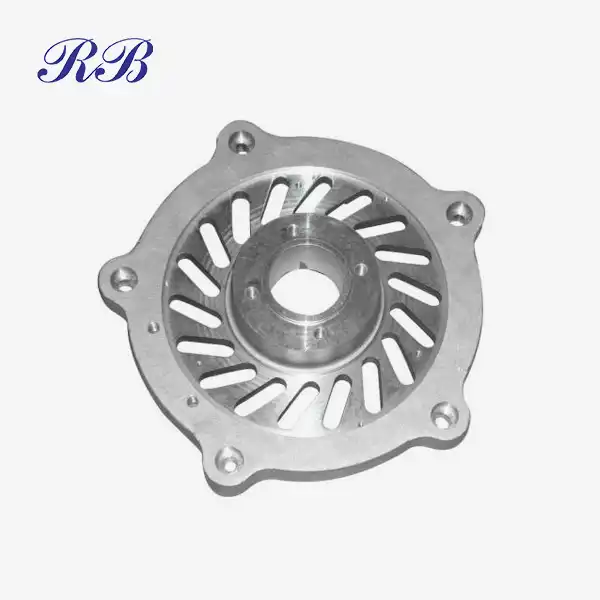
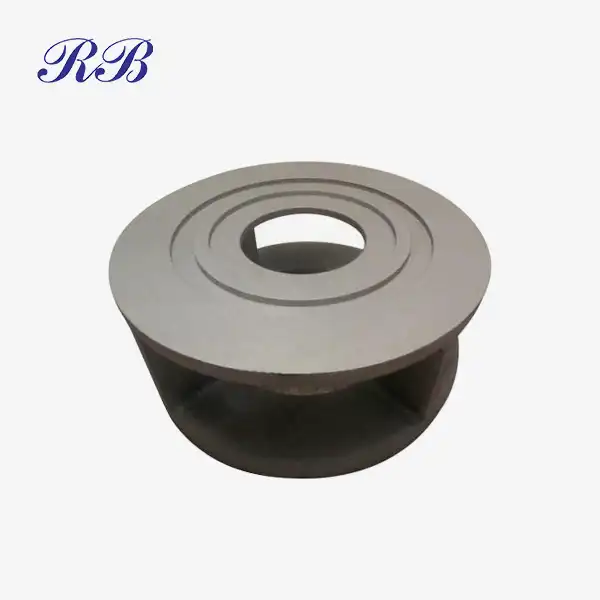
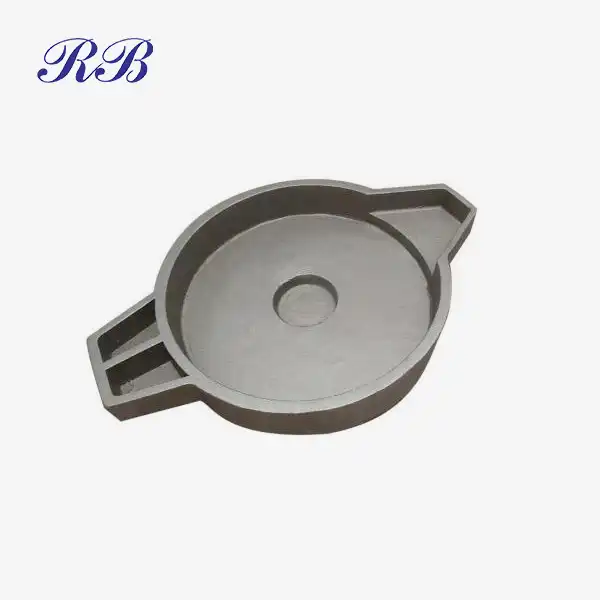
Rongbao Enterprise provides aluminum casting and component manufacturing services, including gravity-cast lamp holder covers. The product description provided specifies that the material is A356 aluminum alloy and notes that CNC machining and shot blasting are used in the production process.
These procedures may be used to assist applications requiring a cast component with certain mounting characteristics and a known surface condition. Final appropriateness is determined by the drawing, the requisite tolerances, finishing specification, and inspection standards established for the order.
Rongbao also has certifications for ISO 9001, ISO 14001, and ISO 45001. If they are included in supplier qualification, then the buyer should check the current certifications, their scope, and who is qualified.
For a new project, please supply the part design, target quantity, material requirements, surface finish expectations, and any specific inspection needs. This information helps the supplier to evaluate manufacturability and define what activities and quality records are included in the quote.
Conclusion
The A356 aluminum alloy is a feasible material for various cast lamp holder covers because it combines the comparatively low weight, desirable casting qualities, and prospective mechanical performance of a variety of lighting applications. Its actual adaptation is still a matter of the component design, manufacturing quality, surface treatment, and installation environment.
Zinc alloy may be an option if your project has distinct goals for surface detail or manufacturing needs, but before you decide, you should weigh up its greater density and corrosion factors that are particular to its use.
The ideal starting point for purchasers seeking Cast lamp holder covers is a detailed technical design and a specified set of performance, finishing, and inspection criteria. By matching these criteria to the material and manufacturing process, suppliers can be better compared and uncertainty reduced before entering into volume production.
With flexible OEM/ODM capabilities and efficient production of up to 5,000 units, Rongbo Enterprise offers both quality and scalability. Contact us at steve.zhou@263.net or zhouyi@rongbaocasting.com to get a tailored quotation and strengthen your supply chain today.
References
1. ASTM International. ASTM B179-22: Standard Specification for Aluminum-Alloy Die Castings[S]. West Conshohocken: ASTM International, 2022.
2. General Administration of Quality Supervision, Inspection and Quarantine of the People's Republic of China, Standardization Administration of China. GB/T 1173-2013 Cast Aluminum Alloys[S]. Beijing: China Standards Press, 2013.
3. International Organization for Standardization. ISO 9001:2015 Quality management systems — Requirements[S]. Geneva: ISO, 2015.
4. Underwriters Laboratories. UL 1598: Standard for Safety Luminaires[S]. Northbrook: UL LLC, 2021.
5. China Foundry Association. Foundry Process and Quality Control Manual[M]. Beijing: Machinery Industry Press, 2020: 210-218.
Learn about our latest products and discounts through SMS or email