- English
- French
- German
- Portuguese
- Spanish
- Russian
- Japanese
- Korean
- Arabic
- Greek
- German
- Turkish
- Italian
- Danish
- Romanian
- Indonesian
- Czech
- Afrikaans
- Swedish
- Polish
- Basque
- Catalan
- Esperanto
- Hindi
- Lao
- Albanian
- Amharic
- Armenian
- Azerbaijani
- Belarusian
- Bengali
- Bosnian
- Bulgarian
- Cebuano
- Chichewa
- Corsican
- Croatian
- Dutch
- Estonian
- Filipino
- Finnish
- Frisian
- Galician
- Georgian
- Gujarati
- Haitian
- Hausa
- Hawaiian
- Hebrew
- Hmong
- Hungarian
- Icelandic
- Igbo
- Javanese
- Kannada
- Kazakh
- Khmer
- Kurdish
- Kyrgyz
- Latin
- Latvian
- Lithuanian
- Luxembou..
- Macedonian
- Malagasy
- Malay
- Malayalam
- Maltese
- Maori
- Marathi
- Mongolian
- Burmese
- Nepali
- Norwegian
- Pashto
- Persian
- Punjabi
- Serbian
- Sesotho
- Sinhala
- Slovak
- Slovenian
- Somali
- Samoan
- Scots Gaelic
- Shona
- Sindhi
- Sundanese
- Swahili
- Tajik
- Tamil
- Telugu
- Thai
- Ukrainian
- Urdu
- Uzbek
- Vietnamese
- Welsh
- Xhosa
- Yiddish
- Yoruba
- Zulu
Casting Junction Box Supplier Selection Guide
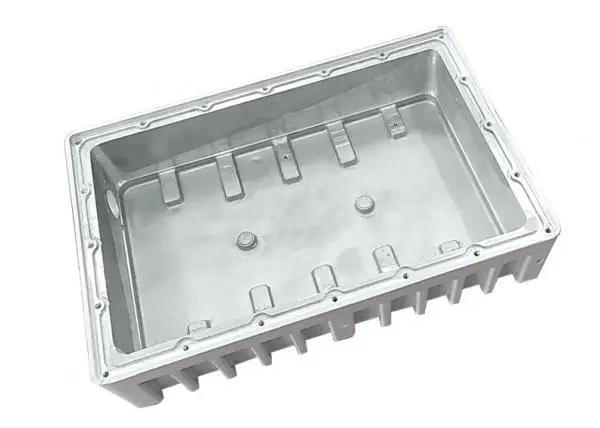
Choosing a supplier for an electrical enclosure is not simply a matter of comparing unit prices. The supplier needs to understand the casting process, material requirements, dimensional tolerances, machining needs, inspection standards, delivery schedule, and any application-specific requirements attached to the final product. A low quotation can lose its advantage quickly if the first samples require several rounds of modification or production lots arrive with inconsistent dimensions. For buyers sourcing a casing junction box , the first step is to define what the product actually requires. The enclosure may need to accommodate cable entries, mounting features, covers, threaded holes, sealing surfaces, or other integrated details. These features influence the casting method, tooling design, machining process, inspection plan, and final cost. Supplier selection therefore works best when it starts with the component rather than with a supplier's marketing claims.
Start With the Casting Requirements
Set up the technical information you will provide to all suppliers before you compare manufacturers. If the drawing, material specification, annual demand, and inspection requirements are not clear, then a provider cannot give a relevant estimate or process proposal.
The drawing shall show the relevant dimensions and tolerances, mounting points, placement of holes, wall thicknesses, sealing regions, and machining needs. A 3D CAD model can give a foundry a better understanding of the general geometry but should not be used in place of a controlled engineering drawing where dimensional constraints are crucial.
Material choice is also worth some attention at the start. According to the original product description, the body of the compressor control box was made of aluminum alloy 356. This alloy is the example product of the provider and supplied as suitable for the casting properties and corrosion resistance required. Buyers should confirm what alloy is necessary for another junction box, rather than just assume that 356 is the suitable choice.
Another essential element is the yearly volume. A supplier working on prototypes and small batches may have a different production route than a foundry producing big repeat orders. Ask the manufacturer how the process will change with increasing volume and if the existing tooling and inspection scheme will allow the predicted production quantity.
Compare the Casting Process with the Part Geometry
Not all casting processes work equally well for all junction boxes.
Sand casting, permanent mold casting, and low-pressure casting have various consequences on surface quality, dimensional stability, tooling needs, production economics, and applicability for certain designs. The procedures are accurately identified in the original article as key areas for supplier evaluation.
The question then is not just whether a provider “offers aluminum casting.” Ask the provider why they are recommending a particular procedure for your part.
A casting with somewhat complicated elements inside or out can require a different technique and tools than a simpler enclosure, for instance. Wall thickness, ribs, bosses, holes, draft angles, and machining allowances all have an effect on manufacturability. A competent supplier should be able to analyze the drawing before tooling begins and identify any elements that could cause filling, shrinkage, distortion, or machining problems.
This discussion of engineering is particularly helpful before a mold is built. It is easier to change a drawing at the design review stage than to change finished tooling while manufacturing is under way.
Look Beyond the Foundry Name and Check Engineering Support
The engineering capacity of a supplier can directly influence quality and the project cost.
Who looks at the customer drawings, and what do they look at? A good review should include casting feasibility, draft, wall thickness, machining allowance, parting lines, and key dimensions and features that may complicate mold design.
DFM, or design for manufacturability, should be part of the discourse. A supplier with real DFM knowledge may sometimes be able to advise a minor shape change that makes the casting easier to produce without impacting its functional requirements.
The supplier is not supposed to redesign the customer’s product without approval. The aim is to detect production hazards early and give the engineering team a chance to see if a suggested change is okay.
Facts are more useful than generalities. Request examples of engineering input from prior projects; customer-specific information may be omitted if needed. This offers buyers a better idea if the supplier is really involved in product development or just making whatever is on the purchase order.
Check Equipment and What Happens After Casting
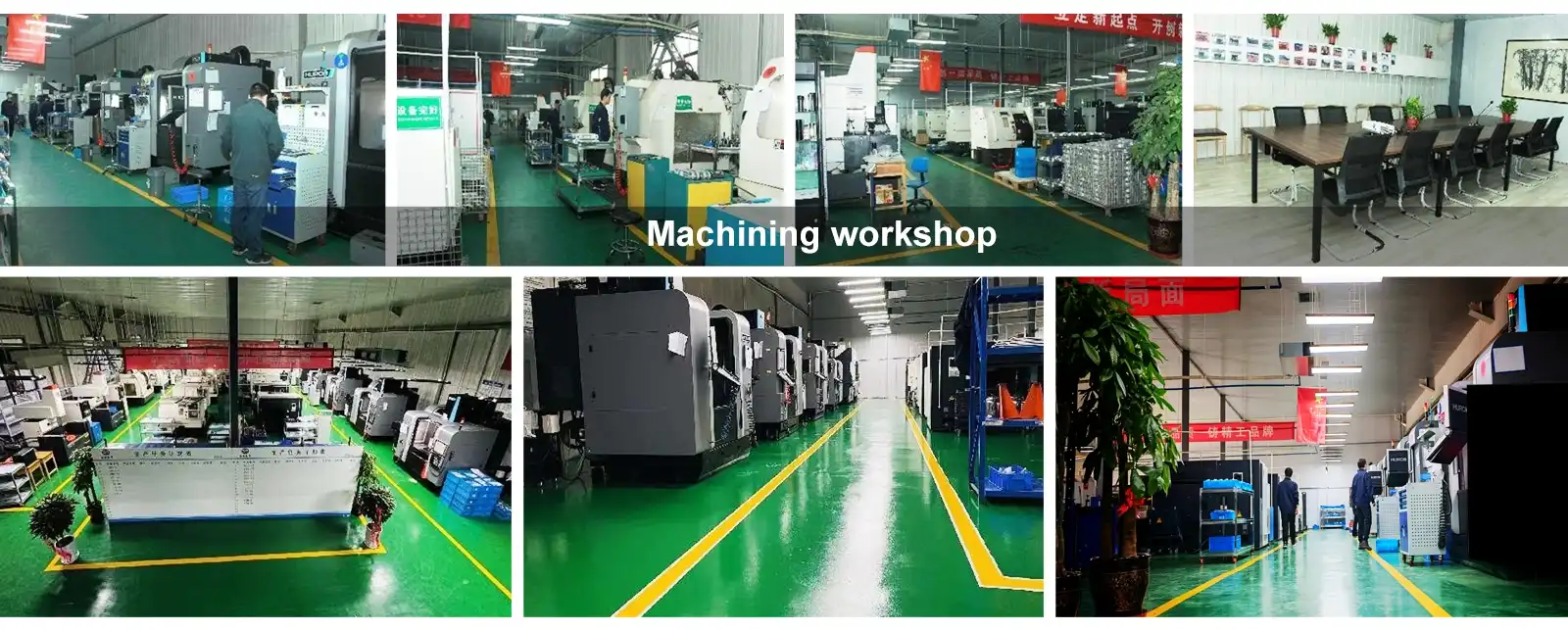
Casting quality involves more than the foundry. The manufacturing chain can comprise molding, casting, trimming, heat treatment where necessary, CNC machining, surface treatment, assembly, and final inspection.
Examples of equipment worth considering include CNC machining centers, automated molding systems, CMM equipment, and X-ray inspection. These skills should be evaluated against the actual requirements of the junction box, not as a checklist.
The availability of an advanced casting machine may be less critical than dimensional checking for a machined sealing surface. Where the internal casting integrity is crucial for a component, non-destructive inspection may be worth more attention.
Where feasible, inquire how they maintain and calibrate equipment. A modern machine does not necessarily create good parts. The supplier requires suitable process controls, maintenance practices, tooling management, and inspection processes in relation to the equipment.
Verify Aluminum Material Control and Traceability
Material traceability is one of the simpler things for buyers to check.
How is aluminum alloy received, identified, stored, and traced during manufacture? The vendor shall be able to describe the correlation between material information, production batches, and completed components. The original study also underlines the relevance of material certifications and lot traceability, as these records can be utilized to examine quality issues and for customer audits.
A purchaser could seek a sample material certificate as part of a supplier evaluation. Ensure that the document has the correct alloy, supplier, or lot information and the relevant chemical or mechanical data.
Do not take any certificate as proof of automatic approval of any final casting. Different controls are verification of materials and assessment of final parts. The material shall comply with the specified specification, and the finished casing junction box shall meet the dimensional, visual, functional, and other criteria stated for the project. Don't assess quality by certifications. Use documents.
Evaluate Quality Through Documents, Not Certificates Alone
Certification should be viewed as a part of a supplier evaluation and not as a substitute for product-specific proof. The original text makes this distinction, and it is recommended that the actual implementation of the quality system be consulted.
Request typical quality documents if there is a new supplier. Depending on the project, these can contain material certifications, dimensional inspection reports, process records, non-conformance reports, or other papers specified in the buy specification.
Best question: How can I link the documentation to the real part? A good inspection report should enable the identification of the part number, drawing or specification, inspection requirements, measured values where applicable, and production or inspection information.
Depending on the application, industry-relevant credentials should be taken into consideration. IATF 16949 is for the automotive supply chain. AS9100 is an aerospace quality management standard. However, for an enclosure for an electrical or hazardous site use, rules such as UL or ATEX can apply. The right requirement must be derived from the product specification, end market, customer, or applicable regulation and not from a generic supplier checklist.
Define the Inspection Plan Before Mass Production
Before starting mass production, the vendor has to know how the final part is going to be approved.
Dimensional examination of a casting junction box may include overall dimensions, mounting hole locations, wall-related dimensions, machined interfaces, and any other critical attributes as specified on the drawing. Visual inspection is used to assess the look of the casting, visible faults, surface condition, and machining quality.
Further testing depends on the application. Some tests may be necessary for specialized purposes such as pressure or leak testing, surface finish inspection, salt spray testing, or thermal cycling. Not all enclosures require all of these inspections.
When you inquire for quotes, this difference counts. If you put a lot of testing in your specification that you don’t need, the price can be needlessly expensive from a supplier. The first quote could look great, but if a supplier doesn't have a test your casing junction box application requires, it won't be the real cost of the project.
If feasible, agree on the scope of the inspection before manufacture.
Ask How the Supplier Handles Non-Conforming Parts
Even a well-run manufacturing process will produce a nonconforming component on occasion. The crucial thing is the provider response.
What happens if the inspection result is out of drawing tolerances? The supplier shall have a clear procedure to identify the impacted batch, contain the problem, determine the root cause, and determine what corrective action is required.
Records of remedial actions support supplier qualification. This is not about finding a vendor that guarantees that he has never had a quality problem. A more realistic objective is to see if the supplier can find problems in time and react in a regulated way.
And communication is another big issue. If a production problem jeopardizes the delivery schedule, the buyer should be informed in due time for a decision. This is especially true for custom enclosures related to a project deadline for tooling and production.

Compare Total Cost Rather Than Unit Price
When you compare vendors, don't only look at the price per piece.
For a casing junction box for an application-specific application, the commercial quote may comprise tooling, casting, machining, finishing, inspection, packing, and transportation. The purchaser should know what is included and what is priced separately.
Extra care is needed with the tooling. If you have design changes during development, be sure the tooling cost quoted covers the work that will be required on the mold or die. What if you alter the drawing after the tooling is approved?
Payment terms also influence project profitability. The original article reads that “New customers may be required to pay in advance, while other arrangements may exist for existing relationships.” These should be seen within the framework of the full quotation and not in isolation.
A little higher unit price may be justified if a quote includes more inspection, better engineering help, or more predictable lead times or requirements that a lesser quote does not provide.
Confirm Lead Time With the Actual Production Route
Lead time is to be discussed before placing an order.
For a new custom product, the schedule could include drawing review, quotation approval, tooling, sample production, sample inspection, adjustments, and mass production. Once the tooling and process are established, repeat orders can have a varied timeline.
Ask the supplier to distinguish between sample lead time and repeat manufacturing lead time. And ask on what assumptions the quoted schedule is based. * Delivery subject to material availability, tool approval, drawing changes, and inspection process.
Expedited production capability can be a good thing, but customers should know if an urgent order will cost more or impact other production commitments. The original article is also correct in that custom junction box designs generally require more initial setup than ordinary catalog goods.
It is better to make a reasonable commitment than to quote an aggressive delivery date that the provider cannot consistently achieve.
Test Supplier Flexibility Before You Need It
Long-term supplier relationships are rarely identical. Maybe the customer makes drawings, or the demand in the year increases, or a new mounting need is implemented.
Review engineering change procedures before the first big order release. Ask the supplier how they deal with altered designs, outmoded tooling, sample approval, and changes to inspection requirements.
The supplier shall also identify any changes that result in additional tooling or engineering charges. Clear regulations from the start to avoid problems later on.
This is especially true with specialty electrical enclosures, where the casting, machining, and tooling procedures are linked. A little dimension change may be cheap at the drawing stage but costly after tooling is complete.
Use the Sample as a Supplier Qualification Step.
A sample is better than a sales presentation.
Before you release for mass production, ensure that the sample matches the regulated drawing and approved specification. Check critical dimensions, casting appearance, machining quality, mounting features, cable-entry areas, sealing surfaces, and other installation-relevant characteristics.
The sample stage permits communication studies. Did the supplier find any drafting errors before production? Any reports of any deviations? Was the inspection report presented in a way that was easy to read? Did the delivered part meet the agreed revision?
The results provide us a good indicator of the supplier’s performance after we have received the larger order.
Why Rongbao Enterprise Is Worth Evaluating?
Rongbao Enterprise is an aluminum casting supplier for electrical enclosures and industrial applications, with manufacturing operations in Xi'an, China. It provides custom junction boxes and engineering support in the areas of materials selection, design optimization, and manufacturing process issues.
For example, the provider mentions a compressor control box body made of aluminum alloy 356. The unit weight is estimated to be approx. 1.2 kg. The structure is a one-piece cast with integrated mounting possibilities, cable entrance, and structural features.
This product information is intended as a basis for technical conversation and is not a substitute for qualification by buyers considering Rongbao or another potential supplier. The buyer can provide the goal drawing, alloy requirement, annual volume, inspection standard, surface requirements, and application circumstances, then ask the supplier to provide the suitable manufacturing path.
That technical response can reveal a lot about the actual engineering capacity of the provider.
What to Include in Your Supplier Inquiry?
This detailed inquiry about the casing junction box will enable the provider to give a more precise quotation and prevent any further clarification during the project.
- Provide product drawing and 3D model (if any). Supply: Aluminum alloy, annual volume, forecasted order quantity, crucial parameters, machining requirements, surface treatment, inspection requirements, packaging requirements, and goal delivery timeline.
If you need a sealed or environmentally protected junction box, say so; don’t just ask for a “high quality” casing. If the product is to be used in a regulated application, at the beginning provide the applicable customer or industry standard.
Ask the vendor to supply you with specifics about the recommended casting process and any features that may need to be modified. This turns the first quote into an engineering debate, not a simple pricing comparison.

Conclusion
Choosing a casting junction box supplier is more than merely getting a good price from a foundry. The right supplier should exhibit the right casting skills, practical engineering support, controlled material sources, traceable inspection records, realistic production schedules, and a clear approach to dealing with quality issues.
Buyers need to examine the entire manufacturing process of a casing junction box, from drawing approval and tooling to casting, machining, inspection and delivery. Certifications can be useful evidence but should be backed up by product specific documentation and true production capability.
The finest supplier partnerships usually begin with a clear technical inquiry. Send sketch, material required, quantity, inspection expectation and delivery target. Then check the response of every supplier. In general, a manufacturer that asks the proper technical questions, identifies risks early in the manufacturing process, offers thorough documentation and communicates clearly is better situated to support the first order and future production.
Our team brings extensive technical knowledge to support your junction box sourcing requirements. Steve Zhou, our technical sales specialist, offers expert guidance on material selection and application requirements. His foundry background enables practical recommendations balancing performance against manufacturing economics. Contact Steve directly at steve.zhou@263.net for technical consultation and design review support. For quotations, order processing, and logistics coordination, reach Zhou Yi at zhouyi@rongbaocasting.com. We respond promptly to all inquiries with detailed information tailored to your specific needs.
References
- Electrical Safety Foundation International (ESFI), "Electrical Fire and Injury Statistics Report" (2023), Arlington, VA.
- International Organization for Standardization (ISO), "ISO 9001:2015 Quality Management Systems - Requirements" (2015), Geneva, Switzerland.
- ASM International, "Supplier Quality Evaluation in Metal Casting: Best Practices Guide" (2022), Materials Park, OH.
- American Foundry Society, "Foundry Capability Assessment and Supplier Qualification Standards" (2023), Schaumburg, IL.
- Supply Chain Management Review, "Total Cost of Ownership Analysis for Global Sourcing Decisions" (2022), Peerless Media.
Learn about our latest products and discounts through SMS or email