- English
- French
- German
- Portuguese
- Spanish
- Russian
- Japanese
- Korean
- Arabic
- Greek
- German
- Turkish
- Italian
- Danish
- Romanian
- Indonesian
- Czech
- Afrikaans
- Swedish
- Polish
- Basque
- Catalan
- Esperanto
- Hindi
- Lao
- Albanian
- Amharic
- Armenian
- Azerbaijani
- Belarusian
- Bengali
- Bosnian
- Bulgarian
- Cebuano
- Chichewa
- Corsican
- Croatian
- Dutch
- Estonian
- Filipino
- Finnish
- Frisian
- Galician
- Georgian
- Gujarati
- Haitian
- Hausa
- Hawaiian
- Hebrew
- Hmong
- Hungarian
- Icelandic
- Igbo
- Javanese
- Kannada
- Kazakh
- Khmer
- Kurdish
- Kyrgyz
- Latin
- Latvian
- Lithuanian
- Luxembou..
- Macedonian
- Malagasy
- Malay
- Malayalam
- Maltese
- Maori
- Marathi
- Mongolian
- Burmese
- Nepali
- Norwegian
- Pashto
- Persian
- Punjabi
- Serbian
- Sesotho
- Sinhala
- Slovak
- Slovenian
- Somali
- Samoan
- Scots Gaelic
- Shona
- Sindhi
- Sundanese
- Swahili
- Tajik
- Tamil
- Telugu
- Thai
- Ukrainian
- Urdu
- Uzbek
- Vietnamese
- Welsh
- Xhosa
- Yiddish
- Yoruba
- Zulu
Best Stainless Steel Flanges: Top 5 Tips for 2025
The right flange is not simply the one with the lowest price or the highest corrosion resistance. In an industrial piping system, material grade, pressure and temperature, manufacturing method, dimensional accuracy, testing, and supplier control all affect whether a flange will perform as expected. That is why selecting stainless steel flanges should begin with the service conditions and project requirements rather than a supplier's product catalog alone. For buyers, the challenge is often not finding a manufacturer that sells stainless steel products. It is making sure the products offered actually match the specification, inspection requirements, installation conditions, and expected service life of the project. The following five considerations provide a practical way to evaluate stainless steel flanges before placing an order.
Start With the Service Conditions, Not the Product Price
The material selection should be according to the real operation environment. A flange used in a clean water service is not in the same conditions as a flange used on an offshore platform or in a chemical processing plant.
In industrial applications 304 stainless steel is prevalent because it offers a beneficial blend of corrosion resistance, availability, and cost. Typically used for water systems, air handling, general process piping, and other applications where exposure to chlorides is minimal.
When chlorides are present in the service environment, Type 316 is the choice. It has a higher resistance to pitting and crevice corrosion than 304 because of its molybdenum content. May be useful for coastal areas, marine settings, chlorinated water systems, and some chemical industries. But chloride alone doesn't make 316 the appropriate choice. The concentration, temperature, length of exposure, and other elements of the procedure should be discussed as well.
Generally, low carbon grades such as steel 304L and 316L are utilized when welding may provide a problem of sensitization. The low carbon content decreases the chance of chromium carbide precipitation in the heat affected zone during welding. This is especially true when constructing flanges around welded pipe assemblies.
Duplex or super duplex stainless steel is needed for more demanding services. Duplex 2205 is an alloy comprising austenitic and ferritic phases that offers more strength than conventional austenitic grades and excellent resistance to many types of corrosion. Super duplex grades have even higher alloy values and are used in particularly severe environments when corrosion resistance and mechanical performance are worth the increased material cost.
Grades like 430 ferritic can make sense for some lower corrosion applications but not as a direct replacement for 304 or 316 for all plumbing systems.
Temperature also needs regular monitoring. Don't pick a flange by just the max temp figure without checking the material standard, pressure-temperature rating, condition of manufacture, and process environment. The flange, gasket, bolts, and adjacent pipe shall also be suitable for the intended service.
Please advise on the fluid, normal and upset temperature, design pressure, chloride or other corrosive exposure, pipe size, flange standard, and connection requirements before we can provide you a price. This gives the builder enough information to suggest a grade rather than merely quote the most common material.
Look Beyond the Manufacturing Method
The method of manufacturing a flange directly impacts its quality, size, inspection requirements, and the cost of a flange. Hence, the buyer must compare things on the basis of the whole specification and not assume that one manufacturing technique is always better than another.
The forging method is widely used for pressure containment flange applications since it can create superior mechanical qualities and a controlled material structure. ASTM A182 – Specification for Forged or Rolled Alloy and Stainless Steel Pipe Flanges, Forged Fittings and Valves and High-Temperature Service. If the project specification calls for forged flanges, the buyer must not accept a general description such as “forged stainless steel” but must check the material grade, the applicable standard, the heat treatment condition, the dimensions, and the required tests.
Casting may be useful where the needed geometry is more complex or where production costs make casting more suitable to the application. Properly managed casting operations can produce useful industrial parts, but the evaluation of cast parts should be based on their own material and inspection standards. The choice between forged and cast production should be based on the application and specification, not on a naive assumption that one approach is always better.
Another thing to keep in mind is heat treatment. Solution treatment of stainless steel products might alter the final metallurgical condition and the corrosion performance. Where the applicable material standard requires, the heat treatment required shall be specified in the supplier's paperwork.
Machining is just as important. You may have the proper material quality, but if the dimensions are wrong, you could have installation problems. Bolt-hole position, outer diameter, bore, thickness, flange face dimensions, and other relevant parameters shall comply with the criteria of the prescribed standard or authorized drawing.
Special attention to sealing the face. The flatness, finish, facing type, and dimensional correctness should be in conjunction with the selected gasket and mating flange. A vendor should not merely say a flange has a “smooth surface.” The procurement specification should specify the facing required and any dimensional limits.
A good supplier comparison will thus include more than "forged vs. cast." Ask the manufacturer what controls they have in place for heat treatment, machining, inspection, identification, and final dimensional verification. Those details do a far better job of showing production control for stainless steel flanges.

Verify the Manufacturer Before Comparing Quotations
A professional quotation is only effective when the supplier is capable of manufacturing and inspecting the required goods consistently.
Begin with the company’s fundamental information. Check the legal identity of the manufacturer, location of its production, business history, and real ability to manufacture. A company may have been trading stainless steel products for years, but it does not automatically qualify it to produce each type of flange. Experience should be taken into consideration together with equipment, personnel, and product scope.
Certification documents should be verified, not only displayed on a website. If a provider claims ISO 9001 certification, verify the certification organization, validity period, certified site, and scope. A quality management certificate can help provide confidence in the manufacturer’s management system but does not on its own demonstrate that a single batch of flanges is in accordance with your technical specification.
In the case of big volumes or recurrent orders, production capacity is important. Check whether the supplier actually makes the products or buys them from another supplier. If subcontracting is a part of the business, define which operations are subcontracted and how incoming items are inspected.
Traceability is particularly critical for industrial plumbing components. In case of need, the material heat number has to be related to the final flange and to the necessary material certificate. This produces a record that allows the customer to link the physical product to its material and test documents.
A useful supplier audit should also look at quality control procedures. Ask about how incoming raw materials are inspected, how production dimensions are checked, what inspection equipment is utilized, and how nonconforming items are handled. For a repeat job, it’s worth asking how the supplier ensures uniformity between production batches.
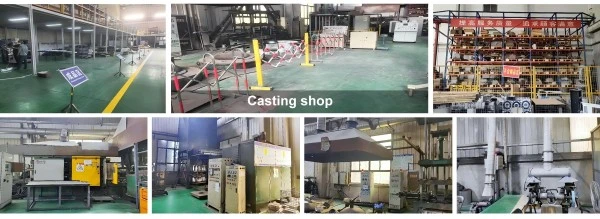
An on-site audit may give extra evidence if the order is technically critical or financially significant. The point here is not merely to observe a clean workshop. It is to see if the manufacturer’s actual equipment, inspection procedure, traceability system, and production organization can support the specifications in your purchase order.
Make Testing and Documentation Part of the Purchase Specification
Testing should be agreed upon before production begins. Ambiguous testing criteria might lead to arguments once manufacturing has started.
Chemical composition is one of the basic verification points for stainless steel flanges. Spectro analysis can validate the main alloying elements and assist in verifying that the material is the correct grade. The material test report shall indicate the material grade and heat number and give actual chemical composition values, if required by the applicable standard.
Mechanical testing offers more information on the performance of the material. Tensile testing can offer tensile strength, yield strength, and elongation information depending on specification and product requirements. Hardness testing may be necessary or utilized as an additional inspection procedure.
The choice of non-destructive inspection should be based on the product, specification, and service needs. Liquid penetrant inspection can be used to detect surface breaking discontinuities. Ultrasonic testing may be used to evaluate certain subsurface conditions, and radiographic inspection may be applicable to the detection of internal discontinuities in suitable items or components. Not all NDE methods are required on every flange; thus, the purchase specification should specify which exams are necessary.
Dimensional inspection is equally as critical as material testing. A chemical analysis may be perfect for a flange, and it might not fit the piping system. Critical dimensions should consequently be verified against applicable standards or approved drawings. Bolt-hole alignment, bore size, thickness, flange diameter, and sealing-face parameters are areas that may need to be checked.
The documentation package shall satisfy the order criteria. Depending on the project, the buyer may require material test results, dimensional inspection records, heat-treatment records, NDE reports, certificates of conformity, and other quality documentation.
Don’t think that more paperwork immediately means better quality. The crucial thing is traceability. The papers must relate to the actual materials and products delivered.

Calculate the Real Cost of the Flanges
The purchasing price is crucial, but it is only one portion of the cost of employing stainless steel flanges.
The first place to consider is installation. If dimensions are not uniform, bolt holes do not line up, or the flange face does not match the desired gasket pattern, field adjustment can require more labor and create a delay in installation. Thus, it may be appropriate to pay a slightly higher purchase price if this eliminates needless installation effort.
Operating cost is affected by sealing performance. The flange face, gasket, bolt arrangement, tightening process, and piping alignment all influence joint performance. Therefore, a flange should be regarded as a part of the entire bolted connection and not as a separate item.
Corrosion resistance may also affect the replacement and maintenance requirements. If an incorrect alloy is selected for the process environment, this may result in premature deterioration. Selection of a suitable grade can allow the component to remain in service for a longer period of time. The predicted service life should be examined against real process circumstances, not as a general advantage of stainless steel.
You also have to take into account logistics. Lead time, minimum order quantity, packaging, shipment, inspection procedures, and cost of urgent replacement parts can all affect the final purchase price. If a project has tight deadlines, a supplier’s ability to deliver consistently could be more essential than a tiny variation in unit pricing.
Make sure the products being compared are of the same material grade, standard, size, pressure class, facing, manufacturing technique when specified, testing requirements, paperwork, and delivery terms when comparing quotations. Or the lower quote might just be leaving out criteria already covered by another vendor.
What to Send a Manufacturer Before Requesting a Quote?
A clear RFQ allows the customer and manufacturer to prevent unnecessary explanation and pricing problems. For stainless steel flanges, the request should generally include pipe size and flange dimensions, needed material grade, appropriate flange standard, pressure class or rating, facing type, quantity, service circumstances, and any additional testing needs.
The RFQ should clearly state whether MTRs, third-party inspection, NDE, heat-treatment records, or certificates of conformity are required; these requirements should not be considered after the order has been placed.
It is also helpful to tell the manufacturer if the order is for a new project, maintenance stock, or recurrent replacement parts. Material identification and dimensional control might be particularly crucial for recurring purchases when new components may need to match old piping assemblies.
A supplier who asks questions in depth, before a quotation, is frequently delivering a more useful purchasing service than one who promptly offers a low price based on limited information. The inquiries reveal if the manufacturer has an understanding of the application and if the quote is based on a real spec.
Conclusion
Choosing the right stainless steel flanges are not about comparing pricing or picking the greatest alloy grade you can find. Start with the operational environment and then match the material to the pressure, temperature, corrosion exposure and manufacturing circumstances. Then review the manufacturing process, dimensional control, testing, traceability, documentation and supplier competency.
The best buy selection is often the one that balances technical requirements and total cost well. It’s not necessarily better to use a higher grade material when the application doesn’t require it, just as a low-cost flange is not a bargain if it creates installation, inspection or replacement complications.
Give the manufacturer a comprehensive specification before placing an order. Ask for the documentation necessary for you to confirm compliance. When material, size, testing and delivery criteria are clearly established from the outset, buyers are in a much better position to compare providers and select the stainless steel flanges that will meet the actual needs of the project.
FAQ
1: What stainless steel grade works best for fire protection systems?
Type 304 stainless steel suits most fire protection applications effectively. The material resists corrosion from water exposure throughout typical service life. Type 316 offers enhanced resistance for coastal installations or chlorinated water systems. Material selection should consider specific environmental conditions at each installation location.
2: How can buyers verify that flanges meet ASTM specifications?
Request mill test reports documenting chemical composition and mechanical properties. Verify heat numbers match between certificates and flange markings. Consider positive material identification testing at receiving inspection. For critical applications, engage third-party inspection agencies to witness manufacturer testing.
3: What certifications indicate a quality flange manufacturer?
ISO 9001:2015 certification demonstrates systematic quality management implementation. ISO 14001 addresses environmental responsibility. ISO 45001 covers occupational health and safety. These certifications require third-party audits verifying compliance. Additional industry-specific certifications may apply depending on application sectors.
Stainless Steel Flanges Supplier: Rongbao Enterprise
Applying these five tips leads to better purchasing outcomes. Yet finding suppliers who actually deliver on promises remains the critical final step. Rongbao Enterprise has earned recognition serving fire protection and industrial applications through consistent quality and reliable service.
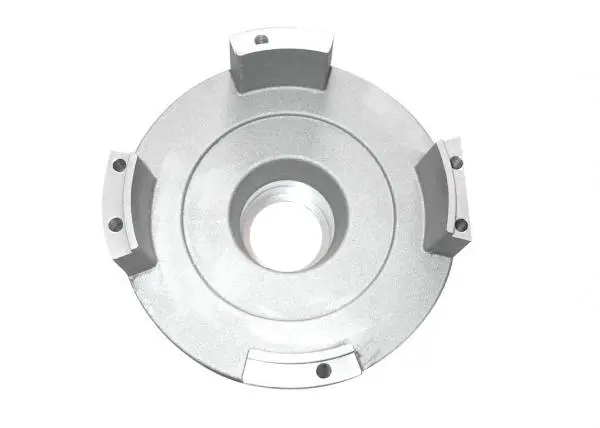
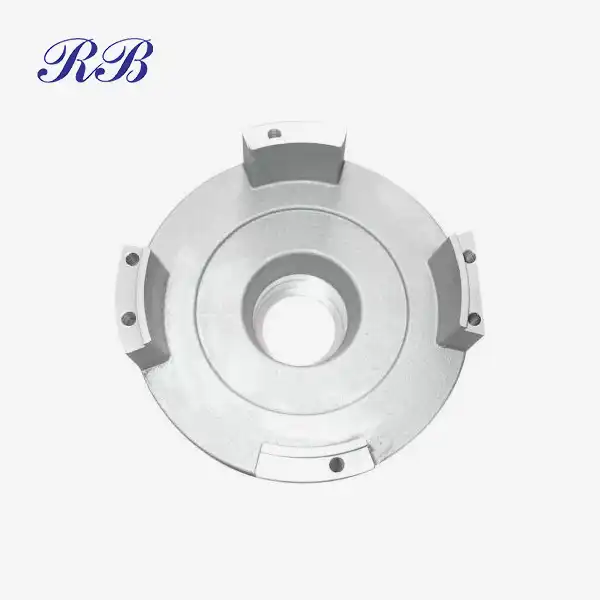
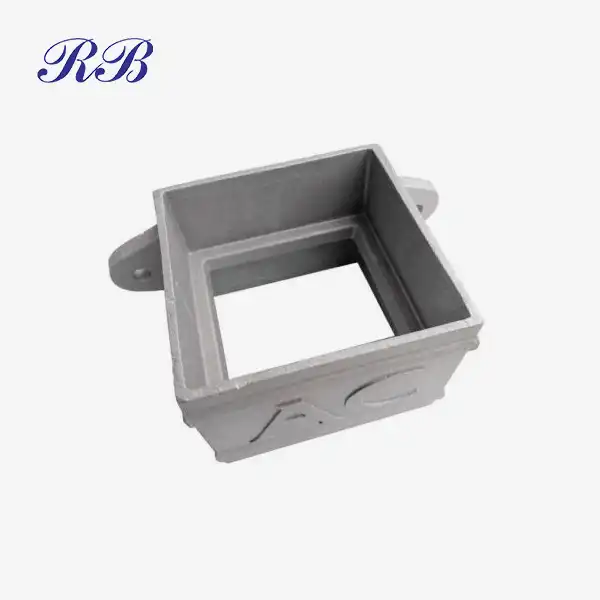
Based in Xi'an, China, the company manufactures stainless steel flanges using gravity casting with A356 material. Each component weighing 1.11 kilograms receives thorough processing from casting through finishing. CNC machining achieves precise dimensions on critical features where tolerances determine performance. Shot blasting surface treatment prepares products for demanding service environments.
Procurement professionals seeking quality stainless steel flanges for connecting brackets and fire protection applications should contact Rongbao Enterprise directly. Technical discussions clarify requirements and identify optimal solutions. Quotation requests receive prompt responses from experienced professionals. Reach the sales team at steve.zhou@263.net or zhouyi@rongbaocasting.com to discuss your 2025 flange requirements. Quality components from a proven supplier strengthen your projects and protect your reputation.
References
1. Grand View Research. (2024). Industrial Flanges Market Size, Share & Trends Analysis Report By Type, By Material, By End-Use Industry, And Segment Forecasts, 2024-2030. San Francisco, CA: Grand View Research, Inc.
2. ASTM International. (2022). ASTM A182/A182M-22: Standard Specification for Forged or Rolled Alloy and Stainless Steel Pipe Flanges, Forged Fittings, and Valves and Parts for High-Temperature Service. West Conshohocken, PA: ASTM International.
3. American Society of Mechanical Engineers. (2020). ASME B16.5-2020: Pipe Flanges and Flanged Fittings: NPS 1/2 Through NPS 24 Metric/Inch Standard. New York, NY: ASME.
4. International Organization for Standardization. (2015). ISO 9001:2015 Quality Management Systems — Requirements. Geneva, Switzerland: ISO Central Secretariat.
5. Davis, J.R. (2000). Stainless Steels: ASM Specialty Handbook. Materials Park, OH: ASM International.
Learn about our latest products and discounts through SMS or email