- English
- French
- German
- Portuguese
- Spanish
- Russian
- Japanese
- Korean
- Arabic
- Greek
- German
- Turkish
- Italian
- Danish
- Romanian
- Indonesian
- Czech
- Afrikaans
- Swedish
- Polish
- Basque
- Catalan
- Esperanto
- Hindi
- Lao
- Albanian
- Amharic
- Armenian
- Azerbaijani
- Belarusian
- Bengali
- Bosnian
- Bulgarian
- Cebuano
- Chichewa
- Corsican
- Croatian
- Dutch
- Estonian
- Filipino
- Finnish
- Frisian
- Galician
- Georgian
- Gujarati
- Haitian
- Hausa
- Hawaiian
- Hebrew
- Hmong
- Hungarian
- Icelandic
- Igbo
- Javanese
- Kannada
- Kazakh
- Khmer
- Kurdish
- Kyrgyz
- Latin
- Latvian
- Lithuanian
- Luxembou..
- Macedonian
- Malagasy
- Malay
- Malayalam
- Maltese
- Maori
- Marathi
- Mongolian
- Burmese
- Nepali
- Norwegian
- Pashto
- Persian
- Punjabi
- Serbian
- Sesotho
- Sinhala
- Slovak
- Slovenian
- Somali
- Samoan
- Scots Gaelic
- Shona
- Sindhi
- Sundanese
- Swahili
- Tajik
- Tamil
- Telugu
- Thai
- Ukrainian
- Urdu
- Uzbek
- Vietnamese
- Welsh
- Xhosa
- Yiddish
- Yoruba
- Zulu
Gravity Sand Casting Parts: Conductors For Power Transmission
Power transmission systems rely on more than cables, towers, and insulators. A large number of metal fittings connect, support, clamp, and terminate the conductors that carry electrical power across long distances. Some of these components have relatively simple shapes; others combine mounting pads, cable grooves, bolt holes, ribs, and other features in one casting. For these applications, gravity sand casting parts can be a practical manufacturing option, particularly when the component is relatively large, the geometry is not suitable for machining from solid material, or production volumes do not justify permanent-die tooling. Aluminum alloys such as A356 are often considered for cast transmission hardware because they combine relatively low density with useful casting characteristics and mechanical properties. However, the alloy itself does not determine whether a conductor or connector will perform properly in service. Mold design, melt treatment, solidification control, heat treatment where specified, machining, inspection, and traceability all affect the finished part. That distinction matters to buyers. A casting that looks clean after machining is not necessarily a casting with controlled internal quality. For power transmission components, the manufacturing route needs to be matched to the drawing, loading conditions, electrical requirements, and inspection specification from the beginning.
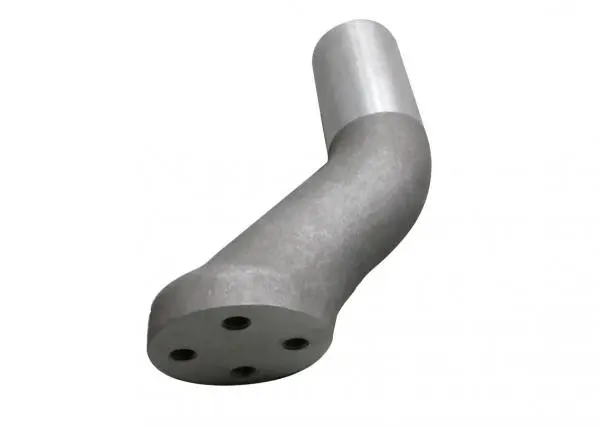
Why Gravity Sand Casting Works for Transmission Hardware?
Transmission fittings are exposed to many types of loads in their service life. These include mechanical strain, bolt loading, vibration, thermal expansion, wind-induced movement, environmental exposure, etc. Depends on the part. So a connector or clamp needs to have the proper mechanical properties, dimensional stability, and corrosion resistance.
This region is desirable partly because the density of aluminum is quite low. The aluminum has an oxide coating built in that gives it beneficial resistance to typical air exposure, and reducing the weight of components makes for easier handling and installation. Actual corrosion performance is still reliant on alloy composition, surface condition, ambient exposure, and any specified surface treatment.
One such alloy is A356, which can be used when the design requires a combination of castability and mechanical performance. The properties are sensitive to the quality of the casting and subsequent heat treatment. If a certain temper, such as the T6 condition, is specified, the heat-treatment method should be regarded as part of the production specification and not as an optional finishing activity.
Gravity sand casting also has the benefit of very flexible part geometry. This is not similar to the process that requires a constant high-pressure die. Sand casting is a one-time-use mold for every casting. A pattern specifies the exterior arrangement, and cores can provide openings, passageways, cavities, or other inside elements.
This flexibility is helpful if a transmission fitting has a lot of built-in capabilities. The design might be altered to a single near-net-shape casting that would only require machining in areas of precise dimensions, rather than merging multiple machined blocks.
The mode of manufacture also makes economic sense at certain volumes of output.” Sand casting tooling is often less complex than permanent steel dies, especially for large pieces or if changes are needed to the design during development. A provider can adjust patterns or core setups without the need to rebuild a complete high-pressure die.
The important caveat here is that sand casting is not always the right choice for every part of the conductor. If you need thin pieces, very tight tolerances, stringent pressure requirements, or very big volume production, then another process may be suitable. The selection depends on part geometry and material specification, annual demand, inspection requirements, and total manufacturing cost.
Designing the Casting Before the Pattern Is Made
Good casting begins at the design review, not at the molding line.
An evaluation of a drawing of a conductor or connector by an engineering team for wall thickness, transitions, radii, machining tolerances, parting lines, and core and areas of metal buildup should be performed. The drawings for machined items are not always directly usable for gravity sand casting parts.
The fast change from thin to thick sections is a major challenge. During solidification, the thicker parts remain liquid longer than the surrounding material. If certain areas are not sufficiently supplied, shrinkage defects may emerge. Thus, a carefully constructed casting might have more uniform wall thicknesses and smoother transitions for better solidification behavior.
Filets must be looked after too. Sharp internal corners might lead to stress concentrations and manufacturing difficulties. The addition of an acceptable radius can reduce the stress concentration and boost the metal flow without changing the functional purpose of the component.
The same principle is valid for the machining allowances. If surfaces have to be machined, drilled, or turned later, they must contain enough material to obtain the final dimension after casting. If the allowance is too little, a casting surface or imperfection may remain in the completed area. The over-allowance increased the machining time and the consumption of material.
Another thought is core design. If the conductor fitting includes any inner cavities or recessed sections, the core must be stable during the process of molding, handling, and pouring. Lack of good core support might result in dimensional variation, sand inclusion, or movement of the internal geometry.
In addition, at this point the buyer can call out essential dimensions instead of imposing unreasonably close tolerances on the entire casting. A non-functional exterior surface may enable a broader casting tolerance. A bolthole position, contact region for a conductor, cable groove, or mounting surface may necessitate CNC machining and closer inspection.
This difference can minimize cost without jeopardizing the integrity of the finished component.
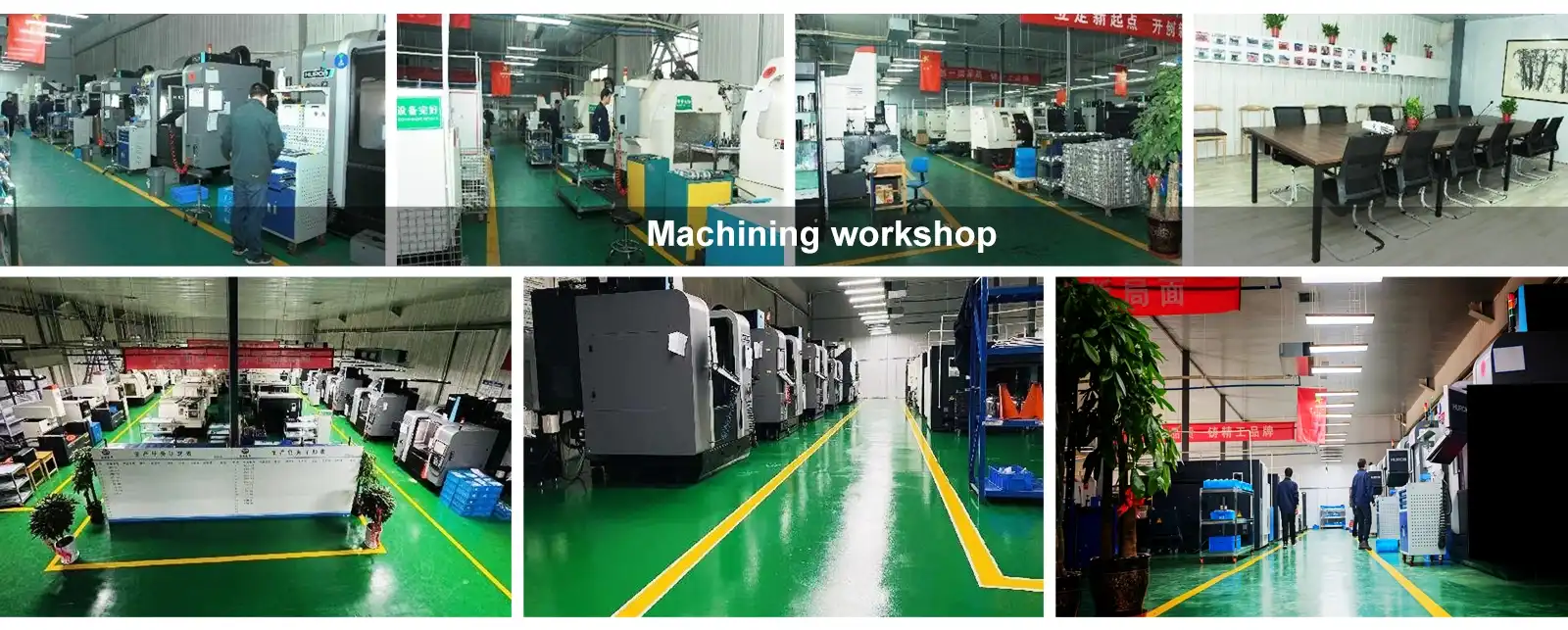
Building the Mold and Controlling the Metal
Once the casting design has been approved, the foundry proceeds to develop the pattern, core tooling, gating system, and feeding arrangement.
The gating system regulates the flow of molten aluminum to the mold. The idea is not to just fill up the cavity fast. The metal must be fed in a controlled way that decreases turbulence and helps to reduce the likelihood of entrainment of oxides. The quality of the casting depends directly on the location of the runners, ingates, and risers.
The risers are very significant in aluminum castings. When liquid metal cools and solidifies, it shrinks. A riser in the right place can deliver extra liquid metal to an area that could otherwise be prone to shrinking.
Doing casting simulation before locking down production tooling can be advantageous. Engineers can simulate the filling and solidification processes to identify possible hot spots, incomplete filling, or regions more prone to shrinkage. Simulation cannot substitute for real testing, but it can reduce the number of design iterations required to get to the first acceptable casting.
The molding process is therefore a part of process control. The qualities of the sand must be kept within the limits set for the particular molding system. Factors such as moisture, permeability, strength, and others can affect mold integrity and gas evacuation.
Also, the aluminum melt has to be controlled. The chemical composition will be tested to the approved alloy specification. The melting temperature must be acceptable for the alloy and the shape of the casting. Dissolved hydrogen and other impurities are removed by degassing and other melt treatment procedures.
These are especially significant because interior faults may not be seen from the outside. A casting may appear to be good on the outside but may have porosity or impurities, which diminish its mechanical strength.
It’s not enough for the foundry to say it employs A356 aluminum for a component used in transmission hardware. The foundry needs to be able to specify how it regulates melt chemistry, temperature, degassing, molding sand, and pour conditions.
From Rough Casting to Finished Conductor Component
The molds are broken after pouring and solidification to release the castings from the runners and risers.
The first level of inspection is mostly visual and dimensional. Operators cut gates, risers, flash, and parting line material. Grinding and shot blasting can give a more uniform surface and help to show up faults.
Quality assurance is not cleaning. A casting that appears smooth may not be good within.
Machining is sometimes used when final geometry needs to be more accurate than can be cheaply accomplished by casting. Typical fitting techniques in transmissions include drilling of bolt holes, machining of contact faces, production of precise grooves, and polishing of mounting surfaces.
The design of the fixture is critical, but the dimensions can be made predictable with CNC technology. If the casting is not held consistently, even the best machining equipment will not give consistent results. A mature manufacturing process will therefore create datums and locating surfaces and will employ suitable fixtures for repeating output.
Dimensionality should be measured in terms of functionality. The tolerance will be utilized to determine if a coordinate measuring machine, height gauge, caliper, gauge, or dedicated inspection fixture is suitable.
10. The inspection plan shall also discriminate between casting and machining dimensions. This lets us establish if a problem came from molding or machining.
If the bolt hole position is off but the machined diameter is within tolerance, the problem may be with the casting location or fixture reference, not the drilling procedure itself. If you can identify them apart, you can solve the problem much more quickly.
What Buyers Should Check Before Approving a Supplier
The supplier evaluation process is a fantastic chance to improve many casting projects.
A quote should not just state the alloy and the unit price. The buyer should question the foundry to verify the intended manufacturing route, material condition, tooling setup, degree of machining, inspection procedure, and expected production capacity.
Documentation of the material is very important, especially for aluminum castings. The buyer’s specification for purchase may require chemical analysis data, material certificates, heat treatment, or batch paperwork.
If it is specified as A356, it is also worth determining whether the requirement is for the as-cast material or for a designated heat-treated condition. The mechanical-property criteria shall be related to the applicable material and product specification. 5.2.2 General Values.
The supplier shall also define the method of identification and traceability of gravity sand casting parts. A good traceability system can trace a final part back to its production batch, material heat or melt, inspection records, and any associated process data.
This is quite beneficial if you have a dimension issue after a couple of shipments. A supplier may have to chase several parts without traceability. Batch level records can narrow down the probe substantially more quickly.
The first article inspection is another important checkpoint. The customer shall verify measurements against the authorized drawing and that the stated material and performance standards have been met prior to releasing a casting to regular production.
Nondestructive testing may also be required where specified in the design or procurement requirements. Discontinuities. X-rays or other examination methods can give information about internal or surface-related discontinuities. The procedure to be followed relies on the fault being investigated and the criteria for acceptance.
No one inspection package fits all castings. The right inspection technique must be developed before starting manufacturing, not after the error occurred.
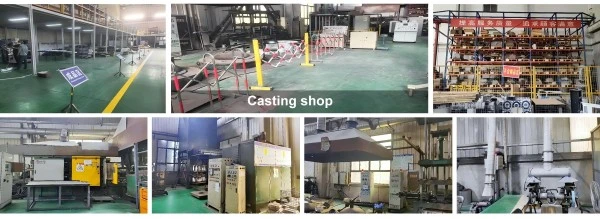
Quality Control Needs to Continue After Approval
Just because the first batch is accepted doesn’t mean that every batch after that will be.
“There are many different kinds of sand. MELTING MACHINES 16. Maintenance of patterns and core boxes will wear out. Fixtures wear out. Operator-generated variance can occur due to poorly defined process parameters.
Therefore, the production documentation must define the important process parameters. These can be the alloy chemistry, melt temperature, degassing conditions, sand properties, pouring parameters, heat-treatment cycles, machining settings, and inspection frequency.
Statistical process control can be useful for dimensions that are critical to function or assembly. The goal is not to generate charts just for the sake of documentation. The practical goal is to identify slow process drift before a dimension is out of specification.
Nonconforming items should also be specified for management. The supplier will be able to provide documentation for identification, segregation, review, rework (if required), and discarding of rejected castings.
This is vital for the hardware in question, for it can be difficult to distinguish between acceptable and not suitable pieces even after the production process has ceased.
Certification for quality management (e.g., ISO 9001) may be a means of demonstrating that a supplier has a documented quality system in place, but certification should not be taken as a substitute for technical evaluation. Buyers will still want to see the actual control plan, inspection reports, material records, and production capability for their items.
Environmental credentials are the same as vocational qualifications. They can be valuable for supplier certification but cannot in themselves demonstrate compliance of a particular aluminum casting with the dimensions or mechanical norm.
Conclusion
Conductors for power transmission and gravity sand casting parts are not merely metal shapes cast in sand molds. The reliability is from the full chain, from the casting design and gating to the melt treatment, solidification, machining, inspection, and traceability.
For many cast transmission components, A356 can be a viable candidate; however, the alloy designation alone does not assure high performance. Buyers are permitted to examine the material condition required, casting design, critical dimensions, internal quality assurance needs, inspection plan, and manufacturing controls before approving a supplier.
The ideal thing for producers is to treat each casting as an engineering part, not a commodity. A good pattern, regulated melt, stable molding process, good machining, and a documented inspection system can make a relatively inexpensive sand-casting method a reliable provider of power transmission gear.
The essential question in the procurement team’s thinking is not whether a foundry can create a casting. The crucial question is whether the supplier can manufacture the gravity sand cast parts to the required specification, can provide evidence of quality, and can continue to do so as the project goes from samples to full production.
FAQ
1: Why is A356 aluminum commonly used for gravity sand casting parts in power transmission?
A356 offers a useful combination of properties for overhead line components. It has a relatively low density, which keeps parts light and easier to handle on towers. When cast and, if needed, heat treated correctly, it reaches mechanical strengths suitable for many clamps, connectors, and support pieces. Data from ASM and other materials handbooks show good tensile strength and adequate ductility for structural use.
The alloy also resists general atmospheric corrosion, especially when designers avoid water traps and sharp crevices. Its castability is strong, meaning it fills sand molds well and forms detailed geometry with a lower risk of misruns. For these reasons, many foundries and utilities treat A356 as a standard choice when they design gravity sand casting parts for power transmission.
2: How can I reduce the risk of porosity or defects in gravity sand casting parts for conductors?
Some control lies in the foundry, and some rests with design. On the design side, you can avoid large isolated masses and very sharp thickness changes. You can also allow reasonable radii at internal corners. These choices give metal a better path to feed shrinking regions and reduce stress concentrations.
On the process side, your supplier should use proper melt treatment, including degassing and slag removal, and maintain stable sand properties. Gating and riser design should come from experienced engineers, ideally supported by casting simulation. During production, the foundry should monitor key parameters and, when necessary, apply non destructive testing to confirm part integrity. When both sides follow these practices, the risk of serious porosity in gravity sand casting parts drops sharply.
Gravity Sand Casting Parts Supplier: Rongbao Enterprise
If you are evaluating suppliers for gravity sand casting parts used as conductors for power transmission, you likely want two things. You want solid technical capability, and you want proof that the supplier can deliver stable batches at the right scale. Rongbao Enterprise focuses directly on that combination for A356 aluminum gravity cast components.
The company’s management systems hold ISO 9001:2015, ISO 14001, and ISO 45001 certifications. These certificates confirm structured control of quality, environment, and worker safety. For a single conductor design, Rongbao can support production runs around 5 000 pieces, with specifications fully customized to your requirements. Both OEM and ODM cooperation are available, so you can supply a finished design or work jointly from an idea.
All finished castings ship from Xi’an, China in robust wooden boxes. Inside each box, parts are arranged to prevent damage to machined surfaces and edges. This packaging approach supports long sea and land transport and helps parts arrive at your warehouse ready for assembly or further processing.
If you want to discuss a new design for conductors or other gravity sand casting parts, you can contact Rongbao Enterprise directly. Send your drawings, expected volumes, and technical requirements to steve.zhou@263.net and zhouyi@rongbaocasting.com. The engineering team will review your information, suggest suitable casting and machining routes, and provide a detailed quotation and schedule.
References
ASM International. ASM Handbook, Volume 15: Casting. ASM International, Materials Park, OH.
Stefanescu, D. M. Science and Engineering of Casting Solidification. 3rd ed., Springer, 2015.
American Foundry Society. AFS Technical Resources on Aluminum Sand Casting. Accessed for process and quality guidelines.
MatWeb Material Property Data. A356.0 Aluminum Casting Alloy Data Sheet. Typical mechanical and casting properties.
Ravi, B. “Casting Simulation and Optimization: Benefits, Bottlenecks, and Best Practices.” Journal of Materials Processing Technology, Vol. 203, 2008, pp. 9–13.
CIGRÉ Working Group B2 publications on overhead line design and performance.
_1751078338779.webp)
Learn about our latest products and discounts through SMS or email