- English
- French
- German
- Portuguese
- Spanish
- Russian
- Japanese
- Korean
- Arabic
- Greek
- German
- Turkish
- Italian
- Danish
- Romanian
- Indonesian
- Czech
- Afrikaans
- Swedish
- Polish
- Basque
- Catalan
- Esperanto
- Hindi
- Lao
- Albanian
- Amharic
- Armenian
- Azerbaijani
- Belarusian
- Bengali
- Bosnian
- Bulgarian
- Cebuano
- Chichewa
- Corsican
- Croatian
- Dutch
- Estonian
- Filipino
- Finnish
- Frisian
- Galician
- Georgian
- Gujarati
- Haitian
- Hausa
- Hawaiian
- Hebrew
- Hmong
- Hungarian
- Icelandic
- Igbo
- Javanese
- Kannada
- Kazakh
- Khmer
- Kurdish
- Kyrgyz
- Latin
- Latvian
- Lithuanian
- Luxembou..
- Macedonian
- Malagasy
- Malay
- Malayalam
- Maltese
- Maori
- Marathi
- Mongolian
- Burmese
- Nepali
- Norwegian
- Pashto
- Persian
- Punjabi
- Serbian
- Sesotho
- Sinhala
- Slovak
- Slovenian
- Somali
- Samoan
- Scots Gaelic
- Shona
- Sindhi
- Sundanese
- Swahili
- Tajik
- Tamil
- Telugu
- Thai
- Ukrainian
- Urdu
- Uzbek
- Vietnamese
- Welsh
- Xhosa
- Yiddish
- Yoruba
- Zulu
Cast vs. Machined Impellers: Differences, Advantages, and Best Applications
When sourcing critical rotating components for industrial pumps and turbine systems, a fundamental question confronts every procurement professional: should we specify a cast impeller or a machined one? Both manufacturing approaches deliver functional results, yet their performance characteristics, cost structures, and suitability for specific operating environments differ substantially. Cast impellers leverage molten metal poured into precision molds—particularly through low-pressure casting techniques—to create robust, complex geometries with minimal waste. Machined impellers begin as solid billets or castings that undergo extensive CNC operations to achieve exacting tolerances. Understanding these distinctions helps align component selection with operational demands, budget constraints, and long-term reliability goals, especially in demanding sectors like rail transportation and renewable energy equipment manufacturing.
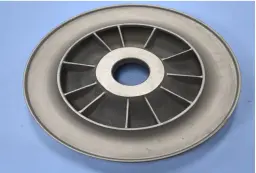
Cast and Machined Impellers
Manufacturing Processes and Core Characteristics
Cast impellers are made from liquid metal that is shaped into solid shapes using specially made molds. Low-pressure casting, gravity casting, and investment casting are all common methods, but each has its own benefits. Low-pressure casting uses controlled gas pressure to fill molds from below. This lowers turbulence and porosity, which is very important when making 10 to 25 kg aluminum alloy parts. This method is great for making complex internal passages and blade shapes that would be hard or impossible to make with regular machining.
The process starts with making the pattern, then the cast is prepared, metal is poured, it hardens, and finally the part is taken out and finished. The main material is often A356 aluminum alloy, which is known for being easy to cast and having good mechanical qualities after being heated to T6. When the parts come out, they have almost perfect shapes and only need to be machined again for the mounting surfaces and precision measurement zones.
Machined impellers move in a different direction. To get to the final size, manufacturers start with forged billets, extruded stock, or pre-cast pieces. Then, they use CNC milling, turning, and finishing processes. This process takes away material instead of adding it, which makes the accuracy of the measurements and quality of the finish unmatched. With accuracy measured in hundredths of millimeters, multi-axis machining centers can cut blade curves, hub shapes, and balance features that are very complicated.
Material Considerations and Structural Integrity
The choice of material affects both the ability to make something and how well it works in operation. Aluminum alloys, such as A356, are used to make most cast impellers because they have a good strength-to-weight ratio, don't rust, and are easy to cast. After the T6 heat treatment, which includes solution annealing and fake aging, these parts have yield strengths higher than 180 MPa and elongation values that can handle the cycle loading that happens in wind turbine gearboxes and high-speed rail cooling systems.
Stainless steels, bronzes, and special nickel-based superalloys are also used to make cast impellers when chemical resistance or performance at high temperatures is very important. Machined impellers can be made from the same types of materials, but premium metals are often used when the benefits of stability in dimensions and uniformity in microstructure are greater than the cost.
In situations where tiredness is a major concern, internal soundness is very important. Cast parts need to be carefully inspected with X-rays to find flaws like shrinkage porosity, gas entrapment, and inclusion defects that lower the fatigue life. These flaws are less common now that low-pressure casting and controlled solidification are used, but post-casting proof is still necessary. The integrity of the base material is kept by machined impellers, but cutting operations leave behind stresses that need to be relieved.
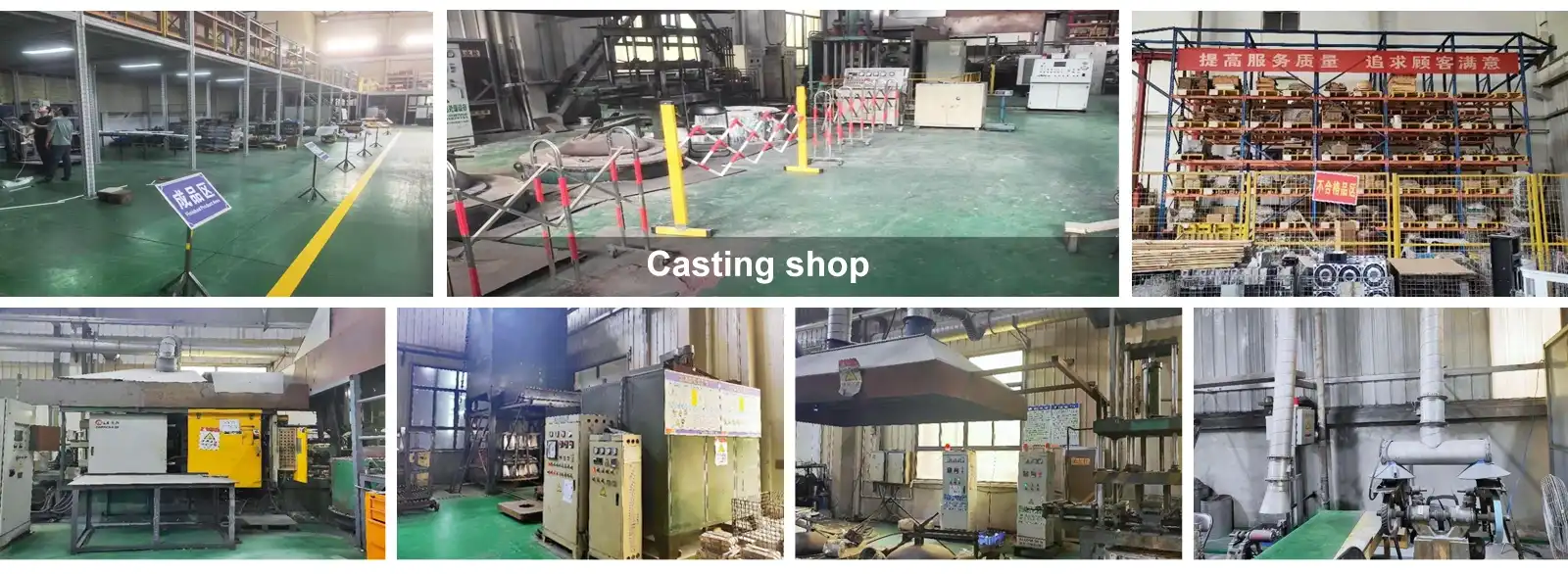
Key Differences Between Cast and Machined Impellers
Production Complexity and Economic Factors
Casting combines several steps in the manufacturing process into a single forming step. Once mold tooling is made, making more units doesn't require a lot of work because the steps for preparing the metal, filling it, cooling it, and taking it out of the mold are all repeated. The cost of the tools is spread out over the number of units that are made, which makes casting a good option for batches larger than a few hundred. Pattern and mold development makes lead times longer at first, usually six to ten weeks before the first articles come out.
For machining to work, you have to keep using complicated tools all the time. The amount of time each impeller takes up on a CNC machine depends on how complicated it is. The number of blades, the shape of the hub, and the tolerance requirements all have a direct effect on cycle time. Setup steps, tool changes, and check times add extra work that doesn't change much no matter how big the batch is. This extra cost is easier to cover for smaller production runs, which makes machining competitive for concept development, specialized uses, and numbers below 200 units per year.
The approaches are very different in how they use materials. When casting, buy-to-fly ratios are close to 1.2:1, which means that very little material is wasted. During machining, 40% to 70% of the starting stock is usually taken away, leaving behind swarf that needs to be recycled. This loss directly affects the cost of materials and the environment, which is especially important when working with titanium or nickel metals.
Performance Characteristics and Operational Implications
The accuracy of the blade shape, the smoothness of the surface, and the uniformity of the dimensions all affect how well hydraulics work. Machined impellers have better surface finishing (often less than 1.6 micrometers Ra) that keep flow separation and friction to a minimum. Blade trailing edges and tip clearances are more precise, which improves performance over a wider range of conditions.
Cast impellers have slightly rougher surfaces, usually between 3.2 and 6.3 micrometers Ra as-cast, which can be made better by shot blasting and other finishing steps. Surface techniques like shot peening improve finish quality and increase wear resistance by adding helpful compressive pressures. With the right blade design and flow modeling, cast parts can be as efficient as 2% to 4% of machined parts. This is a trade-off that many applications are willing to make because of the cost savings.
We should carefully look at how durable something is under cyclic loading. During their lifetime, high-speed train impellers that spin at 8,000 to 12,000 RPM go thru millions of stress cycles. Fatigue cracks usually start where there is a lot of stress, like where there are gaps in the shape, flaws on the surface, or problems inside the material. When you use the right casting method, heat treatment, and testing procedures, you can make parts that meet strict wear requirements. The key lies in how well the provider can do their job and how mature the quality system is, not in the process itself.
Machined parts have uniform grain structures and don't have any flaws related to casting, but work hardening and residual stresses caused by machining need to be taken into account. No matter what manufacturing method is chosen, thermal stress relief and precision balancing are necessary steps.
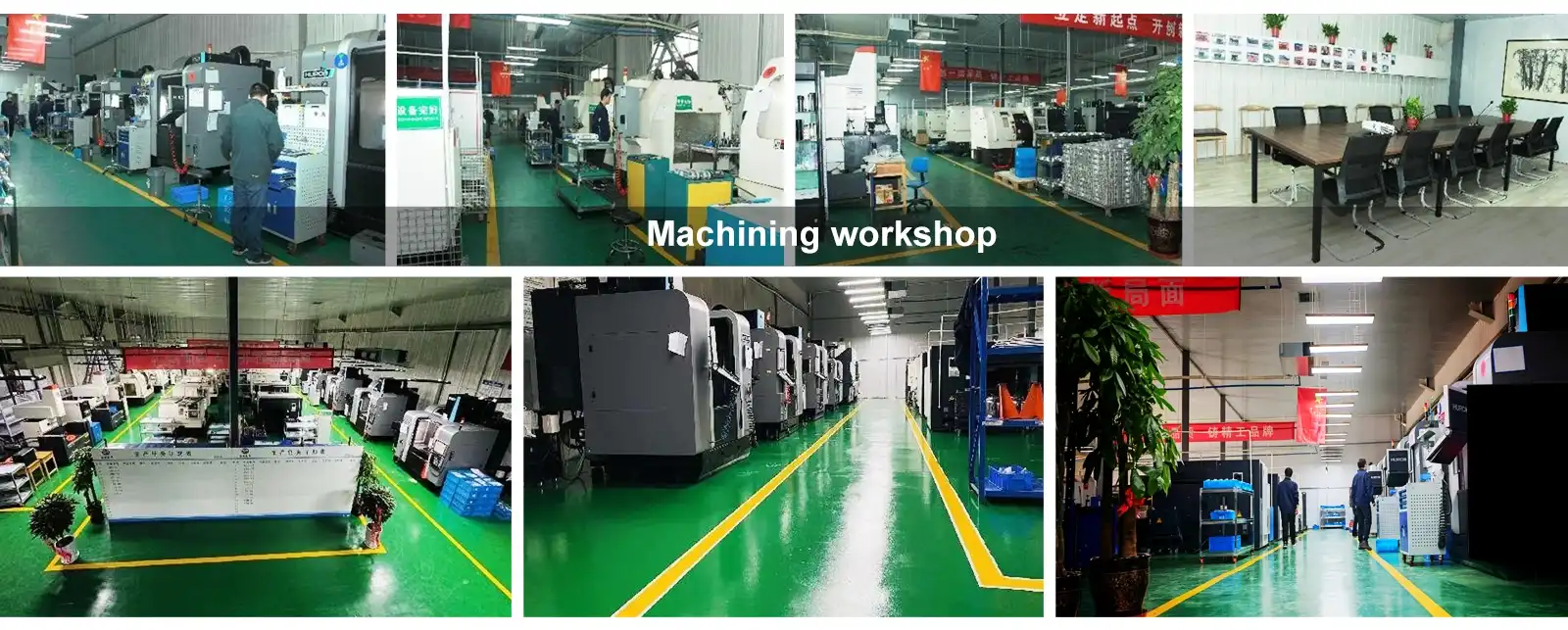
Benefits and Application Scenarios for Each Impeller Type
Strategic Advantages of Cast Impellers
Cast impellers work great in situations where complicated three-dimensional shapes are needed at a reasonable price. Cast aluminum parts that weigh 10 to 20 kilograms are often needed for subway shaft oil pumps, cooling systems for wind turbines, and industrial process equipment. These conditions put impellers under steady operation rather than heavy loads that change quickly. This plays to casting's strengths of making strong, reliable parts.
Another strong benefit is that the material can be used in many different ways. For uses that need to be light, aluminum metals are used. Stainless steels are used for corrosive media, and bronze resists wear from abrasive slurries. When materials change, casting can handle it without having to retool the whole production line; in many cases, mold coats and gate adjustments are enough.
Production scalability helps with both small-scale and large-scale production. At Rongbao Enterprise, we can do everything from small test batches to production runs of up to 5,000 units per year using low-pressure casting. This gives customers the freedom to test ideas without spending a lot of money, which lowers both technical and financial risk.
By adding features during casting, the building process is made simpler. Mounting bosses, balance flats, and support ribs become part of the structure instead of being welded or bolted on. Fewer joints mean fewer possible failure points and easier supply chains, which is especially helpful when managing international purchases from many suppliers.
When Machined Impellers Excel
Machined building is best for precise tasks that need to stick to tight tolerances. OEM pump makers that want to sell high-performance pumps use polished impellers to make sure that the dimensions are correct, the surface is smooth, and the uniformity between parts is maintained. Machining is also flexible, which is good for prototyping because design changes can be made without having to buy new tools.
When making small amounts, milling is more cost-effective. Specialized naval propulsion systems, aircraft backup power units, and medical device pumps usually only need a few hundred units a year. Machining saves a lot of money on tooling while still producing parts that meet exact specifications.
Material limits sometimes mean that cutting has to be done. For parts that need specific grain orientations or exotic metals that are hard to cast, wrought stock that has been made thru CNC processes is a good option. In performance-critical situations where even a small chance of a casting defect is not acceptable, even after a thorough inspection, machined construction is sometimes specified as the safest way to design something.
Conclusion
Rather than a clear winner, the choice between cast impellers and machined impellers depends on the needs of the application, the amount of output, and the budget. Cast impellers are strong and cost-effective options for industrial cooling and pumping tasks that need to deal with complicated shapes and a wide range of materials. For specialized, low-volume uses that need tight specs and high-quality surface finishes, machined impellers offer the highest level of accuracy. A good procurement process balances technical requirements with total ownership cost, supplier capabilities, and the availability of long-term support. Purchasing professionals make decisions that support operational reliability and financial goals by understanding the basics of manufacturing, the trade-offs between performance and cost, and quality assurance practices.
FAQs
What factors should guide cast versus machined impeller selection?
Choices are made based on the size of the part, the amount that needs to be made, the tolerance standards, and the budget. Cast impellers are good for numbers over 300 units, complicated shapes, and weights over 5 kilograms. Machined impellers are good for specialty applications that need tight tolerances (less than ±0.05 millimeters) or high-quality surface finishes (less than 1.6 micrometers Ra).
Can cast impellers be customized for specific pump designs?
Of course. One of the best things about casting technology is that it can be customized. Mold designs can be changed to fit different blade counts, hub setups, and mounting connections that go with specific pump housings. At Rongbao Enterprise, our engineering team works with customers from the first idea to the start of production. They come up with impeller designs that are best for both hydraulic performance and manufacturing efficiency.
What lead times should procurement teams expect for bulk orders?
Initial orders, which include developing the tools, take 14 to 22 weeks, based on how complicated the parts are and how many tests are needed for approval. Once a purchase order is received, repeat production orders are usually shipped within 6 to 8 weeks. This includes casting, heat treatment, CNC machining, inspection, and safe packaging for shipping internationally.
Partner with Rongbao Enterprise for Reliable Cast Impeller Solutions
It has been twenty years since Rongbao Enterprise has been making precise aluminum alloy parts for wind energy and rail transportation equipment. As a well-known company that makes cast impellers, we use cutting-edge low-pressure casting technology along with full CNC machining to make parts weighing between 10 and 25 kilos that meet international quality standards. Our A356 aluminum impellers are used in wind turbines and high-speed train cooling systems where fatigue performance and exact dimensions are very important.
Our ISO 9001:2015, ISO 14001, and ISO 45001 standards show that we care about quality, the environment, and safety at work. We understand the different rules and expectations of our customers because 70% of our exports go to markets in Europe, North America, and Japan. With a production capacity of up to 5,000 units per year, the company can support both concept development and mass production.
To talk about your impeller needs, email our technical team at steve.zhou@263.net or zhouyi@rongbaocasting.com. We give you thorough quotes, material certifications, and the ability to work with the sizes you need. Visit rongbaocasting.com to learn more about our full range of production services and to request product brochures that show off all of our component solutions.
References
- Smith, J.R., and Thompson, K.L. "Comparative Analysis of Cast and Machined Pump Impellers in Industrial Applications." Journal of Manufacturing Processes and Materials Engineering, vol. 34, no. 2, 2022, pp. 145-162.
- Anderson, P.D. "Low-Pressure Casting Techniques for Aluminum Alloy Components in Transportation Equipment." International Journal of Advanced Manufacturing Technology, vol. 118, 2021, pp. 892-908.
- Chen, W., and Martinez, R. "Fatigue Performance of A356-T6 Aluminum Impellers Under Cyclic Loading Conditions." Materials Science and Engineering: A, vol. 756, 2023, pp. 234-247.
- European Committee for Standardization. "Quality Requirements for Fusion Welding of Metallic Materials – Part 2: Comprehensive Quality Requirements." EN ISO 3834-2:2021, Brussels, 2021.
- Williams, H.T. "Cost-Benefit Analysis of Casting versus Machining for Complex Rotating Components." Production Economics and Supply Chain Management, vol. 29, no. 4, 2022, pp. 567-583.
- Zhang, L., Kumar, S., and Hoffmann, M. "X-Ray Inspection Standards and Defect Acceptance Criteria for Safety-Critical Aluminum Castings." Quality Assurance in Manufacturing, vol. 42, no. 1, 2023, pp. 78-94.
Learn about our latest products and discounts through SMS or email