- English
- French
- German
- Portuguese
- Spanish
- Russian
- Japanese
- Korean
- Arabic
- Greek
- German
- Turkish
- Italian
- Danish
- Romanian
- Indonesian
- Czech
- Afrikaans
- Swedish
- Polish
- Basque
- Catalan
- Esperanto
- Hindi
- Lao
- Albanian
- Amharic
- Armenian
- Azerbaijani
- Belarusian
- Bengali
- Bosnian
- Bulgarian
- Cebuano
- Chichewa
- Corsican
- Croatian
- Dutch
- Estonian
- Filipino
- Finnish
- Frisian
- Galician
- Georgian
- Gujarati
- Haitian
- Hausa
- Hawaiian
- Hebrew
- Hmong
- Hungarian
- Icelandic
- Igbo
- Javanese
- Kannada
- Kazakh
- Khmer
- Kurdish
- Kyrgyz
- Latin
- Latvian
- Lithuanian
- Luxembou..
- Macedonian
- Malagasy
- Malay
- Malayalam
- Maltese
- Maori
- Marathi
- Mongolian
- Burmese
- Nepali
- Norwegian
- Pashto
- Persian
- Punjabi
- Serbian
- Sesotho
- Sinhala
- Slovak
- Slovenian
- Somali
- Samoan
- Scots Gaelic
- Shona
- Sindhi
- Sundanese
- Swahili
- Tajik
- Tamil
- Telugu
- Thai
- Ukrainian
- Urdu
- Uzbek
- Vietnamese
- Welsh
- Xhosa
- Yiddish
- Yoruba
- Zulu
Understanding Impeller Types: Open, Semi-Open, Closed, Axial, and Mixed Flow
Impellers serve as the beating heart within pumps, compressors, and turbines across countless industrial applications. These rotating components transform mechanical energy into fluid motion through carefully engineered blade designs. Whether handling clean water or abrasive slurries, selecting the appropriate impeller configuration proves essential for operational efficiency and equipment longevity.
Manufacturing processes have evolved considerably over decades, enabling producers to create increasingly sophisticated impeller geometries. Cast impeller technology represents a cornerstone of modern fluid handling systems, combining precision engineering with material science. Understanding the fundamental differences among various impeller configurations allows engineers to optimize system performance while reducing maintenance requirements and operational costs.
The interaction between an impeller's physical structure and the fluid it moves determines much about a pump's character. Blade orientation influences whether pressure generation or volumetric flow takes precedence. Shroud configuration affects how well the system handles particulates suspended within the working fluid. Through examining these structural variations, we gain insight into matching equipment capabilities with application demands.
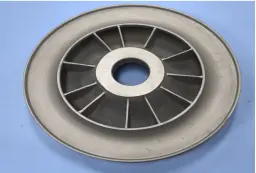
Open Impeller Design and Applications
Open impellers feature vanes attached directly to a hub without protective shrouding on either face. This straightforward architecture offers distinct advantages when pumping fluids containing solid particles or fibrous materials. The absence of confining surfaces prevents debris accumulation that would otherwise restrict flow or damage precision-machined clearances. Maintenance personnel can visually inspect blade surfaces and easily remove any trapped material during routine service intervals.
However, this design simplicity carries performance trade-offs. Fluid slippage around exposed blade tips reduces volumetric efficiency compared to enclosed alternatives. Higher net positive suction head requirements make open impellers more susceptible to cavitation under certain operating conditions. Manufacturers typically reserve this configuration for smaller pumps where these limitations prove acceptable given the operational advantages.
Structural Characteristics
The open impeller's uncomplicated form simplifies the casting process, reducing both manufacturing complexity and tooling expenses. Vanes extend from the central hub like spokes on a wheel, allowing unrestricted access from both sides. This accessibility facilitates cleaning operations essential in food processing, pharmaceutical manufacturing, and wastewater treatment applications. Engineers specify blade angles and hub profiles to optimize performance within the configuration's inherent constraints.
Material selection for open impellers balances strength requirements against corrosion resistance needs. Stainless steel alloys dominate applications involving aggressive chemicals or elevated temperatures. Bronze compositions serve well in marine environments where seawater contact occurs regularly. The cast impeller approach accommodates various metallurgical specifications, enabling manufacturers to tailor material properties to specific operational demands.
Industrial Implementation
Wastewater treatment facilities represent a primary application domain for open impellers. Sewage contains fibrous materials, grit, and other debris that would quickly clog enclosed designs. The robust nature of open vane arrangements withstands impact from solids passing through the pump. Municipal engineers appreciate the reduced maintenance burden these pumps impose compared to more restrictive alternatives.
Agricultural irrigation systems also benefit from open impeller technology. Water drawn from rivers or ponds often carries suspended sediment and organic matter. Pumps must handle these contaminants without frequent servicing, particularly during critical growing seasons. The forgiving nature of open impeller designs aligns well with these operational realities, though operators accept somewhat lower efficiency as a necessary compromise.
Semi-Open and Closed Impeller Configurations
Semi-open impellers incorporate a back shroud that supports the vanes while leaving the front face exposed. This hybrid approach provides greater mechanical rigidity than fully open designs while retaining some ability to handle suspended solids. The rear shroud guides fluid more effectively than unsupported vanes can manage, improving hydraulic efficiency. Engineers must balance the clearance between the front blade tips and the pump casing carefully, as wear in this gap gradually degrades performance over time.
Adjustability distinguishes quality semi-open impeller installations. Precision axial positioning mechanisms allow technicians to restore optimal blade-to-casing clearances as normal wear occurs. This feature extends serviceable pump life considerably, delaying the need for complete impeller replacement. Some advanced systems permit adjustment during operation, minimizing production interruptions in continuous process environments.
Closed Impeller Excellence
Fully enclosed impellers feature shrouds on both faces, creating sealed passages that prevent recirculation losses. This configuration achieves the highest hydraulic efficiency among the major impeller categories. The front and rear shrouds work together to maintain consistent blade tip clearances throughout the impeller's diameter. Manufacturing complexity increases substantially, as creating these intricate internal passages requires sophisticated casting and machining capabilities.
The closed design excels in applications demanding maximum pressure generation from minimum input power. Clean fluids with low solid content suit this configuration ideally, as particles can accumulate in the confined spaces and cause damage. Industrial process pumps, boiler feed systems, and high-rise building water supply installations commonly employ closed impellers. Their superior efficiency translates directly into reduced energy consumption across extended operating periods.
Material and Manufacturing Considerations
Producing closed impellers demands precision tooling and careful process control. The cast impeller method must create complex internal geometries without defects that would compromise structural integrity or hydraulic performance. Core positioning accuracy affects passage dimensions critically, requiring rigorous quality assurance throughout production. Investment casting techniques prove particularly well-suited to achieving the required precision levels.
Aluminum alloys offer excellent strength-to-weight ratios for applications where mass reduction matters. High-speed train components benefit from lightweight construction that reduces rotating inertia. A356 aluminum provides good castability alongside respectable mechanical properties, making it a popular choice for demanding aerospace and transportation applications. Surface treatments enhance corrosion resistance and improve operational longevity in challenging environments.
Axial and Mixed Flow Impeller Principles
Axial flow impellers move fluid parallel to the shaft axis, functioning similarly to propellers. Blade angles impart forward thrust to the fluid rather than generating radial velocity components. This orientation suits applications requiring high flow rates at relatively modest pressure increases. Cooling systems, ventilation equipment, and large-volume water transfer installations benefit from axial configurations. The design generates minimal radial forces on bearings, simplifying support structure requirements.
Blade twist varies along the radius to maintain optimal attack angles as rotational speed changes with distance from the hub. This geometric complexity requires careful engineering to avoid flow separation and efficiency losses. Modern manufacturing techniques enable precise blade profiling that maximizes performance across the intended operating range. Some designs incorporate adjustable pitch mechanisms allowing operators to modify flow characteristics without changing rotational speed.
Mixed Flow Versatility
Mixed flow impellers combine attributes of both radial and axial configurations. Fluid enters axially but exits at an angle between purely radial and purely axial directions. This arrangement provides moderate pressure rise with substantial volumetric flow capacity. The design flexibility allows engineers to tune performance characteristics by adjusting blade angles and shroud geometries. Many medium-duty pump applications benefit from this balanced approach.
Transportation of fluids with varying viscosities represents a key advantage of mixed flow designs. The configuration handles both thin liquids and slightly viscous substances more effectively than purely radial arrangements. Chemical processing facilities appreciate this versatility when a single pump must accommodate different product streams. The cast impeller manufacturing process readily accommodates the compound curvatures required for optimal mixed flow performance.
Application Selection Criteria
Choosing between axial, mixed, and radial flow configurations depends on specific system requirements. High flow rate with low pressure increase favors axial designs. Moderate flow with substantial pressure generation suggests radial configurations. Mixed flow occupies the middle ground, offering reasonable capability in both dimensions. System designers must evaluate total head requirements, volumetric flow demands, and available net positive suction head when making selection decisions.
Installation space constraints sometimes override pure performance considerations. Axial flow pumps occupy less radial space than equivalent capacity radial designs. Inline mounting configurations simplify piping arrangements in congested facilities. Conversely, radial pumps may prove more compact when measured along the shaft axis. Engineers must balance multiple factors when specifying equipment for particular installations.

Cast Impeller Manufacturing Excellence
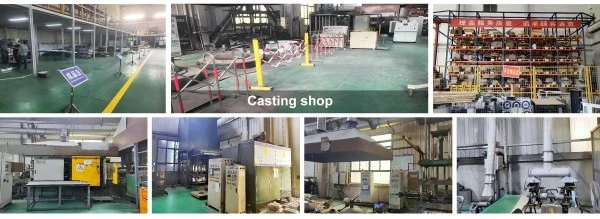
Casting processes enable the economical production of complex impeller geometries that would prove prohibitively expensive through machining alone. Investment casting delivers exceptional surface quality and dimensional accuracy. The process begins with creating precise wax patterns that replicate the desired final geometry. Multiple patterns receive ceramic shell coatings before the wax melts away, leaving hollow molds. Molten metal poured into these molds solidifies into near-net-shape castings requiring minimal subsequent machining.
Low-pressure casting techniques prove particularly suitable for aluminum alloy impellers. The method fills molds gradually under controlled pressure, reducing turbulence that could introduce porosity or inclusions. Material properties benefit from the gentle filling action, as metallurgical structure remains more uniform throughout the casting. This process works exceptionally well for components like high-speed train impellers where reliability demands exceed typical industrial standards.
Quality Assurance Protocols
Rigorous inspection procedures ensure cast impellers meet exacting specifications. Dimensional verification confirms critical features fall within prescribed tolerances. Non-destructive testing detects internal flaws that could compromise structural integrity. Dynamic balancing eliminates vibration sources before components enter service. These quality measures prove essential when impellers operate at elevated speeds or in applications where failure could endanger personnel or equipment.
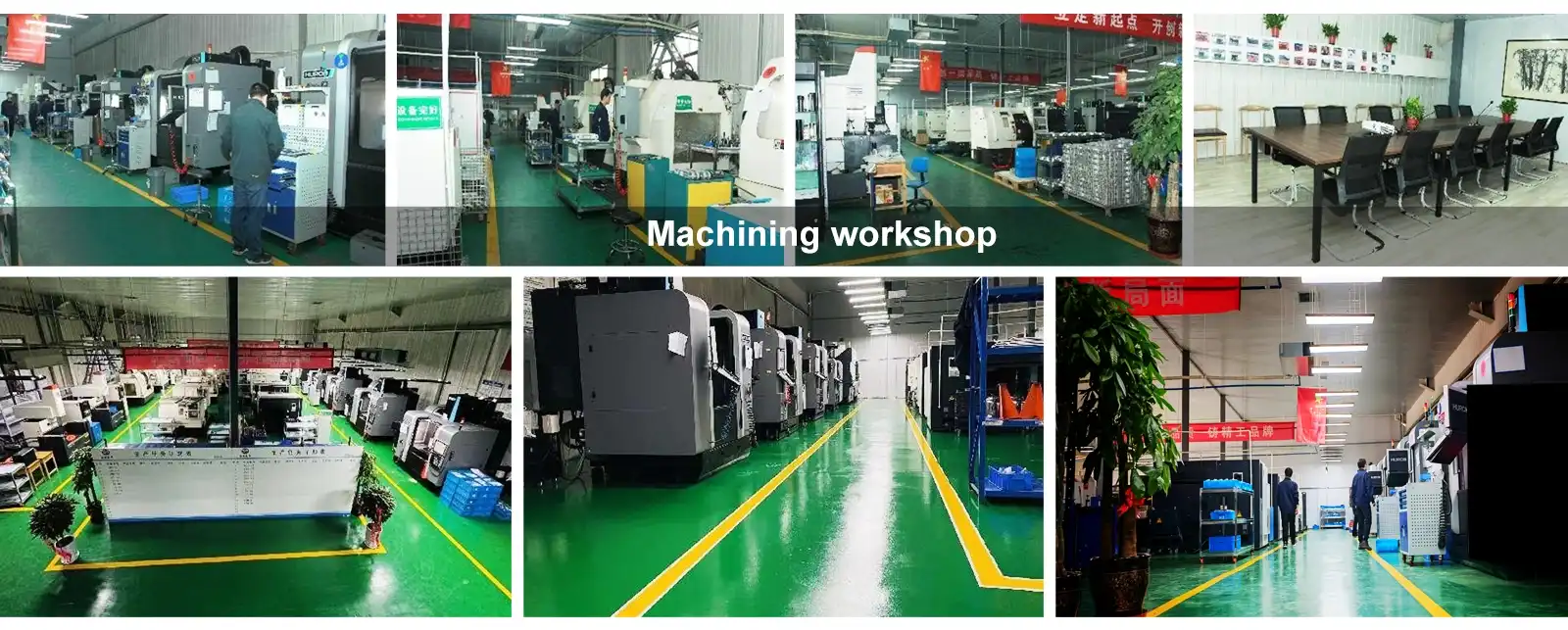
Surface treatment extends component service life considerably. Shot blasting removes surface irregularities and induces beneficial compressive stresses in the material. This process improves fatigue resistance while preparing surfaces for subsequent protective coatings if required. CNC machining operations refine critical dimensions like bore diameters, mounting faces, and seal surfaces. The combination of precision casting and selective machining optimizes production economy while maintaining necessary accuracy levels.
Cast Impeller Supplier: Rongbao Enterprise
Rongbao Enterprise brings extensive expertise in precision cast impeller manufacturing to the global market. Our facility in Xi'an, China combines advanced low-pressure casting technology with rigorous quality assurance protocols. We specialize in producing high-performance impellers for demanding applications, including high-speed train systems where reliability proves non-negotiable.
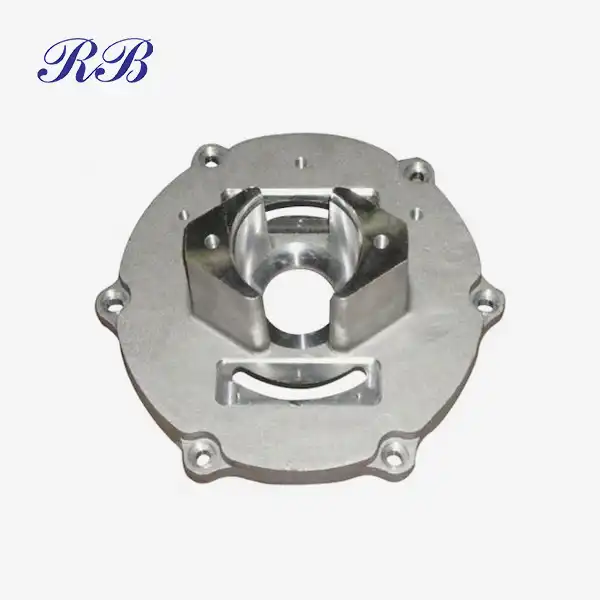
Our production capabilities encompass A356 aluminum alloy components manufactured through controlled low-pressure casting processes. Each cast impeller undergoes comprehensive inspection including dimensional verification, non-destructive testing, and dynamic balancing. CNC machining refines critical features to precise tolerances, while shot blasting surface treatment enhances both appearance and durability. We maintain ISO 9001:2015, ISO 14001, and ISO 45001 certifications, demonstrating our commitment to quality, environmental responsibility, and workplace safety.
Contact our technical specialists to discuss your cast impeller requirements. We provide detailed quotations based on your specifications, material preferences, and quantity needs. Our team offers guidance on design optimization, material selection, and manufacturing processes to ensure your project succeeds. Reach us at steve.zhou@263.net or zhouyi@rongbaocasting.com to begin your inquiry. Experience the precision and reliability that has made Rongbao Enterprise a trusted partner for critical fluid handling components across diverse industries worldwide.
FAQs
Q1: What factors determine whether an open or closed cast impeller works best for a specific application?
A: Fluid cleanliness matters most. Open impellers handle suspended materials well but are less efficient. Since closed impellers generate higher heads more effectively, pressure requirements also affect selection. When adopting a configuration, system designers must consider the fluid's solid content, pressure increase, and maintenance intervals. Temperature and chemical compatibility refine the selection.
Q2: How does low-pressure casting improve cast impeller quality compared to conventional methods?
A: Controlled low-pressure mould filling reduces defect-causing turbulence. Gentle filling creates more homogeneous, flaw-free metallurgical structures. The technique improves aluminum alloy mechanical characteristics and dependability. Compared to gravity casting, components have less porosity and better surface polish. Highly demanding applications like high-speed transportation systems benefit from these benefits.
Q3: Can worn semi-open impellers be restored to original performance levels?
A: Many semi-open designs allow technicians to modify for wear. Axial relocation decreases blade tip-pump casing clearances, somewhat restoring efficiency. Impeller replacement is necessary after extreme wear, hence this modification has limitations. Monitor and modify components to extend service life and maintain performance. Some modern technologies allow change during operation, reducing continuous process downtime.
References
- Howell Foundry. (2025). "Introduction to Impellers: What You Should Know."
- GlobalSpec. "Impellers Selection Guide: Types, Features, Applications."
- Eddy Pump Corporation. (2025). "Complete Guide to Impeller Selection - Types, Uses and How do they Work."
- Dean Group International. (2024). "What Is Impeller Casting?" Investment Casting Network. (2025). "A Complete Guide For Impeller Casting."
Learn about our latest products and discounts through SMS or email