- English
- French
- German
- Portuguese
- Spanish
- Russian
- Japanese
- Korean
- Arabic
- Greek
- German
- Turkish
- Italian
- Danish
- Romanian
- Indonesian
- Czech
- Afrikaans
- Swedish
- Polish
- Basque
- Catalan
- Esperanto
- Hindi
- Lao
- Albanian
- Amharic
- Armenian
- Azerbaijani
- Belarusian
- Bengali
- Bosnian
- Bulgarian
- Cebuano
- Chichewa
- Corsican
- Croatian
- Dutch
- Estonian
- Filipino
- Finnish
- Frisian
- Galician
- Georgian
- Gujarati
- Haitian
- Hausa
- Hawaiian
- Hebrew
- Hmong
- Hungarian
- Icelandic
- Igbo
- Javanese
- Kannada
- Kazakh
- Khmer
- Kurdish
- Kyrgyz
- Latin
- Latvian
- Lithuanian
- Luxembou..
- Macedonian
- Malagasy
- Malay
- Malayalam
- Maltese
- Maori
- Marathi
- Mongolian
- Burmese
- Nepali
- Norwegian
- Pashto
- Persian
- Punjabi
- Serbian
- Sesotho
- Sinhala
- Slovak
- Slovenian
- Somali
- Samoan
- Scots Gaelic
- Shona
- Sindhi
- Sundanese
- Swahili
- Tajik
- Tamil
- Telugu
- Thai
- Ukrainian
- Urdu
- Uzbek
- Vietnamese
- Welsh
- Xhosa
- Yiddish
- Yoruba
- Zulu
Best Casting Motor End Cover Supplier: A B2B Buying Guide
Motor manufacturers need a dependable casting motor end cover supplier to preserve production efficiency during supply chain issues. This tutorial covers procurement issues such as batch quality discrepancies and locating competitive suppliers with scalable capacity. Motor end covers provide heat dissipation and mechanical alignment while protecting crucial internal components. Selecting the correct supplier affects unit prices, equipment performance, and long-term operational stability for high-volume procurement managers. We'll discuss assessment criteria, manufacturing procedures, and best practices to help you form partnerships that meet production targets without sacrificing quality.
Understanding Casting Motor End Covers: Essential Knowledge for Buyers
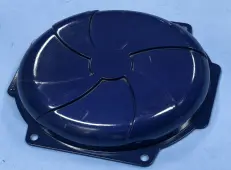
Motor end covers are protective enclosures that are placed at both axial ends of electric motors. They keep internal parts safe and determine where the rotor is located in space. These cast aluminum parts work with bearing systems to keep the space between the rotor and stator assemblies exactly right. In addition to keeping out environmental pollutants, end covers that are properly made help with temperature control by having cooling fins and structural lines built in.
The Core Functions of Motor End Covers
In electric motor systems, motor housing parts have more than one technical use. The end cover holds the bearing system in place and has fixing holes for extra parts like cooling fans and wire glands. Dimensional accuracy has a direct effect on how well a motor works; mismatch leads to noise, shaking, and early bearing failure. When you use good casting methods, the wall thickness and bearing seat tolerances stay the same from one production batch to the next.
Common Casting Methods and Material Selection
Die casting is still the most frequent approach to create aluminum motor end covers, particularly when ADC12 alloy standards are applied. By pushing molten aluminum into steel molds under tremendous pressure, thin walls with smooth exteriors and the proper dimensions are created. For larger pieces where tool costs must be reduced, gravity casting is an alternative, although surface quality normally requires more labor. Choose a material that balances heat conductivity, corrosion resistance, and mechanical strength. ADC12 is simple to build and fits electrical equipment performance criteria. Sand casting is good for complex interior structures, but it takes longer and costs more per unit in large numbers.
Key Performance Characteristics
Quality end-casting motor end covers can manage heat better than basic ones. Integrated cooling fins enhance convective heat transfer surface area, extending engine life when used continually. In damp or chemically hostile settings, motor corrosion resistance is crucial. Powder coating and anodizing make them safer. Aluminum alloys are preferable to cast iron for energy-efficient motors since weight impacts performance. Dimensional stability throughout temperature changes prevents assembly difficulties during manufacturing and aligns bearings during usage.
How to Choose the Best Casting Motor End Cover Supplier: Criteria & Considerations
The supplier you choose has a direct effect on production costs, the regularity of deliveries, and the stability of the product across order batches. When motor companies look at possible partners for aluminum casting parts, they have to weigh a lot of different factors.
Defining Your Procurement Requirements
Making requirements clearer avoids misunderstandings and the cost of redoing work. For custom OEM designs to work, providers need to be able to make molds and offer engineering help for improving the design. Standard replacement parts put short lead times and low costs ahead of the ability to be customized. The number of units made affects which suppliers are best; companies that make 10,000 or more units a month need partners with specialized capacity and automatic quality systems. For exports, material compliance documentation is very important, and suppliers need to know about RoHS, REACH, and regional certification needs.
Essential Supplier Evaluation Metrics
Certification credentials are reviewed first. ISO 9001:2015 certifies quality management. ISO 14001 and 45001 are safety and environmental standards. Facilities demonstrate technology's age, upkeep, and expandability, not simply output. Mill certifications and spectrometric tests prove aluminum alloy specifications fulfill material traceability criteria. Delivery history overrides claims. Guided on-time delivery and capacity management. Clear pricing reveals costs early. In addition to unit price, you should know how to pay for samples, how much they cost, how they will be packed, and how you will be compensated. Low prices might deter suppliers from monitoring material, process, and delivery quality. For accurate comparisons, request material, processing, and surface treatment prices.
Factory-Direct Manufacturing Advantages
Working directly with casting manufacturers cuts out the middleman and gives you access to engineering resources. When you work directly with a factory, you can talk about customization with production teams who know the limits of production and what drives costs. When technical questions go straight to engineers instead of salespeople, communication works better. Direct access to the site for checks and process observations speeds up the resolution of quality problems. When you have long-term relationships with makers, you both have a reason to keep improving and investing in capacity in a way that supports your growth.
International Sourcing Considerations
When evaluating offshore suppliers, you need to be more careful about logistics, communication, and quality consistency. While different time zones can slow down response times, they shouldn't get in the way of clear technical conversations. Check with your suppliers to see if they have specific account managers for foreign customers. Understanding Incoterms, customs processes, and normal transit times will help you plan your goods and figure out your total landed costs. When inspection prices go up, quality control becomes more important. Before placing big orders, ask for PPAP documentation, statistical process control data, and third-party inspection reports.
Comparing Casting Motor End Covers: Making Informed Product Decisions
Different ways of making motor end covers give them different qualities that affect cost, efficiency, and fitness for use.
Die Casting Versus Alternative Manufacturing Methods
For making a lot of lightweight metal parts with complicated shapes, high-pressure die casting is the best method. The process makes surfaces smooth and within tight tolerances, which cuts down on the need for secondary machining. When compared to covers that are machined from solid billets, those that are cast waste less material and cost less per unit once the costs of the tools are spread out over a larger number of units. Sand casting is flexible for making prototypes and small batches, but it needs a lot of machining to get the bearing seat tolerances right. Gravity casting is a good compromise between die casting and sand casting because it has lower tooling costs and better surface quality. It is best for medium production volumes.
Material Performance Comparisons
The ADC12 aluminum alloy is the most common choice for motor end casting motor end covers because it is easy to cast, conducts heat well, and doesn't rust. Aluminum, which weighs about 0.6 kg for most motor sizes, makes motors lighter than cast iron ones while still keeping their structural integrity. The silicon in ADC12 makes it easier for the material to flow during casting, which lets thin-wall pieces be made that make the material work better. It has a thermal conductivity of 96 W/m·K, which makes it easier for heat to move from inside the motor to the air outside. Other aluminum alloys, such as A356, have better mechanical qualities, but they need more complicated casting conditions and cost more.
Custom Design Versus Standard Specifications
Standard catalog designs cut down on the cost of tools and wait times, which works well when motor designs use standard frame sizes. Custom setups improve performance for certain uses; for example, changed designs for cooling fins help motors that run all the time get rid of more heat, and built-in fixing features cut down on assembly time. The decision about customization depends on how much is being made and how well it needs to work. Custom mold tooling costs usually run from $5,000 to $25,000, based on how complicated the mold is. To get good unit economics, you need to order at least 1,000 to 5,000 pieces. Experienced providers that offer design optimization services can find ways to cut costs while still meeting useful needs.
Purchasing Process and Best Practices for B2B Clients
Purchasing processes that work well cut costs and keep production from stopping because of a lack of parts.
Structuring Your Supplier Engagement
Include 3D CAD models, dimensional tolerances, surface finish requirements, and material certifications in specification documents before hiring a supplier. Compare estimates from many suppliers with similar needs. You must know the minimum order quantity now. Some dealers need 500 pieces, but others allow smaller practice orders. Discuss payment terms with the vendor to meet cash flow needs. Product development often costs 30–50%.
Sample reviews check supplier capabilities before production commitments. Request examples of dimensional inspection, material certification, and surface treatment validation. PPAP documentation that fulfills auto requirements certifies non-auto procedures. Set acceptance and testing requirements to avoid production ramp disagreements.
Managing Lead Times and Inventory Planning
Usually, it takes between 6 and 9 weeks to deliver casting motor end covers, which includes preparing the tools, inspecting the first piece, production, finishing, and shipping. Rush orders cost more and may not be as good if suppliers cut corners on process steps. Plan your inventory levels with variable lead times in mind. Keeping 4-6 weeks of safety stock on hand keeps the production line from stopping because of unexpected delays. Communication frequency is important, especially for big orders. Ask for weekly updates on production and shipping paperwork ahead of time to make sure that receiving operations run smoothly.
Installation and Maintenance Considerations
Damage to precision bearing surfaces can be expensive, so it's important to handle them correctly during assembly. Keep end covers in their original packaging until you're ready to install them to keep them clean and free of scratches. When putting together the motor, make sure the bearing seat is clean and use the right fitting methods to keep the motor from warping. As part of regular maintenance, the condition of the bearings and the torque of the mounting bolts should be checked. Surface treatments like powder coating need to be handled carefully because chips or scratches can make rust protection less effective and may mean that the part needs to be replaced.
Why Trust Recommended Casting Motor End Cover Suppliers
To build trusting relationships with suppliers, you need to do more than just check out marketing claims and initial quotes.
Certification and Quality Assurance Protocols
Reliable motor part sellers have several management system certifications to show maturity. Quality methods, calibrated equipment, and product tracking systems are required for ISO 9001:2015 certification. ISO 14001 certifies waste and resource management. ISO 45001 certification shows a company values worker safety and wants safe workplaces. These licenses are assessed yearly by certified authorities for system efficiency.
Quality control should check incoming supplies, work in progress, and finished items. Spectrometric measurement proves aluminum alloy composition meets specifications. Coordinate measurement devices verify bearing seat diameters and mounting hole placements. Pressure testing reveals structural porosity concerns. Request key dimension statistical process control data with Cpk values exceeding 1.33. This shows all production batches use the same process.
Comprehensive After-Sales Support
Service-oriented suppliers are different from transactional sellers because they offer technical support. Engineering support helps fix problems with assembly, make designs more easily made, and look into failures that happen in the field. When production needs to be done quickly, responsive communication is important. Suppliers should give direct contacts for technical and business questions instead of making people go through general inquiry channels. Warranty policies show that you trust the quality of the product. Usually, they cover material and manufacturing flaws for a year as long as the parts are used in a certain way.
Rongbao Enterprise's Integrated Capabilities
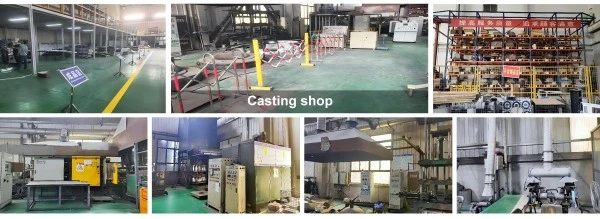
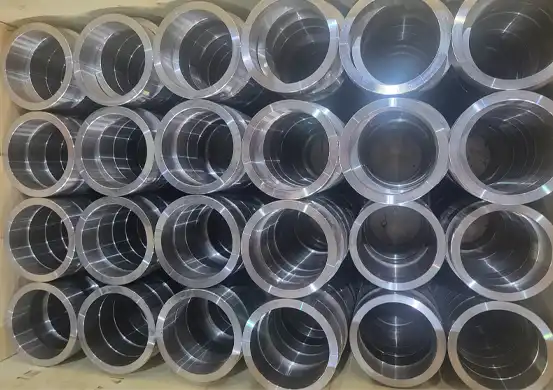
Expert casting suppliers do more than create parts. Our Xi'an high-pressure die casting and CNC machining facilities transform raw materials into finished products with protective coatings. Integration speeds up corporate cooperation and improves quality control. Aluminum casting, mold improvement, and quality management are my skills after 20 years in the industry. Increased demand for typical motor end cover configurations may expand production to 1,000 units per day. Targeting overseas markets sends 70% of output to Europe and North America, where quality and compliance are strict. This focus on exporting has improved logistical and administrative skills, simplifying international trade.
Conclusion
Find the finest casting motor end cover suppliers based on pricing, manufacturing capacity, technical support, and quality consistency. Clear communication of objectives and a careful examination of suppliers based on objective characteristics such as certifications, process expertise, and delivery performance are the first stages to developing successful relationships. Knowing how things are manufactured helps purchasers match part characteristics to application demands while keeping costs down by creating the proper amount of parts. Established vendors that build and finish tools provide stability and simplify collaboration. Supplier screening pays off in the long term by reducing quality issues, improving delivery, and speeding up technical assistance throughout a product's lifespan.
FAQ
1. What factors determine pricing for aluminum motor end covers?
Price changes depend on the cost of materials, the complexity of the parts, the amount of output, and the finishing needs. The price of aluminum in ADC12 changes with the world material markets, but it usually makes up 40 to 50 percent of the cost of the parts. When complex geometries need advanced tooling, unit costs go up until the cost of the tools is spread out over bigger numbers. Surface treatments, such as powder coating, cost an extra $0.50 to $2.00 per piece, depending on how much coverage is needed and what color is chosen. Larger order numbers have a big effect on prices. For example, when you order more than 5,000 pieces, the costs often drop by 15–25% compared to minimums of 500 pieces because the setup costs are spread out over more units.
2. Can suppliers customize end cover designs for specific motor applications?
Most casting manufacturers with a lot of experience offer OEM customization services, such as making molds, improving designs, and making prototypes. Customization is possible if the shape is complicated and the material can be worked with in a certain way. To figure out if something can be made, suppliers usually need 3D CAD files or detailed models with dimensional limits. Design teamwork helps find ways to cut costs while still meeting useful needs. For example, draft angles and uniform wall thickness make the casting easier and lower the number of defects. For special castings, the minimum order quantity usually starts at around 1,000 pieces to cover the cost of the mold.
3. How do I verify supplier reliability before placing large orders?
Ask for tours of the site or audit reports from a third party that list the equipment's power and quality control systems. Check the validity of certification credentials by looking them up in the databases of the issuing bodies. Ask for references from customers in similar fields, and then call those people to find out how well they deliver and how consistent the quality is. Ask for PPAP records from past projects that show data from measurements and material certifications. Start your connection with smaller trial orders so you can see how responsive the contact is, how good the documentation is, and how well the product fits your needs before committing to larger numbers.
Partner with Experienced Casting Motor End Cover Manufacturers
Rongbao Enterprise has been making motor parts for 20 years and has experience casting aluminum. They serve electric motor makers all over the world. At our Xi'an facility, we use high-pressure die casting, precise CNC cutting, and advanced surface treatment to make motor end covers that are fully finished and ready to be put together. We follow strict quality control measures from inspecting raw materials to checking the finished product, as required by ISO 9001:2015, ISO 14001, and ISO 45001 standards. A daily production capacity of 1,000 pieces meets both current production needs and the need to quickly increase production to meet rising demand. Our engineering team works together on unique OEM designs, making sure that the specs are the best they can be so that they can be made while still meeting your performance needs. International logistics experience guarantees on-time delivery to North America and Europe, with full documentation support. Get in touch with our team at steve.zhou@263.net or zhouyi@rongbaocasting.com to talk about your motor end cover needs and get competitive quotes from a reliable casting motor end cover provider.
References
1. Chen, W. and Liu, H. (2021). Aluminum Alloy Die Casting Technology for Electric Motor Components. Journal of Manufacturing Processes and Materials, 15(3), 234-247.
2. International Organization for Standardization. (2019). Quality Management Systems for Automotive Production and Relevant Service Parts Organizations. ISO/TS 16949:2019 Guidelines.
3. Kumar, S. and Patel, R. (2020). Thermal Management in Electric Motor Housing Design: Material Selection and Optimization. International Journal of Heat Transfer Engineering, 42(8), 1156-1170.
4. Miller, J.D. (2022). B2B Procurement Strategies for Metal Casting Components: Risk Mitigation and Supplier Evaluation. Supply Chain Management Review, 26(2), 44-59.
5. Zhang, Y., Wang, L., and Thompson, A. (2020). Comparative Analysis of Casting Methods for Aluminum Motor Components. Materials and Manufacturing Technology, 35(4), 567-582.
6. Association of Electric Motor Manufacturers. (2023). Industry Standards for Motor Housing Components: Dimensional Tolerances and Material Specifications. Technical Publication AEMM-2023-07.
Learn about our latest products and discounts through SMS or email